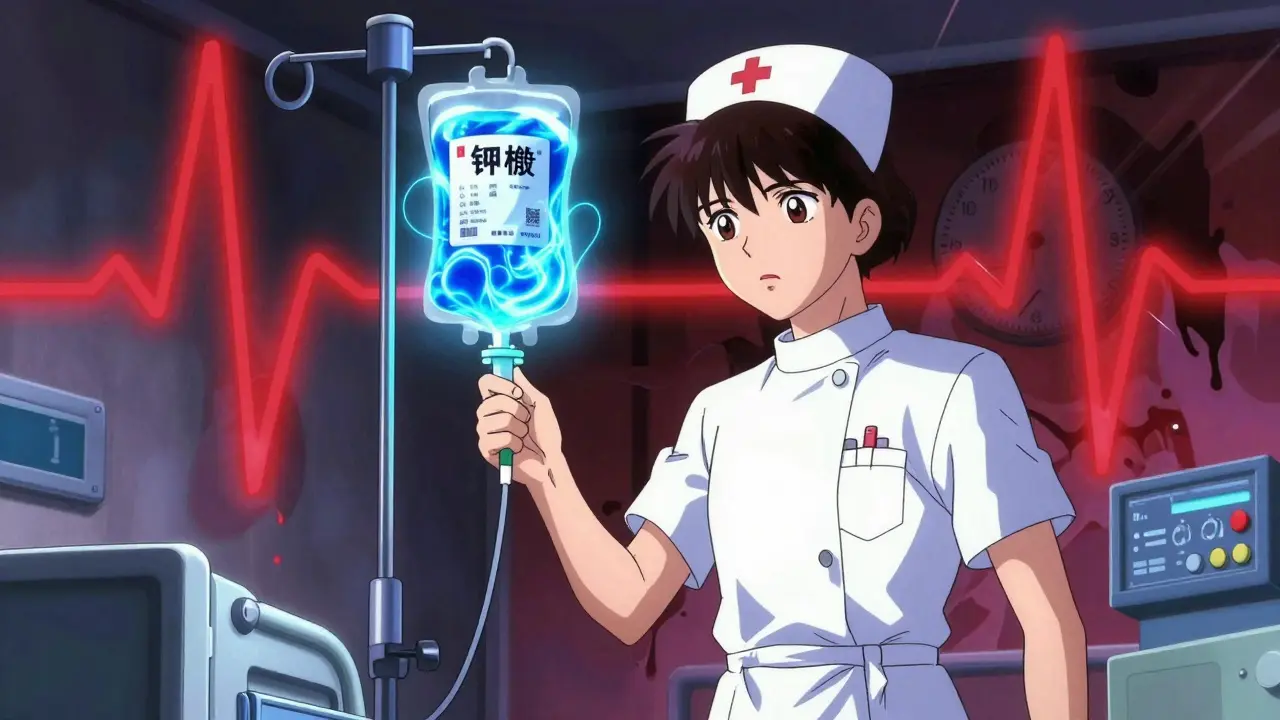
Imagine a patient in critical care. The doctor orders an IV infusion of potassium chloride. It’s a common drug, essential for stabilizing heart rhythms. But if the concentration is wrong, or the rate is too fast, the result isn’t just a minor error-it can be fatal. This is why we talk about high-alert medications. These are drugs where even a small mistake can cause severe harm or death. Identifying which ones need extra scrutiny, specifically independent double checks (IDCs), is not just a bureaucratic box to tick. It is the single most effective manual safeguard against catastrophic dispensing errors.
You might think that because these errors are rare, they aren’t worth the extra time. That’s a dangerous assumption. According to data from the ECRI Institute, properly executed IDCs can prevent approximately 95% of potential high-alert medication errors from reaching patients. When done poorly, that number drops to 40%. The difference lies in how you identify the risk and how you perform the check. This guide breaks down exactly how to spot these high-risk agents and execute the verification process correctly, based on the latest standards from 2024 and 2026.
What Makes a Medication "High-Alert"?
Not every drug requires two nurses to verify it before administration. If every pill and injection needed a double check, hospitals would grind to a halt. So, how do we decide? The concept was formalized by the Institute for Safe Medication Practices (ISMP) in 2001. They defined high-alert medications as pharmaceutical agents that bear a heightened risk of causing significant patient harm when they are used in error.
The key here is the consequence, not the frequency. Errors with high-alert meds might happen just as often as errors with regular antibiotics, but the outcome is vastly different. Think of it like driving. You might make a small steering correction every day without issue. But if you accidentally hit the gas instead of the brake while reversing out of a garage, the consequences are immediate and severe. High-alert meds are the "reverse gear" of pharmacy.
The ISMP updates their official list every two years. The most recent version, released in January 2024, identifies 19 specific categories. These typically share three characteristics:
- Narrow Therapeutic Index: The difference between a helpful dose and a toxic one is tiny (e.g., warfarin, digoxin).
- Complex Dosing: Calculations involve weight, renal function, or continuous adjustments (e.g., chemotherapy, insulin infusions).
- Catastrophic Potential: Wrong route or rate leads to rapid deterioration (e.g., neuromuscular blockers, concentrated electrolytes).
The Core List: Which Drugs Require Double Checks?
While individual hospital policies may vary slightly, the core list of medications requiring independent double checks remains consistent across major healthcare systems like the Veterans Health Administration (VHA) and Providence Health System. Here are the primary categories you must recognize immediately upon seeing an order.
| Medication Category | Specific Examples & Constraints | Why It’s High-Risk |
|---|---|---|
| Chemotherapeutic Agents | All dosage forms (IV, oral, topical) | High toxicity; complex dosing based on body surface area |
| Insulin | IV infusions and IV pushes (not necessarily subcutaneous routine doses) | Rapid onset; hypoglycemia can cause seizures or coma |
| Concentrated Electrolytes | Potassium Chloride (>1mEq/ml), Potassium Phosphate (>1mEq/ml) | Direct cardiac arrest risk if pushed IV or infused too fast |
| Anticoagulants | IV Heparin, Direct Thrombin Inhibitors (Argatroban, Bivalirudin) | Bleeding risks; complex monitoring requirements (aPTT, anti-Xa) |
| Neuromuscular Blockers | Paralytics (Rocuronium, Vecuronium) except under anesthesia management | Patient cannot breathe; loss of communication masks distress |
| Opioids (PCA) | Injectable Patient-Controlled Analgesia pumps | Respiratory depression; pump programming errors are common |
| Total Parenteral Nutrition (TPN) | Continuous infusions, lipids | Metabolic disturbances; infection risk; complex composition |
Note that sodium chloride solutions above 0.9% (hypertonic saline) also fall into this category due to the risk of central line damage and fluid overload. Always check your institution’s specific policy, as some expand this to include all continuous infusions or all controlled substances.
What Is an "Independent" Double Check?
This is where most failures occur. Many staff members confuse a "double check" with a "witness signature." They stand side-by-side, one nurse reads the order aloud, and the other nods and signs. This is called a simultaneous check, and studies show it catches only 32% of errors compared to 87% for truly independent checks.
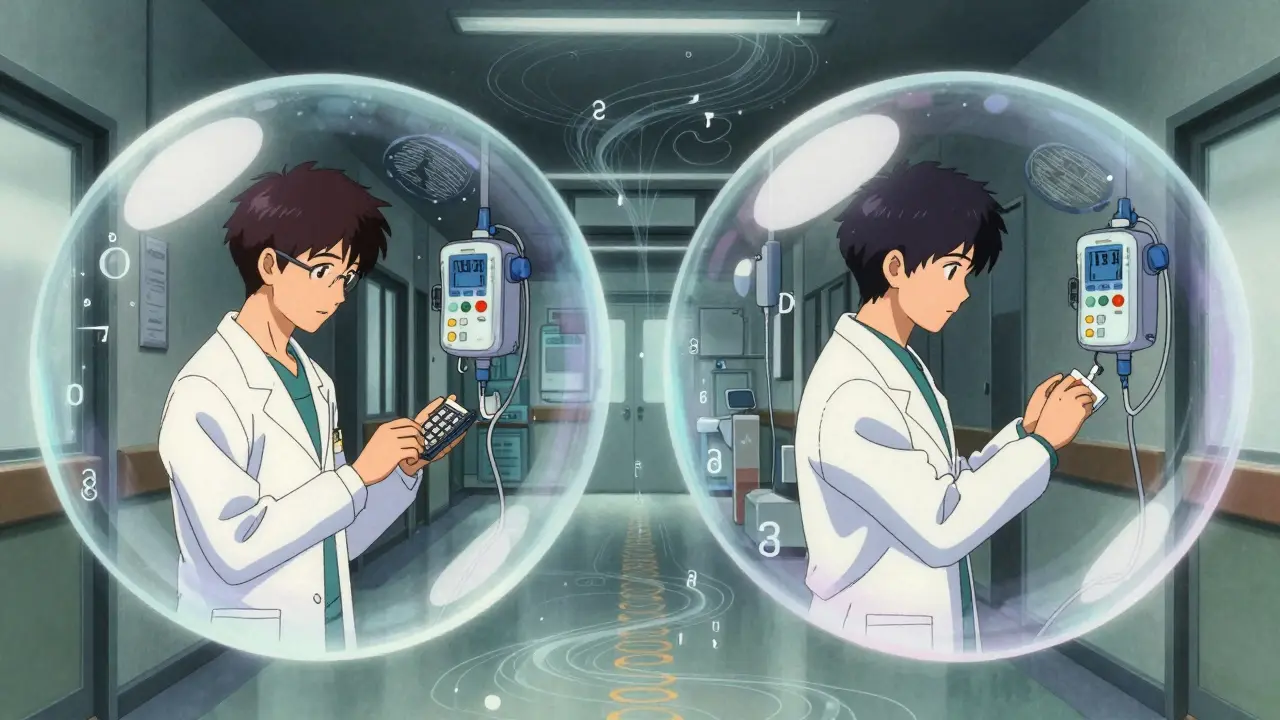
An Independent Double Check (IDC) requires two licensed clinicians to perform the verification separately, apart from each other, and without communicating their expectations beforehand. Here is the correct workflow:
- Separate Verification: Clinician A checks the medication order, calculates the dose, and verifies the pump settings alone. Clinician B does the exact same thing, independently, looking at the original order and the physical medication/pump.
- No Bias: Clinician A should not say, "I put it at 10ml/hr, can you sign off?" Instead, they should ask, "Can you verify the settings?" This prevents the second clinician from simply agreeing with the first.
- Comparison: Only after both have completed their independent checks do they compare results. If there is a discrepancy, neither administers the drug until the error is resolved.
- Documentation: Both clinicians must electronically sign the Medication Administration Record (eMAR). This creates a legal and safety audit trail.
The VHA Directive 1195, issued in October 2024, explicitly defines this process. It emphasizes that the second clinician must ensure clinical appropriateness in the context of the patient’s plan of care, not just match numbers on a screen.
The Five Rights: What Exactly Are You Checking?
When performing an IDC, you are verifying five critical elements. Missing any one of these invalidates the check.
- Right Patient: Verified through two forms of identification (e.g., name and date of birth). For unconscious patients, use wristbands and room numbers carefully.
- Right Medication: Match the drug name on the vial/bag to the prescription. Watch out for look-alike/sound-alike names (e.g., hydralazine vs. hydroxyzine).
- Right Dose: Verify the strength and total amount. For infusions, calculate the mg/kg/min or ml/hr independently.
- Right Route: Confirm the administration method. Never push potassium IV; it must be diluted and infused. Ensure the port is correct.
- Right Time: Align with the ordered frequency. For continuous drips, this means verifying the start time and ensuring no overlap with previous doses.
Technology vs. Human Checks: The Modern Approach
Is the human double check still relevant in 2026? Yes, but its role is evolving. The ISMP has cautioned against overusing manual IDCs because they are labor-intensive and prone to fatigue-based errors. Instead, they advocate for a risk-based approach combined with technology.
Smart pumps with Dose Error Reduction Systems (DERS) are now standard in many large health systems. These pumps have hard limits that prevent programming rates above safe thresholds. When a smart pump flags an error, then a human double check is triggered. This hybrid model reduces high-alert medication errors by 63%, compared to 42% for manual checks alone, according to ECRI’s 2023 analysis.
However, technology is not a silver bullet. Smart pumps can be bypassed with override codes. AI-assisted verification tools are currently in pilot programs at academic medical centers, but they are not yet widespread. Until then, the human eye remains the final safeguard, especially for complex scenarios like pediatric chemotherapy or renal replacement therapy solutions.
Overcoming Workflow Challenges
We know the theory. We know the rules. So why do errors still happen? Often, it’s due to workflow pressures. Nurses report being rushed, leading to "quick sign-offs." Staffing shortages mean a second qualified clinician isn’t always available during emergencies.
To combat this, successful institutions implement specific strategies:
- Dedicated Time: Mayo Clinic includes IDC time in staffing calculations. Recognizing that a double check takes 2-3 minutes allows managers to schedule appropriately.
- Clear Protocols: Ambiguity kills safety. WVU Medicine’s protocol specifies exactly which 10 categories require IDCs. If it’s not on the list, it doesn’t need a double check. This reduces alert fatigue.
- Training Competency: Providence Health System requires a 2-hour competency module with a 95% passing rate. Annual refreshers keep skills sharp.
- Leadership Support: Culture matters. When leaders emphasize safety over speed, staff feel empowered to stop the line if a check feels rushed.
If you’re struggling with compliance, look at your data. The ASHP recommends identifying which medications drive the most errors in your specific unit. Tailor your IDC requirements to those local pain points rather than applying a blanket rule everywhere.
Regulatory Landscape and Future Trends
The pressure to get this right is coming from regulators, not just internal safety officers. The Joint Commission’s National Patient Safety Goal NPSG.01.01.01, effective January 1, 2024, mandates that accredited organizations identify high-alert medications and implement specific safeguards. CMS Conditions of Participation also require systems for safe medication use.
Looking ahead, the trend is toward precision. The High-Alert Medication Safety Coalition, formed recently by ISMP, ASHP, AHA, and The Joint Commission, is working on standardized national protocols. We expect to see more risk-stratified approaches-stricter checks for vulnerable patients (e.g., those with renal impairment) and fewer for stable adults on low-risk protocols.
By 2028, ECRI predicts a 40% reduction in manual double checks as technology matures. But for now, your ability to identify high-alert medications and perform a true independent double check is a vital skill. It’s not just about following rules; it’s about protecting lives.
Do all high-alert medications require a double check?
No. The ISMP advises against universal application. Manual independent double checks should be reserved for the highest-risk tasks, such as IV insulin, heparin infusions, and chemotherapy. Other high-alert meds may be managed with technological safeguards like smart pumps or forcing functions.
What is the difference between a witness check and an independent double check?
A witness check involves one person performing the task while another observes. An independent double check requires two clinicians to perform the verification separately and privately before comparing results. IDCs are significantly more effective at catching errors.
Which organizations maintain the list of high-alert medications?
The Institute for Safe Medication Practices (ISMP) maintains the primary list for acute care settings, updated biennially. Other bodies like the American Society of Health-System Pharmacists (ASHP) and the Veterans Health Administration (VHA) also publish guidelines and directives.
How long does an independent double check take?
A proper IDC typically adds 2 to 3 minutes per medication administration. While this seems small, it adds up. Successful hospitals build this time into staffing models to prevent rushing.
Can smart pumps replace human double checks entirely?
Not yet. While smart pumps with DERS reduce errors significantly, they can be overridden. Human verification remains essential for complex dosing, patient-specific factors, and situations where technology fails or is unavailable.