

If you find yourself forgetting pills or skipping doses despite knowing it’s essential, you aren’t alone. Statistics from the National Institutes of Health suggest that approximately 50% of patients with chronic illnesses fail to stick to their prescribed regimens. This isn't usually because people don't care about their health. It often comes down to how our brains process routine tasks versus one-off decisions. The modern framework for fixing this was significantly advanced by the World Health Organization's 2003 report, which established that Medication Adherence is influenced by complex factors including social economy, healthcare systems, and patient mindset. When we rely solely on willpower, we set ourselves up for failure. Your brain prefers patterns that require zero energy. Transforming medication-taking from a conscious effort into automatic behavior requires a systematic application of behavioral science. We’re going to look at specific tricks that have shown measurable success, based on data showing that behavioral interventions can improve adherence rates by an average of 15.7% compared to standard care.
The Willpower Trap and Automaticity
Most people try to solve missed doses with reminders to "remember better." But cognitive load is real. Between work, childcare, and household management, there is no mental bandwidth left to constantly monitor a pill bottle. Research shows that when interventions target intentional non-adherence versus unintentional non-adherence differently, results jump significantly. Dr. Naihua Duan noted in a 2022 commentary that effective interventions must tailor approaches to these specific types. The goal here is automaticity. This means the action happens without you having to think about it. For example, if you brush your teeth twice a day, that action is almost on autopilot. By attaching a new behavior to an existing strong neural pathway, you bypass the decision-making fatigue. You stop asking "should I take my medicine right now?" and simply do it because you've just done something else that acts as a trigger.
Habit Stacking Techniques
Habit Stacking is perhaps the most effective psychological tool for this problem. This technique involves linking your medication to an activity you already perform with near-perfect consistency.
- Coffee Trigger: If you drink coffee every morning, place your morning pills right next to your mug or kettle. You cannot make the coffee without seeing the bottle.
- Tv Time: Many people watch news or a show at the same time. Take your afternoon dose exactly when the remote is picked up.
- Toothbrush Pairing: For evening doses, keep the meds in the bathroom cabinet directly above the sink. Brushing teeth is almost universal; the physical proximity makes missing a dose harder.
Designing Your Environment
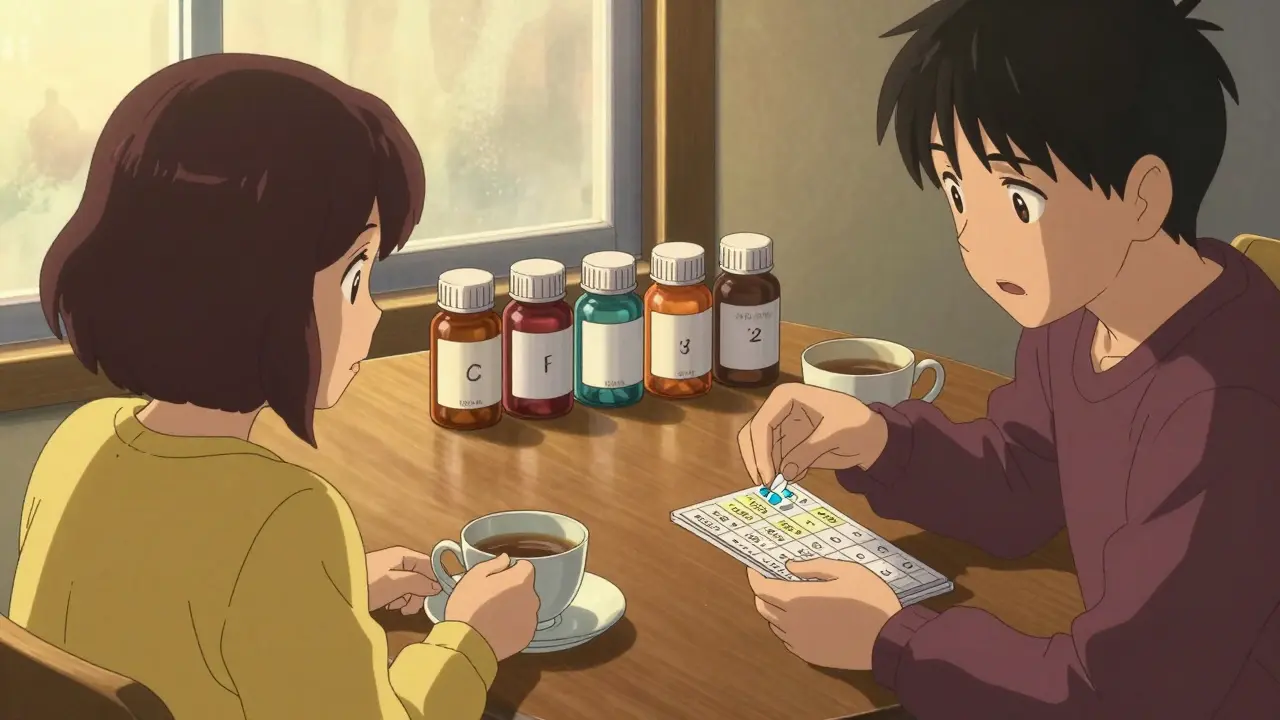
Your surroundings dictate your actions more than your intentions do. If you keep medications hidden in a deep cupboard or a bag that goes into the coat closet, you create friction. Friction is the enemy of habit formation. Instead, you want to lower the barrier to entry. Visual cues play a massive role here. You might use a weekly pill organizer. While a 2021 study in the Journal of Clinical Pharmacy and Therapeutics suggested pill organizers alone showed modest improvements (8.4%), combining them with environment design changes the result. If you leave the organizer on top of the fridge door or next to the keys, you interact with it multiple times a day. Consider the layout of your medicine cabinet. Are the prescriptions you need today buried under old ones? A rule of thumb used by pharmacy teams is to rotate stock frequently, ensuring the current month's supply is front-and-center. If you have to search for what you need, you are less likely to grab it when distracted.
| Strategy | Adherence Improvement Rate | Best Used For |
|---|---|---|
| Smartphone Reminders | 28.7% Increase | Daily high-intensity routines |
| Weekly Pill Organizers | 27% Reduction in Missed Doses | Elderly populations, multi-drug regimens |
| Single-Pill Combinations | 26% Increase | Polypharmacy (taking many drugs) |
| Auto-Refill Programs | 33.4% Continuity Boost | Preventing gaps in supply |
Technology-Assisted Solutions
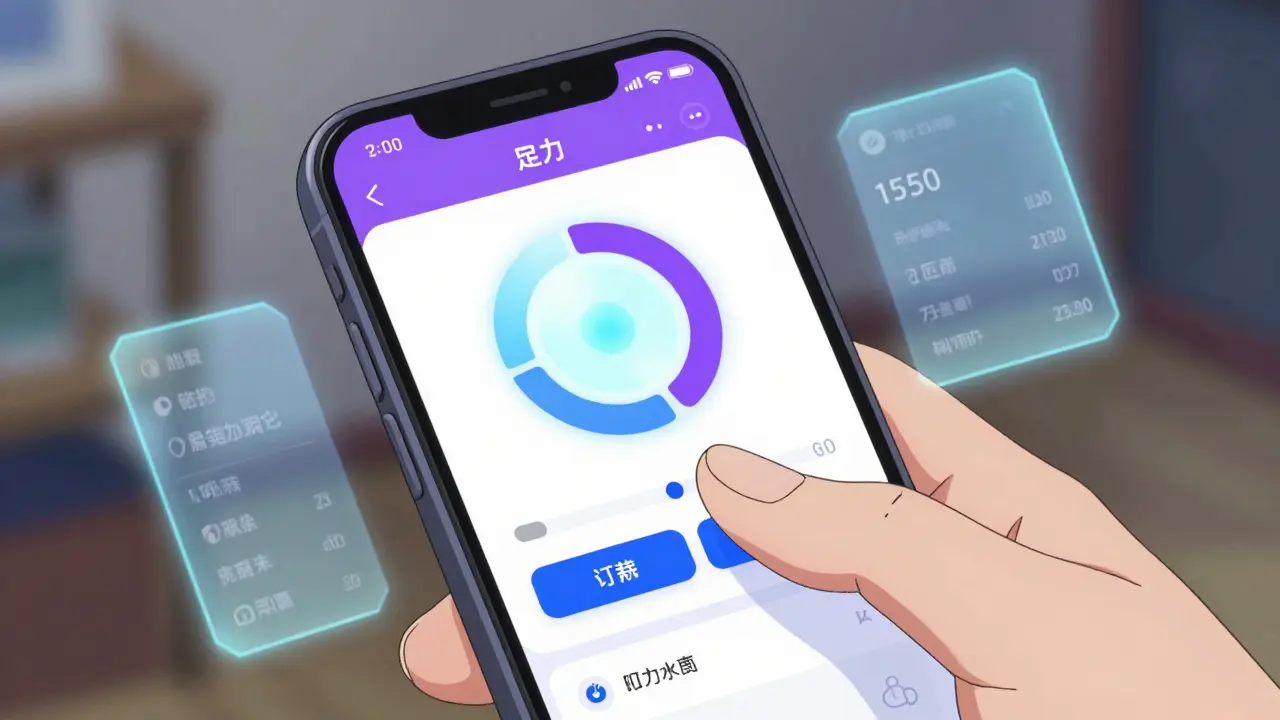
Digital tools have evolved beyond simple alarms. In 2021, a meta-analysis in JMIR mHealth and uHealth involving over 12,000 participants showed smartphone-based reminders increased adherence by 28.7%. However, not all alerts work equally. Generic notifications that you swipe away are useless. You need customization. Look for apps that allow customizable reminder timing. Some allow you to log intake visually, which gives you immediate feedback. A feature called "visual progress display" has been linked to a 23.7% improvement in tracking. This taps into the gamification of health-seeing a streak counter build up gives a dopamine hit that reinforces the behavior. For those managing serious conditions, ingestible sensors paired with mobile apps are becoming a reality. Systems like Proteus Discover, referenced in JAMA Internal Medicine in 2023, improved adherence in heart failure patients by 34.7%. These systems confirm the pill was actually swallowed, removing the uncertainty of "did I take that yet?" If you have a smartphone, ensure it is fully charged and stays close to you, or invest in a dedicated smart dispenser that connects to Wi-Fi to alert family members if a dose is missed.
Handling Mental Barriers
Sometimes the issue isn't forgetfulness; it's resistance. You know you should take the pill, but you feel reluctant. Maybe it causes side effects, or you simply resent being dependent on it. This is known as intentional non-adherence, and it requires different tactics. Motivational interviewing techniques, as documented in Patient Education and Counseling, demonstrated a 22.1% improvement in adherence across randomized trials. This approach involves identifying intrinsic motivations rather than external pressure. Instead of thinking "my doctor told me to," ask yourself, "how does this help the things I value most?" If you want to walk your dog or attend your grandchildren's graduation without health setbacks, frame the medication as the vehicle to get there. Dr. Deborah S. Hasin highlighted that addressing attitudinal barriers through cognitive-behavioral strategies reduces non-adherence by 31%. If you feel anxious about a dose, schedule it during a calm moment, not when you're rushing out the door. Radical acceptance of the condition helps too. Fighting the fact that you need treatment burns energy that could be used to build the habit. Accepting the regimen allows you to focus on making it easier.
Social Support Systems
We rarely live in isolation. Leverage your network. A 2018 study showed team-based interventions where physicians, pharmacists, and nurses delivered consistent messages achieved 68% adherence rates compared to 49% with fragmented care. In your home, you can mimic this team dynamic. Leave a note for your partner: "Please remind me at 9 AM." Ask a family member to join the routine; maybe they drink tea while you take your meds, creating a shared ritual. Additionally, enroll in pharmacy auto-refill programs. This removes the burden of remembering to reorder. If you run out of pills, the habit chain breaks immediately, often resulting in a permanent lapse. The research indicates auto-refill programs improve continuity by 33.4%. For specialized populations, such as minoritized youth or those with psychiatric disorders, tailored consultations that involve family systems have shown 37.2% greater adherence. Don't be afraid to ask your support system to audit your routine occasionally to spot bottlenecks.
Overcoming Travel and Life Changes
Habits are fragile when the routine shifts. Holidays, business trips, or moving homes disrupt the environmental cues you worked hard to build. To prepare for travel, pack your medication in your carry-on luggage before you even leave the house. Always label the bottles clearly to comply with security regulations. During travel, set a phone alarm that syncs with the time zone of your destination, not your origin. If you switch medications or dosages, update your stack immediately. If you move the pill box to a new cabinet, update the habit link. This flexibility prevents regression. Even long-term solutions exist for those who struggle immensely. Long-Acting Injectable (LAI) medications represent a structural behavioral solution that bypasses daily adherence requirements entirely. Studies in Schizophrenia Bulletin showed LAIs reduced non-adherence by 57% compared to oral medications for certain conditions. Discuss options like this with your GP if daily oral habits remain unmanageable.
Maintaining Momentum Long-Term
Building the initial habit is only half the battle; keeping it is the other half. Track your progress for the first three months. Write it down or use an app. Once the streak hits 60 days, the neural pathways become stronger, and you may rely less on reminders. Periodically review the regimen with your pharmacist. Sometimes, switching to once-daily formulations from multiple times a day is possible. Simplifying medication regimens through dose consolidation increased adherence rates by 26% in a 2011 meta-analysis. Remember that perfection isn't the goal. Missing a dose happens. The key is to not let one slip turn into a week-long gap. If you forget, take it as soon as you remember, but never double up unless specifically advised. Resume the stack and continue forward.
What is the fastest way to form a medication habit?
The fastest method is habit stacking. Link your medication time to an existing non-negotiable habit like brushing your teeth or drinking morning coffee. This leverages existing neural pathways rather than trying to build a new memory from scratch.
Can technology replace pill boxes?
For many, yes. Smartphone apps with customizable reminders have shown a 28.7% improvement in adherence. However, analog tools like weekly pill organizers still reduce missed doses by 27%, especially for older adults or those prone to phone distractions.
Why do I forget even though I know it's important?
It usually comes down to cognitive load. When you are busy or stressed, your brain prioritizes immediate survival tasks over maintenance tasks like pill-taking. Environmental cues help bypass this by making the action automatic.
What if I resist taking the medication mentally?
Mental resistance is distinct from forgetting. Try using motivational interviewing techniques to identify personal barriers. Focus on the benefits that align with your values, such as staying active for hobbies or family events.
Does auto-refill help with sticking to the plan?
Yes significantly. Auto-refill programs improve continuity by 33.4% by ensuring you never run out of medication, eliminating the friction of placing a new order before you need it.
Should I combine multiple strategies?
Research supports it. The ADAPT program showed that integrating motivational interviewing with behavioral techniques achieved 78% adherence rates. Using multiple methods like apps plus organizers creates safety nets.






This piece really digs into the cognitive architecture behind habit formation. We often overlook the friction involved in daily compliance behaviors. The concept of automaticity is key when discussing neurological conditioning. Most folks struggle because they rely on executive function rather than associative learning. Linking a pill intake to an existing anchor behavior reduces the metabolic cost of decision making. You see this clearly when analyzing the data from behavioral economics studies. It shifts the locus of control from internal willpower to external cues. Friction reduction in the physical environment cannot be overstated either. If you hide the meds in a cupboard you defeat your own success metrics. Visual proximity acts as a heuristic trigger for the basal ganglia. Digital tools help but analog consistency is often more robust. Smartphone apps have their place in the gamification strategy though. Seeing a streak counter builds a dopamine reward loop effectively. Ultimately the goal is to remove the cognitive tax entirely. When action becomes automatic the risk of attrition drops significantly.
OMG YES!!! THIS IS EXACTLY WHAT WE NEED HEAR TODAY!!!!!!! BEHAVIORAL TRICKS ARE THE ONLY WAY TO WIN!!!!! STOP RELEANCING ON WILLPOWER ALONE!!!!!!!
Great breakdown of the concepts here :) I think cultural differences matter for what triggers work best for people :) Maybe breakfast habits vary wildly depending on where you live :) Hope everyone finds something that clicks :) Stay positive everyone :)
big pharma wants u addicted to systems not healthy habits they profit from failure so ignore this BS
Such a cynical take on healthcare delivery systems honestly pathetic analysis of reality ignores genuine patient struggles completely invalid argument structure frankly speaking ridiculous conclusion reached
You literally do not care about your own life if you skip meds 😡🤮 Health is a moral obligation not optional choice 🚫😤 Stop being lazy and take your pills 💊👉💅
I understand the frustration but pushing shame onto patients does not help anyone :) Boundaries are important for self respect :) Kindness goes further than judgmentalism :) Thanks for sharing your thoughts :) :)
i thnk its abt how we feel inside not just outside things we cant blame ourselves for struggling becuz stress is real wth sometimes brain just fails us :( thnk about kindness
Totally agree here 🙌 staying kind to yourself helps the process so much 💪 health wins when you rest 🧠 love this perspective ❤️ keep going friends 🏆🌟
Just stack your meds with brushing teeth every single morning without fail
Discipline is non-negotiable for survival mechanisms in modern society. Reliance on suggestion is insufficient for clinical stability requirements. You must enforce the protocol.