
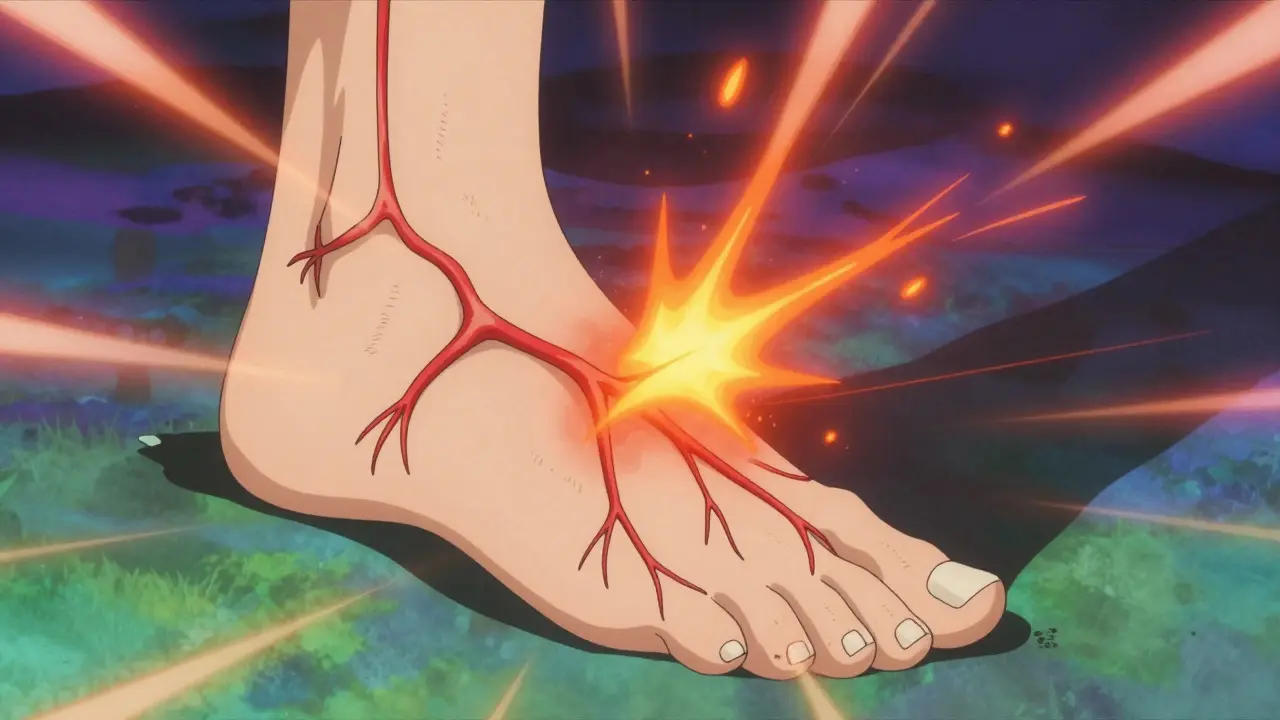
Every year, millions of people with diabetes face nerve damage that causes burning, tingling, or sharp pain. This is diabetic neuropathy pain, and it’s not just discomfort-it can lead to serious complications like foot ulcers and infections if not managed properly. While there’s no cure for nerve damage from diabetes, effective treatments exist to reduce pain and prevent further harm. The key is using the right medications and foot care practices tailored to your needs.
Understanding Diabetic Neuropathy Pain
Diabetic neuropathy happens when high blood sugar damages nerves over time. About 50% of people with diabetes develop some form of nerve damage, and 10-26% experience painful symptoms. The pain often starts in the feet and hands, feeling like needles, burning, or numbness. Without proper care, this can lead to foot ulcers, infections, or even amputations. The American Diabetes Association warns that 15% of neuropathy patients develop foot ulcers within five years. Early treatment is critical to slow progression and protect your feet.
FDA-Approved Medications for Pain Relief
The FDA has approved four specific medications for diabetic neuropathy pain. Each has unique benefits and side effects. Let’s look at them closely:
duloxetine is a serotonin-norepinephrine reuptake inhibitor (SNRI) approved for diabetic neuropathy pain at 60mg daily. It reaches steady state in three days and helps with both pain and depression, which affects 25-33% of neuropathy patients. Generic versions cost about $15.59 for 90 capsules. Common side effects include nausea and dry mouth. For many, this is the first choice because of its effectiveness and lower cost compared to other options.
pregabalin (Lyrica) is an anticonvulsant that starts at 75mg daily and increases to 150mg if needed. It peaks in the blood within 1-1.3 hours but costs $378.99 for 90 capsules. About 30% of users report dizziness, making driving unsafe. Despite the high cost, it’s widely used because of strong research backing-eight major studies confirm its effectiveness for pain and sleep issues.
8% capsaicin patch (Qutenza) is applied directly to painful feet. It works by depleting pain signals in nerves. A single 60-minute application by a healthcare provider can reduce pain by up to 70%. However, the process itself is painful for many, and it’s only for foot pain. Patients often say it’s worth the discomfort for long-lasting relief.
tapentadol extended-release (Nucynta ER) is an opioid used when other treatments fail. Starting dose is 50mg twice daily, but it carries addiction risks. The CDC strongly discourages opioids for chronic pain due to high misuse rates. Only use this under strict medical supervision.
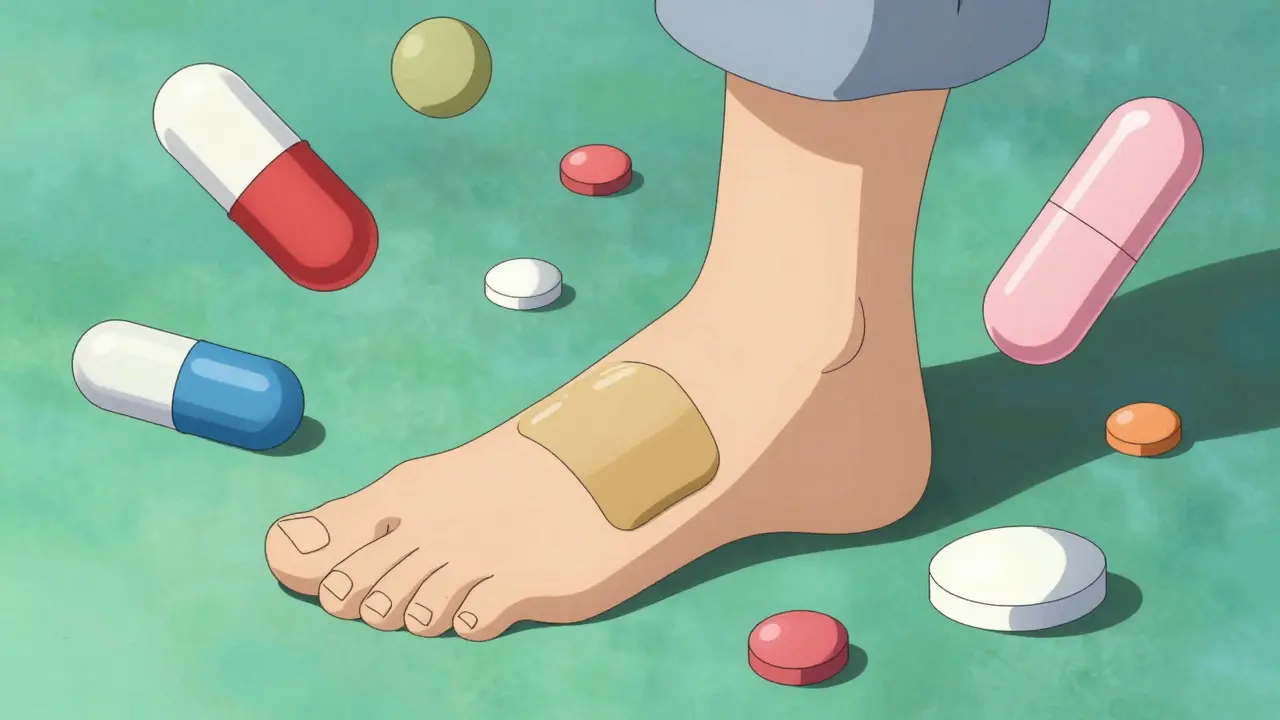
Off-Label Medications and Their Use
Many doctors prescribe medications not specifically approved for neuropathy but proven effective. These options are often more affordable:
- gabapentin (Neurontin) costs just $4 for 90 capsules. Doses range from 300-3600mg daily. It’s the cheapest option but causes drowsiness and swelling in 65% of users. Many start with this before moving to other drugs.
- amitriptyline is a tricyclic antidepressant taken at 10-100mg nightly. It’s effective for pain and sleep but causes dry mouth in 57% of users and constipation in 40%. The American Academy of Family Physicians (AAFP) notes it’s a first-line option despite not being FDA-approved for neuropathy.
- tramadol is a weak opioid used as a third-line option. The NHS recommends it only when other treatments fail. Doses range from 50-300mg daily, but addiction risks make it a last resort.
Drug effectiveness varies. Clinical studies show gabapentinoids reduce pain by 30-50% in most patients. Duloxetine has similar results but also helps with depression. Opioids like tramadol work for some but carry serious risks. Always discuss options with your doctor based on your health history.
Practical Foot Care Essentials
Proper foot care is non-negotiable for diabetic neuropathy. Here’s what to do every day:
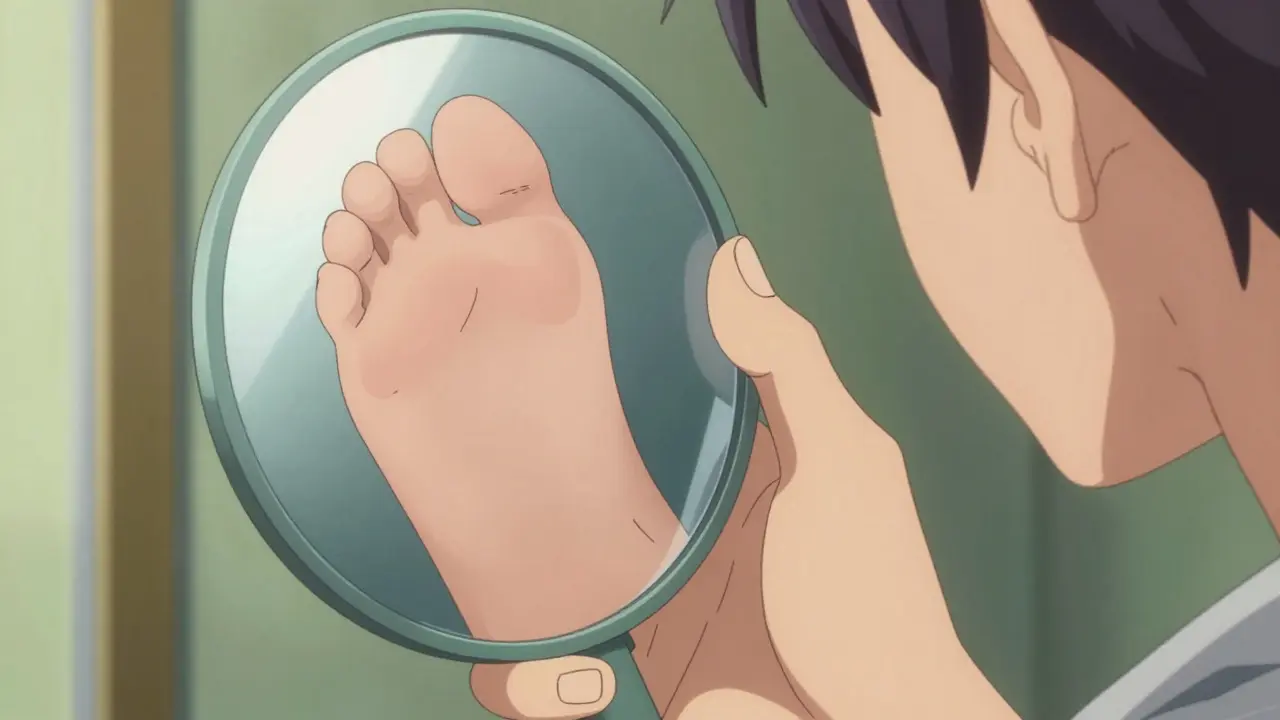
- Check your feet daily for cuts, blisters, redness, or swelling. Use a mirror if you can’t see the bottom of your feet. The American Diabetes Association says this simple step prevents 85% of amputations.
- Wash feet with warm water (not hot) and dry thoroughly, especially between toes. Moisture buildup leads to fungal infections.
- Apply moisturizer to keep skin soft, but never between toes. Dry skin cracks easily, letting bacteria in.
- Wear properly fitted shoes and seamless socks. Check shoes for rocks or debris before putting them on. Ill-fitting shoes cause blisters that turn into ulcers.
- Trim toenails straight across to avoid ingrown nails. Never cut them too short or use sharp tools.
Annual foot exams with a 10g monofilament test are essential. This tool checks for loss of sensation-a key sign of nerve damage. If you can’t feel the filament, it means your feet need extra protection. The NHS mandates this test for all diabetic patients, and 78% of certified diabetes educators use it in care plans.
Managing Side Effects and Costs
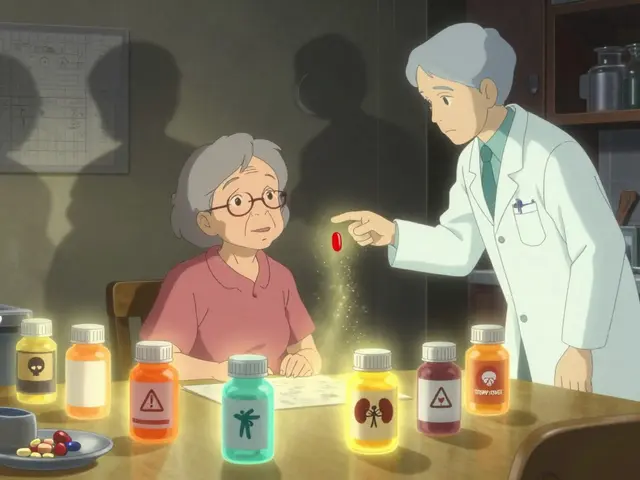
Side effects are common but manageable. For pregabalin, start with a low dose and increase slowly to reduce dizziness. If duloxetine causes nausea, take it with food. Gabapentin’s drowsiness can be managed by taking it at bedtime. Cost is a big factor: generic duloxetine costs $15.59 for 90 capsules, while pregabalin runs $378.99. Many insurance plans cover duloxetine more easily. Ask your doctor about patient assistance programs-pharmaceutical companies often offer discounts for low-income patients.
Also, watch for red flags. If you notice foot sores that don’t heal in 48 hours, redness, swelling, or sudden numbness, see your doctor immediately. These could signal infections or worsening nerve damage. Early intervention prevents serious complications.
When to See a Doctor
Don’t wait for symptoms to worsen. Seek help right away if:
- Your feet have sores, blisters, or ulcers that don’t heal within a few days
- You notice redness, warmth, or swelling in your feet (signs of infection)
- Pain suddenly gets worse or spreads to new areas
- Your foot shape changes (like Charcot foot, where bones weaken and collapse)
Regular check-ups with your healthcare team are crucial. They can adjust medications, monitor blood sugar control, and catch problems early. The American Academy of Neurology recommends reviewing treatment every 4-8 weeks to ensure it’s working. If one medication fails, there are alternatives-don’t give up.
Can diabetic neuropathy be reversed?
No, current treatments cannot reverse existing nerve damage. However, managing blood sugar levels and using medications can slow progression and reduce pain. The American Diabetes Association emphasizes that early intervention is key to preventing further damage. Keeping blood sugar in target range reduces the risk of new nerve damage by 60%.
What’s the most effective medication for neuropathy pain?
Effectiveness varies by individual. Clinical studies show duloxetine and pregabalin reduce pain by 30-50% in responsive patients. Duloxetine is often preferred for its lower cost and dual benefit for depression. Gabapentin is a budget-friendly option but may cause more drowsiness. Your doctor will consider your specific symptoms, other health conditions, and cost to find the best fit.
Why is foot care so important for diabetic neuropathy?
Nerve damage reduces sensation in your feet, so you might not feel cuts or blisters. Without proper care, these small injuries can turn into serious infections or ulcers. The American Diabetes Association states that 85% of amputations start with foot ulcers. Daily foot checks and professional exams prevent these complications.
Can I use over-the-counter pain relievers for neuropathy pain?
No. Common OTC pain relievers like ibuprofen or aspirin don’t work for nerve pain and can harm your kidneys. The WebMD warns NSAIDs increase acute kidney injury risk by 2.1-fold in diabetics. Only use medications prescribed by your doctor for neuropathy pain.
How long does it take for neuropathy medications to work?
Most medications take 4-8 weeks to show full effects. Duloxetine reaches steady state in three days, but pain relief builds over weeks. Pregabalin may work faster, with some patients noticing relief in 48 hours. Your doctor will adjust doses over time to find the right balance between effectiveness and side effects.





Checking feet daily is crucial
I've been doing it for years and it's made a huge difference
Duloxetine helped me manage the pain but had to take with food
Capsaicin patch is tough but worth it for long term relief
I've been trying pregabalin but the cost is insane 😭
Anyone know if there's a cheaper genaric?
Also, my doctor said to use capsaicin patch but it's so painfull 😅
Maybe I'll try gabapentin instead.
Thx for the tips!
FDA approved meds are a scam Big Pharma controls everything The real cause is 5G radiation Natural remedies like alpha-lipoic acid work better Check the studies they don't want you to see They hide the truth
US drugs are way better than other countries' options 😤
Why should we use foreign meds?
The FDA has the best standards.
Anyone who says otherwise is just anti-American.
This post is full of lies 😠.
The real solution is just cutting carbs.
All this medication nonsense is a scam.
I have reviewed multiple peer-reviewed journals on this topic
The current guidelines are woefully inadequate
The FDA's approval process is compromised by pharmaceutical lobbying
For proper management, one must adhere strictly to the European Society of Neurology protocols, which are far more rigorous
Also, your foot care advice is simplistic and ignores the latest research on neuroregeneration
Combining duloxetine with foot care really helps
It's important to work with your doctor to find the right balance
Some people respond better to gabapentin, others to pregabalin
Everyone's different, so don't give up if one doesn't work
Also, managing blood sugar is key to slowing progression
Daily foot checks prevent 85% of amputations. Must do this.
In my country, we use traditional herbal remedies alongside Western medicine
It's important to integrate different approaches for holistic care
However, consulting a healthcare provider is crucial to avoid interactions
Also, foot care practices vary by culture but the basics remain the same
I've been using gabapentin for years
It's a lifesaver
But don't forget the foot care
#JustSaying
My grandma in Mexico uses aloe vera on her feet
Works great! But maybe chek with doc first 😊
Also, the foot care tips are spot on
Thanks for sharing
Check feet daily. Life-saving.
Medications have serious side effects
People die from duloxetine
Why isn't there more warning?
The FDA should ban these medications
I've seen patients with severe complications from duloxetine