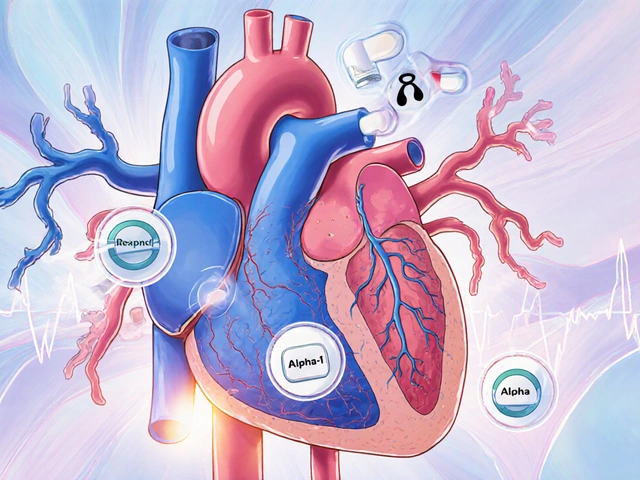
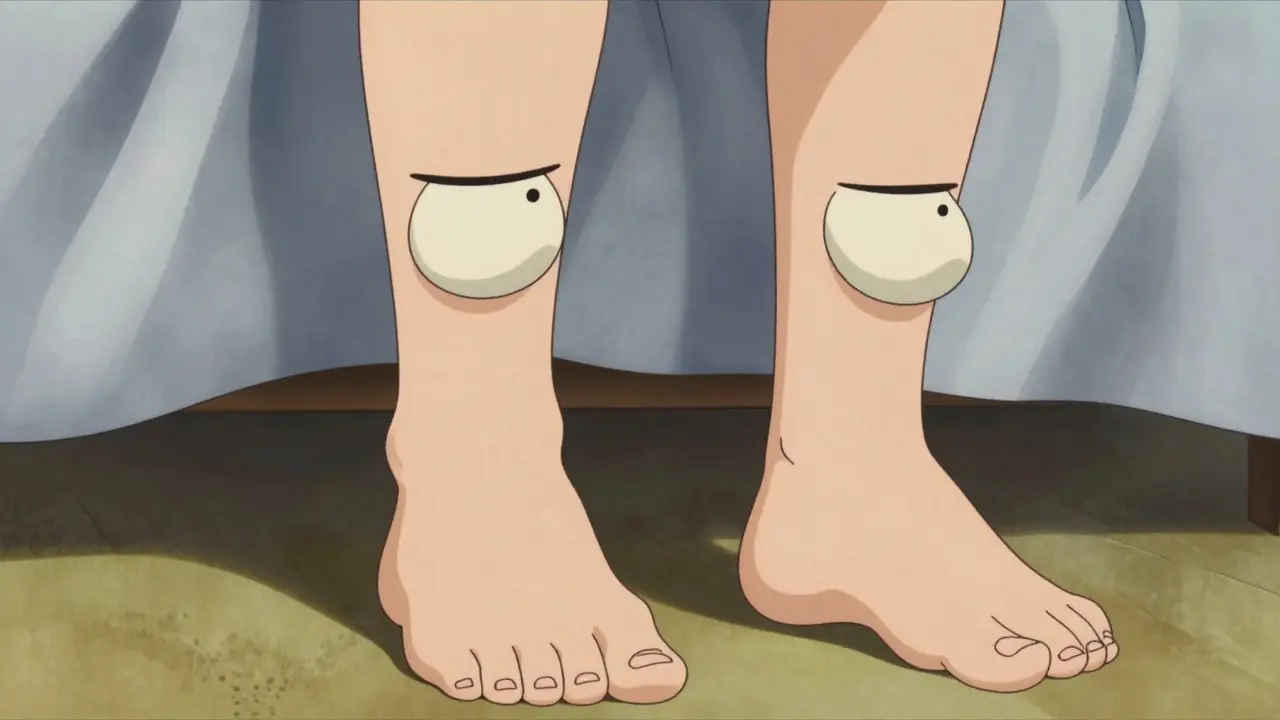
Waking up with puffy eyelids or finding that your shoes don't fit by the end of the day is a frustrating reality for many people dealing with kidney issues. This swelling, known as edema in CKD is the accumulation of excess fluid in body tissues because the kidneys can't remove enough sodium and water from the bloodstream. If you're in stage 3, 4, or 5 of chronic kidney disease, your kidneys struggle to maintain the delicate balance of salt and water, leading to fluid leaking into your legs, ankles, and sometimes even your abdomen.
Dealing with this isn't just about aesthetics; it's about your heart and lung health. When fluid builds up, it increases the pressure on your system. The goal isn't just to "lose water weight," but to reach a state called euvolemia-where your body has exactly the amount of fluid it needs without overloading your organs. While the process can feel like a constant battle against salt and swelling, a combination of medication, diet, and physical tools can get things under control.
The Role of Diuretics in Fluid Removal
When your kidneys can't do the heavy lifting, medications called diuretics (often called "water pills") step in to force the kidneys to release more sodium and water into your urine. However, not all water pills work the same way, especially as kidney function declines.
For those with an estimated glomerular filtration rate (eGFR) below 30, loop diuretics are the gold standard. These include drugs like furosemide (Lasix), bumetanide, and torsemide. They are powerful because they act on the thick ascending limb of the loop of Henle in the kidney. In severe cases, doctors might push furosemide doses up to 160-320 mg daily. Interestingly, for those with very advanced disease (eGFR below 15), the FDA recently approved intravenous furosemide, which clears fluid 38% more effectively than the oral version because it bypasses the gut, where absorption can be erratic in sick patients.
If your kidney function is a bit higher (eGFR above 30), thiazide diuretics like hydrochlorothiazide are often used. Some doctors use a "sequential nephron blockade," which means combining a loop diuretic and a thiazide. While this is great for stubborn swelling, it's a double-edged sword-it can increase the risk of acute kidney injury by about 23%.
For a few specific cases, like those with heart failure or severe abdominal swelling (ascites), spironolactone is used. This is a potassium-sparing diuretic. Because CKD already makes it hard to get rid of potassium, this drug requires a hawk-eye on your blood tests to avoid hyperkalemia, which can be dangerous for your heart.
| Diuretic Type | Common Examples | Best For... | Typical CKD Context |
|---|---|---|---|
| Loop Diuretics | Furosemide, Torsemide | Heavy fluid removal | eGFR < 30 mL/min |
| Thiazides | Hydrochlorothiazide | Mild to moderate edema | eGFR > 30 mL/min |
| Potassium-Sparing | Spironolactone | Heart failure/Ascites | Requires strict potassium monitoring |
Cutting the Salt: The Foundation of Control
You can take the strongest diuretics in the world, but if you're eating a high-sodium diet, you're essentially filling a bucket while trying to bail it out with a spoon. Salt acts like a sponge, holding onto water in your blood vessels and pulling it into your tissues.
The general rule for CKD patients with edema is to keep sodium under 2,000 mg per day. For those in stages 4 or 5, some specialists push that down to 1,500 mg. To put that in perspective, two slices of commercial bread can hit 400 mg of sodium. A single cup of canned soup can easily blow your entire daily budget with 1,200 mg. The trick is realizing that most of the salt we eat doesn't come from the shaker-it's hidden in processed foods.
It's not just about salt, though; it's about total fluid. In advanced CKD, you may need to limit everything you drink (and things that act like liquids) to 1,500-2,000 mL per day. Keep an eye on "hidden fluids." Watermelon is 92% water, and a cup of yogurt adds about 200 mL to your daily tally. Staying strict with this can actually reduce edema by 30-40% in early-stage CKD without needing extra medication.

Using Compression and Movement to Push Fluid Back
Medication and diet handle the *amount* of fluid in your body, but compression therapy handles *where* that fluid sits. Gravity is your enemy here; fluid naturally pools in your ankles and calves.
Graduated compression stockings (usually 30-40 mmHg) are a game-changer. They apply pressure to the ankles and gradually decrease as they go up the leg, which physically pushes fluid back toward your heart. Using these consistently can reduce leg volume by 15-20% over a month. For those with nephrotic syndrome where stockings aren't enough, intermittent pneumatic compression devices-basically sleeves that inflate and deflate-can be 35% more effective than stockings alone.
But don't just put on the socks and sit still. Movement is medicine. A 2021 review showed that walking 30 minutes a day, 5 days a week, improves edema control by 22% compared to resting. Why? Because your muscles act as a pump for your lymphatic system. If you can, elevate your legs above the level of your heart several times a day to let gravity help you move fluid out of your extremities.

The Balancing Act: Risks and Trade-offs
Managing edema is a tightrope walk. On one side, you have the risk of "volume overload"-where fluid backs up into the lungs (pulmonary edema) or puts too much pressure on the heart. On the other side, aggressive diuresis can cause "over-diuresis," leading to dehydration and a sudden drop in kidney function, known as acute kidney injury (AKI).
There is a real danger in pushing diuretics too hard. In stage 4 CKD, using more than 160 mg of furosemide equivalent daily can increase the risk of hospitalization for AKI by over four times. This is why doctors emphasize a slow and steady approach, targeting a weight loss of about 0.5 to 1.0 kg per day in acute settings. If you lose weight too fast, your kidneys may not have time to adapt to the lower blood volume, and you could actually damage the remaining function you have.
The challenge for most people is the daily grind. It's hard to avoid salt at a restaurant, and compression stockings can be a nightmare to put on when your legs are already swollen. This is why a team approach-having a nephrologist for meds, a renal dietitian for the salt, and a physical therapist for the movement-works so much better. Patients using this multidisciplinary approach see a 75% success rate in controlling edema compared to just 45% with standard care.
Why do my legs swell even though I'm taking water pills?
This usually happens for two reasons: either you're consuming more sodium than the medication can clear, or you have "diuretic resistance." In CKD, the kidneys may become less responsive to the drug. This is often managed by increasing the dose or using a combination of loop and thiazide diuretics to block sodium reabsorption at different points in the kidney.
Is all salt the same when it comes to CKD edema?
Most salt, whether it's table salt or sea salt, is made of sodium chloride. Your body reacts to the sodium, not the source. Avoid "salt substitutes" that use potassium unless your doctor clears them, as people with CKD are at high risk for hyperkalemia (dangerously high potassium levels).
How do I know if I'm taking too many diuretics?
Watch for signs of volume depletion: extreme dizziness when standing up, severe muscle cramps, or a sudden decrease in urine output. If you feel excessively thirsty or confused, you may be over-diuresed, which can lead to acute kidney injury. Always track your daily weight; a sudden drop of more than 1kg a day might be too aggressive.
Can I use compression stockings if I have circulation problems?
You must be careful. If you have severe peripheral artery disease (PAD), compression stockings can actually restrict blood flow further and cause tissue damage. Always have a healthcare provider check your ankle-brachial index (ABI) or circulation before starting high-pressure compression therapy.
What is the "dry weight" my doctor mentions?
Dry weight is your weight without any excess fluid accumulation. It's the target weight where your heart and lungs function best and you have no visible edema. Your doctor uses this as a benchmark to determine how much fluid you've gained between appointments and how to adjust your diuretics.
Next Steps and Troubleshooting
If you're struggling to manage your swelling, try these specific adjustments based on your situation:
- If you can't get the stockings on: Look into "donning aids" (metal frames that hold the sock open) or try lower-pressure wraps first to reduce volume before moving to 30-40 mmHg stockings.
- If you're struggling with salt cravings: Use acids (lemon juice, lime) and herbs instead of salt. The brightness of citrus often tricks the palate into not missing the saltiness.
- If diuretics disrupt your sleep: Take your dose early in the morning. Avoid taking water pills after 4:00 PM to prevent spending the whole night in the bathroom.
- If your weight is fluctuating wildly: Keep a daily log of your weight, blood pressure, and fluid intake. This data is invaluable for your nephrologist to fine-tune your medication without causing an AKI.