
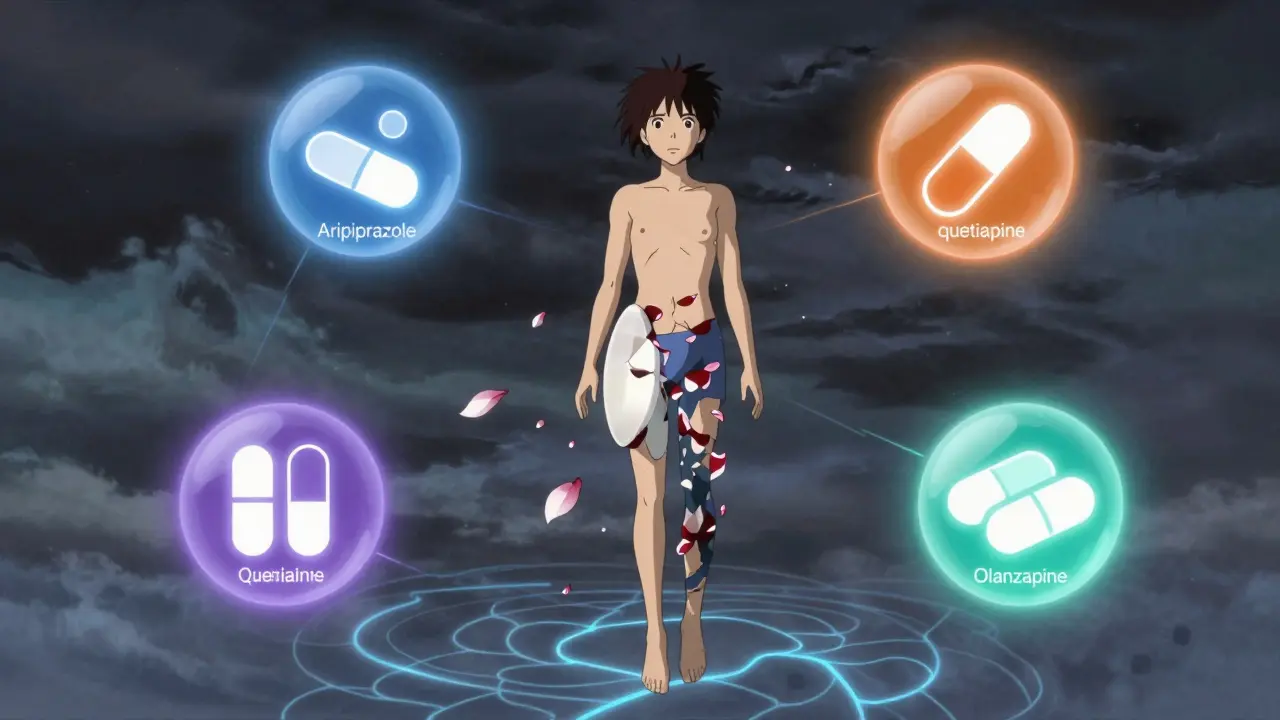
When antidepressants stop working, it’s not just frustrating-it’s life-altering. About 30 to 40% of people with depression don’t respond to two or more standard treatments. This is called treatment-resistant depression (TRD). For these individuals, the usual options-SSRIs, SNRIs, or even switching medications-aren’t enough. The next step isn’t giving up. It’s moving to augmentation and advanced therapies that actually work.
What Counts as Treatment-Resistant Depression?
TRD isn’t just a label. It’s defined by clear criteria: at least two adequate trials of different antidepressants, each taken at the right dose for at least six weeks. The landmark STAR*D trial, which followed nearly 3,000 patients from 2001 to 2006, showed that more than half didn’t respond to the first medication. By the time they tried two, nearly 40% were still stuck. That’s not failure. That’s biology.Many assume if a drug doesn’t work once, it won’t work again. But TRD often means the brain needs a different kind of support-not just more of the same. That’s where augmentation comes in.
Augmentation: Adding to What’s Already Working
Augmentation means adding another medication to your current antidepressant, not replacing it. It’s like adding a second engine to a boat that’s still struggling to move. The FDA has approved four specific agents for this purpose, all backed by solid clinical data.- Aripiprazole (Abilify): Added to SSRIs or SNRIs, it boosts response rates by about 27%. In the VAST-D trial, 24.8% of TRD patients achieved remission with aripiprazole, compared to 15.5% when switching to another drug alone.
- Brexpiprazole (Rexulti): Similar to aripiprazole but with a gentler side effect profile. It’s dosed lower (0.5-3 mg/day) and causes less restlessness.
- Quetiapine extended-release (Seroquel XR): At 150-300 mg/day, it’s one of the most effective augmenting agents. Studies show up to 48% response and 24.5% remission when paired with an SSRI. Sedation is common, but for those with insomnia or agitation, it can be a relief.
- Olanzapine-fluoxetine (Symbyax): A fixed-dose combo. It works well, especially for people with severe depression and anxiety. But weight gain is a real concern-up to 5-7% of body weight over months.
Other agents aren’t FDA-approved for TRD but have strong evidence. Lithium, for example, has been used for decades. Target blood levels are 0.3-0.6 mEq/L. Too low? No effect. Too high? Toxic. Regular blood tests are non-negotiable. Liothyronine (a thyroid hormone) also helps-especially in people with low thyroid function. One meta-analysis found a 2.87 times higher chance of response compared to placebo.
Not all augmentations are created equal. Some, like ziprasidone and mirtazapine, have higher dropout rates due to side effects. Aripiprazole remains the best balance of effectiveness and tolerability. But even then, about 15-25% of people develop akathisia-a feeling of inner restlessness that can be unbearable. Dose reduction or switching helps.
Advanced Therapies: Beyond Pills
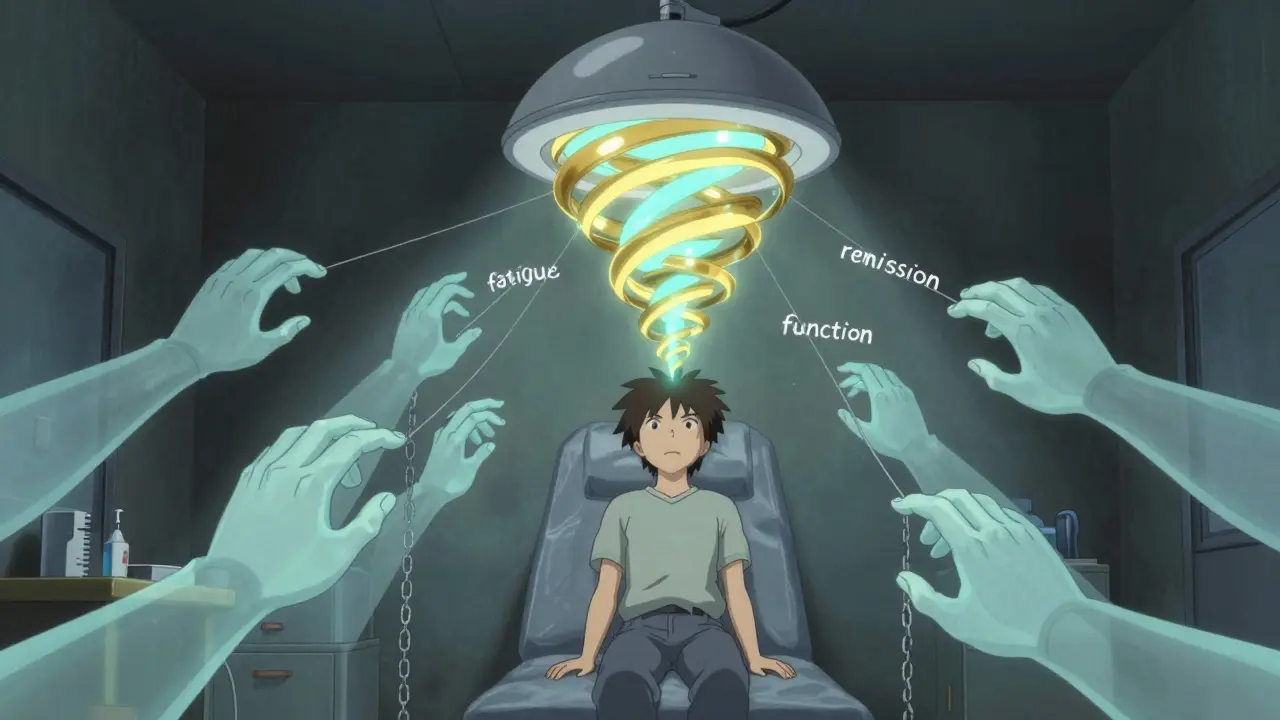
When medications still fall short, it’s time to look beyond chemistry. The brain isn’t just a chemical imbalance-it’s a circuit. And sometimes, circuits need to be reset.Repetitive Transcranial Magnetic Stimulation (rTMS) is now a first-line advanced therapy. Over 50 randomized trials involving more than 10,000 patients confirm its value. It uses magnetic pulses to stimulate underactive areas in the prefrontal cortex. No anesthesia. No memory loss. Just 20-30 minute sessions, five days a week, for four to six weeks. Response rates? 50-55%. Remission? 30-35%. It’s become standard care in clinics across the U.S. and Europe.
Esketamine nasal spray (Spravato) changed everything in 2019. Unlike traditional antidepressants that take weeks, esketamine can lift mood in hours. In the TRANSFORM-2 trial, 70.3% of TRD patients responded within four weeks, compared to 47.5% on placebo. But it’s not simple. You must receive it in a certified clinic. Dissociation-feeling detached from reality-happens in nearly 60% of users. It fades within an hour, but the risk means it’s tightly controlled. It’s not for everyone, but for those who’ve tried everything else, it’s a lifeline.
Repetitive transcranial magnetic stimulation (rTMS) and esketamine are now the two most reliable advanced options. But what about deeper interventions?
Deep Brain Stimulation and Emerging Frontiers
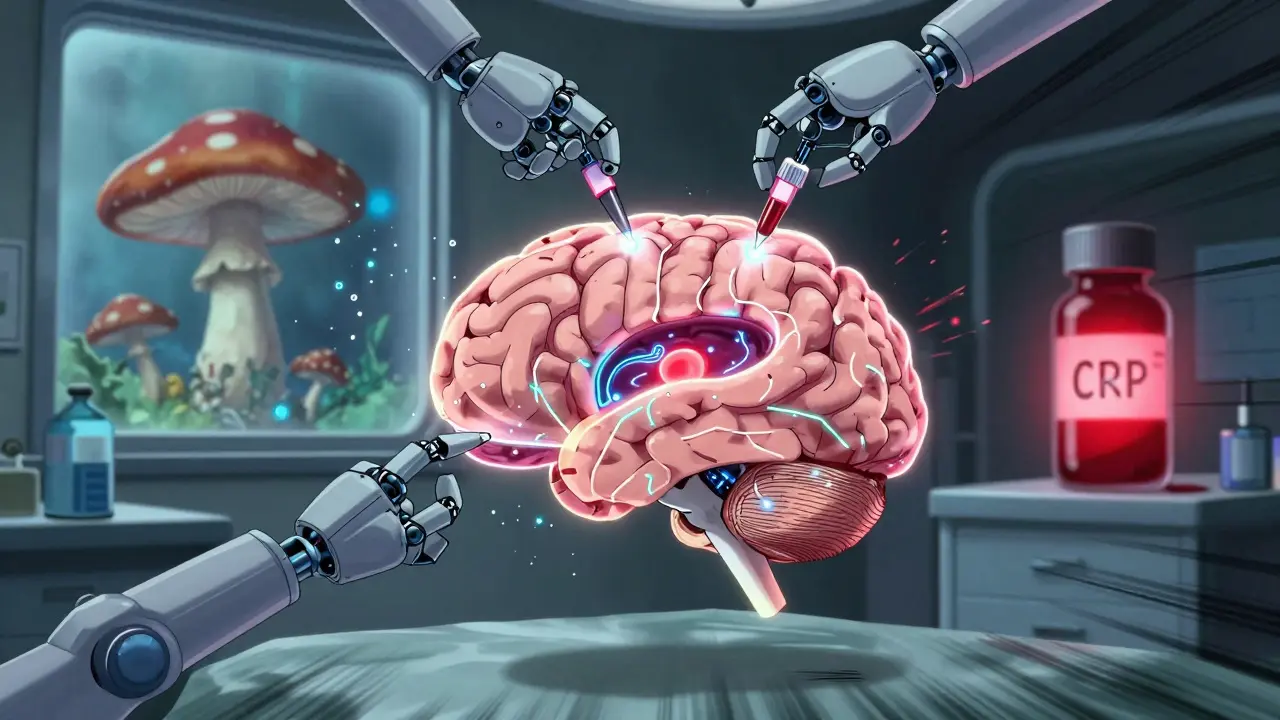
For the rare few who don’t respond to rTMS or esketamine, deep brain stimulation (DBS) is being studied. Electrodes are implanted in the subcallosal cingulate cortex (SCC)-a region linked to mood regulation. One small 2017 study of six patients showed 92% responded after two years. That’s extraordinary. But DBS is still experimental. It requires brain surgery, carries infection and bleeding risks, and isn’t FDA-approved for depression yet.Meanwhile, newer ideas are emerging. Psilocybin-the active compound in magic mushrooms-showed a 71% response rate in a 2020 JAMA Psychiatry trial with just 24 patients. It’s not legal or widely available, but the data is too strong to ignore. Another study in Molecular Psychiatry (2022) found that infliximab, an anti-inflammatory drug used for rheumatoid arthritis, helped TRD patients with high inflammation. Those with elevated CRP levels had a 30.5% remission rate on infliximab versus 13.7% on placebo. This suggests depression isn’t just about serotonin-it’s also about immune activity.
Why Some Treatments Work and Others Don’t
The truth? Not all augmentation strategies hold up. A 2019 meta-analysis in the British Journal of Psychiatry found that only aripiprazole had a clear, small benefit. Others? Not so much. Why? Because depression isn’t one disease. It’s many. One person’s TRD is driven by low energy and fatigue. Another’s is tied to anxiety, insomnia, or inflammation. A one-size-fits-all approach fails.That’s why guidelines from the American Psychiatric Association and CANMAT stress personalization. Your symptom profile matters. If you’re exhausted, modafinil or bupropion might help. If you’re anxious and sleepless, quetiapine or lithium might be better. If you’ve had sexual side effects from SSRIs, bupropion augmentation avoids that. Patient preference isn’t a luxury-it’s part of the treatment plan.
The Real-World Picture
Even with all these options, remission is hard. The EU-NEURD registry, tracking over 1,800 TRD patients in Europe, found only 28.4% achieved remission with standard augmentation. That’s sobering. And the cost? In the U.S., TRD adds $210.5 billion annually to healthcare spending. In Europe, it’s €113.4 billion. These aren’t just numbers. They’re people stuck in cycles of hopelessness.The goal isn’t just to treat depression. It’s to restore function. To help someone get out of bed, go to work, hug their kid, or feel joy again. That’s why we keep pushing forward-with better drugs, smarter devices, and deeper science.
What Comes Next?
The future of TRD treatment lies in precision. Biomarkers-like inflammation levels, genetic profiles, or brain activity patterns-will soon guide choices. Right now, we’re still guessing. In five years, we might know whether a patient will respond to esketamine, rTMS, or a new anti-inflammatory before they even start.For now, the path is clear: If two antidepressants failed, don’t stop. Talk to your doctor about augmentation. Consider rTMS. If you’re eligible, esketamine could be life-changing. And if nothing works yet? Research is accelerating. What’s experimental today might be standard tomorrow.


So we're just supposed to believe that adding antipsychotics to antidepressants is the golden ticket? I've seen people on Abilify turn into zombies who can't sit still but still can't get out of bed. Meanwhile, the real issue? We're treating depression like a software bug you can patch with more code. It's not serotonin. It's not dopamine. It's the fact that we live in a world that grinds people into dust and calls it 'resilience'.
The science here is genuinely promising, but what's missing is the human layer. TRD isn't just a diagnostic category-it's the quiet collapse of someone who used to laugh at sunrise, who once wrote poems in the margins of their notebooks, who held their sibling’s hand through a hospital stay and now can't muster the energy to text back. The medications help, yes. But healing requires more than pharmacology. It needs community, dignity, and time without judgment. We treat the brain like a machine, but it's a garden. You can't force blooms with a hammer.
Let’s not forget that.
In India, we often see depression as a weakness or a lack of faith. But this article reminds me that biology doesn't care about caste, creed, or country. The fact that lithium, a compound used for centuries in Ayurveda, is now scientifically validated as an augmenting agent feels poetic. Science and tradition don't have to be enemies. They can be partners. What matters is whether the person feels seen-not just treated.
Thank you for this thoughtful overview. It gives hope without sugarcoating.
Had a cousin go through TRD. Tried six meds. Got worse. Then rTMS. Six weeks later, she cried while watching a commercial for dog food. Not because it was sad. Because she felt something again. No hype. Just quiet relief. rTMS isn't magic. But it's real. And it's available. More people need to know.
Also, esketamine? Scary as hell. But if you've tried everything and still can't breathe? You'll sit in that clinic chair and take the spray. No questions asked.
So like... we're just gonna slap an antipsychotic on someone because their serotonin's low? Cool. Meanwhile, the guy who wrote this probably has a therapist, a standing yoga class, and a $2000 ergonomic chair. Meanwhile, I'm on Medicaid with three kids and no time to sit still for 30 minutes five days a week. The system is broken. Not the brain.
I’ve been here. Not just once. Twice. Three times. The first time, I thought I was broken. The second, I thought I was lazy. The third, I thought I was a burden. Then I got on aripiprazole. Not because it was perfect. But because it gave me 10% more of myself back. I could shower. I could answer texts. I could look at my daughter without feeling like I was failing her. That’s not a cure. But it’s a lifeline. And I’m not ashamed to say I owe my life to a tiny white pill that makes me feel like a robot half the time. Because the alternative? The silence? The numbness? That’s worse. I’m still here. And I’m not done fighting.
Even if it takes a decade.
Oh sweet baby Jesus, another article that makes TRD sound like a TED Talk. Let me guess-you’ve tried Abilify, got akathisia, then switched to Rexulti, then cried during a Target commercial because you felt something for the first time in years. Yeah. We get it. The real story? The one where you lost your job, your partner left, and your mom said 'pray harder'? That’s the one nobody talks about. But hey, at least your insurance covers rTMS. Lucky you.
ESketamine works. rTMS works. Lithium works. But none of it matters if you can’t afford it. Or if your provider doesn’t know about it. Or if you live in a state where Medicaid won’t touch it. This isn’t science. It’s a privilege. Stop acting like it’s not.
They say psilocybin helps. Cool. But if you live in the US and your doctor won't even talk about it, what's the point? Meanwhile, my cousin's on Seroquel and can't move without a nap. So yeah. We're just swapping one hell for another.
Wish we had better options.
It’s fascinating how we’ve moved from Freud to fMRI, from talk therapy to transcranial magnetic stimulation. But the core question remains: Why does the mind suffer? Is it chemical? Environmental? Spiritual? Or is it the unbearable weight of existing in a world that values productivity over presence? The treatments listed here are tools. But they don’t answer the why. And perhaps, in the end, the why is what we’re really trying to heal.
India has been treating mental health with yoga, meditation, and Ayurveda for 5000 years. Why are Western doctors only now 'discovering' that the mind-body connection matters? We didn’t need rTMS or esketamine. We had wisdom. But no one listened. Now they want to patent it and sell it for $10,000 a session. Classic. The West always waits until it’s profitable to care.
Wait-so you’re telling me that depression is caused by INFLAMMATION?! And that a drug used for ARTHRITIS can cure it?! This is obviously a BIG PHARMA plot to sell more drugs. They’re hiding the truth: depression is caused by 5G towers, fluoride in the water, and the government’s secret mind-control program. I’ve been researching this for 17 years. The real cure? Cold showers, raw garlic, and refusing to use social media. But no one wants to hear it. They’d rather give you a nasal spray and call it science.
Wake up, sheeple.