
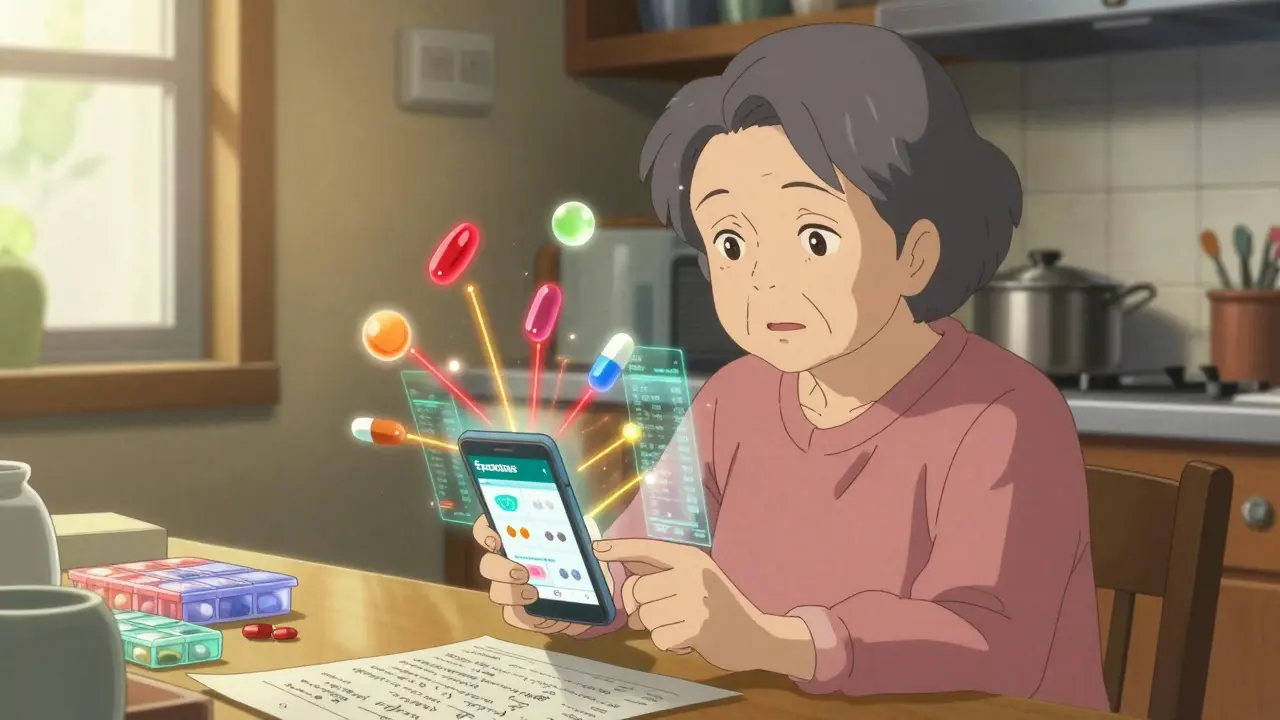
When you take multiple medications, especially generics, you're not just managing your health-you're playing a high-stakes game of chemical chess. One pill might be safe alone, but throw in a second, third, or fourth, and suddenly you're at risk of a dangerous interaction. These aren't rare edge cases. In the UK alone, over 40% of adults over 65 take four or more prescription drugs. And with generics making up nearly 90% of prescriptions, the chances of hidden conflicts are higher than ever. That's where digital consultation tools come in-not as fancy gadgets, but as essential safety nets.
Why Generic Drugs Create Unique Risks
Generic drugs are identical in active ingredient, dosage, and strength to their brand-name counterparts. That’s the law. But here’s the catch: they’re not always identical in how they’re absorbed, metabolized, or cleared from your body. A generic version of a blood thinner might have a slightly different filler, which changes how fast it enters your bloodstream. That difference doesn’t make it unsafe-but when combined with another drug, even a small shift can trigger a cascade of side effects.Take warfarin, a common blood thinner. A generic version might interact differently with a generic statin than the brand-name versions do. These subtle variations are why checking interactions isn’t just about drug names-it’s about understanding the full chemical profile behind each pill. And that’s where digital tools step in.
How Digital Tools Work
These aren’t simple search engines. They’re clinical decision engines. You type in the names of your medications-brand, generic, or even over-the-counter supplements-and the tool cross-references millions of known drug-drug interaction pairs. It doesn’t just say “possible interaction.” It tells you:- What kind of interaction it is (pharmacokinetic, pharmacodynamic, or additive toxicity)
- How severe it is (mild, moderate, severe)
- What symptoms to watch for
- What alternatives exist
Some tools even show you the science behind it. For example, DDInter-a free, open-access database developed at Chongqing University-explains that when fluoxetine (an antidepressant) is taken with a generic form of tramadol (a painkiller), it can block the enzyme that breaks down tramadol. This causes tramadol to build up in your system, increasing the risk of seizures. That’s not something a pharmacist can remember offhand. But a digital tool? It knows.
The Top Tools You Can Actually Use
Not all tools are created equal. Here’s what’s actually working for clinicians right now:| Tool | Max Drugs Checked | Free Access | Key Strength | Limitation |
|---|---|---|---|---|
| Epocrates | 30 | Yes (full features) | Best for outpatient use. Checks generics, OTCs, and herbal supplements. Fast, intuitive, and widely trusted. | Occasional lag when adding many drugs at once. |
| Micromedex | 50+ | No (enterprise only) | Used in 89% of U.S. hospitals. Integrates with EHRs. Includes IV compatibility, dosing calculators, and overdose protocols. | Too complex for individual patients. Requires hospital subscription. |
| DrugBank | 5 | Partial (requires login) | Most detailed mechanism explanations. Used by researchers. Includes chemical structures and metabolic pathways. | Free version is crippled. Constant upgrade prompts. |
| mobilePDR | 10 | Yes | Official PDR content. Updated within a week of manufacturer changes. | Weak on herbal supplements and interaction severity ratings. |
| DDInter | 5 | Yes (no registration) | Free, open-source, no ads. Excellent for academic use and detailed DDI mechanisms. | Clunky interface. No mobile app. No overdose guidance. |
For most people, Epocrates is the go-to. It’s free, works offline, and lets you check 30 drugs at once-something even hospital systems struggle with. If you’re a pharmacist or clinician managing complex cases, Micromedex is the powerhouse. But if you’re just trying to avoid a bad reaction between your generic blood pressure pill and your herbal sleep aid? Epocrates does the job without a subscription.
False Alarms and Missed Dangers
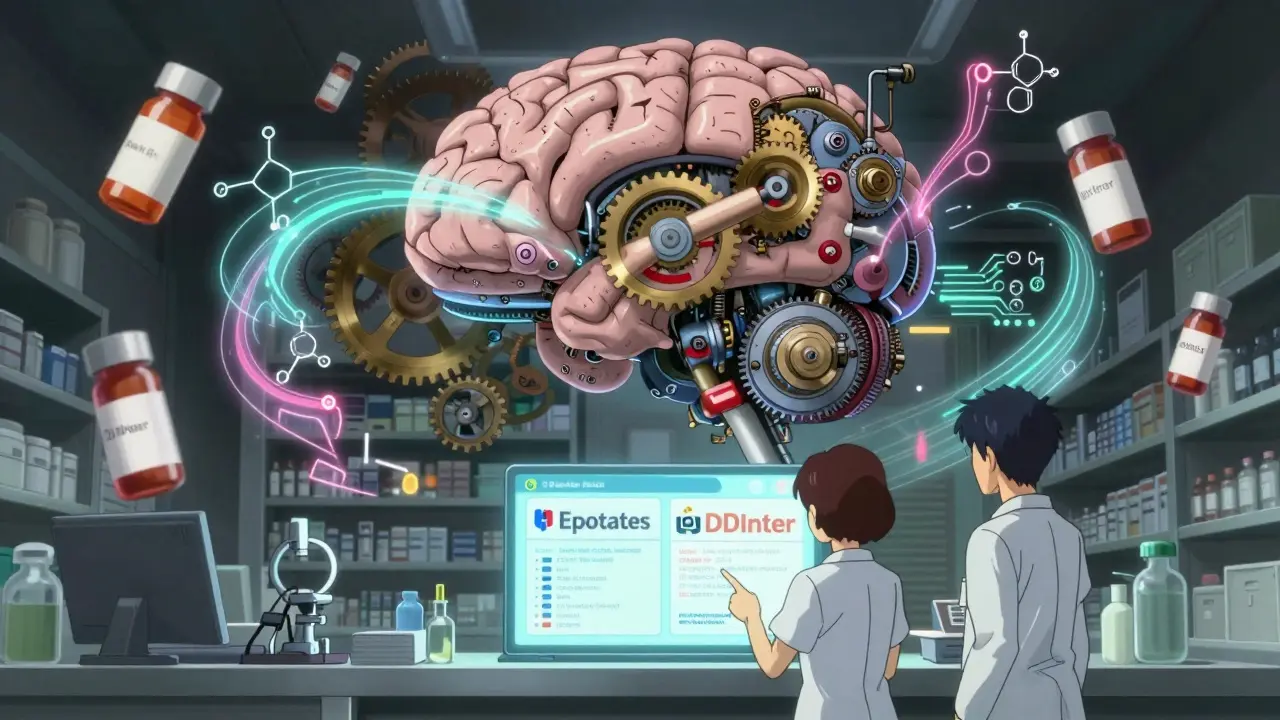
Here’s the uncomfortable truth: these tools aren’t perfect. In fact, they’re often wrong.A 2022 study in JAMA Internal Medicine found that clinicians ignore between 49% and 96% of interaction alerts. Why? Because too many are false alarms. A tool might flag a mild interaction between two drugs that have been safely used together for decades. When you get 20 alerts a day, and 18 of them are noise, you stop paying attention.
And then there’s the reverse problem: missed interactions. No single database includes every known interaction. A 2023 report from the American Medical Informatics Association found that depending on the drug class, tools miss between 8% and 32% of clinically significant interactions. That means if you rely on one tool alone, you could be missing something dangerous.
The fix? Don’t trust one tool. Use two. Check Epocrates, then cross-reference with DDInter. If both flag something, take it seriously. If only one does, dig deeper-look up the mechanism, talk to your pharmacist.
What’s Changing in 2026
The next wave isn’t just about checking interactions anymore-it’s about predicting them.DDInter launched Version 2.0 in early 2024 with machine learning that predicts interactions not yet documented in any database. It’s not magic-it’s pattern recognition. By analyzing how similar drugs behave in clinical trials and real-world data, it can guess what might happen when two new generics are combined.
Merative, the company behind Micromedex, bought a startup called InteracDx in late 2023 to do the same thing. Their goal? Cut false positives by 35%. That’s huge. Less noise means more trust. And trust means clinicians actually use the tools.
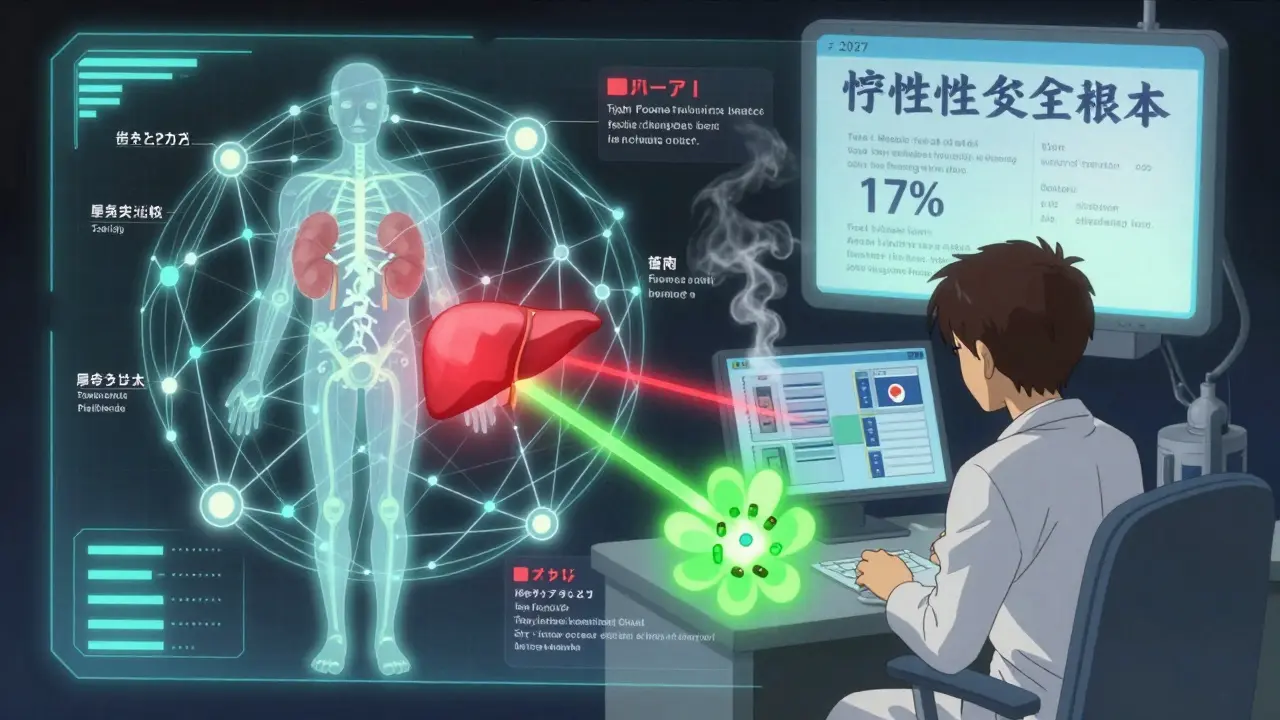
The FDA is pushing for this too. Its 2023 Digital Health Innovation Plan explicitly calls for better algorithms that don’t just react to known interactions, but anticipate new ones. By 2027, you might see tools that say: “Based on your age, kidney function, and current meds, this combination has a 17% risk of kidney damage. Here’s a safer alternative.”
What You Should Do Today
You don’t need to be a doctor to use these tools. Here’s how to protect yourself:- Download Epocrates (free on iOS and Android). It’s the most reliable for everyday use.
- When your doctor prescribes a new generic, enter all your current meds-including supplements like magnesium, melatonin, or St. John’s Wort.
- If the tool flags something, don’t panic. Write it down. Ask your pharmacist: “Is this a real risk, or a false alarm?”
- Don’t rely on Google or WebMD. They’re not built for this.
- Keep a printed or digital list of every medication you take. Update it every time something changes.
One woman in Bristol, 72, was on six medications. Her doctor switched her to a generic form of her blood pressure pill. Two weeks later, she felt dizzy and nauseous. Her pharmacist ran her list through Epocrates. The tool flagged a moderate interaction between the new generic and her cholesterol drug. A simple switch back to the brand name fixed it. No hospital visit. No ER. Just a digital tool and a pharmacist who knew how to use it.
That’s the power of these tools-not because they’re smart, but because they’re consistent. Humans forget. Machines don’t.
What’s Next?
The future of medication safety won’t be about more alerts. It’ll be about smarter ones. Tools that know your kidney function, your age, your diet, your genetics-and adjust warnings accordingly. That’s coming. But today, the tools we have already save lives. You just need to use them right.Can I trust generic drug interaction checkers on my phone?
Yes, if you use a reputable one like Epocrates. It’s free, widely used by clinicians, and regularly updated. Avoid random apps that aren’t backed by medical institutions. Stick to tools with clear developer credentials-like those from the American Academy of Family Physicians or Merative.
Do these tools check herbal supplements and OTC meds?
The best ones do. Epocrates includes over 1,200 herbal and OTC products. DDInter and DrugBank cover fewer. If you take turmeric, ginkgo, or melatonin regularly, make sure your tool includes them. Many dangerous interactions happen between prescriptions and supplements-especially blood thinners and sedatives.
Why do some tools require payment?
Tools like Micromedex and DrugBank’s full version are built for hospitals and clinics. They cost thousands per year to license because they include real-time updates, EHR integration, and clinical calculators. For individual use, Epocrates and DDInter offer nearly everything you need for free. Paying is only necessary if you’re managing complex cases in a hospital or pharmacy.
Are digital tools replacing pharmacists?
No. They’re replacing guesswork. Pharmacists still interpret the results, adjust for your health history, and decide what to change. A tool might flag an interaction-but only a pharmacist can tell you whether it’s dangerous for you. Think of them as co-pilots, not replacements.
What if I’m on Medicare or the NHS-can I get these tools for free?
Yes. Epocrates is free for anyone. DDInter is completely free and open. Many NHS pharmacies in the UK now offer free access to Micromedex through their clinical systems. Ask your pharmacist-they may have a version you can use on a clinic tablet or even on your phone.


Epocrates is the only tool I trust. Free, offline, and works when you need it most. No fluff. Just facts.
The clinical validation behind Epocrates and Micromedex is unmatched. I’ve reviewed their databases for hospital protocols, and the evidence base is rigorous. That said, DDInter’s open-source transparency is valuable for academic research-especially when dissecting metabolic pathways. Still, for frontline use, nothing beats reliability.
I want to thank the author for highlighting the human impact-not just the technology. A 72-year-old woman in Bristol avoided an ER visit because a pharmacist used a free app. That’s the power of accessible medicine. We must ensure these tools remain free and widely available. No one should be forced to pay for safety.
Of course the FDA wants more algorithms. Because nothing says "healthcare" like letting a Silicon Valley startup decide if your blood thinner kills you. Meanwhile, real pharmacists are overworked and ignored. These "tools" aren’t saving lives-they’re just shifting blame.
Let’s be real-the entire digital interaction framework is a corporate veneer. DDInter is open-source? Cute. But who funds its maintenance? Who audits its ML models? In India, we see this pattern: Western institutions release "free" tools, then monetize the data. The real danger isn’t drug interactions-it’s data colonialism disguised as innovation.
And don’t get me started on Epocrates. It’s not "reliable"-it’s a marketing product of a pharma-adjacent conglomerate. The algorithmic bias alone in its interaction engine favors branded formulations. Generic users are systematically downgraded in risk scoring. This isn’t safety. It’s surveillance with a stethoscope.
Divya raises a valid point about data sovereignty, but I think we’re overcomplicating this. The tools exist because real people are getting hurt. In rural India, many elders take five or six meds with no one to check interactions. A free app like DDInter is better than nothing-even if imperfect. We should advocate for better systems, not dismiss useful ones because they’re not ideal.
Also, Epocrates doesn’t favor brands-it flags based on pharmacokinetic data, not corporate ties. The tool doesn’t care who manufactures the pill. It cares about CYP450 inhibition. That’s science, not sales.
Here’s the uncomfortable truth no one admits: these tools don’t prevent interactions-they create new ones. By automating risk assessment, we’ve trained clinicians to outsource critical thinking. Now, when a tool says "no interaction," they assume safety. But biology isn’t a database. It’s chaos wrapped in proteins. The more we rely on algorithms, the more we blind ourselves to the unpredictable.
And let’s not pretend the FDA’s "2027 prediction model" is innovation. It’s just regression with a fancy name. They’re feeding historical data into a black box and calling it foresight. That’s not prediction. That’s nostalgia dressed as AI.
True safety isn’t in software. It’s in the quiet, slow, human act of listening-to the patient, to the pharmacist, to the silence between the pills.
Wow. Just... wow. You wrote a 3,000-word essay and somehow missed the most obvious point: if generics are so risky, why are they even allowed? The FDA approved them. The NHS uses them. So why are we acting like this is some new crisis? It’s not. It’s just fearmongering wrapped in a PowerPoint.
And don’t even get me started on "DDInter"-some university project with a clunky interface? That’s not a tool. It’s a GitHub repo with a blog post. Meanwhile, Epocrates? It’s been used by 12 million clinicians. You’re giving equal weight to a hobby project and a clinical standard? That’s not critical thinking. That’s incompetence.
I’m a nurse in rural Ohio. My patients? Grandparents on 6 meds, no internet, no smartphone. But they all have a basic Android phone. I showed them Epocrates. One guy, 81, now checks his own meds before each refill. He said, "I didn’t know I was risking a stroke with my turmeric."
Tools like this don’t replace humans. They empower them. And that’s worth more than any algorithm.
I love how this post doesn’t just list tools-it tells stories. That woman in Bristol? That’s why I do what I do. 💪
And honestly? Epocrates changed my life. I used to panic every time a patient added a new supplement. Now I open the app, type it in, and breathe. It’s not perfect-but it’s consistent. And in medicine? Consistency is everything.
Also, if you’re taking melatonin with warfarin? Please, please, please check it. I’ve seen two cases where that combo caused bleeding. Neither patient knew. Neither doctor asked. But the app did. That’s not magic. That’s just good design.
Let’s stop treating digital tools like villains. They’re not replacing pharmacists. They’re giving them superpowers.
So... you’re saying I should use an app instead of asking my pharmacist? Lol. Sweetheart, my pharmacist doesn’t even know what a statin is half the time. She just hands me the pill and says "take it."
But hey-if the app says it’s safe? I’ll believe it over her. She’s got glitter on her nametag.