

You’ve probably heard the horror stories. A patient switches from a brand-name drug to its generic equivalent, expecting the same results, but suddenly feels worse. They report new headaches, fatigue, or even pain where there was none before. The doctor checks the blood work, sees identical levels of the active ingredient, and is left scratching their head. What’s going on? It’s not magic, and it’s rarely a manufacturing defect. It’s the nocebo effect, a phenomenon where negative expectations about a treatment lead to reduced efficacy or perceived side effects.
This isn’t just anecdotal noise. In clinical trials, roughly one in five people taking a sugar pill reports actual side effects. Nearly one in ten quits the study because they feel so bad. When we talk about generics, which make up nearly 90% of all prescriptions dispensed in the US, this psychological barrier becomes a massive public health issue. If patients believe a cheaper pill will hurt them more, it often does. So, how do healthcare providers bridge the gap between chemical equivalence and patient trust?
What Is the Nocebo Effect Really Doing?
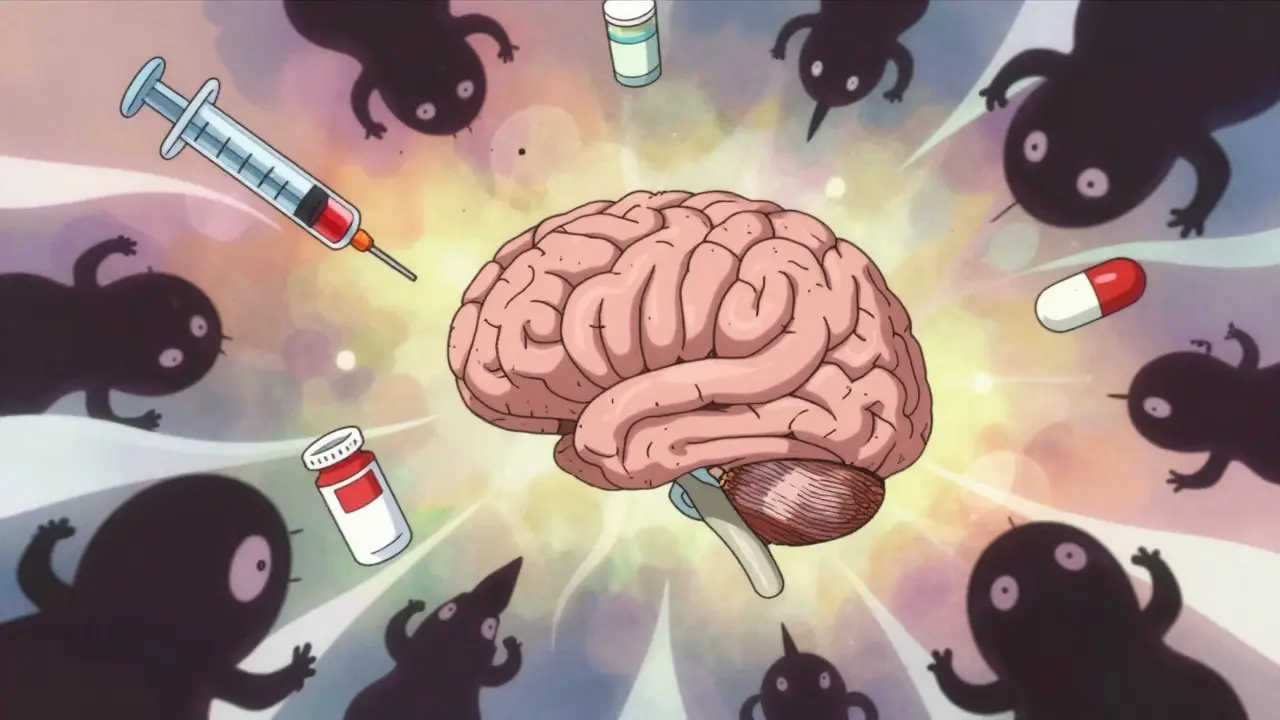
The term "nocebo" comes from Latin, meaning "I will harm." It’s the dark twin of the placebo effect. While placebos work through positive expectation, nocebos work through fear. When a patient expects a generic drug to be inferior or harsher, their brain amplifies normal bodily sensations. That slight ache you might ignore on a good day becomes a "side effect" when you’re anxious about a new medication.
A pivotal 2025 study published in Exploratory Research in Clinical and Social Pharmacy proved this isn't just in patients' heads-it has measurable impacts. Researchers gave healthy participants a nasal spray that contained no active ingredient (sham-oxytocin). One group was told it was a cheap, complex-named generic; another was told it was an expensive, simple-named brand. Those who thought they were taking the generic reported significantly more negative effects than those who thought they had the brand. The price tag and the name alone changed their physical experience.
| Condition | Perceived Status | Reported Outcome | Psychological Driver |
|---|---|---|---|
| Sham Spray (Generic Cue) | Cheap, Complex Name | Higher incidence of adverse events | Negative Expectation |
| Sham Spray (Brand Cue) | Expensive, Simple Name | Lower incidence of adverse events | Positive/Neutral Expectation |
| No Treatment | N/A | Baseline symptoms only | No Anticipation |
Why Generics Trigger Specific Biases
It’s easy to dismiss these concerns as ignorance, but the roots run deep. Patients associate high cost with high quality. When a pharmacy swaps a familiar blue tablet for a white oval one, the visual change signals something is different. Even if the active ingredient is identical, the packaging, color, and shape create a perceptual disconnect.
A 2024 study in Science highlighted this perfectly. Participants tested an anti-itch cream that was actually inert. Half got it in a sleek, expensive-looking box labeled "Solestan®," while the other half got it in a plain orange box labeled "Imotadil-LeniPharma." Those with the "expensive" cream reported less pain sensitivity. The "cheap" cream users felt more pain. The brain literally modulates pain perception based on price cues.
In the real world, this plays out on social media and in pharmacies. You’ll see posts on Reddit like, "My doctor switched me to the generic sertraline and now I’m having terrible side effects." Often, the blood levels are fine, but the patient’s anxiety creates a feedback loop. They scan their body for signs of trouble, find normal fluctuations, and attribute them to the "bad" generic.
Bioequivalence: The Science Behind the Switch
To combat these fears, we need to lean on hard science. Bioequivalence is the standard regulatory bodies use to approve generics. It doesn’t mean the drugs are 100% identical in every microscopic aspect-that’s impossible. It means the generic delivers the same amount of active ingredient into the bloodstream within the same timeframe as the brand.
The FDA requires that the rate and extent of absorption fall within an 80-125% confidence interval compared to the reference product. For most drugs, this margin is tighter than the natural variation between two batches of the brand-name drug itself. Yet, patients hear "not exactly the same" and panic.
Healthcare providers need to reframe this conversation. Instead of saying, "It’s basically the same," try explaining that the body processes the generic in a way that is statistically indistinguishable from the brand. Use analogies. Comparing it to buying apples from two different orchards might help-same fruit, same nutrition, different wrapper.
Strategies to Mitigate Negative Perceptions
Managing the nocebo effect isn’t about lying to patients. It’s about careful communication. Here are practical steps clinicians and pharmacists can take:
- Pre-emptive Counseling: Don’t wait for the complaint. When switching a patient, explain the change proactively. Kaiser Permanente protocols suggest scripts like, "This contains the exact same active ingredient, and studies show patients do just as well on this version."
- Positive Framing: Avoid listing every possible rare side effect unless necessary. Say, "Most people tolerate this well," rather than, "Some people get nausea, dizziness, and rash." This reduces the chance of patients scanning for those specific symptoms.
- Leverage Authority: Patients trust their doctors. If the prescriber explicitly states confidence in the generic, it builds trust. If the pharmacist seems hesitant, the patient picks up on that uncertainty immediately.
- Address Cost Positively: Frame savings as a benefit, not a compromise. A JAMA Internal Medicine study found that highlighting cost savings ($3,172 average annual savings) alongside efficacy info reduced nocebo effects by 37%. Make the patient feel smart for choosing value, not short-changed.
The Role of Packaging and Branding
We can’t ignore the visual impact. The European Medicines Agency recommends that generic packaging shouldn’t deliberately mimic brands to avoid confusion, but also shouldn’t look alarming. However, the trend toward "branded generics"-where manufacturers use similar colors or shapes to the original-is gaining traction.
For sensitive medications, especially psychiatric or pain management drugs, visual consistency matters. If a patient recognizes the pill, their anxiety drops. Pharmacists can help by showing the old and new pills side-by-side, pointing out the identical active ingredient listed on both boxes. Making the connection visible helps bridge the psychological gap.

When to Consider a Trial Period
Sometimes, despite best efforts, a patient struggles. If someone insists they can’t tolerate a generic after a switch, consider a structured trial period. Reassure them that you’re monitoring closely. Often, simply knowing they have an "out" reduces the anxiety enough for the medication to work normally.
Also, check for actual formulation differences. Some generics use different inactive ingredients (fillers, dyes) that might cause genuine allergies or sensitivities in a small subset of patients. Distinguishing between a true allergy and a nocebo reaction requires careful history-taking.
Frequently Asked Questions
Are generic drugs really as effective as brand-name drugs?
Yes. Regulatory agencies like the FDA require generics to prove bioequivalence, meaning they deliver the same amount of active ingredient into your bloodstream in the same amount of time as the brand-name drug. Studies consistently show therapeutic equivalence for the vast majority of medications.
Why do I feel worse when switching to a generic?
This is often due to the nocebo effect, where negative expectations about the new medication lead to perceived side effects. Changes in pill appearance or branding can trigger anxiety, causing the brain to amplify normal bodily sensations or create new ones.
Can the price of a medication affect how I feel?
Research suggests yes. Studies have shown that patients report fewer side effects and better outcomes when they believe a medication is expensive, even if it is chemically identical to a cheaper version. Price acts as a cue for quality in the human mind.
How can my doctor help reduce nocebo effects?
Doctors can use positive framing, emphasize the scientific proof of equivalence, and involve the patient in the decision-making process. Clear, confident communication that highlights the benefits of the switch without dwelling on potential negatives helps build trust.
What if I am allergic to a generic?
While the active ingredient is the same, inactive ingredients (like fillers or dyes) may differ. If you have known allergies to specific substances, check the label. True allergies are rare but possible, distinct from the nocebo effect.
Next Steps for Healthcare Providers
If you’re managing patients on generics, start small. Audit your own language. Are you saying "just" generic, or are you presenting it as a proven alternative? Train staff to recognize signs of nocebo-driven distress. Use tools like the Beliefs about Medicines Questionnaire (BMQ) to identify patients who are highly anxious about medication changes. By addressing the psychology first, you protect the pharmacology second.



It is rather patronizing to suggest that the public needs 'counseling' on basic pharmacological facts when their skepticism is rooted in a legitimate distrust of corporate cost-cutting measures disguised as healthcare efficiency. The assumption that patients are merely victims of their own psychology ignores the systemic failures that have eroded trust in medical institutions. We should not be managing perception; we should be demanding transparency.
Oh man, I feel this so hard 😭🙏 My anxiety goes through the roof every time my pharmacy swaps my meds! It’s like my brain just decides everything hurts because it looks different. 🥺💊
You think its just psychosomatic? Wake up!! The big pharma lobby pushes generics not because they are equal but because they want to control the supply chain and make us dependent on cheap fillers that actually mess with our gut biome!!! Its all about money and control, the studies are rigged to show equivalence while ignoring long term effects of dyes and binders that brands hide behind patents!!! They gaslight you into thinking its your mind playing tricks when really its the chemical cocktail changing inside your body!!!
The data supports the nocebo effect strongly enough that dismissing patient reports as mere ignorance is intellectually dishonest. However blaming corporations for profit motives doesn't change the physiological reality of expectation bias. We need to accept both truths simultaneously
love the jargon breakdown here especially the bioequivalence part its wild how much our brains hack our pain receptors based on price tags honestly feels like magic but science yall
we gotta stop shaming people for feeling worse though its real to them even if chemically identical
positive framing is key fr
This analysis provides a crucial framework for understanding patient adherence issues. By acknowledging the measurable impact of negative expectations, providers can implement evidence-based communication strategies that respect patient autonomy while maintaining therapeutic efficacy. The distinction between perceived side effects and actual adverse events must be handled with care to maintain clinical integrity.
Lazy reading leads to lazy conclusions. The post assumes a uniform population response which is statistically unsound given individual metabolic variances. One cannot simply wave away genuine formulation differences as psychological noise without rigorous double-blind crossover trials specific to the individual patient's history.
While the moral argument for affordability is strong, we must not ignore the ethical duty to ensure patient comfort. If a generic causes distress due to appearance or reputation, switching back to brand-name when affordable is a valid clinical decision. We prioritize patient well-being over rigid adherence to cost-saving mandates.