
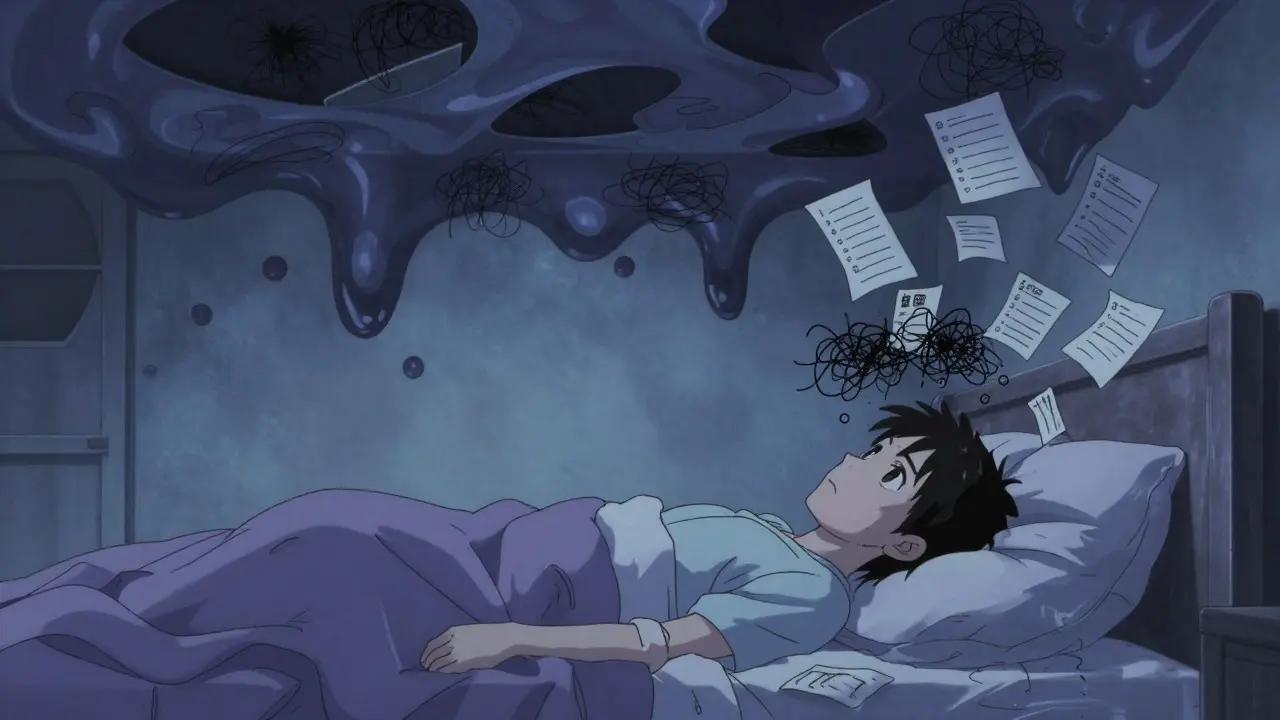
Imagine lying in bed for nine hours, but only sleeping for five. You stare at the ceiling, frustrated, while your brain races through tomorrow’s to-do list. This cycle of tossing, turning, and waking up exhausted is more than just a bad night-it’s a conditioned response that keeps chronic insomnia alive. If you’ve tried counting sheep or drinking chamomile tea with no luck, the problem might not be what you’re doing wrong, but how much time you’re spending awake in bed.
Sleep Restriction Therapy (SRT) is a behavioral treatment technique designed to address chronic insomnia by limiting time in bed to match actual sleep time. It sounds counterintuitive-why would restricting sleep help you sleep better?-but it works by leveraging your body’s natural biology. By compressing your time in bed, you build up "sleep pressure," making your brain desperate enough to fall asleep quickly and stay asleep longer. Developed by Dr. Arthur Spielman and established as a core component of Cognitive Behavioral Therapy for Insomnia (CBT-I), SRT disrupts the negative association between your bed and wakefulness.
Why Sleep Restriction Works: The Science Behind the Strategy
To understand why SRT is effective, you need to look at homeostatic sleep drive. Think of this like hunger. If you snack all day, you won’t be very hungry at dinner. Similarly, if you spend eight hours in bed when you only sleep six, your "sleep hunger" never builds up high enough to force deep, consolidated sleep. You end up with fragmented, light sleep and long periods of wakefulness.
SRT fixes this by artificially creating sleep deprivation. When you limit your time in bed to match your actual sleep duration, your body accumulates adenosine, a chemical byproduct that promotes sleep. According to research from the American Academy of Sleep Medicine, this approach increases sleep efficiency-the percentage of time spent in bed actually sleeping. Instead of drifting in and out of consciousness, your brain prioritizes deep, restorative stages because it knows the opportunity window is short.
The goal isn’t to keep you sleep-deprived forever. It’s to reset your circadian rhythm and retrain your brain to view the bed solely as a place for sleep, not for anxiety, reading, or scrolling on your phone. Once your sleep efficiency hits a target level, usually above 85%, you gradually add back time in bed until you reach a healthy seven to eight hours of solid sleep.
Step-by-Step Guide to Starting Sleep Restriction Therapy
Implementing SRT requires precision. Guessing your sleep schedule won’t work; you need data. Here is how to start, based on protocols from leading sleep centers like St. Peter's Sleep Center.
- Track Your Sleep for One Week: Keep a detailed sleep diary. Record when you get into bed, when you estimate you fell asleep, any nighttime awakenings, and when you finally got up. Do this for seven consecutive days, including weekends. Be honest-if you woke up at 3 AM and didn’t sleep again until 6 AM, write that down.
- Calculate Your Average Total Sleep Time (TST): Add up the total hours you actually slept each night and divide by seven. If you averaged five hours of sleep despite being in bed for seven, your TST is five hours.
- Set Your Initial Time-in-Bed (TIB): Your new TIB prescription equals your average TST plus 30 minutes. So, if your average sleep was five hours, your initial TIB is five and a half hours. This is your strict window.
- Choose a Fixed Wake Time: Pick a wake-up time that fits your daily responsibilities and stick to it every single day. No alarm clock snoozing, no sleeping in on Saturdays.
- Calculate Your Bedtime: Count backward from your fixed wake time by your prescribed TIB. If you must wake up at 7:00 AM and your TIB is 5.5 hours, you get into bed at 1:30 AM. Go to bed earlier only if you are genuinely sleepy, but generally, wait until you hit that mark.
This initial phase will feel tough. You will be tired during the first week or two. That is normal. The fatigue is proof that the therapy is working-it means your sleep drive is building up.
Managing the Adjustment Phase: Expectations and Challenges
The first few weeks of SRT are often called the "restriction phase," and they require mental toughness. A 2023 survey by Sleepstation.org.uk found that 68% of users experienced significant daytime fatigue during the first 1-2 weeks. This is the trade-off for long-term relief.
Here is how to handle the side effects:
- Avoid Driving if Possible: If you feel dangerously drowsy, take public transport or ask a colleague for a ride. Safety comes first. Most people find that the acute drowsiness peaks around day three or four and then stabilizes.
- No Napping: Even a 20-minute nap can undermine the sleep pressure you are trying to build. If you must rest, keep it under 20 minutes and before 3 PM, but ideally, avoid it entirely during the initial phase.
- Stay Active: Physical activity during the day helps burn off excess energy and reinforces your circadian rhythm. Morning sunlight exposure is particularly helpful for setting your internal clock.
- Stick to the Schedule: The biggest reason SRT fails is inconsistency. As noted by Sleep Education, 41% of unsuccessful attempts were due to "cheating" by extending time in bed on weekends. Treat your wake-up time as non-negotiable.
Remember, the goal is not to suffer indefinitely. The restriction is temporary. You are essentially rebooting your sleep system.

Progressing the Therapy: Increasing Your Sleep Window
You don’t stay restricted forever. The beauty of SRT is its adaptive nature. After the first week, calculate your sleep efficiency using this formula:
Sleep Efficiency = (Total Time Asleep / Total Time in Bed) x 100
If your efficiency is below 80%, keep your current time-in-bed prescription. If it is between 85% and 90% for three consecutive nights, increase your time in bed by 15 to 30 minutes. You do this by going to bed earlier, while keeping your wake time fixed.
For example, if you were sleeping 5.5 hours efficiently, you might move your bedtime from 1:30 AM to 1:00 AM, giving you 6 hours in bed. Monitor your efficiency again. If it drops, hold steady for another week. If it stays high, increase again. Repeat this process until you reach your desired sleep duration, typically 7 to 8 hours.
This gradual expansion ensures that you maintain high sleep quality. Jumping straight to 8 hours in bed without earning it often leads to a return of fragmented sleep and early morning awakenings.
Sleep Restriction vs. Other Insomnia Treatments
Many people turn to medication or general sleep tips first. Here is how SRT compares to other common approaches.
| Treatment Method | Mechanism | Long-Term Efficacy | Side Effects/Risks |
|---|---|---|---|
| Sleep Restriction Therapy | Increases sleep pressure by limiting time in bed | High (78% sustained improvement at 6 months) | Temporary daytime fatigue; requires discipline |
| Sleep Hygiene Education | Improves environment and habits (e.g., no caffeine) | Low to Moderate (often insufficient alone) | None, but limited impact on chronic cases |
| Benzodiazepines/Sleep Meds | Chemically induces sedation | Low (32% sustained improvement; high relapse) | Dependency, rebound insomnia, tolerance |
| Melatonin Supplements | Regulates circadian timing | Moderate (helps onset, less so for maintenance) | Morning grogginess, variable effectiveness |
According to a 2023 meta-analysis, SRT outperforms sleep hygiene education alone by 47% in improving sleep efficiency. While medications might knock you out tonight, they often fail to address the underlying behavioral patterns causing insomnia. In fact, stopping meds after long-term use can cause severe rebound insomnia. SRT addresses the root cause: the conditioned arousal associated with the bedroom.
Combining SRT with Stimulus Control Therapy
SRT works best when paired with Stimulus Control Therapy (SCT). These two form the core of CBT-I. While SRT manages the quantity of time in bed, SCT manages the quality of the association.
The rules of SCT are simple but strict:
- Use the bed only for sleep and sex. No reading, watching TV, or working in bed.
- If you haven’t fallen asleep after 20 minutes (or if you wake up and can’t return to sleep), get out of bed. Go to another room and do something quiet and boring until you feel sleepy again.
- Return to bed only when you are ready to sleep.
This prevents your brain from linking the bed with frustration and wakefulness. When you combine this with the sleep pressure from SRT, the results are powerful. A user on Reddit reported jumping from 68% to 89% sleep efficiency in just three weeks by strictly adhering to both protocols.
Who Should Avoid Sleep Restriction Therapy?
While SRT is highly effective, it is not for everyone. Due to the initial sleep deprivation, it can exacerbate certain conditions. Consult a doctor before starting if you have:
- Severe Depression: Sleep loss can worsen depressive symptoms. Cognitive therapy components may be needed first.
- Bipolar Disorder: Sleep restriction can trigger manic episodes.
- Epilepsy: Lack of sleep lowers the seizure threshold.
- Jobs Requiring High Alertness: If you operate heavy machinery, fly planes, or drive long distances daily, the initial fatigue could be dangerous unless you can adjust your schedule temporarily.
Dr. Michael Grandner from the University of Arizona notes that SRT requires careful implementation for patients with comorbid anxiety disorders, as the initial stress of sleep loss can heighten anxiety. In these cases, pairing SRT with cognitive therapy is essential.
Digital Tools and Professional Support
You don’t have to do this alone. While you can implement SRT using a paper diary, digital tools can make tracking easier. Apps like Sleepio and the VA’s CBT-i Coach provide structured guidance. The FDA-cleared app Somryst has shown 64% efficacy in delivering SRT remotely, which is crucial given that only 15% of insomnia patients currently receive CBT-I due to provider shortages.
If self-help isn’t working, seek a certified sleep specialist. The Society of Behavioral Sleep Medicine lists over 1,200 CBT-I-certified clinicians in the U.S. Many insurance plans now cover CBT-I, recognizing it as a first-line treatment recommended by the American College of Physicians.
Frequently Asked Questions
How long does Sleep Restriction Therapy take to work?
Most people see significant improvements in sleep efficiency within 2 to 3 weeks. However, the full course of therapy, including the gradual expansion of sleep time, typically takes 6 to 8 weeks. Some individuals may continue to see benefits strengthen over several months.
Can I nap during Sleep Restriction Therapy?
Ideally, no. Napping reduces the homeostatic sleep drive (sleep pressure) that SRT relies on to consolidate nighttime sleep. If you absolutely must nap, keep it under 20 minutes and finish it before 3 PM. However, avoiding naps entirely yields the fastest results.
Is Sleep Restriction Therapy safe?
Yes, for most people. It involves temporary mild sleep deprivation, which is generally safe. However, caution is advised for those with bipolar disorder, epilepsy, severe depression, or jobs requiring extreme alertness (like pilots or heavy machinery operators). Always consult a healthcare provider before starting.
What if I don't fall asleep during my restricted window?
This is common in the first few days. Stick to your fixed wake-up time regardless of how little you slept. This builds the necessary sleep pressure for the next night. If you consistently struggle, ensure you are combining SRT with Stimulus Control Therapy (getting out of bed if awake for more than 20 minutes).
Does insurance cover Sleep Restriction Therapy?
Coverage varies. Since SRT is a core part of CBT-I, many insurers that cover CBT-I will cover it. As of 2024, only 12 states mandate insurance coverage for CBT-I, but many private plans include it. Check with your provider or look for telehealth options like Somryst, which may be covered differently.
How is Sleep Restriction different from Sleep Hygiene?
Sleep hygiene involves good habits like avoiding caffeine and keeping a cool room. It is helpful but often insufficient for chronic insomnia. Sleep Restriction is an active behavioral intervention that directly targets sleep efficiency by limiting time in bed. Studies show SRT is significantly more effective than sleep hygiene education alone for treating chronic insomnia.







Man, this is exactly what I needed to read today. I’ve been fighting insomnia for months and every time I tried to 'relax' into sleep it just made it worse. The concept of building up that sleep pressure makes so much sense now. It’s like starving yourself before a big meal so you actually appreciate the food. I’m going to try tracking my sleep for a week like you said. No more lying in bed staring at the ceiling until 4 AM. Let’s do this!
The paradox here is fascinating. We treat sleep as something we must actively pursue, yet the act of pursuing it often repels it. By restricting the window, we surrender control, which ironically grants us rest. It reminds me of Zen archery; you hit the target when you stop trying to aim.
I don't know about all this science talk but I tried limiting my bed time once and I felt like crap for a week. My boss noticed I was sluggish during meetings. Is it really worth risking your job performance for better sleep? Seems like a risky gamble if you ask me.
@Gary Browne, it is absolutely worth it! The initial fatigue is temporary, usually peaking around day three or four. After that, the quality of sleep improves dramatically. Many people find they are actually more alert during the day because their sleep is consolidated rather than fragmented. Just be careful with driving those first few days!
One must question the underlying motives of such rigid behavioral conditioning. Who benefits from reducing human rest to mere efficiency metrics? The pharmaceutical industry certainly does not want you curing yourself with a stopwatch. This method feels like industrial time-management applied to biology. Proceed with extreme caution and skepticism regarding the long-term psychological effects of self-imposed deprivation.
Look, most people here are just lazy. You spend too much time in bed because you lack discipline. If you can’t wake up at 7 AM after being in bed for 5 hours, maybe your problem isn’t insomnia, it’s weakness. Stop whining about being tired and get out of bed. Life doesn’t care if you’re rested.
i feel seen by this post honestly. i have been doing this wrong for years. always staying in bed hoping i will eventually drift off but then i just get anxious. the idea of getting up if i am awake for 20 minutes seems harsh but maybe it is necessary. i hope it works for everyone trying it
Ah yes, let us all become robots who optimize our biological functions like spreadsheet cells. How utterly devoid of soul. Sleep is meant to be a mysterious journey into the subconscious, not a scheduled maintenance window. But sure, go ahead, measure your adenosine levels while you exist. Very impressive.
It is morally irresponsible to promote methods that cause daytime drowsiness without stronger warnings. People drive cars. They operate machinery. To suggest someone should risk public safety for personal sleep hygiene is negligent. The article mentions avoiding driving, but how many people will actually listen? We need stricter guidelines on who is allowed to attempt this therapy without medical supervision.
Listen up folks :) I’ve been down this road. The key is consistency. Most people fail because they cheat on weekends. Don’t be that person. If you extend your sleep window on Saturday, you reset the clock. It’s brutal, I’ll give you that. Day three hits hard. Your brain will scream at you. But push through. The payoff is real. I went from waking up every hour to sleeping straight through. Trust the process, trust the pain, and you’ll win. Keep your head up! :)
This is super helpful info! I’ve heard of CBT-I but never understood the restriction part. Does anyone have experience using apps like Somryst? I’d love some digital guidance to keep me on track. Also, how strict do you have to be with the bedtime? What if you’re not sleepy at the exact minute?
Efficiency over comfort. The data supports this approach. Stick to the protocol.
In many cultures, we view rest as a communal right, but here it is treated as a personal optimization challenge. Still, the technique itself is powerful. I encourage anyone struggling to try this, but please support each other. Share your progress. It is a difficult journey alone. Remember to expose yourself to morning light, it helps anchor your rhythm regardless of where you live.
thanks for sharing this. simple and clear instructions. no fluff. just what to do. i will start tonight.