
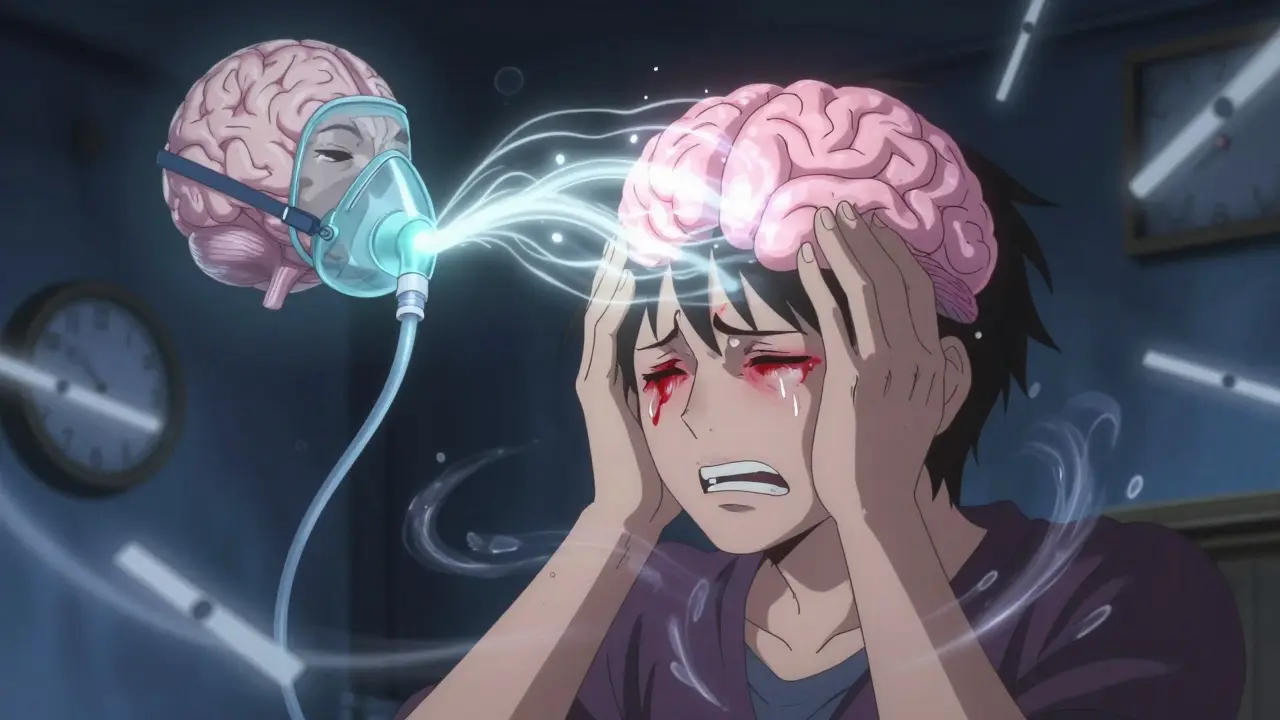
Imagine waking up in the middle of the night with a pain so intense it feels like someone is drilling into your eye. No nausea. No light sensitivity. Just pure, burning agony on one side of your face, lasting 15 to 90 minutes, and coming back night after night for weeks. This isn’t a migraine. This is a cluster headache.
What Makes Cluster Headaches Different
Cluster headaches are not just bad headaches. They’re among the most painful conditions known to medicine. People who live with them often call them "suicide headaches" because the pain is so unbearable. Unlike migraines, which can last hours or days and often come with nausea and sensitivity to light, cluster headaches strike suddenly, hit hard, and vanish just as fast-usually within an hour.The pain is always on one side: around the eye, above the eyebrow, or along the temple. Along with the pain, you might notice your eye watering, your nose getting stuffy, your eyelid drooping, or your face flushing. You can’t sit still. You pace. You rock. You scream. There’s no calming down.
These attacks happen in cycles-clusters. For weeks or months, you might get one or two attacks every day, often at the same time. Then, for months or even years, you’re free. No warning. No pattern you can predict. That’s what makes them so terrifying.
Cluster headaches affect about 1 in 1,000 people. Men are three times more likely to get them than women, and most people start having them between ages 20 and 50. Smoking and alcohol can trigger attacks during a cluster period, but they don’t cause the condition. The real cause? No one knows for sure. Brain imaging shows the hypothalamus, the part that controls your body’s clock, goes haywire during attacks. That’s why they often wake you up at the same time every night.
Why Oxygen Therapy Works
For decades, doctors had few options. Triptans helped some, but not everyone. And they came with risks-chest tightness, high blood pressure, heart concerns. Then came oxygen.In the 1950s, Dr. Harold Wolff noticed that patients with cluster headaches got relief when they breathed pure oxygen. It wasn’t a fluke. Decades later, research confirmed it: inhaling 100% oxygen at high flow rates stops cluster attacks faster than any drug.
Here’s how it works: when you breathe pure oxygen, your blood oxygen levels spike. That forces blood vessels in the brain to narrow, calming the overactive pain pathways. It’s like hitting a reset button on your nervous system. And it happens fast.
Studies show that 78% of people get pain-free within 15 minutes using oxygen therapy. In one trial, patients on 12 liters per minute of oxygen were four times more likely to be pain-free than those breathing regular air. That’s not just better-it’s life-changing.
And here’s the best part: no side effects. No dizziness. No nausea. No heart risks. You can use it as often as you need. No limits. No tolerance buildup. That’s why the American Academy of Neurology, the European Headache Federation, and the National Institute for Health and Care Excellence (NICE) all list oxygen as a top-tier, first-line treatment.
How to Use Oxygen Therapy Correctly
It’s not enough to just turn on an oxygen tank. If you do it wrong, it won’t work.You need:
- 100% medical-grade oxygen
- A flow rate of 12 to 15 liters per minute
- A non-rebreather mask with a reservoir bag
- At least 15 minutes of continuous breathing
The mask must seal tightly around your nose and mouth. If air leaks in, you’re not getting enough oxygen. Most people mess this up the first few times. You’ll feel the mask pulling on your face. You’ll think you’re breathing too hard. But you need to breathe deeply and steadily-no gasping.
Start as soon as you feel the pain coming. Waiting even 10 minutes can make the difference between relief and a 90-minute nightmare. Keep the oxygen unit next to your bed. In your car. In your office. You never know when the next attack will hit.
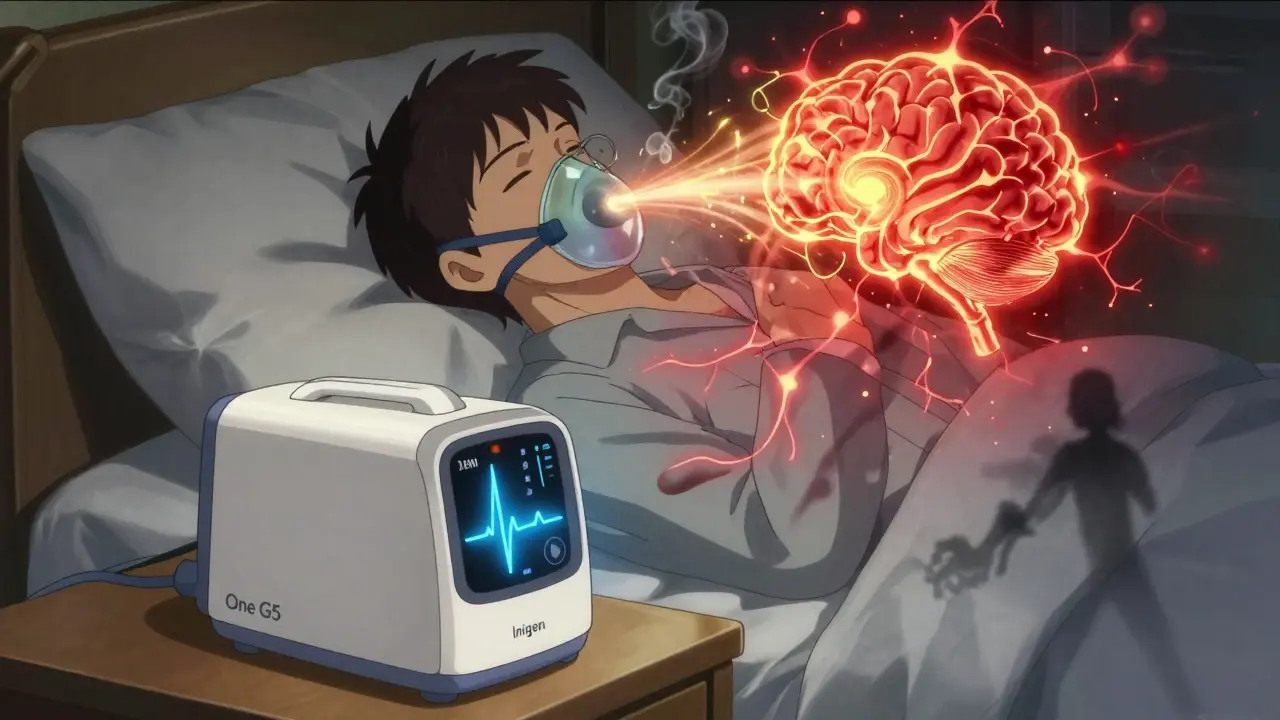
Portable oxygen concentrators like the Inogen One G5 or the new O2VERA device weigh under 5 pounds. You can carry them in a backpack. They’re quiet. They run on batteries. And they deliver 15 liters per minute-enough to stop an attack in under 10 minutes.
One patient in Bristol told me: "I used to lie on the floor, screaming, waiting for it to pass. Now I put on the mask, breathe for 10 minutes, and go back to sleep. It’s like flipping a switch."
Who Doesn’t Respond to Oxygen?
Oxygen works for most-but not all. About 20% of people don’t get relief, even with perfect technique.Research shows certain factors predict poor response:
- You’ve never smoked (oddly, smokers respond better)
- Your attacks last longer than 180 minutes
- You have constant, low-grade pain between attacks
If you fall into one of these groups, oxygen might still help-but you’ll likely need a backup plan. Triptans (like sumatriptan injections) are still an option, though they carry risks. Newer options like gammaCore (a nerve stimulator you hold to your neck) are showing promise for those who don’t respond to oxygen.
But here’s the truth: most people who say oxygen didn’t work didn’t use it right. They used a nasal cannula instead of a full-face mask. They set the flow to 5 liters instead of 12. They waited too long. Or they didn’t use it long enough.
Getting Oxygen: The Real Battle
The hardest part isn’t using oxygen. It’s getting it.In the UK, you need a prescription from a neurologist or headache specialist. Then you go through a DME (durable medical equipment) provider. The process can take weeks. Some people wait months.
In the US, Medicare only covers oxygen if you’ve tried two triptans and have at least one attack per week. Private insurers vary wildly. UnitedHealthcare approves 68% of claims. Aetna approves just 42%. Many patients are denied-despite clear guidelines saying oxygen is first-line treatment.
Insurance denials are the biggest barrier. A 2022 survey found 63% of negative reviews on patient forums blamed coverage issues. Rural patients are hit hardest-only 28% have immediate access compared to 63% in cities.
There’s hope. Patient advocacy groups like Clusterbusters have pushed 22 U.S. states to pass laws requiring insurance coverage for oxygen therapy. In the UK, NHS guidelines support oxygen use, but local funding varies. If you’re denied, appeal. Cite the NICE guideline NG178. Bring printouts from the American Headache Society. Be persistent.
What’s Next for Oxygen Therapy
The technology is improving fast. New demand-valve masks release oxygen only when you inhale-saving gas, reducing noise, and making it easier to use while moving. In 2023, the FDA cleared the O2VERA device, designed specifically for cluster headaches. In Europe, a new nasal delivery system showed 89% effectiveness in trials.Researchers are now testing ways to make relief even faster-targeting under 7 minutes. Portable, battery-powered units are getting smaller, quieter, and cheaper. Within five years, you might be able to buy a cluster headache oxygen device over the counter.
But the real breakthrough won’t be in the machine. It’ll be in awareness. Too many people suffer for years before getting diagnosed. Too many doctors still think it’s just a bad migraine. Too many patients give up because they can’t get the oxygen they need.
If you have cluster headaches, you’re not alone. And you don’t have to suffer without treatment. Oxygen therapy isn’t magic. But for most people, it’s the closest thing to one.
What to Do If You Think You Have Cluster Headaches
If you’re having severe, one-sided head pain that comes in cycles, wakes you up at night, and lasts less than 90 minutes:- See a neurologist-preferably a headache specialist
- Keep a headache diary: time, duration, triggers, symptoms
- Ask about oxygen therapy as your first treatment
- If denied insurance, request a formal appeal with clinical guidelines
- Join a support group: Clusterbusters.org or r/ClusterHeadaches on Reddit
You don’t have to live in pain. The tools to stop it exist. You just need to know how to use them.
Can oxygen therapy cure cluster headaches?
No, oxygen therapy doesn’t cure cluster headaches. It stops individual attacks quickly and effectively. It doesn’t prevent future cycles or reduce how often they happen. For long-term prevention, doctors may prescribe verapamil, lithium, or other medications. Oxygen is for acute relief only.
Is oxygen therapy safe for people with heart problems?
Yes. Unlike triptans, which can cause chest tightness or raise blood pressure, oxygen therapy has no known cardiovascular risks. It’s the safest acute treatment available for cluster headaches-even for people with heart disease, high blood pressure, or a history of stroke.
Do I need a prescription for oxygen therapy?
Yes. In the UK and US, medical-grade oxygen is classified as a drug and requires a prescription. Your neurologist will write one using the ICD-10 code G44.0 for cluster headache. You’ll then work with a durable medical equipment provider to get the device.
Can I use a regular nasal cannula instead of a mask?
No. Nasal cannulas deliver oxygen at low flow rates (usually 2-6 liters per minute), which is not enough to stop a cluster headache. You need a non-rebreather mask that delivers 12-15 liters per minute directly into your lungs. Using a cannula will likely waste time and money.
How long does it take to get used to the oxygen mask?
Most people get comfortable with the mask after 2-3 attacks. The biggest issue is getting a good seal. If air leaks, the treatment won’t work. Practice during a calm time. Adjust the straps. Breathe slowly. You’ll learn quickly. Many patients say the first few uses are awkward-but once it works, they never want to go without it.
Can I use oxygen therapy while sleeping?
No. You need to be awake and actively breathing through the mask for it to work. Most cluster attacks happen at night, so keep the oxygen unit next to your bed. As soon as you feel the pain start, sit up, put on the mask, and breathe for 15 minutes. Don’t wait to fall asleep-you won’t get relief.
Are there any side effects from using oxygen therapy?
Very few. Some people report mild dryness in the nose or throat. Rarely, a headache might return after stopping oxygen, but this is usually because the attack wasn’t fully stopped. There are no serious side effects, no addiction risk, and no long-term harm from regular use.
What if oxygen doesn’t work for me?
If oxygen doesn’t help, talk to your doctor about alternatives. Subcutaneous sumatriptan is the most common next step-it works fast and is effective for 70-75% of people. Intranasal zolmitriptan is another option, though slower. For chronic cases, neuromodulation devices like gammaCore or occipital nerve stimulation may be considered. But don’t give up on oxygen too soon-most failures are due to incorrect use, not lack of effectiveness.







Just wanted to say this post saved my life. I’d been suffering for 18 months thinking it was migraines. My neurologist didn’t even mention oxygen until I brought it up. Now I keep a portable unit by my bed. First time I used it, I cried from relief. No more pacing the floor screaming. Just breathe. And it’s gone.
Thank you for writing this.
Ugh. Another one of these ‘oxygen is magic’ posts. People who don’t get it are just weak. I’ve had cluster headaches for 12 years and oxygen did NOTHING for me. You’re all just drinking the Kool-Aid. If it worked for everyone, doctors wouldn’t still be prescribing triptans. Wake up.
OMG I’m so glad someone finally explained this right 😭 I used a nasal cannula for 6 months thinking it was enough… no wonder it didn’t work. Just got my mask yesterday. First use tonight - 8 minutes and I was asleep again. I’m not crying, you’re crying.
Of course oxygen works. But why is it so hard to get? Because insurance companies don’t care about your suffering. They care about profit. And doctors? They’re too lazy to fight for you. You think this is medical care? Nah. It’s a corporate game. And you’re just a number on a spreadsheet.
Correction: The study cited showed 78% efficacy, not 78% of patients. There’s a difference. Also, the non-rebreather mask must deliver 12–15 L/min, not 10–15. Precision matters. Misstating parameters leads to improper use and false negatives. Please update your references.
Man, this hit different. I’m from Mumbai, and here, most docs think it’s ‘stress migraines’ - no one even knows the word ‘cluster’. I had to Google it myself after 3 years of agony. Found a guy in Delhi with an oxygen tank who let me borrow it once a week. It’s like getting water in the desert. You don’t need magic. You need access. And that’s the real fight.
Keep pushing. We’re with you.
Oxygen therapy is only effective in episodic clusters. Chronic cluster patients show no significant response. The data is clear. Also, the claim about smokers responding better is misleading - it’s not because smoking helps, it’s because neuroinflammation patterns differ. Stop oversimplifying. This isn’t a wellness blog.
so i just got my oxygen unit and honestly it feels like a sci-fi thing?? like i’m some kind of space astronaut breathing pure air?? but it works?? i used it last night and i didn’t scream once?? i’m not crying i’m just… wow.
ps: typo in the mask instructions lol
Let me tell you what nobody says. Oxygen therapy works because it’s not just about oxygen - it’s about the pressure, the flow rate, the mask seal, the timing. I’ve seen people buy the most expensive concentrator and still fail because they didn’t sit upright. Or they used it while lying down. Or they only breathed for 8 minutes. You have to treat it like a ritual. 15 minutes. No distractions. No phone. No checking if it’s working. Just breathe. Deep. Slow. Steady. That’s the secret. Not the machine. The discipline.
And if you’re using a nasal cannula? You’re wasting your time. And your insurance’s money. Don’t be that guy.
Why is this even a thing? In America we’re giving oxygen like it’s a free gift? Meanwhile, people can’t afford insulin. This is a scam. It’s not a medical breakthrough - it’s a profit center for equipment companies. And the docs? They’re just happy to push a device instead of figuring out the root cause. Wake up, sheeple.
Think about it. Why does oxygen work? Because it’s not oxygen at all. It’s the placebo effect of the mask. The ritual. The fact that you’re forced to sit still. The government and Big Pharma know this. That’s why they’re pushing it - to keep you dependent on equipment. Meanwhile, the real cause - electromagnetic pollution from 5G towers - is being suppressed. You think this is medicine? It’s control.
Bro I was skeptical too. Got the mask, used it wrong the first three times. Then I watched a video on YouTube - the guy showed how to pinch your nose to make sure the seal’s tight. Game changer. Now I’ve got it down. I even bought one for my brother who’s got it too. We both keep them in our cars now. Like having a fire extinguisher. You hope you never need it. But you’re damn glad it’s there.
There’s something beautiful about this. You’re not fighting pain with chemicals. You’re not numbing your nerves. You’re giving your body what it needs to reset itself. It’s like hitting pause on a broken system and letting it reboot. No side effects. No dependency. Just clean air and patience.
And yeah, the insurance battle sucks. But if you fight - with the guidelines, with the letters, with the persistence - you win. I’ve seen it happen. You’re not alone. We’re all just trying to breathe.
Stop waiting for doctors to save you. Go get the mask. Buy it. Rent it. Borrow it. Steal it if you have to. Your pain is real. Your time is now. Oxygen doesn’t care about your insurance. It only cares if you breathe. So breathe. Now. Don’t wait for permission. You’ve waited long enough.