
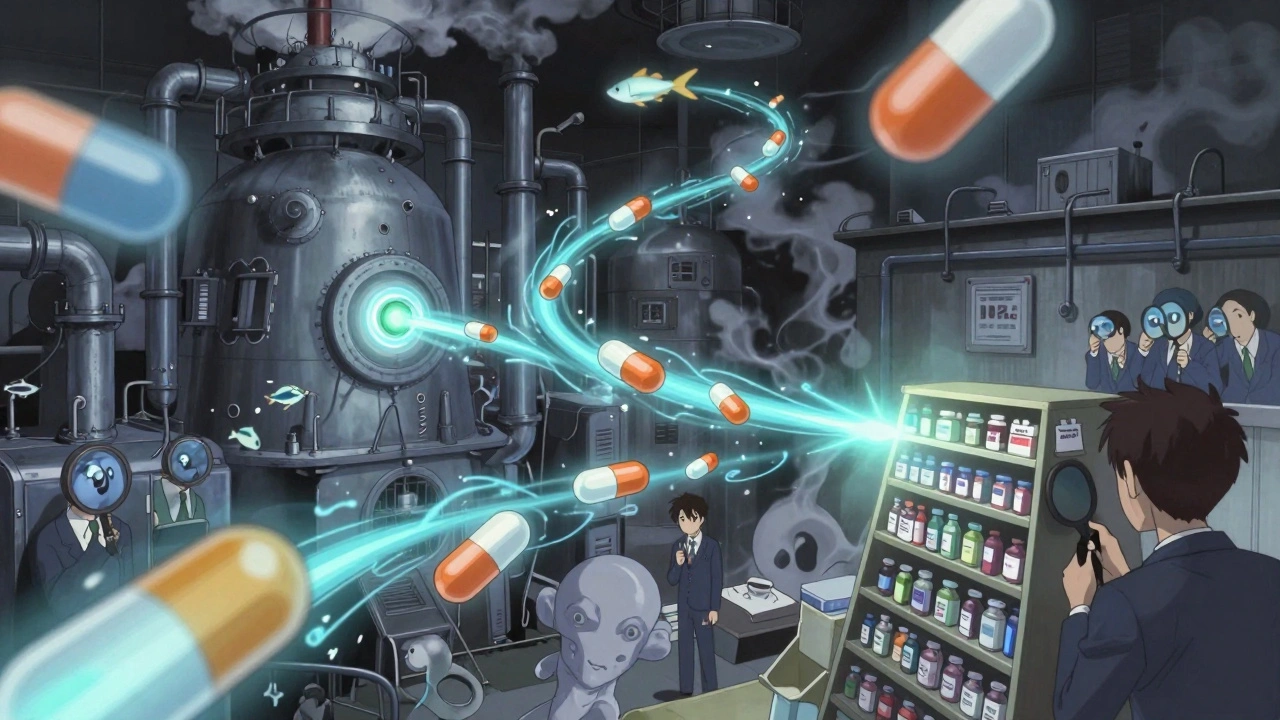
Every day, millions of people in the U.S. pick up a generic pill at their local pharmacy-whether it’s metformin for diabetes, lisinopril for high blood pressure, or atorvastatin for cholesterol. These drugs save lives and cut costs, but few people ever wonder how they got there. The journey from a chemical factory in India to your medicine cabinet is long, complex, and surprisingly fragile. It’s not just about making a pill. It’s about navigating global politics, corporate negotiations, and regulatory hoops that no one talks about-but everyone pays for.
Where the Medicine Starts: Raw Materials from Overseas
Before a pill can be made, you need the active ingredient. That’s called an Active Pharmaceutical Ingredient, or API. And here’s the first surprise: 88 percent of all API manufacturing happens outside the United States. Most of it comes from just two countries-China and India. These factories produce bulk chemicals that will eventually become the medicine you swallow. But they’re not regulated like U.S. plants. The FDA inspects foreign facilities, but even with inspections rising from 248 in 2010 to 641 in 2022, the scale is overwhelming. One plant in India might supply APIs for hundreds of different generic drugs across dozens of U.S. manufacturers.
Why does this matter? Because when a factory shuts down-due to an FDA warning, a natural disaster, or a shipping delay-hundreds of medications can vanish from shelves overnight. During the pandemic, over 170 generic drugs faced shortages because of disrupted API supplies. There’s no backup. No local stockpile. Just one fragile line from a distant factory to your pharmacy.
Getting Approval: The FDA’s Green Light
Once the API is made, it’s sent to a U.S.-based manufacturer. That company doesn’t have to repeat expensive clinical trials. Instead, they file an Abbreviated New Drug Application, or ANDA, with the FDA. The goal? Prove their version works exactly like the brand-name drug. Same active ingredient. Same dose. Same effect. That’s it.
But proving equivalence isn’t simple. The FDA requires strict testing: dissolution rates, bioavailability, purity levels. Every batch must meet Good Manufacturing Practices (GMP). If one test fails, the whole lot gets tossed. And if the FDA finds repeated violations, they can block the drug from ever hitting the market.
Here’s the catch: the FDA approves the drug, but doesn’t control who makes it or how much it costs. That’s left to the market. And the market is crowded. Over 1,000 companies make generic drugs in the U.S. alone. That means fierce competition-and prices that drop fast.
From Factory to Distributor: The Wholesale Middlemen
After approval, the generic drug moves to wholesale distributors. These are the big players: AmerisourceBergen, Cardinal Health, McKesson. They buy in bulk from manufacturers and then sell to pharmacies. But here’s where things get murky.
Manufacturers don’t set a fixed price. They list a Wholesale Acquisition Cost (WAC)-a sticker price that rarely reflects what anyone actually pays. Distributors then offer discounts to pharmacies based on volume, payment speed, or contract terms. These discounts are negotiated one by one. A small independent pharmacy might get a 5 percent discount. A giant chain like CVS might get 20 percent or more.
And then there’s the “prompt payment discount.” If a pharmacy pays the distributor within 10 days, they might get an extra 2-3 percent off. It’s a cash-flow game. Pharmacies with tight margins can’t afford to wait. So they pay fast-even if it means borrowing money to do it.
How Pharmacies Get Paid: The MAC System
When you walk up to the counter, the pharmacy doesn’t just charge you what they paid. They get reimbursed by your insurance-or more accurately, by your Pharmacy Benefit Manager (PBM). And this is where the real financial pressure hits.
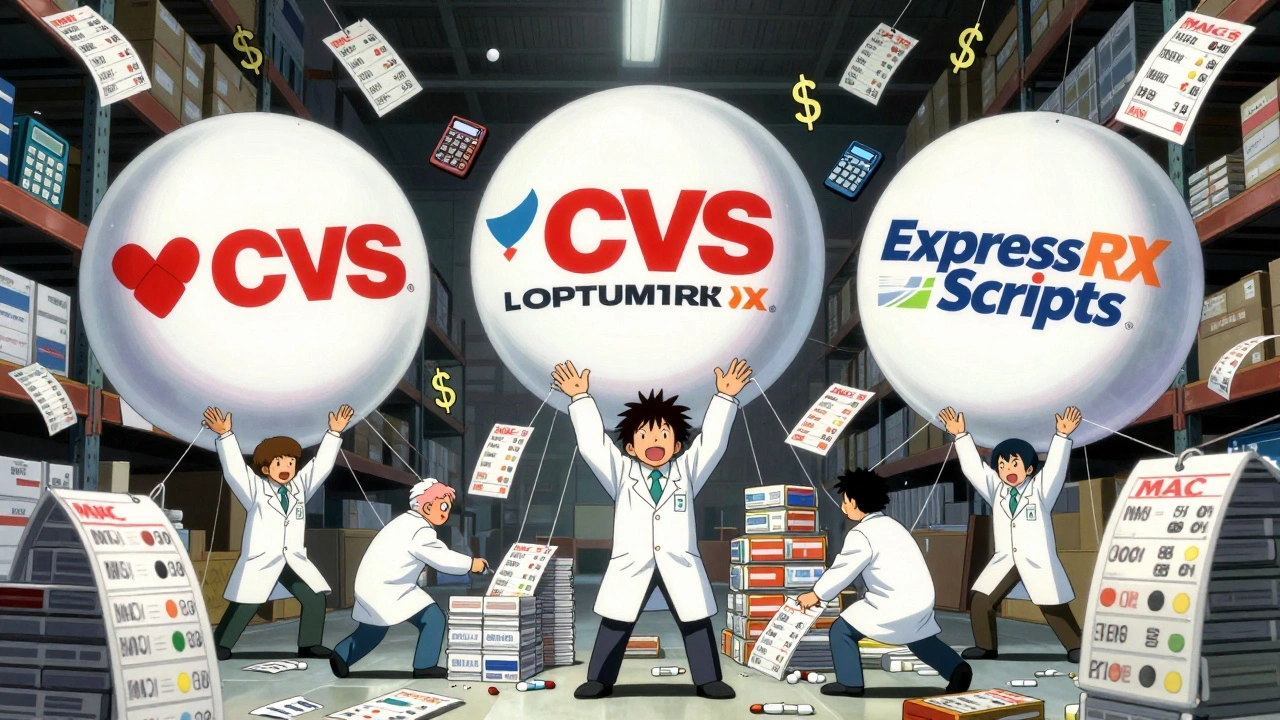
For brand-name drugs, reimbursement is often a percentage of the drug’s list price. For generics? It’s based on something called the Maximum Allowable Cost, or MAC. The MAC is a cap set by PBMs for each generic drug-say, $2.50 for a 10 mg tablet of atorvastatin. It’s not based on what the pharmacy paid. It’s based on what the PBM thinks they *should* pay.
Here’s the problem: MAC prices often fall below what pharmacies actually paid to buy the drug. A 2023 survey by the American Pharmacists Association found that 68 percent of independent pharmacies were selling generic drugs at a loss because the MAC reimbursement was lower than their acquisition cost. That means they lose money every time they fill a prescription.
Pharmacies try to offset this by negotiating lower prices with distributors. They buy in bulk. They switch suppliers. They even stock multiple brands of the same generic to find the cheapest one. But it’s a constant game of whack-a-mole. One day the price is low. The next day, the manufacturer raises it-or runs out.
Who Controls the System: PBMs and Market Power
Three companies-CVS Caremark, OptumRX, and Express Scripts-control about 80 percent of the PBM market. They don’t just set MAC prices. They decide which drugs are covered. They build formularies. They negotiate rebates with brand-name makers. And they steer patients toward certain pharmacies.
But here’s the twist: generic manufacturers almost never pay rebates to PBMs. Why? Because they’re already selling at rock-bottom prices. There’s no profit left to give back. Brand-name companies, on the other hand, pay huge rebates-sometimes 50 percent or more-to get their drugs on preferred lists. That’s how they stay profitable.
So the system favors brands. Generics get squeezed. PBMs make money by controlling access and pricing, not by lowering costs. And pharmacies? They’re stuck in the middle-paying more than they get paid back.
Why This System Is Unstable
The generic drug supply chain was built to be efficient, not resilient. It’s designed to drive prices down, not to prevent shortages. And that’s working too well.
With over 90 percent of prescriptions filled with generics-and only 23 percent of total drug spending going to them-there’s intense pressure to cut costs. Manufacturers have slim margins. Some are barely breaking even. When a company can’t make money on a drug, they stop making it. And when one company stops, others often follow. That’s how shortages start.
Meanwhile, the supply chain keeps getting longer. APIs from China. Manufacturing in India. Distribution through U.S. wholesalers. Reimbursement handled by PBMs. Every link adds delay, cost, and risk. A shipment stuck at a port. A factory audit gone wrong. A PBM changing the MAC. Any one of these can break the chain.
Experts like Dr. Aaron Kesselheim of Harvard call it a “lack of transparency.” No one knows the real cost of a generic drug-not the pharmacy, not the patient, not even the insurer. The price you see at checkout? It’s not the price the pharmacy paid. It’s not the price the PBM reimbursed. It’s a number pulled out of thin air.
What’s Changing? And What Could Help
Some fixes are already in motion. The FDA’s 2023 Drug Competition Action Plan aims to speed up generic approvals and reduce shortages. Some manufacturers are diversifying their API sources-building factories in Vietnam, Brazil, or Eastern Europe to avoid over-reliance on China and India.
Technology is helping too. AI is being used to predict demand. Blockchain is being tested to track pills from factory to pharmacy. Real-world data lets pharmacies spot delays before they turn into shortages.
But the biggest problem isn’t technology. It’s incentives. The system rewards low prices over reliability. It rewards big players over small ones. It rewards PBMs over pharmacies.
Without policy changes-like capping MAC prices, requiring transparency in rebates, or supporting domestic API production-the system will keep grinding down the people who deliver the medicine: the pharmacists, the distributors, the small manufacturers. And eventually, the medicine won’t be there when you need it.
Next time you pick up a $4 generic prescription, remember: it didn’t just appear. It traveled across oceans, survived regulatory audits, survived price wars, and survived a system designed to squeeze profit out of everything-except the patient’s health.



i used to work in a pharmacy and let me tell you, we lost money on like half the generics we sold. the MAC prices are a joke. we’d order at $1.80, get reimbursed $1.50. we’d cry into our coffee. no one talks about this but pharmacists are bleeding out.
So we’re supposed to feel bad for pharmacies because they can’t charge enough for pills made in China? Let’s just make the drugs here. Build factories. Hire Americans. Stop outsourcing our healthcare to communist regimes and then act shocked when it breaks. This isn’t a supply chain issue-it’s a national security failure.
the MAC thing is wild. i had a friend who owned a little pharmacy in rural ohio and she had to switch generic brands every other week because the price kept changing. sometimes she’d get stuck with a batch that cost more than the reimbursement. she’d just eat the loss. no one’s helping these people.
What we’re witnessing here isn’t merely a logistical bottleneck-it’s a systemic erosion of value creation in favor of extraction. The PBM model, as currently architected, functions as a rent-seeking mechanism that externalizes risk onto frontline providers while internalizing profit through opacity. The absence of price transparency isn’t an accident-it’s the design. When reimbursement is decoupled from acquisition cost, moral hazard becomes institutionalized. We’ve optimized for efficiency at the expense of resilience, and now we’re reaping the consequences of a system that treats medicine as a commodity rather than a public good.
you think this is bad? wait till you find out how the FDA gets their inspectors. they’re overworked, underpaid, and often rely on translations from factories that don’t even speak English properly. they approve drugs based on paperwork that could be forged by a high school kid with a printer. the whole system is a house of cards held together by hope and bad coffee.
so many people don’t realize how much pharmacists do just to keep this going 😔 they’re not just dispensing pills-they’re solving supply chain puzzles, begging distributors for stock, and sometimes even paying out of pocket to keep patients covered. we need to support them. 🙏
the entire system is a monument to bureaucratic absurdity. we outsource our active pharmaceutical ingredients to nations with questionable regulatory integrity then demand that our domestic manufacturers meet FDA standards while competing on price with companies that operate in countries where labor is cheaper than bottled water. this is not capitalism. this is corporate feudalism with a side of placebo effect
china owns our medicine supply chain and the fda is asleep at the wheel. they’re letting poison pills into the system and no one cares. why? because the same people who run the pbms also run congress. they’re all in on it. the next time you take a pill, ask yourself-was it made by a slave in a factory with no ventilation? probably. and they want you to shut up and take it.