
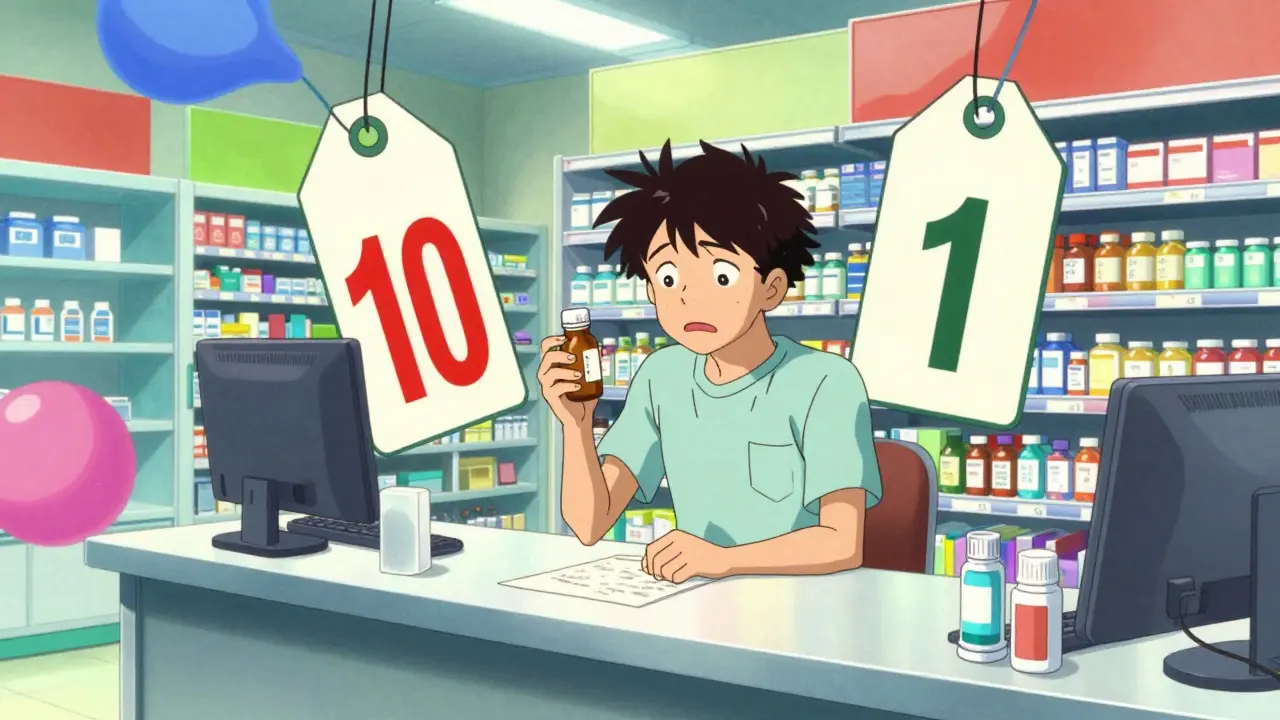
| Feature | Generic Drugs | Brand-Name Drugs |
|---|---|---|
| Typical Cost | 80-85% cheaper | Premium pricing |
| Active Ingredients | Identical to brand | Original formulation |
| FDA Requirement | Must be bioequivalent | Original patent holder |
| Prescription Volume | ~90% of US fills | ~10% of US fills |
| Total Market Spend | ~18% of total cost | ~75% of total cost |
The Basics of What You Actually Pay
When we talk about out-of-pocket costs, we are referring to the money that leaves your wallet after your insurance has paid its share. For many, the choice is a no-brainer: go with the generic. Generic drugs are medications created to be the same as brand-name drugs in dosage, safety, strength, and quality. The FDA requires these to be bioequivalent, meaning they perform the same action in your body. While they might have different fillers or binders, the active chemical is identical. But why is the cost so different? Brand-name companies spend billions on research, development, and marketing. Once their patent expires, other companies can produce the generic version without those massive startup costs, passing the savings to you. In a perfect world, you'd always pay less for the generic. In reality, your insurance plan's design determines if that's actually true.How Insurance Design Changes Your Bill
Your insurance plan isn't just a discount card; it's a set of rules that determines your exposure to price hikes. If you have a flat copayment-say, $10 for any generic-you are shielded. If the drug's list price jumps by 15%, you still pay $10. However, if your plan uses coinsurance (where you pay a percentage of the cost) or has a high deductible, you are directly exposed to the list price. In these cases, when the manufacturer raises the price, your pharmacy bill goes up immediately. Research has shown that while many patients are insulated by fixed copays, a huge portion of the population feels every cent of price inflation because of these specific benefit designs.The Medicare Part D Paradox
If you're on Medicare Part D, things get weird. You might encounter a situation where a high-priced specialty generic actually costs you more than a brand-name drug. This happens because of the "donut hole," or the coverage gap. Here is the catch: brand-name manufacturers often provide discounts in the coverage gap. These discounts count toward your total out-of-pocket spending, which helps you reach the "catastrophic coverage" level faster. Once you hit that level, your costs drop significantly (often to just 5% of the drug price). Generic manufacturers usually don't offer these same discounts. To put this in perspective, data from Vanderbilt University Medical Center showed that brand-name users might only need to spend around $982 to bridge a certain gap, while generic users might have to spend over $3,700 to reach the same milestone. It is a structural flaw that occasionally punishes patients for choosing the cheaper option.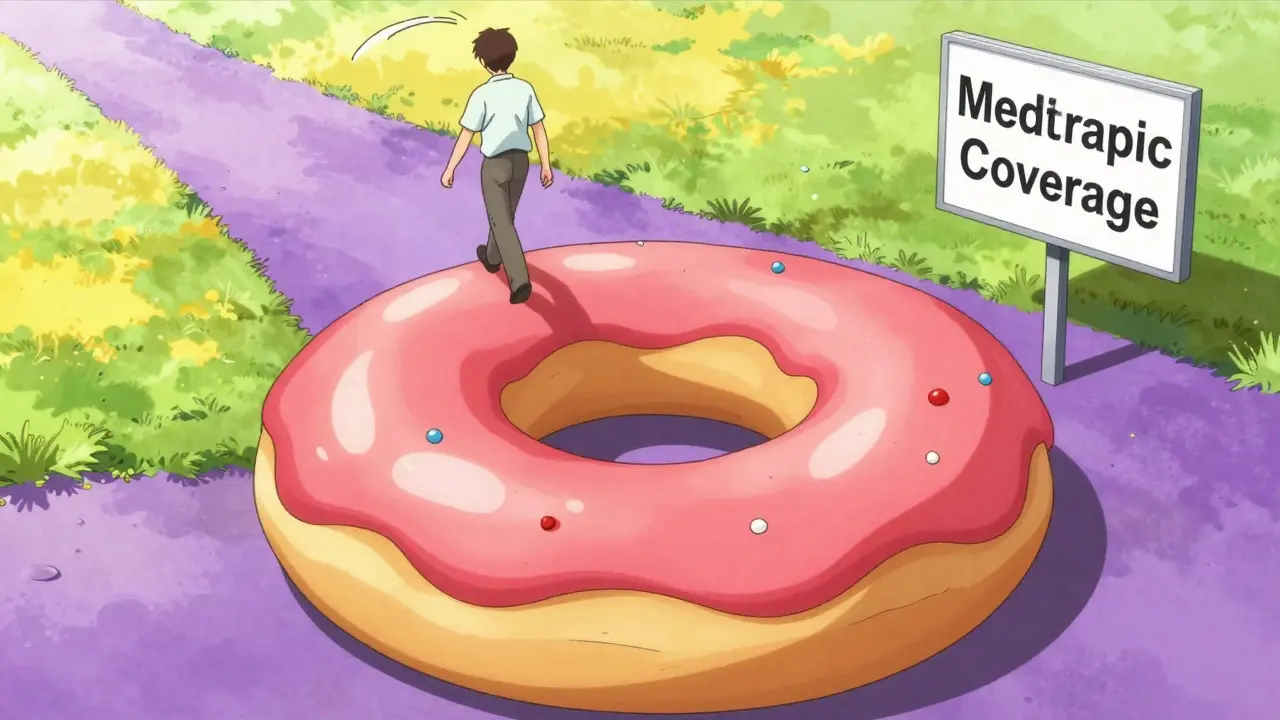
Hidden Costs and Market Distortions
Even when you go generic, you might be overpaying. There are "middlemen" in the pharmaceutical chain-specifically Pharmacy Benefit Managers (PBMs)-who manage the lists of which drugs are covered. Because of a lack of price transparency, these entities can create market distortions. Some reports indicate that patients can overpay for generics by 13% to 20% simply because the supply chain is inefficient and opaque. This is why some people are turning to cash-pay models. For example, Mark Cuban Cost Plus Drug Company operates on a transparent pricing model: manufacturing cost plus a flat fee. For some generic prescriptions, this is cheaper than using insurance. While this doesn't work for everyone-especially those on Medicaid-it highlights that the traditional insurance route isn't always the cheapest path.When Brand-Name is the Only Option
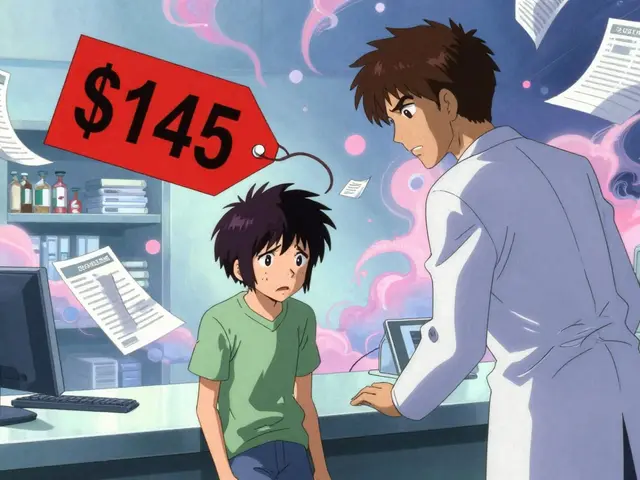
Sometimes, a generic isn't an option. Your doctor might write "dispense as written" or "do not substitute" on your prescription if they believe the brand-name version is medically necessary for your specific condition. If you need a brand-name drug but your insurance won't cover it, you'll likely have to deal with a "prior authorization." This is a process where your doctor explains to the insurance company why the generic won't work for you. Until that's approved, you might be stuck paying the full retail price, which can be staggering compared to the generic alternative.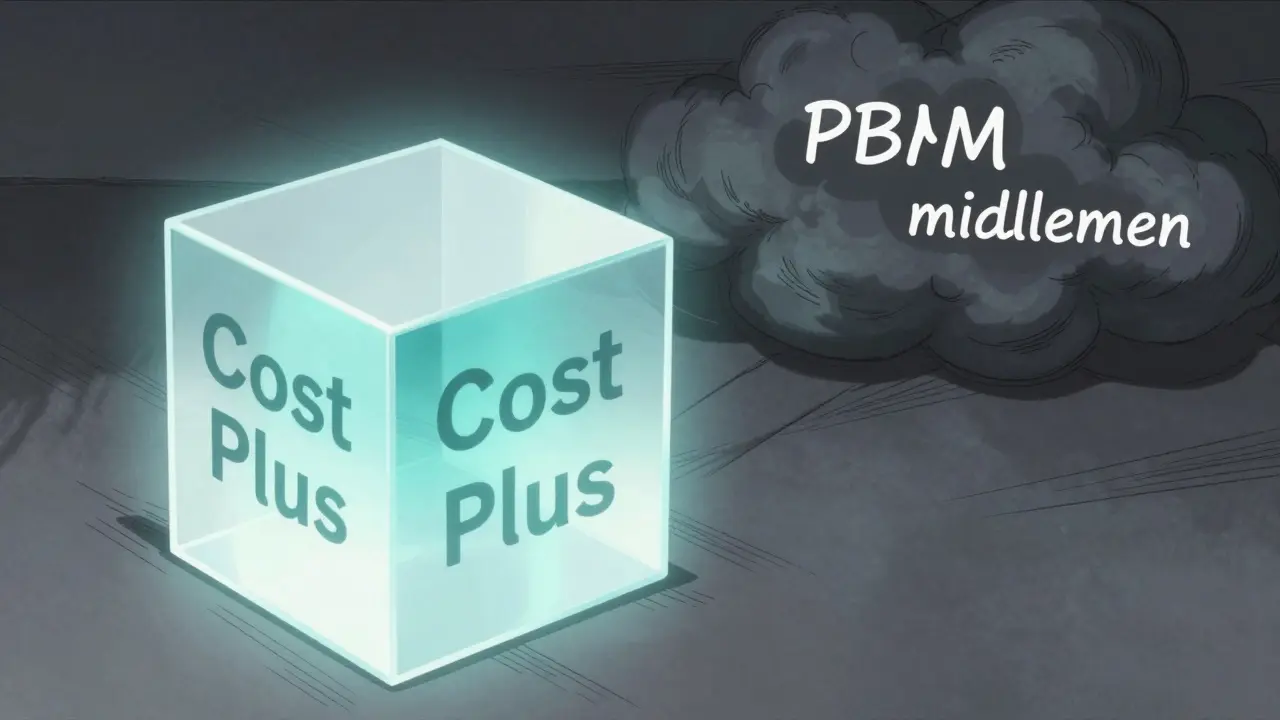
Practical Tips for Lowering Your Costs
Navigating this system requires a proactive approach. Don't assume the pharmacy's first price is the best one.- Ask your pharmacist if there is a generic alternative that is in a lower "tier" of your insurance plan.
- Check transparent pricing sites or cash-pay pharmacies to see if the cash price is lower than your insurance copay.
- If you are on Medicare, be mindful of where you are in the coverage cycle to avoid the "donut hole" traps.
- Request a 90-day supply instead of 30 days; this often reduces the number of copays you pay per year.
Are generic drugs really as effective as brand-name drugs?
Yes. The FDA requires generic drugs to have the same active ingredients and be bioequivalent to the brand-name version. This means they work the same way in your body and provide the same clinical benefit, even if the inactive ingredients (like dyes or binders) differ.
Why does my insurance sometimes charge more for a generic than a brand?
This usually happens in Medicare Part D due to the "coverage gap." Brand-name companies often give discounts that count toward your out-of-pocket limit, helping you reach catastrophic coverage faster. Generic companies rarely do this, which can leave the patient paying more out-of-pocket before the insurance kicks in fully.
What is a "prior authorization"?
It is a requirement from your insurance company that your doctor must prove a brand-name drug is medically necessary before they will agree to cover the cost. Without this approval, the insurance may refuse to pay, leaving you with the full bill.
Can I use cash instead of insurance to save money?
In some cases, yes. Cost-plus pharmacies and discount coupons can sometimes offer a lower price for generics than your insurance copay, especially if you have a high deductible. It is always worth comparing the cash price with your insurance cost.
Do PBMs affect how much I pay at the pharmacy?
Yes. Pharmacy Benefit Managers (PBMs) decide which drugs are on the "formulary" (the list of covered drugs) and at what tier they sit. Their negotiations and profit margins can lead to market distortions, sometimes resulting in patients paying more for generics than necessary.






pbm's are basically legal robbers honestly just a huge scam to keep us paying more than we should
It is also worth noting that for certain narrow therapeutic index drugs, such as warfarin or levothyroxine, switching between generic and brand-name versions can lead to significant fluctuations in blood levels. In those specific medical instances, the "dispense as written" instruction is critical for patient safety and stability.
Omg I had no idea about the donut hole thing! 😱 That sounds so stressful for anyone on a fixed income. Does that mean we should actually check the brand name price sometimes? :)
We need to be much more aggressive in demanding transparency from these PBMs. The fact that a middleman can distort the price of a generic by 20% without any one person noticing is a systemic failure. If you're feeling cheated, start by requesting the cash price at three different pharmacies; the variance is often shocking and gives you leverage to ask your doctor for a different, more affordable alternative that actually fits your budget.
Honestly, if you're still using the pharmacy your insurance just 'suggests,' you're practically asking to be overcharged. I've been using Cost Plus for ages because it's just... cleaner. It's kind of embarrassing that the average person doesn't realize how rigged the traditional retail pharmacy model is. I mean, really, who still believes in the 'insurance discount' fairy tale? It's just so quaint.
The asymmetry of information here is staggering. We're dealing with a vertical integration of the supply chain where the PBMs are essentially leveraging rebates to manipulate the formulary tiers. It's a classic agency problem where the agent's incentives are completely decoupled from the end-user's cost-minimization goals. The whole pharmacokinetic equivalence is a moot point when the economic barrier to entry is this distorted.
Just a heads up for everyone, if you're struggling with costs, look into manufacturer coupons. Some brand-name companies give them away for free on their websites, and it can sometimes bring the cost way down, even if the insurance won't play ball.
This is truly HEARTBREAKING!! 😭 Imagine a person who is just trying to be thirfty by picking a generic, only to find out they are being punnished by the very system that should help them!! It is an absolutte travesty of justice for the elderly!! We must advocate for better change immediately!!
I appreciate the breakdown of the cost structures. It helps put the frustration into perspective.
The aformentioned 90-day supply tip is genuinely a life-saver... I've saved a significant amount of money just by changing the frequency of my pharmacy visits... it's a simple fix that many people overlook!
It is simply appalling that such a convoluted system exists to dictate the health of citizens. One must wonder if the administrative complexity is a deliberate feature rather than a bug to discourage people from seeking the most economical options. It is a most distressing state of affairs for the vulnerable.
The information provided is quite comprehensive.
I totally agree with the point about cash-pay models. I tried it once for a basic generic and it was actually cheaper than my $20 copay. It's just a shame that not everyone knows how to do it or has the time to hunt for the best price.