
Caffeine-Medication Timing Calculator
How to Use This Tool
Select your medication type from the dropdown below to see recommended timing guidelines for caffeine consumption. This tool is based on evidence from medical studies and guidelines from major health organizations.
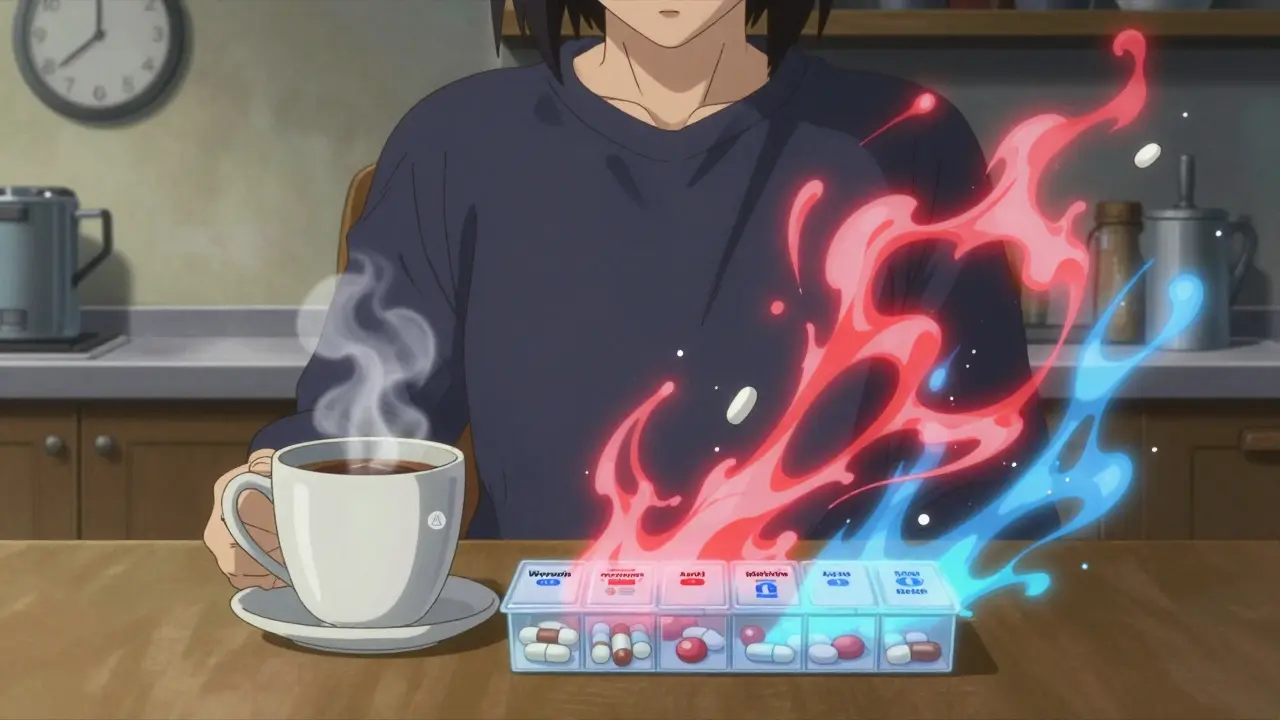
Most people drink coffee without thinking twice. But if you're taking any kind of medication, that morning cup might be doing more than just waking you up-it could be changing how your drugs work, making them stronger, weaker, or even dangerous.
Why Caffeine Interferes With Medications
Caffeine isn’t just a stimulant. It’s a chemical that interacts directly with your body’s drug-processing system. Specifically, it blocks an enzyme called CYP1A2, which breaks down about 10-15% of all prescription drugs. When caffeine sits in your system, it slows down how fast your liver clears out certain medications. That means those drugs stick around longer, building up to higher levels than intended.At the same time, caffeine also blocks adenosine receptors in your brain and heart. Adenosine helps calm your nervous system and regulate heart rhythm. When caffeine takes over those receptors, it can cancel out the effects of drugs designed to work through them-like those used in cardiac stress tests.
This isn’t theoretical. Studies show that caffeine can raise the blood levels of some drugs by 20-40%. For others, it can cut absorption by more than half. The result? Treatment failure, unexpected side effects, or even hospital visits.
Medications That Become More Dangerous With Caffeine
Some drugs become dangerously potent when mixed with caffeine. The biggest red flags are in three categories: heart meds, psychiatric drugs, and stimulants.
Anticoagulants like warfarin are especially risky. Caffeine slows warfarin’s breakdown, pushing your INR (a measure of blood clotting time) up by 15-25% within a day. That means you’re at higher risk for bleeding-bruising easily, nosebleeds, or worse. The American Heart Association advises keeping caffeine under 200 mg per day (about two cups of coffee) and never changing your intake suddenly. A spike in coffee one week, then cutting back the next, can send your INR swinging up and down.
Tricyclic antidepressants like amitriptyline and imipramine are also affected. Caffeine can boost their blood levels by 20-40%, increasing side effects like dizziness, dry mouth, rapid heartbeat, and confusion. Even if you’ve been taking them for years, adding a second cup of coffee might push you into dangerous territory.
Stimulant medications like Adderall, Ritalin, or even over-the-counter pseudoephedrine (in cold pills) combine explosively with caffeine. Together, they can spike your heart rate by 20-35 beats per minute and raise systolic blood pressure by 15-25 mmHg in under an hour. People with heart conditions or high blood pressure are at serious risk. One 2025 clinical update from University Hospitals documented multiple ER visits from patients who took an ADHD pill with their morning coffee and ended up with chest pain and palpitations.
Medications That Stop Working Because of Caffeine
Not all interactions make drugs stronger-some make them useless.
Cardiac stress test drugs like adenosine and dipyridamole are designed to slow your heart slightly to mimic exercise. But caffeine blocks the exact receptors these drugs need to work. That’s why the American College of Cardiology requires patients to avoid caffeine for 24 hours before the test. Skip it? Your test might come back inconclusive, forcing you to reschedule and delay diagnosis.
Anti-seizure drugs like carbamazepine, phenytoin, and valproate lose effectiveness when caffeine is present. A 2019 study in Epilepsy & Behavior found patients who drank coffee regularly had 18-35% more seizures than those who avoided it. Even if your seizures were under control, caffeine could be the hidden trigger.
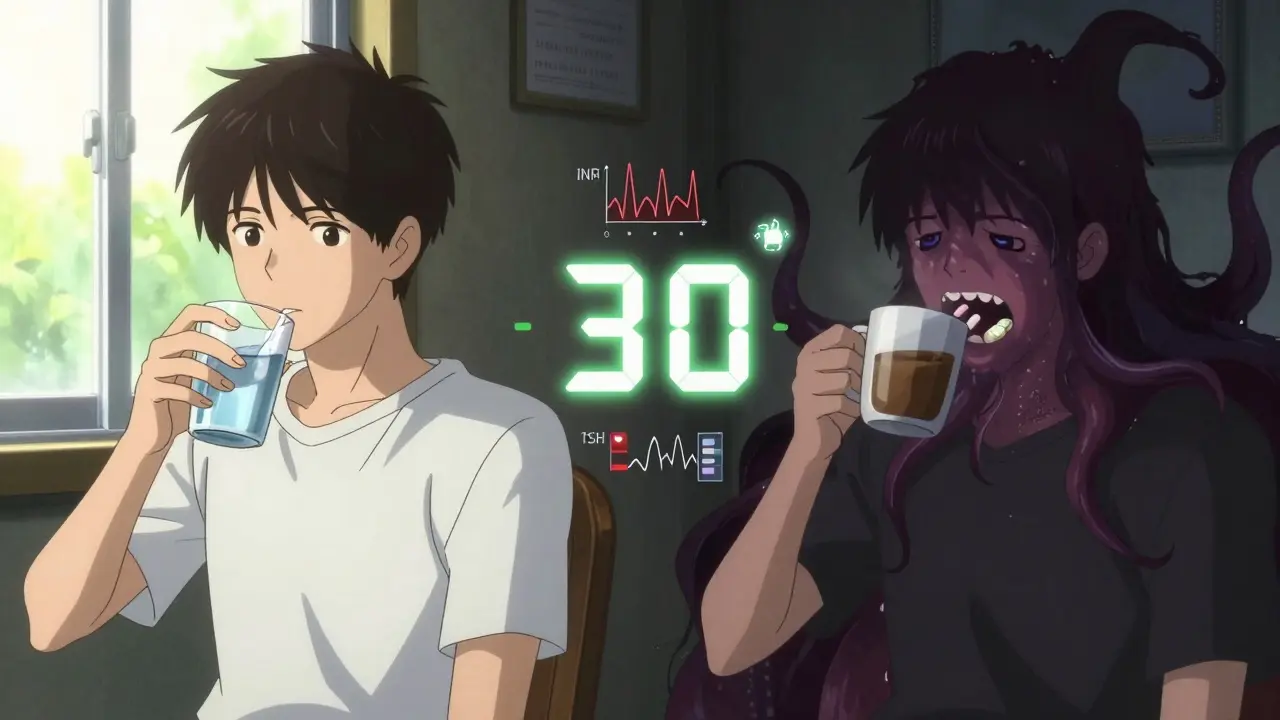
Thyroid medication like levothyroxine (Synthroid) is one of the most common and preventable mistakes. Coffee-yes, even one cup-can reduce absorption by 25-57%. A Reddit user shared that after years of stable TSH levels at 1.8, switching to taking Synthroid with coffee pushed it to 4.5. Once they waited 60 minutes after taking the pill before drinking coffee, their levels returned to normal. The Endocrine Society’s official guideline? Wait 30-60 minutes after taking levothyroxine before consuming any caffeine.
Psychiatric Drugs and Caffeine: A Delicate Balance
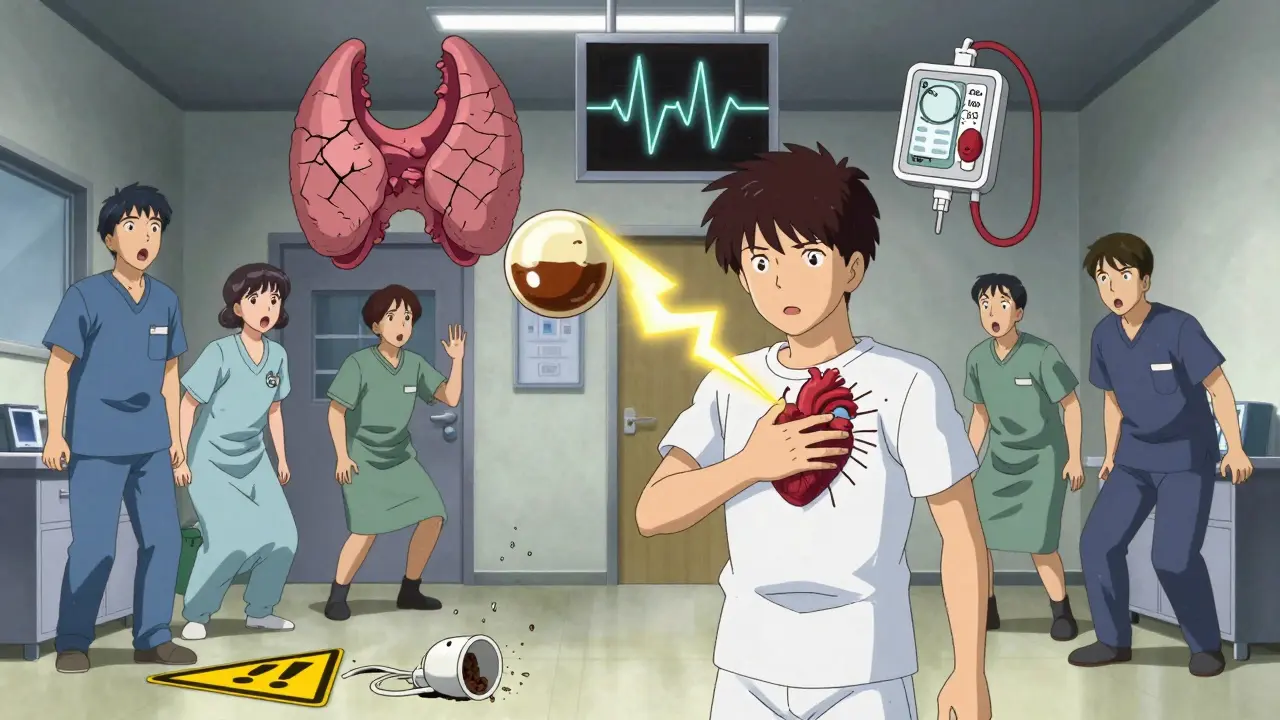
Antidepressants react unpredictably to caffeine. Some are weakened; others are amplified.
SSRIs like fluvoxamine (Luvox) and escitalopram (Lexapro) are significantly affected. Harvard Health notes that coffee can reduce fluvoxamine absorption by about one-third. That means you might feel like your depression isn’t improving-even though you’re taking your pills exactly as prescribed. The problem? It’s not your fault. It’s the coffee.
On the flip side, caffeine can increase levels of tricyclic antidepressants, leading to drowsiness, tremors, or even serotonin syndrome-a rare but life-threatening condition marked by high fever, confusion, fast heart rate, and muscle rigidity.
Patients on psychiatric meds report consistent patterns: 68% say caffeine makes their anxiety worse, and 42% notice their meds just don’t seem to work as well. One user on PatientsLikeMe described feeling “like a wire was plugged into my chest” after taking Adderall with coffee-unable to sleep for 12 hours, heart racing, hands shaking.
What About Diabetes and Blood Pressure Meds?
People with diabetes need to be extra careful. Caffeine combined with pseudoephedrine (common in decongestants) can spike blood sugar by 15-25 mg/dL and raise body temperature by half a degree to a full degree. That’s enough to throw off insulin dosing and make blood sugar control harder.
For blood pressure meds like verapamil, caffeine can blunt their effect for 2-3 hours. Mayo Clinic’s data shows diastolic pressure stays 8-12 mmHg higher than normal after coffee. That might not sound like much, but if you’re already borderline hypertensive, those extra points matter.
How to Stay Safe: Practical Rules
You don’t have to quit coffee. You just need to time it right.
- For levothyroxine: Wait 30-60 minutes after taking your pill before drinking coffee.
- For warfarin: Keep caffeine intake consistent-no more than 200 mg daily (about two cups), and don’t suddenly drink more or less.
- For cardiac stress tests: Avoid all caffeine for 24 hours. That includes tea, energy drinks, chocolate, and even decaf coffee (which still has 2-15 mg).
- For stimulants (ADHD meds, decongestants): Avoid caffeine for at least 4-6 hours after taking them.
- For antidepressants: If you notice increased anxiety, jitteriness, or trouble sleeping, try cutting out coffee for a week. See if things improve.
Decaf isn’t safe either. One cup of decaf coffee can still have up to 15 mg of caffeine. For people on sensitive meds like levothyroxine or warfarin, that’s enough to cause problems.
When to Call a Doctor Immediately
Some reactions need emergency care. If you experience any of these after consuming caffeine with medication:
- Heart rate over 120 beats per minute
- Systolic blood pressure above 180 mmHg
- Difficulty breathing
- Confusion, vision changes, or loss of coordination
- Seizures, muscle twitching, or rigid muscles
- Suicidal thoughts or worsening depression
- Loss of consciousness
Call 999 or go to the nearest emergency room. These aren’t normal side effects-they’re signs your body is overwhelmed.
What’s Changing in 2025
The medical world is catching up. In 2024, the FDA required new warning labels on 15 medications for caffeine interactions, including newer blood thinners like apixaban. The NIH launched a $3.2 million study in January 2025 to look at how caffeine affects apixaban and rivaroxaban-drugs millions now take daily.
Pharmacies are updating their systems too. Drug databases like Micromedex now flag caffeine interactions for 127 medications, up from 89 in 2020. Most major hospitals now have electronic alerts in their systems that pop up when a doctor prescribes a drug that interacts with caffeine.
Future tools may include genetic tests to identify people with slow CYP1A2 metabolism-those who process caffeine poorly and are at highest risk. Smartphone apps that scan your meds and warn you about caffeine are also in development.
Bottom Line
Caffeine isn’t the enemy. But it’s not harmless either. If you take medication, especially for your heart, thyroid, brain, or mood, your coffee is part of your treatment plan. Don’t treat it like a harmless habit.
Check your meds. Talk to your pharmacist. Track how you feel when you drink coffee. Small changes in timing can mean the difference between control and crisis.
One cup of coffee might seem small. But for someone on warfarin, levothyroxine, or an antidepressant, it’s a chemical wild card. Know the risks. Adjust your routine. Your health depends on it.





So my Adderall and coffee are now public enemy number one? Cool. I’ll just switch to tea. Wait-no, that’s bad too. Guess I’m drinking water and crying in the shower now.
Thank you for this. I’ve been wondering why my thyroid levels kept creeping up even though I took my Synthroid ‘correctly.’ Turns out I was drinking coffee 10 minutes after. Now I wait an hour. Life changed. ☕️🚫
I never realized caffeine could mess with my Lexapro so bad. I thought I was just getting anxious because I’m a mess. Turns out it’s the coffee. I cut it out for a week and my panic attacks dropped by like 70%. Why doesn’t anyone tell you this?
My mom’s on warfarin and drinks three cups of coffee a day. She thinks it’s fine because she’s been doing it for 15 years. I printed out this article and taped it to her fridge. She’s still mad at me. Worth it.
This is such an important post. So many people think caffeine is just ‘a little buzz’ and don’t realize it’s a full-blown pharmacological actor. If you’re on meds, treat coffee like a prescription-timing matters, dosage matters, and consistency matters. Talk to your pharmacist. They know more than your doctor sometimes.
People think they’re being ‘independent’ by ignoring medical advice. Then they end up in the ER and wonder why. This isn’t about restriction-it’s about respect. For your body. For your meds. For the people who have to clean up your mess later. Stop being reckless and start being responsible.
It is of paramount importance to note that the CYP1A2 enzyme polymorphism varies significantly across ethnic populations, and individuals of African descent, such as those from South Africa, demonstrate a higher prevalence of the slow-metabolizer phenotype. This renders the general recommendation of 200 mg/day potentially inadequate for certain demographics, as their hepatic clearance is markedly diminished, thereby increasing the risk of toxic accumulation of co-administered pharmaceutical agents. Further, the assumption that decaffeinated beverages are inert is scientifically unsound, as even trace amounts of caffeine may exert pharmacodynamic effects in genetically susceptible individuals. I urge all clinicians to incorporate pharmacogenomic screening prior to prescribing medications with known caffeine interactions.
Big Pharma doesn’t want you to know this because coffee is too profitable. The FDA only added warnings after lawsuits. They’ve been hiding this for decades. Your doctor? Paid by drug companies. Your pharmacist? Told to push pills, not warn you. Even decaf is laced with trace chemicals to mimic the real thing. You think they care about your heart? They care about your subscription to Starbucks. Wake up. This isn’t science-it’s corporate control.
So if I take my Adderall at 7am and coffee at 8am I’m fine right? Wait no wait I read the 4-6 hour thing oh god I’ve been doing this wrong for years I’m gonna die I’m gonna die I’m gonna die