
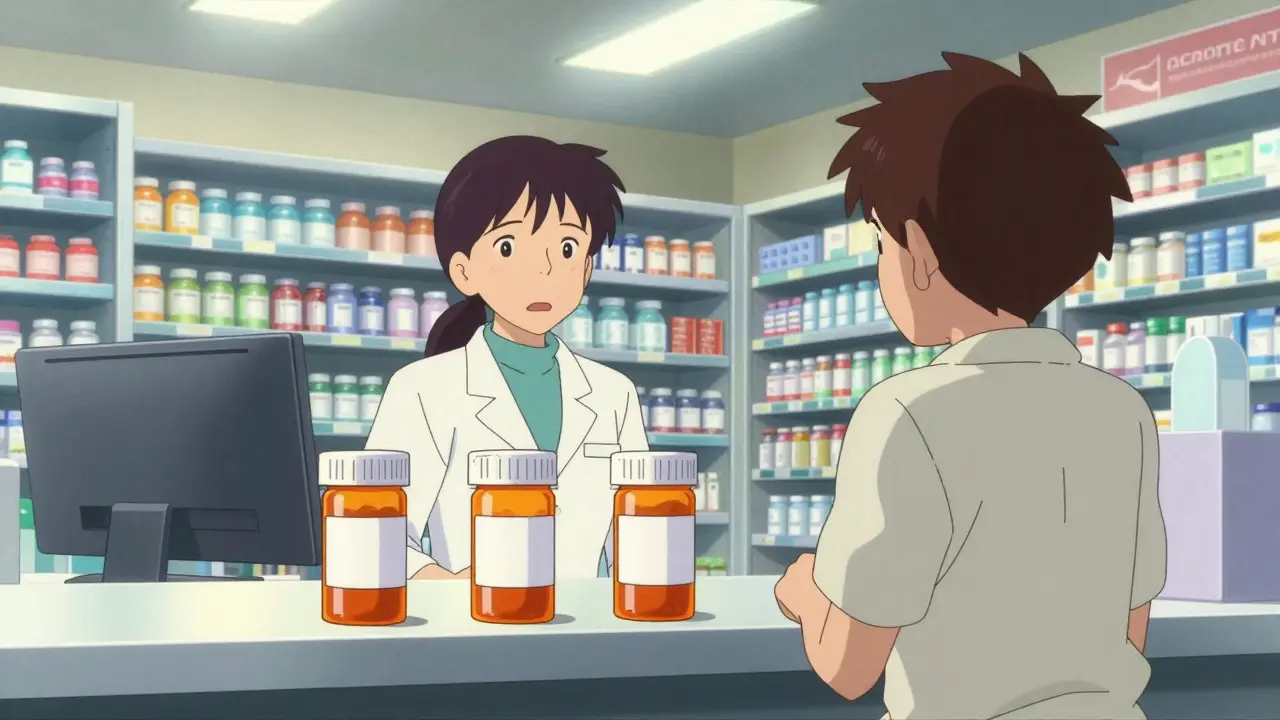
You're at the pharmacy counter and the pharmacist tells you there are three different versions of your medication available. They all have the same active ingredient and the same price, but different manufacturers. Which one do you pick? Most people just shrug and take whatever is in the bottle, but if you're managing a sensitive health condition, the answer isn't always "it doesn't matter." While the law ensures these drugs are similar, they aren't always identical clones.
The truth about generic equivalence
When we talk about generic drugs, we often hear they are "the same" as the brand name. In the eyes of the law, this is mostly true. Bioequivalence is the requirement that a generic drug delivers the active ingredient into the bloodstream at a similar rate and extent as the original brand-name drug . To get approval, manufacturers must prove that their drug's performance falls within a specific range-usually 80% to 125% of the brand-name's pharmacokinetic profile.
Wait, does that mean a generic could have 20% less medicine? Not exactly. That range is about how the body absorbs the drug, not the amount of powder in the pill. In reality, most generics are incredibly close to the original. Data shows that 80% of the differences between approved generics and brand names are actually within a tiny 5% window. For the vast majority of people, switching between these options feels like nothing at all.
Decoding the FDA Orange Book
If you really want to know what you're getting, you can look at the FDA Orange Book is the official publication that lists approved drug products with reference to their therapeutic equivalence . This is where the FDA assigns "TE codes" to generics. These codes are the gold standard for deciding if one drug can be swapped for another without a doctor's intervention.
| Code | What it Means | Best For... |
|---|---|---|
| AB-rated | Therapeutically equivalent; no clinically significant difference in performance. | Directly replacing a brand name or switching manufacturers. |
| B-rated | Meets standards but has documented differences in bioequivalence. | Starting a new medication where cost is the primary concern. |
An AB-rated generic is the "safe bet." It means the FDA is confident the drug will behave exactly like the brand name. A B-rated generic is still safe and approved, but it might not be as seamless a switch if you've been on the brand-name version for years.

When the "small difference" actually matters
For most meds-like a common statin or a blood pressure pill-the specific generic manufacturer doesn't change your outcome. But there is a category called Narrow Therapeutic Index (NTI) drugs are medications where small changes in the blood concentration can lead to significant therapeutic failure or toxicity . If you're taking these, a 5% difference in absorption isn't just a statistic; it's a potential health risk.
Common examples of NTI drugs include digoxin (for heart failure), warfarin (a blood thinner), and levothyroxine (for thyroid issues). For these specific medications, the Endocrine Society and other medical bodies suggest a "stick-to-one" rule. Once you find a manufacturer's version that stabilizes your levels, don't switch. Switching from one generic manufacturer to another for levothyroxine, for instance, can cause your thyroid levels to swing, making you feel like your dose is suddenly wrong when it's actually just a different formulation.
How to handle the pharmacy switch
Pharmacies often change which generic they stock based on their contracts with wholesalers. You might have used "Generic A" for six months, and suddenly you're handed a bottle of "Generic B." If you are on a standard medication, this is usually fine. However, if you are on an NTI drug or have a very sensitive reaction to fillers, you need to be proactive.
Ask your pharmacist for the National Drug Code (NDC). This is a unique identifier for every specific manufacturer's version of a drug. By tracking the NDC, you can ensure you're getting the exact same pill every month. If the pharmacist tells you the manufacturer has changed, you can ask them to check the Orange Book rating to ensure it's still an AB-rated equivalent.
Practical checklist for your next refill
Not sure what to do when your medication looks different? Use this logic to decide your next move:
- Check your drug class: Is it a Narrow Therapeutic Index (NTI) drug? If yes, insist on the same manufacturer every time.
- Verify the rating: If you're switching from a brand to a generic, ask if it's AB-rated.
- Monitor your symptoms: If you switch generics and suddenly feel different (more side effects or less efficacy), document the date and the new manufacturer.
- Talk to the pro: Ask your pharmacist, "Is this the same manufacturer I had last time?"
Are generic drugs actually less effective than brand names?
In the vast majority of cases, no. The FDA requires generics to be bioequivalent, meaning they work the same way in the body. While there are very rare cases where specific patients react differently to inactive ingredients (fillers), the active medicine performs the same.
Why does my generic pill look different than the last one?
Different manufacturers use different dyes, shapes, and fillers. As long as the active ingredient and dosage are the same and the drug is AB-rated, the color or shape of the pill doesn't affect how the medicine works.
Can I ask my doctor to specify a certain generic?
Yes. Your doctor can write "Dispense as Written" (DAW) or specify a particular manufacturer on the prescription. This is especially common for thyroid or seizure medications where stability is key.
What is a "B-rated" generic and is it safe?
B-rated generics are safe and FDA-approved, but they have slight differences in how they are absorbed compared to the brand name. They are generally fine for people starting a medication, but might not be the best choice for someone who is already perfectly stable on a brand-name version.
Do I need to worry about the "80-125%" range?
For most people, no. This range refers to the statistical confidence interval of how the drug is absorbed, not a random 25% drop in medicine. Most generics actually stay within a 5% difference from the brand name.
Next steps for patients
If you are starting a new medication, a B-rated generic can save you a lot of money without hurting your results. However, if you've been on a medication for years and your condition is stable, switching to an AB-rated generic is the smoother path. If you're taking something for your heart or thyroid, make a pact with your pharmacist to keep your manufacturer consistent. A simple request to "keep the NDC the same" can prevent unnecessary blood test fluctuations and health scares.





This is such a helpful breakdown for anyone feeling overwhelmed by their prescriptions. I've seen so many people struggle with thyroid meds and not understand why they feel off even when the dose is the same. Just focusing on that NDC code can be a real game changer for stability!
Absolutely typical!!! The way they gloss over the "fillers" is just laughable... as if a child or a sensitive adult doesn't react to those chemicals!!! I've seen reactions that would make a pharmacist shake in their boots!!! Do your own research!!!
The fundamental misunderstanding here is that most patients lack the intellectual rigor to comprehend the difference between pharmacokinetic profiles and therapeutic outcomes. One must realize that the FDA's standards are merely a baseline for adequacy, not a guarantee of perfection. It is a philosophical tragedy that we entrust our biological homeostasis to a system that accepts a 20% variance in absorption, regardless of how the statistical mean suggests otherwise. True health requires a level of precision that the current industrial pharmaceutical complex is simply not designed to provide. We are essentially gambling with our chemistry under the guise of cost-efficiency.
Oh sure, just ask the pharmacist to check the Orange Book. I'm sure they have nothing better to do during the rush hour than browse a government database for you while ten other people are waiting in line.
I literally had a panic attack when my pill changed from blue to white! I thought they gave me the wrong med and I spent two hours calling my doctor because I was convinced my heart was going to stop! This is honestly a nightmare for anyone with anxiety!
my doctor told me the same thing bout my meds but i honestly think they just try to push whatever is cheapest for the insurance company lol
The Orange Book is a joke and anyone who trusts it is just a sheep. They probably have deals with the manufacturers to keep those "AB ratings" high so people keep buying the cheap stuff while the elite use the pure versions. It's all about control and keeping the masses in a state of mild dysfunction.
too long didnt read but sounds okay
Why follow US FDA rules? Our Indian pharma is the best in the world and we provide the cheapest meds globally 🇮🇳💪 Just take what works and stop overthinking everything! 💊🔥
I think it's wonderful that we have so many options to make healthcare affordable for everyone. While it's good to be cautious, we should also be grateful for the systems that bring costs down for the common person.
Right... because the government is just so transparent and honest with their "ratings" 🙄💅✨ I'll just trust the system blindly then!!!
Let's all take charge of our health right now by keeping a personal log of every single NDC code we receive at the pharmacy because knowledge is power and when you take control of your medication you are taking control of your entire destiny and your future health outcomes which is the most motivating thing you can do for yourself and your family today!
I've always found that having a friendly relationship with the pharmacy staff makes this whole process so much easier since they can actually alert you before you even pick up your medication if the manufacturer has changed, and it's honestly just a matter of taking a few extra minutes to communicate your needs clearly so that everyone is on the same page and you can go home feeling secure about your treatment plan.