Tamoxifen & Antidepressant Interaction Checker
Select Your Current Medications
Select the antidepressant you are currently taking or considering:
Imagine you are taking Tamoxifen, a standard treatment for estrogen receptor-positive breast cancer. You also struggle with anxiety or depression, so your doctor prescribes an antidepressant. For years, the medical world whispered a warning: some of these common mood stabilizers might make Tamoxifen less effective. It was a terrifying thought-treating one health issue while potentially worsening another. But is this fear justified? Or is it based on outdated science?
The short answer is that the relationship between Selective Serotonin Reuptake Inhibitors (SSRIs) and Tamoxifen is far more nuanced than a simple "do not mix" rule. While certain drugs do lower the levels of Tamoxifen’s active form in your blood, large-scale studies show this rarely translates to worse survival rates. Understanding this distinction can save you from unnecessary anxiety and help you choose the right mental health support without compromising your cancer care.
How Tamoxifen Works in Your Body
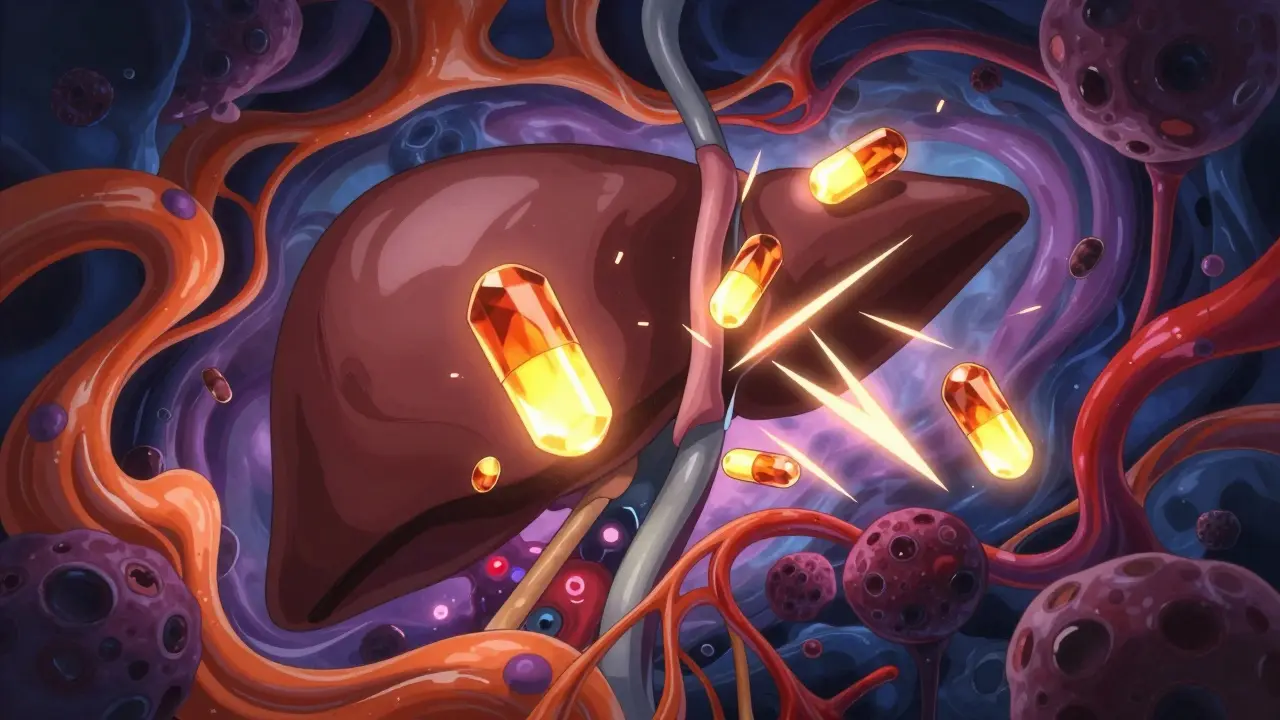
To understand why this interaction matters, we first need to look at how Tamoxifen functions. Tamoxifen is not active when you swallow the pill. It is a prodrug, meaning your body must convert it into its active form to fight cancer cells. This conversion happens primarily in the liver through an enzyme system called Cytochrome P450 2D6 (CYP2D6).
The main active metabolite produced by this process is Endoxifen. Endoxifen is significantly more potent than Tamoxifen itself, binding to estrogen receptors up to 100 times stronger. If something blocks the CYP2D6 enzyme, less Endoxifen is produced. Theoretically, if Endoxifen levels drop too low, the drug might not suppress tumor growth effectively. This theoretical risk sparked the controversy surrounding antidepressants.
The Culprits: Which SSRIs Block the Enzyme?
Not all antidepressants affect CYP2D6 equally. Some have no impact, while others act as strong brakes on the enzyme. Doctors often refer to the Flockhart Table, which ranks drugs by their inhibition strength. Here is how the most common SSRIs stack up:
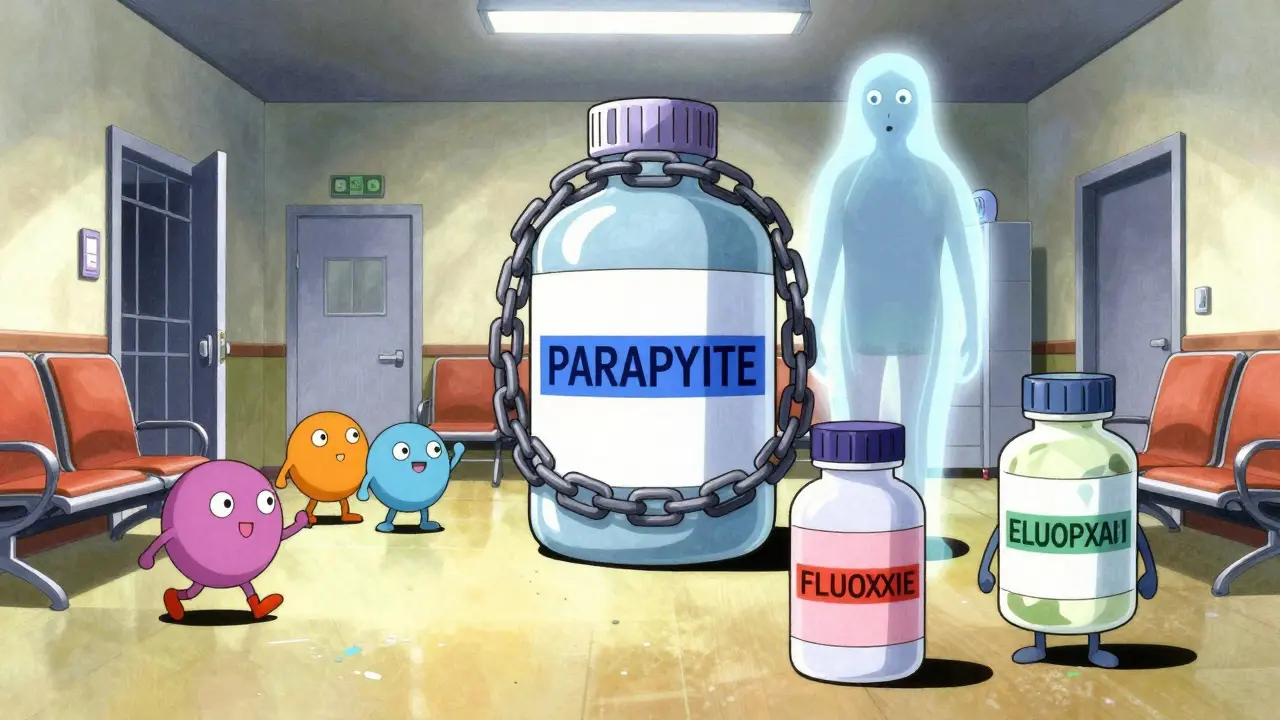
- Paroxetine (Paxil): A strong inhibitor. It can reduce Endoxifen levels by over 50%.
- Fluoxetine (Prozac): A moderate-to-strong inhibitor. It has a long half-life, meaning it stays in your system longer and continues to block the enzyme even after you stop taking it.
- Sertraline (Zoloft): A moderate inhibitor. It causes a smaller reduction in Endoxifen compared to Paroxetine.
- Citalopram (Celexa) and Escitalopram (Lexapro): Weak inhibitors. They have minimal effect on CYP2D6 and are generally considered safe alternatives.
Non-SSRI options like Venlafaxine (Effexor) and Mirtazapine (Remeron) are also frequently recommended because they do not significantly inhibit CYP2D6.
| Drug Name | Inhibition Strength | Impact on Endoxifen | Recommendation |
|---|---|---|---|
| Paroxetine | Strong | High Reduction | Avoid if possible |
| Fluoxetine | Moderate/Strong | Moderate Reduction | Use with caution |
| Sertraline | Moderate | Mild Reduction | Acceptable alternative |
| Citalopram | Weak | Minimal Reduction | Preferred choice |
| Escitalopram | Weak | Minimal Reduction | Preferred choice |
| Venlafaxine | Negligible | No Significant Impact | Preferred choice |
Does Lower Endoxifen Mean Worse Outcomes?
This is the million-dollar question. Early pharmacokinetic studies showed that strong inhibitors like Paroxetine drastically lowered Endoxifen levels. It seemed logical that lower levels would lead to higher recurrence rates. However, biology is messy, and clinical outcomes tell a different story.
A landmark 2016 study by Kaiser Permanente analyzed nearly 17,000 breast cancer survivors. They found no statistically significant increase in breast cancer recurrence or death among women who took Paroxetine alongside Tamoxifen. Similarly, a large Danish cohort study published in JAMA Internal Medicine showed no difference in outcomes. These real-world data points suggest that while the enzyme is blocked, the body may compensate through other metabolic pathways, such as CYP3A4 and CYP2C9, ensuring enough active drug reaches the cancer cells.
Conversely, some smaller studies, like a 2009 Canadian trial, did report increased mortality risks with prolonged Paroxetine use. This conflict keeps the debate alive, but the trend in major oncology guidelines is shifting toward trusting the larger outcome studies over the smaller biochemical ones.
What Do Current Guidelines Say?
If you ask different organizations, you might get slightly different answers, but the consensus is moving toward flexibility. The American Society of Clinical Oncology (ASCO) updated its guidelines in 2022 to state that clinicians should not avoid antidepressants solely due to concerns about CYP2D6 inhibition. They emphasize that treating depression is crucial for quality of life and overall adherence to cancer therapy.
The National Comprehensive Cancer Network (NCCN) takes a slightly more cautious approach. Their antiemesis guidelines recommend avoiding Paroxetine and Fluoxetine in patients needing both Tamoxifen and antidepressants, favoring Citalopram, Escitalopram, or Venlafaxine instead. The European Medicines Agency still maintains stronger warnings against strong inhibitors, reflecting a more conservative regulatory stance in Europe.
Essentially, the advice is not to panic, but to be strategic. If you are already on a weak inhibitor, stay on it. If you are on a strong inhibitor and it works well for you, discuss the risks with your oncologist before switching. Mental health stability is a vital part of recovery.

Should You Get Genetic Testing?
You might have heard about CYP2D6 genotyping. This test checks your DNA to see if you are a "poor metabolizer" naturally, regardless of what drugs you take. About 7-10% of people of European descent are poor metabolizers, meaning their bodies produce very little Endoxifen even without any interfering drugs.
Despite the logic behind this test, ASCO and other major groups currently advise against routine testing. Why? Because the evidence linking genotype directly to clinical outcomes is inconsistent. Being a poor metabolizer does not automatically mean you will fail Tamoxifen therapy. Many factors influence drug efficacy, including tumor biology and patient compliance. Testing can create unnecessary anxiety without offering a clear path to better treatment.
Practical Steps for Patients
Navigating this interaction requires open communication. Here is how to handle it practically:
- Disclose Everything: Tell your oncologist about every medication, supplement, and over-the-counter drug you take. Even herbal remedies can affect liver enzymes.
- Prioritize Mental Health: Untreated depression can lead to stopping Tamoxifen early, which is a proven risk factor for recurrence. Do not suffer in silence to protect your cancer drug.
- Ask About Alternatives: If you are prescribed Paroxetine, ask if Citalopram or Venlafaxine might be suitable. These switches are often seamless and carry lower theoretical risk.
- Monitor Symptoms: Pay attention to side effects. Sometimes, drug interactions cause more noticeable side effects than reduced efficacy. Report any new symptoms immediately.
Remember, the goal is holistic care. Your brain health is just as important as your physical health during cancer treatment. Modern medicine provides enough options to manage both conditions safely.
Can I take Zoloft (Sertraline) with Tamoxifen?
Yes, Sertraline is generally considered a reasonable option. It is a moderate CYP2D6 inhibitor, meaning it has a lesser impact on Endoxifen levels compared to Paroxetine or Fluoxetine. Most oncologists consider it safe, though some prefer weaker inhibitors like Citalopram.
Is Lexapro (Escitalopram) safe with Tamoxifen?
Yes, Escitalopram is widely regarded as one of the safest SSRIs to take with Tamoxifen. It is a weak CYP2D6 inhibitor and has minimal effect on the metabolism of Tamoxifen into its active form, Endoxifen.
Will Paroxetine kill me if I take it with Tamoxifen?
No, that is an exaggeration. While Paroxetine reduces Endoxifen levels, large clinical studies have not consistently shown that this leads to higher death rates. However, because safer alternatives exist, many doctors prefer to avoid Paroxetine to eliminate any theoretical risk.
Do I need to stop my antidepressant before starting Tamoxifen?
Not necessarily. Stopping an antidepressant abruptly can cause withdrawal symptoms and worsen depression, which is dangerous. Instead, work with your doctor to switch to a non-interacting antidepressant gradually, or continue your current medication if the benefits outweigh the risks.
What is the best antidepressant for breast cancer patients on Tamoxifen?
There is no single "best" drug for everyone, but Venlafaxine, Mirtazapine, Citalopram, and Escitalopram are frequently recommended as first-line choices because they do not significantly interfere with Tamoxifen metabolism.