
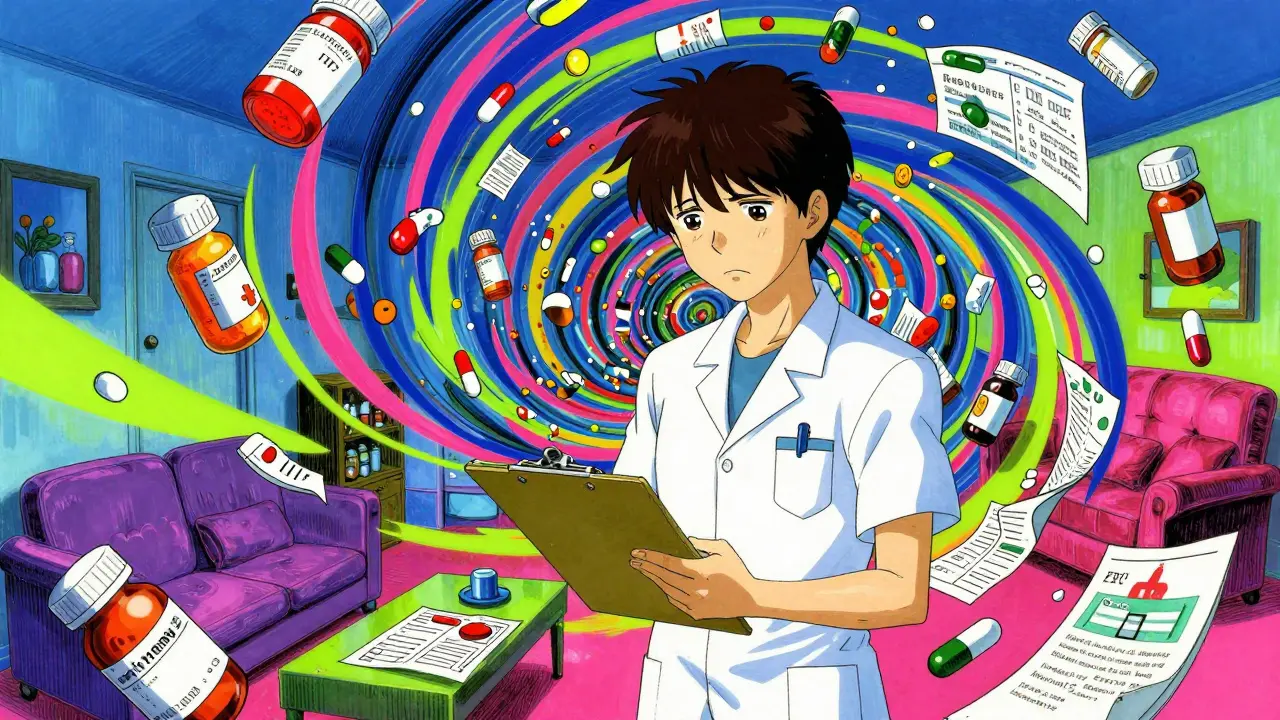
Imagine this: your loved one is taking five different prescriptions. One for blood pressure, one for cholesterol, two for diabetes, and a new one for arthritis. The schedule is complex-some with food, some on an empty stomach, some at night, some in the morning. Now imagine you are the one responsible for making sure every single dose is taken correctly. It sounds overwhelming, doesn't it? You are not alone. Millions of family members step into this role every year, often without any formal training.
The stakes are high. Non-adherence to medication contributes to 125,000 preventable deaths annually in the United States, according to the National Council on Patient Information and Education. But here is the good news: involving family and caregivers systematically can cut home medication errors by nearly half. This guide will show you exactly how to build a safety net that protects your loved one’s health while reducing your own stress.
Start With a Master Medication List
Before you buy any pill boxes or download apps, you need a single source of truth. Most medication errors happen because information is scattered across different prescription bottles, hospital discharge papers, and doctor’s notes. Dr. Bruce Chernof of The SCAN Foundation emphasizes that caregivers who maintain comprehensive lists reduce adverse drug events by 41%.
Your master list should include more than just the drug name. For each medication, write down:
- Brand and generic names: Sometimes doctors prescribe by brand, but the pharmacy dispenses generic. Knowing both prevents confusion.
- Exact dosage: For example, "Lisinopril 10mg," not just "blood pressure pill."
- Precise scheduling: "Take 1 tablet daily at 8 AM with food" is much clearer than "take once a day."
- Prescribing provider: Who prescribed it? This matters when you have multiple specialists.
- Therapeutic purpose: Why is your loved one taking it?
- Known side effects or interactions: What should you watch out for?
Update this list within 24 hours of any change. Transitions of care-like moving from hospital to home-are the most dangerous times, where 50-60% of medication errors occur. Keep this list in a binder or digital note that travels with your loved one to every appointment.
Build Routines Using Habit Stacking
Willpower is not enough for long-term medication adherence. You need systems. The National Institute on Aging endorses a technique called "habit stacking," which links new medication habits to existing daily routines. Instead of relying on memory, you anchor the medication to something your loved one already does automatically.
For example:
- Take blood pressure medication immediately after brushing teeth in the morning.
- Take evening pills right after setting the alarm clock for the next day.
- Take lunch-time medications as soon as the first bite of food is eaten.
A 2022 study showed that this simple psychological trick increased adherence by 28%. It removes the decision-making process. When the trigger happens (brushing teeth), the action follows (taking the pill). Consistency creates safety.

Leverage Technology and Tools
Human memory fails. Technology does not. You do not need expensive equipment to start, but the right tools can make a massive difference.
| Tool Type | Effectiveness | Best For |
|---|---|---|
| 7-Day AM/PM Pill Organizers | Reduces errors by 37% | Simple regimens, visual confirmation |
| Electronic Dispensers (e.g., Hero Health) | Decreases missed doses by 62% | Cognitive impairment, strict schedules |
| Smartphone Apps (e.g., Medisafe) | Improves adherence by 45% vs paper logs | Tech-savvy users, shared access for families |
| Voice Assistants (e.g., Amazon Alexa) | Reduces missed doses by 37% | Hands-free reminders, cognitively impaired patients |
If your loved one struggles with dexterity or vision, consider automatic refill programs. Major pharmacies like CVS and Walgreens offer these services, typically requiring setup 7-10 days before medication runs out. As of early 2024, 85% of major pharmacies provide this, ensuring you never face the panic of an empty bottle on a Sunday night.
Collaborate With Healthcare Professionals
You are part of the care team, but you are not the expert on pharmacology. That is where pharmacists come in. Dr. Michael Steinman, a geriatric pharmacology specialist at UCSF, notes that pharmacists are the most accessible medication experts, with 92% of U.S. pharmacies offering consultations without appointments.
When you pick up prescriptions, ask these four critical questions:
- What time should this be taken relative to meals?
- Are there specific food or medication interactions I should avoid?
- What should I do if a dose is missed?
- When should I expect to see effects, and what side effects are common?
Also, utilize Medication Therapy Management (MTM) services. If your loved one is on Medicare Part D and takes 8 or more drugs with 3+ chronic conditions, they are eligible for free MTM sessions. These reviews help identify unnecessary medications. Remember, polypharmacy affects 45% of adults aged 65+, increasing fall risk by 50%. Regular reviews can deprescribe safely.

Create Emergency Protocols
Not all medications are equal. Missing a vitamin is inconvenient; missing insulin or anticoagulants can be life-threatening. Create a "medication red list" of drugs that require immediate medical attention if missed or if severe side effects occur.
Keep this list visible in your kitchen or bathroom. Include emergency contact numbers for the prescribing doctor, pharmacist, and poison control. A 2023 study found that having clear emergency protocols decreased emergency department visits by 19%. Knowing exactly what to do when things go wrong reduces anxiety for both you and your loved one.
Protect Yourself From Burnout
Caregiver burnout is real. The National Alliance for Caregiving reports that 42% of caregivers find medication tasks their most stressful responsibility. You cannot pour from an empty cup. Share the load if possible. Can another family member handle weekend refills? Can a neighbor check in during the day? Use respite care services when needed. Your well-being is essential to providing consistent, safe care.
How often should I review my loved one's medication list?
The American Geriatrics Society recommends quarterly reviews for patients on four or more medications. However, you should update your master list immediately after any doctor visit, hospital discharge, or new prescription. Quarterly professional reviews help catch inappropriate prescriptions and potential interactions.
What is the Beers Criteria, and why does it matter?
The Beers Criteria is a clinical guideline that identifies 30 medication classes posing special risks for older adults. It matters because many commonly prescribed drugs can cause falls, confusion, or other serious side effects in seniors. Always verify new prescriptions against this list with your doctor or pharmacist.
Can technology replace human supervision in medication management?
No. Technology like smart dispensers and apps are powerful aids that reduce errors, but they do not replace the need for human observation. You still need to monitor for side effects, changes in behavior, and overall health status. Think of technology as a tool that supports your judgment, not replaces it.
What should I do if my loved one refuses to take their medication?
First, understand why. Is it due to side effects, cost, or difficulty swallowing? Talk to their doctor about alternatives. Never force medication. Try habit stacking to make it routine, or use liquid formulations if tablets are hard to swallow. Open communication and empathy are key to resolving resistance.
Is Medication Therapy Management (MTM) covered by insurance?
Yes, for many people. Medicare Part D mandates MTM for beneficiaries taking eight or more Part D drugs with three or more chronic conditions. Many private insurance plans also offer similar services. Ask your pharmacist if you are eligible for a free comprehensive medication review.