
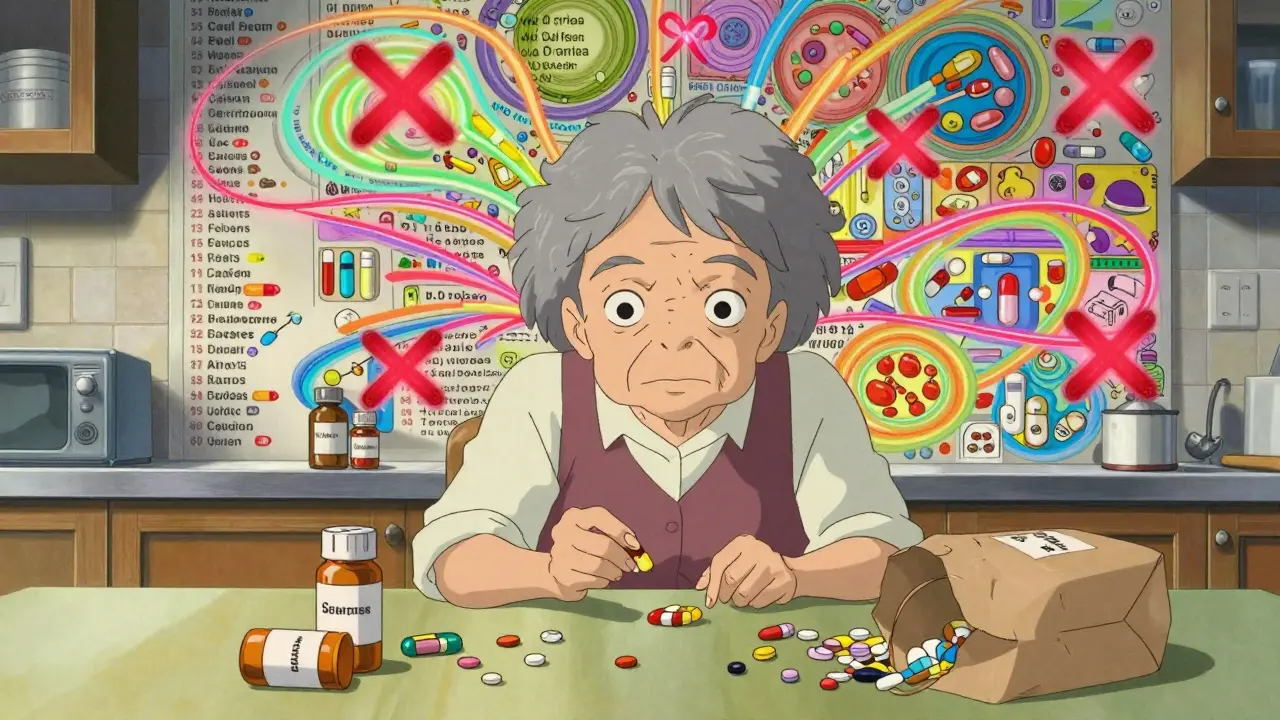
Every year, thousands of people in the U.S. end up in the hospital because of a medication error - not because they took too much, but because no one knew what they were actually taking. It could be a forgotten vitamin, a supplement from the health store, or an old prescription that was stopped but never removed from the list. These mistakes aren’t rare. They’re common. And they’re preventable.
The fix isn’t complicated: keep an up-to-date medication list. But most people don’t do it right. They write down a few prescriptions, forget the aspirin they take daily, or rely on memory during a doctor’s visit. That’s dangerous. A 2023 study in the Annals of Internal Medicine found that when pharmacists verified medication lists before treatment, adverse drug events dropped by over 31%. That’s more than 1.5 million preventable emergencies every year.
What to Include on Your Medication List
Your list isn’t just for prescriptions. It needs everything you take - even the stuff you think doesn’t matter.
- Brand and generic names: If you take Lisinopril, write down both “Lisinopril” and “Zestril.” Some providers don’t recognize brand names.
- Dosage and strength: Not just “blood pressure pill.” Write “10 mg once daily.”
- Frequency: “Twice a day,” “every 8 hours,” “as needed for pain.”
- Route: Is it swallowed, injected, inhaled, or applied to the skin?
- Purpose: Why are you taking it? “For high blood pressure” or “for arthritis pain.” This helps doctors spot duplicates or conflicts.
- Last time taken: Did you skip a dose yesterday? Note it. It matters.
- Prescribing provider: Who wrote the script? Your GP? The cardiologist? This helps when someone needs to call in a refill.
- Allergies and reactions: Not just “penicillin allergy.” Say “rash and swelling after penicillin.” Vague answers won’t save you in an emergency.
- Over-the-counter meds: Ibuprofen, antacids, sleep aids - all of them.
- Supplements and herbs: Fish oil, magnesium, turmeric, echinacea. These can interact with prescriptions in dangerous ways.
The FDA’s “My Medicines” template is a free, printable form that includes all these fields. You can find it online or ask your pharmacist for a copy. Don’t just use a sticky note. You need structure.
Choose the Right Format - Paper, App, or EHR
There’s no one-size-fits-all. The best format is the one you’ll actually use and update.
Paper lists are simple and work everywhere. No battery, no Wi-Fi. But they get outdated fast. A 2022 JAMA Internal Medicine study found 43% of paper lists were wrong - sometimes dangerously so. If you use paper, keep it in your wallet or purse. Update it every time you change something.
Smartphone apps like Medisafe, MyTherapy, and CareZone offer reminders, refill alerts, and even shareable digital copies. They cut missed doses by 28%, according to a 2023 BMJ Open study. But only 35% of adults over 65 use them regularly. If you’re not tech-savvy, this might not be for you. But if you’re comfortable with your phone, apps are powerful. They can even scan your pill bottle labels to auto-fill the list.
EHR-integrated lists (like Epic’s MyChart or Kaiser’s portal) are the gold standard - if you’re in a system that uses them. These lists sync with your pharmacy and doctors’ records. When your cardiologist adds a new drug, it pops up on your portal. But not all providers use the same system. If you switch doctors, your list might not transfer. That’s why you still need a personal copy.
Best practice? Use both. Keep a digital version on your phone for reminders and sharing. Keep a printed copy in your wallet for emergencies.
Update It After Every Change
The biggest mistake people make? Waiting. They update their list “when they get around to it.” That’s how errors happen.
Here’s when you must update your list immediately:
- After a hospital stay or ER visit
- When a doctor adds, stops, or changes a medication
- When you start or stop a supplement or OTC drug
- After a pharmacy refill - sometimes the strength changes
- Every time you see a new provider
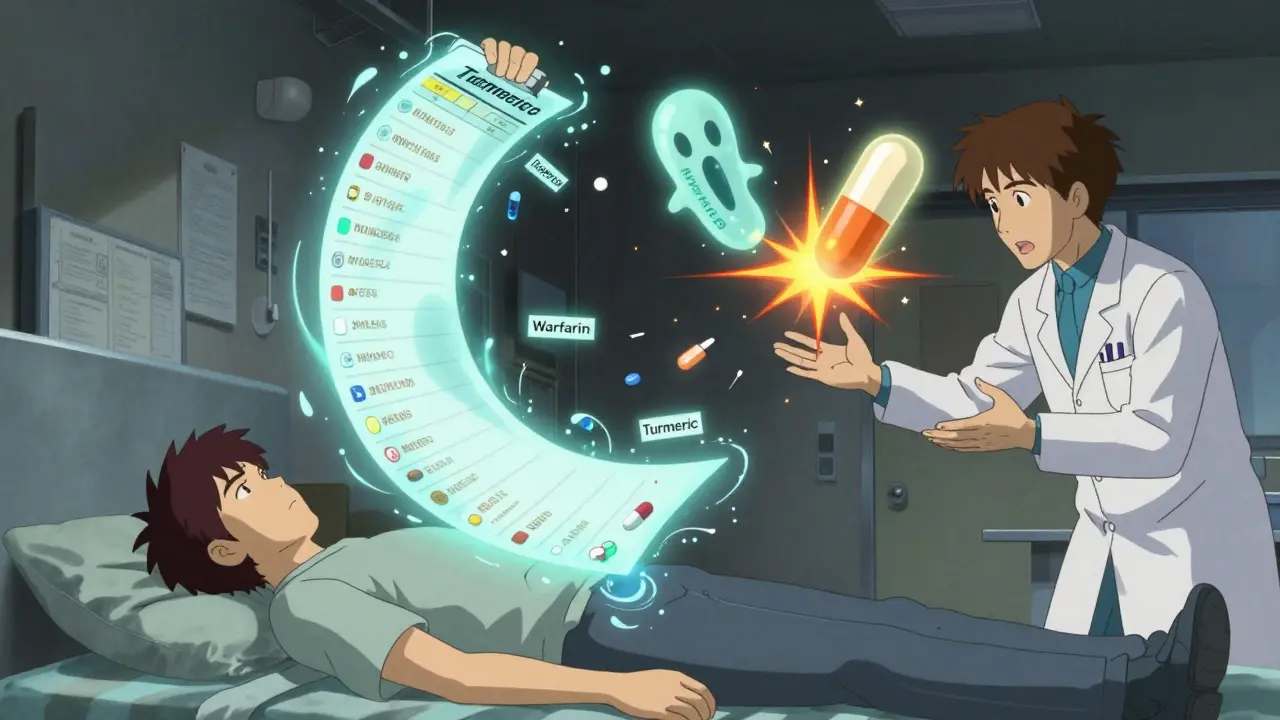
Research from the University of Michigan found that 68% of patients forget to update their list after leaving the hospital. That’s a recipe for disaster. One patient took warfarin and started a new herbal supplement without telling anyone. The list didn’t reflect the change. The result? A dangerous bleed that landed them back in the ICU.
Make updating part of your routine. Try this: every Sunday, while you organize your pill box, look at your list. Ask: “Did anything change this week?” If yes, update it. Five minutes. That’s all it takes.
The Brown Bag Method - A Proven Trick
One of the most effective ways to get your list right is the “brown bag method.”
Before your appointment, take all your medications - pills, creams, patches, bottles - and put them in a brown paper bag. Bring it to your doctor or pharmacist. They look at the labels, compare them to your list, and find mismatches. Maybe you’re taking two different blood pressure pills you didn’t know were the same. Maybe your “aspirin” is actually baby aspirin. Maybe you stopped taking something months ago but never told anyone.
Geriatric pharmacists say 82% of patients have at least one error when they use this method. It’s not glamorous. But it works. And it’s free.
Share It - With Everyone
A medication list is useless if no one else can see it.
Give a copy to:
- Your primary care doctor
- Every specialist you see
- Your pharmacist
- A trusted family member or caregiver
- Your emergency contact
Some people keep a digital copy on their phone and share access with a family member. Others write “In case of emergency” on the front of their list and tape it to the inside of their wallet. In a crisis, first responders check wallets and phones. Make sure they find the right info.
According to the American Medical Association, having a shared, accurate list reduces duplicate prescriptions by 40%. That saves money, reduces side effects, and prevents dangerous interactions.
Common Mistakes to Avoid
Even people who try to keep lists mess up. Here’s what not to do:
- Don’t rely on memory. Your brain forgets. Even if you’ve taken a pill for 10 years, write it down.
- Don’t assume your doctor knows. They see hundreds of patients. They don’t remember your 2019 prescription for gabapentin.
- Don’t ignore supplements. St. John’s Wort can make your antidepressant useless. Calcium can block your thyroid medicine. These aren’t “natural” - they’re active drugs.
- Don’t wait for your annual checkup. Update your list every time something changes. Don’t save it all for one visit.
- Don’t use vague terms. “Pain pill” isn’t enough. “Ibuprofen 200 mg” is.
Dr. Scott Gottlieb, former FDA Commissioner, put it bluntly: “Accurate medication lists are the single most important tool for preventing adverse drug events in polypharmacy patients.” If you take five or more medications - which 76% of seniors do - this isn’t optional. It’s survival.
What If You Can’t Keep Up?
Some people struggle with memory, vision, or mobility. That’s okay. Help is available.
- Ask your pharmacist for a free Medication Therapy Management (MTM) session. It’s covered by Medicare Part D.
- Use a pill organizer with alarms - many have Bluetooth that connects to your phone.
- Ask a family member to help update the list monthly.
- Take a photo of each pill bottle and store them in a labeled folder on your phone. That’s often easier than typing.
One 78-year-old woman in Bristol told her pharmacist she couldn’t write anything down. So she started taking pictures of her bottles. She kept them in a folder called “My Meds.” When she went to the hospital for pneumonia, the ER team scanned her photos and found she was taking a blood thinner she’d forgotten about. They adjusted her treatment. She went home two days later.
Why This Matters More Than You Think
Medication errors cost the U.S. healthcare system $42 billion a year. But the real cost is human. Someone’s parent. Their sibling. Their friend.
Kaiser Permanente reduced medication-related readmissions by 22% in 18 months just by making sure every patient had an updated list before discharge. That’s not magic. That’s discipline.
You don’t need to be a doctor. You don’t need to be tech-savvy. You just need to be consistent. Write it down. Update it. Share it.
Because in a hospital, in an ambulance, in the middle of the night - the person who saves your life might not be the doctor. It might be the nurse who checks your list and says, “Wait - you’re not supposed to be taking this.”
What if I take a lot of medications? How do I keep track?
If you take five or more medications, use a digital app like Medisafe or MyTherapy with refill reminders. Pair it with a printed copy you carry. Ask your pharmacist for a Medication Therapy Management session - it’s free under Medicare Part D. They’ll review everything, spot duplicates, and help you simplify. Many people find they can cut down on pills once everything’s visible on one list.
Do I need to include vitamins and supplements?
Yes. Supplements aren’t harmless. St. John’s Wort can make antidepressants, birth control, and blood thinners stop working. Calcium can block thyroid meds. Magnesium can lower blood pressure too much if you’re already on a pill for that. Every pill, powder, or drop you take - write it down. Your doctor needs to know.
How often should I update my medication list?
Update it immediately after any change: new prescription, stopped drug, added supplement, or hospital visit. Then, review it every month. Set a reminder on your phone for the first Sunday of each month. Spend five minutes checking if anything changed. It’s faster than waiting for an emergency.
Can I use my pharmacy’s app instead of making my own list?
Your pharmacy’s app shows what they’ve filled, but it might miss OTC drugs, supplements, or medications from other pharmacies. It also won’t include allergies or reasons for taking each drug. Use it as a helper, not your only source. Always keep a personal list that includes everything - even if the pharmacy doesn’t have it.
What if I can’t remember what I’m taking?
Bring all your medication bottles to your next appointment. Use the “brown bag method.” Your pharmacist or doctor can match labels to your list. If you can’t get to the office, take photos of each bottle and send them to your provider. Even a blurry photo is better than guessing.
Is a medication list really necessary if I only take one or two pills?
Yes. Even one medication can cause a problem if it interacts with something else - like a new antibiotic or a painkiller you take for a bad back. Accidents happen fast. If you’re in an accident and unconscious, the ER team needs to know everything you take. One missed drug can change how they treat you. Don’t risk it.






Been using Medisafe for about a year now. Honestly, the refill alerts saved me twice when my pharmacy messed up the dosage. Also, I print a copy every quarter and keep it in my wallet - just in case. No fancy tech needed, but the app makes it stupid easy to update.
I’m 62 and I used to think I remembered everything - until I got to the ER last year and realized I’d forgotten I was taking fish oil and that it was interacting with my blood thinner. My daughter helped me set up a Google Doc with all my meds, supplements, and even the reasons why I take each one. Now every Sunday night, I sit with my pill organizer and update it. Five minutes. That’s all. I used to think it was overkill. Now I call it my life insurance policy. Don’t wait for a crisis. Just start today. You’ll thank yourself later.
my doctor never asks about my supplements and i never think to tell him until i’m sitting there with a bottle in my hand. dumb. just start taking pics of your pill bottles. it’s easier than typing.
my grandma uses the brown bag method and it’s kinda beautiful. she brings her whole medicine cabinet to every appointment. i used to laugh, but now i do it too. last time, they found three pills she’d stopped taking 6 months ago but never told anyone. she’s fine now. just… write it down. please.
My uncle died because his ER doctor didn’t know he was on warfarin. They gave him a new antibiotic. He bled out in 12 hours. His list was on his fridge. In pen. On a napkin. No one looked. Don’t be him. Don’t be that person’s family. Write it. Down. Now.
As a clinical pharmacist in Mumbai, I’ve seen over 147 cases in the last 18 months where polypharmacy errors were directly traceable to incomplete medication reconciliation. The absence of a standardized list is not negligence-it is a systemic failure. Every patient, regardless of age or literacy, must be provided with a structured, bilingual (English and regional language) medication template at discharge. Relying on memory or fragmented digital tools is an ethical lapse.
Pharmacies are paid to sell, not to inform. EHRs are owned by corporations that don’t share data across systems. The government doesn’t care. Your list is your only defense. The FDA knows this. They just won’t enforce it. Don’t trust the system. Trust your own paper.
Adverse drug events (ADEs) attributable to incomplete medication reconciliation exhibit a statistically significant correlation with polypharmacy indices (p < 0.001), particularly in populations with comorbidities involving cardiovascular, endocrine, and neuropsychiatric systems. The absence of a structured, auditable pharmacotherapeutic inventory constitutes a critical gap in the continuity of care continuum, violating core tenets of the WHO Medication Safety Framework.
It’s not about the list-it’s about the ontology of self-care. We’ve outsourced our bodily sovereignty to institutions that commodify health. The brown bag isn’t a tool. It’s a ritual of reclamation. Each pill, each capsule, each tincture-each is a fragment of your autonomy. To document them is to say: I am not a data point. I am the archive of my own survival.
Just started using the MyMedicines template from the FDA. Printed it, laminated it, stuck it in my purse. Took me 10 minutes. I’m gonna update it every Sunday. My mom did this and she’s still here. I’m not taking chances.