

Why Most Medication Plans Fail - And How to Fix Them
You’ve been told to take your blood pressure pill every morning. Or your diabetes meds after dinner. But by Wednesday, you’re skipping doses. By Friday, you’ve forgotten why you even started. This isn’t laziness. It’s not weakness. It’s a system that asks you to change lifelong habits without giving you a clear path to follow.
Studies show that nearly half of people with chronic conditions don’t take their meds as prescribed. That’s not because they don’t care - it’s because they’re left guessing. Medication adherence isn’t about remembering to take a pill. It’s about building a habit that fits your life, not the other way around.
What Makes a Goal Actually Work?
Most doctors say, “Take your medicine.” That’s not a goal. That’s an instruction. A real goal answers five simple questions: Who? What? When? Where? Why? And can you measure it?
That’s the SMART framework - Specific, Measurable, Achievable, Relevant, Time-bound. It’s not new. It’s been around since the 1980s. But in healthcare, it’s only now being used the way it was meant to be: as a tool for patients, not just paperwork for providers.
Here’s what it looks like in practice:
- Specific: Instead of “take my pills,” try “Take my metformin 500mg with breakfast every day.”
- Measurable: Use a pill box with days marked. Or a phone app that logs each dose. Count how many you miss.
- Achievable: If you work night shifts, taking a pill at 8 a.m. won’t work. Adjust the time. Make it fit your schedule.
- Relevant: Why does this matter to YOU? Is it to avoid hospital visits? To play with your grandkids without getting winded? Tie the goal to something personal.
- Time-bound: “I’ll take my pills correctly for the next 30 days.” Then review. Not “someday.” Not “next month.” 30 days.
One woman in Bristol, 68, had high blood pressure and kept missing her pills. She didn’t like the taste. She didn’t want to be “sick.” So her goal wasn’t “take lisinopril.” It was: “I will take my pill with my morning tea every day for the next month so I can walk to the park without feeling dizzy.” That changed everything.
Track It - But Not Like a Prisoner
Tracking progress sounds scary. Like someone’s watching you. But it doesn’t have to be.
There are three easy, real-world ways to track adherence - no tech required:
- Pill boxes: Use a 7-day box with morning/afternoon/evening slots. Fill it once a week. If it’s still full on Saturday, you missed doses.
- Calendar marks: Put a big sticker or X on a wall calendar every day you take your meds. Seeing a chain of X’s builds momentum.
- Phone reminders: Set two alarms. One for the time you take it. One an hour later as a backup. Name them something funny: “Lisinopril Time!” or “Don’t Be a Statin Slacker.”
For those who like apps, Medisafe, MyTherapy, and Dosecast are all free, easy to use, and sync with calendars. They send gentle nudges - not guilt trips. And they show you a weekly chart of your success. Seeing your own progress is more powerful than any doctor’s lecture.
Here’s the kicker: People who track their doses are 35% more likely to stick with them long-term. That’s not magic. It’s feedback. Your brain likes knowing when you’re winning.
Find the Real Barriers - Not the Excuses
“I forgot.” “It’s too expensive.” “I don’t feel sick.” These aren’t just excuses. They’re signals.
Before setting a goal, ask yourself: What’s really stopping me?
- Cost? Ask your pharmacist about generic options or patient assistance programs. Many meds cost under £5 a month now.
- Side effects? Don’t stop. Talk to your doctor. Maybe the dose can be lowered. Or switched.
- Too many pills? Ask if you can combine them. Some drugs come in one pill now.
- Memory issues? Use a pill box with alarms. Or ask a family member to check in once a day.
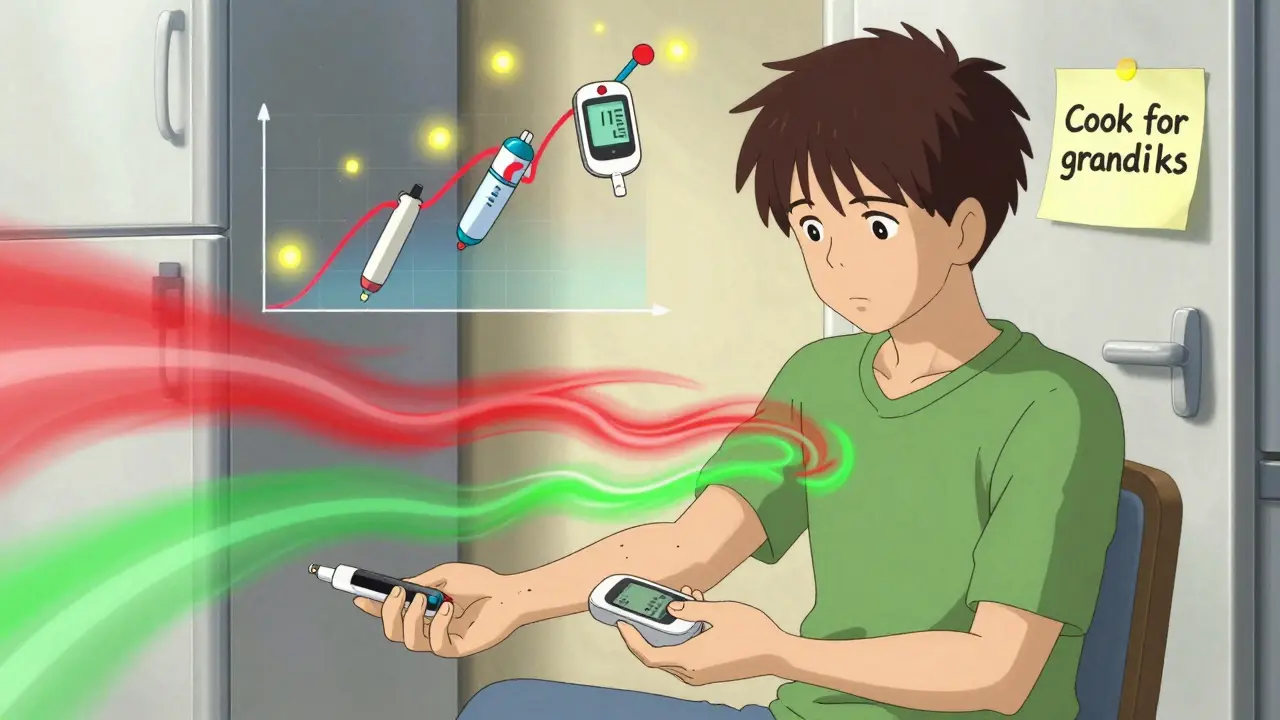
- Don’t see the point? Write down one thing you want to do - hike, cook for your grandkids, sleep through the night - and keep it on your fridge.
One man in Bristol had type 2 diabetes. He hated checking his blood sugar. He said it made him feel like a failure. His goal changed: “I will check my sugar once a week - on Sunday mornings - just to see if I’m moving in the right direction.” He didn’t aim for perfect. He aimed for consistent. His HbA1c dropped from 8.2 to 6.9 in six months.
Small Wins Build Big Change
Don’t wait for a month to celebrate. Celebrate every win - even tiny ones.
Did you take your pill for five days straight? That’s a win. Put a sticker on your calendar. Tell someone. Text your sister: “I took all my meds this week. No excuses.”
Research shows that people who celebrate small wins stick with their goals twice as long. It’s not about perfection. It’s about momentum.
One nurse in a community clinic started giving patients a paper “adherence badge” for every week they hit their goal. It was silly. But people wore them to appointments. They showed them to friends. They started competing - in a good way.
Progress isn’t linear. You’ll miss a day. Maybe two. That’s okay. The goal isn’t flawless. It’s forward.
When Technology Helps - And When It Hurts
Smart pill bottles, apps, wearables - they sound great. But they’re not magic.
For younger people, digital tools work wonders. One study showed asthma patients using sensor-equipped inhalers improved adherence by 27%. Diabetics using connected pens reduced missed doses by 34%.
But for older adults? Many abandon apps within 30 days. Too many buttons. Too much jargon. Too little support.
Here’s the rule: If tech makes it harder, ditch it. Use the simplest tool that works. A pill box. A calendar. A phone alarm. That’s enough.
And if you use an app, make sure it doesn’t shame you. No red alerts. No “you failed” messages. Only gentle reminders and progress charts.

What to Do When You’re Stuck
If you’ve tried and failed before - you’re not alone. Most people have.
Don’t start over. Adjust.
- Was your goal too big? Break it into smaller steps. “Take my pill every day” → “Take my pill three days this week.”
- Was the timing wrong? Move it. Take it when you brush your teeth. After lunch. When you turn on the TV.
- Did you feel alone? Ask someone to be your “adherence buddy.” Just one person who asks, “Did you take it today?”
- Did you lose motivation? Revisit your “why.” Write it down again. Put it on your mirror.
Adherence isn’t about willpower. It’s about design. Design your environment so the right choice is the easy one.
What Your Doctor Should Be Doing - But Often Isn’t
Doctors know this stuff. But in a 10-minute appointment, they’re rushing through labs, symptoms, and prescriptions.
Ask your doctor these three questions:
- “Can we write down one specific goal for my meds this month?”
- “What’s the easiest way to track if I’m doing it?”
- “What happens if I don’t stick to this?”
Most will say, “Just take it.” But if you push gently, many will help you build a real plan. Some clinics now use digital templates that auto-fill SMART goals into your chart. Ask if yours does.
Real Progress, Not Perfect Results
You don’t need to be perfect. You just need to be consistent.
Medication adherence isn’t about checking a box. It’s about reclaiming control. It’s about waking up and knowing you’re doing something powerful for your body - even if no one else sees it.
Start small. Track simply. Celebrate often. And remember: every pill you take is a step toward a life you want - not one you’re forced to live.






This is exactly what I needed! I started using a pill box with morning/afternoon slots and put a gold star on my fridge for every week I hit 100%. I didn’t think tiny wins mattered… until I saw the chain of stars. Now I’m on week 12. 🌟
I love how this doesn’t feel like a lecture. It feels like a friend saying, 'Hey, I get it.' The part about tying meds to tea or brushing teeth? Genius. I’m trying that tomorrow with my blood thinner. 🙌
Let’s be real - most doctors hand you a script and vanish. This isn’t about willpower, it’s about architecture. Design your life so the pill is the default, not the exception. I use a dumb alarm named 'Don’t Be a Statin Slacker' and it’s the funniest thing I’ve ever done for my health. Also, if your app says 'YOU FAILED' - delete it. Life isn’t a video game with penalty points.
SMART goals? lol. You think people dont know this? This is basic psyc 101. Everyone knows this. But no one cares. Because pills are boring and life is chaotic. Stop pretending this is new.
I tried the calendar thing but I kept forgetting to mark it so I just started using a sticker on my toothbrush. Every time I brush I see it. Works better than any app. Also side effects suck but I took my metformin today so I win
They say tracking helps. But what if the system is rigged? What if the pharma companies want you dependent? I mean… why are there so many pills? Why not cure the cause? This feels like a bandaid on a bullet wound.
Ah yes, the classic 'just use a pillbox' advice. How quaint. In 2025, we have AI-driven adherence analytics and blockchain-verified dosing logs. But no, let’s stick to paper stickers. How very… 2012. 🤡
There’s something deeply human about this approach. It doesn’t demand perfection. It asks for presence. I’ve been taking my antihypertensives for 47 days straight now. I didn’t celebrate until day 30. Then I made tea and sat in silence for ten minutes. That was the win.
The epistemological framework here assumes a Cartesian subject who can autonomously optimize behavioral compliance. But in a late-capitalist context where precarity dictates temporality, the notion of 'habit formation' is a neoliberal myth. Your pillbox is a symptom of systemic failure.
I read this at 3 a.m. after skipping my meds for three days… and I cried. Not because I’m weak. But because someone finally said: it’s not your fault. I’m using the tea trick. I took it with my chai tonight. I’m not fixed. But I’m trying. Thank you.
I appreciate the sentiment. But let’s not romanticize the struggle. For many, cost, access, and systemic neglect are the real barriers. A sticker on the wall won’t fix a $400 monthly co-pay. This is useful for those who can afford to care - but what about the rest?
I don’t take meds. I take vibes. If my body needs it, it’ll tell me. This whole system is a scam designed to keep you docile and dependent. I’m free. You’re not.
I’m the author of this post. Thank you all for your thoughtful responses. I didn’t expect this level of vulnerability. To the person who cried - I’m here. To the one who called out the cost issue - you’re right. To the one who said 'I’m not fixed but I’m trying' - that’s the whole point. We’re not building perfect humans. We’re building resilient ones. Keep going.