
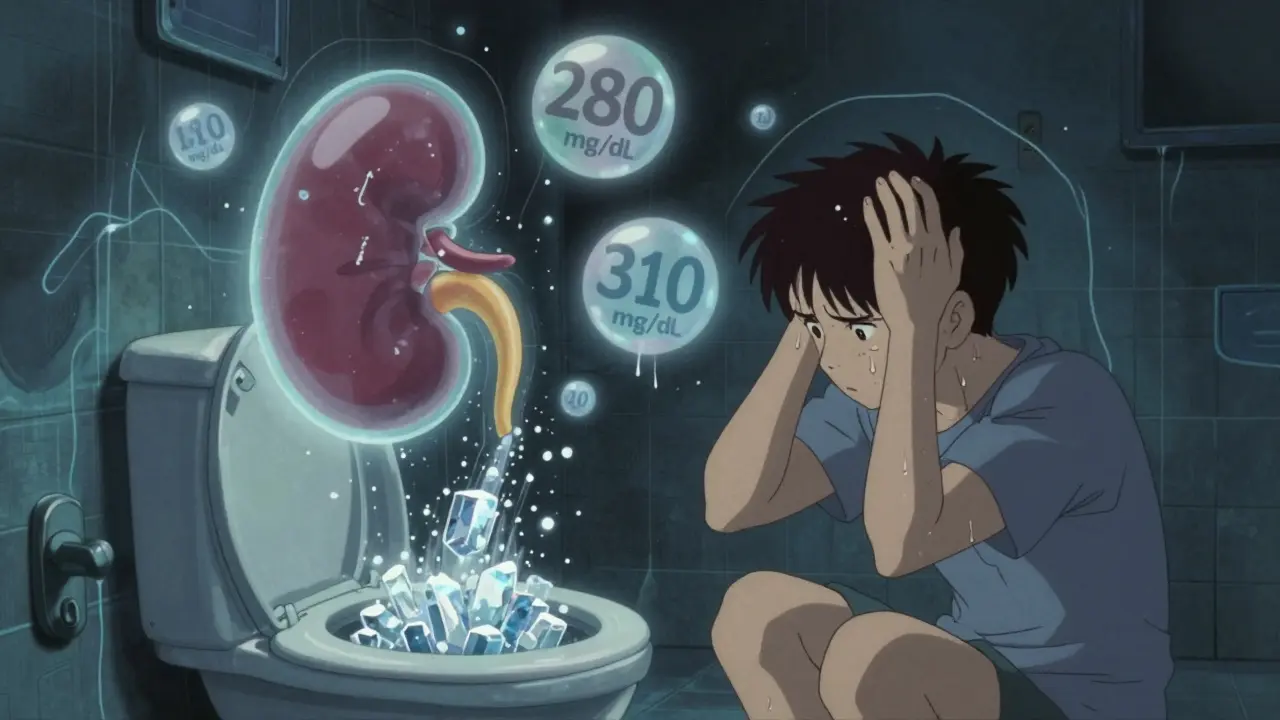
When your blood sugar climbs too high, it doesn’t just make you feel off-it can land you in the hospital, or worse. Hyperglycemia isn’t just a number on a glucose meter. It’s a silent warning that your body is struggling to manage fuel, and if ignored, it can spiral into a life-threatening emergency. Many people don’t realize they’re in danger until they’re already vomiting, confused, or barely able to stand. But the signs are there if you know what to look for-and what to do next.
What Counts as High Blood Sugar?
Hyperglycemia means your blood glucose is above 180 mg/dL. That’s the threshold where your kidneys start spilling sugar into your urine. But severity matters. Mild hyperglycemia (180-250 mg/dL) might just mean you ate too many carbs or skipped your insulin. Moderate (251-300 mg/dL) is a red flag. Severe hyperglycemia-anything above 300 mg/dL-is a medical alert. And if your reading hits 600 mg/dL or higher, you’re in a life-or-death zone. That’s when your body starts shutting down.
It’s not just about the number. What’s happening inside your body is what counts. Without enough insulin, your cells starve for energy even though there’s sugar flooding your bloodstream. Your body panics and starts breaking down fat for fuel, producing toxic ketones. That’s diabetic ketoacidosis (DKA). Or, if you’re older or have type 2 diabetes, your blood can get so thick with sugar that your brain can’t function-that’s hyperosmolar hyperglycemic state (HHS). Both are emergencies. And both can kill.
The Early Signs You Can’t Afford to Ignore
Early hyperglycemia feels like being tired, thirsty, and a little foggy. But those symptoms are easy to brush off. You’ve had a long day. You didn’t sleep well. You’re stressed. But if you have diabetes, these aren’t normal. They’re your body screaming for help.
Here’s what you’ll actually feel:
- Urinating nonstop-more than 2.5 liters a day. You’re going every hour, even at night. Your toilet becomes your second home.
- Thirst you can’t quench-drinking 4 liters of water and still feeling parched. That’s because your body is flushing out sugar, and with it, all your fluids.
- Blurred vision-your eyes can’t focus. Words on your phone or TV look smeared. This happens because high sugar changes the shape of your eye’s lens.
- Constant fatigue-not just sleepy, but drained. Even after sleeping, you feel like you’ve run a marathon. Your cells aren’t getting the energy they need.
These aren’t vague feelings. They’re measurable. In surveys, 68% of people with high blood sugar report blurred vision. Nearly 8 out of 10 feel extreme tiredness. If you’re experiencing two or more of these, test your blood sugar. Don’t wait.
When It Gets Worse: The Warning Signs of Crisis
If your blood sugar stays above 250 mg/dL for hours, things escalate fast. Headaches. Trouble concentrating. Weight loss without trying. You might lose 5% of your body weight in a few weeks just because your body is burning muscle and fat for energy.
Then come the neurological red flags:
- Confusion or trouble thinking clearly-you forget simple things, like where you put your keys or what you were saying mid-sentence.
- Drowsiness or sluggishness-you can’t stay awake, even after caffeine. This is a major sign of HHS.
- Focal weakness-one side of your body feels numb or weak. This can mimic a stroke.
- Loss of consciousness-this is the final stage before coma.
These aren’t just inconvenient. They’re dangerous. In HHS cases, 100% of patients show neurological symptoms. In DKA, nearly a third have neurological deficits. If you or someone you care about is acting confused or unusually sleepy, don’t assume it’s just fatigue. Test blood sugar. Call 999 if it’s above 300 mg/dL and you’re not sure what to do.
DKA vs. HHS: Two Different Emergencies, Same Deadly Outcome
Not all high blood sugar emergencies are the same. DKA and HHS look similar on the surface but have different causes, triggers, and risks.
Diabetic Ketoacidosis (DKA) hits mostly people with type 1 diabetes. It comes on fast-within 24 to 48 hours. You’ll notice:
- Deep, rapid breathing (Kussmaul respirations)-your body tries to blow off acid by breathing hard.
- Fruity-smelling breath-like nail polish remover or overripe apples. That’s acetone from ketones.
- Stomach pain, nausea, vomiting-often mistaken for the flu.
- Blood ketones above 3 mmol/L and blood pH below 7.3.
Hyperosmolar Hyperglycemic State (HHS) mostly affects older adults with type 2 diabetes. It creeps up over days or weeks. You might not even realize you’re sick until you’re too weak to stand. Signs include:
- Extreme dehydration-your skin stays pinched when you tug it, your mouth is dry as paper.
- Blood sugar above 600 mg/dL.
- Serum osmolality over 320 mOsm/kg-your blood is thick like syrup.
- No ketones, or very little. Your body isn’t burning fat-it’s just drowning in sugar.
HHS has a higher death rate-15% to 20%-compared to DKA’s 1% to 5%. And if you’re over 65, your risk of dying from HHS jumps to 22%. That’s why ignoring thirst and fatigue in older adults is so deadly.

What Triggers a Hyperglycemic Emergency?
It’s not always about forgetting insulin. The biggest triggers are often hidden:
- Illness-a cold, flu, or infection can spike blood sugar by 100 mg/dL or more. Your body releases stress hormones that block insulin.
- Insulin pump failure-a clogged cannula or disconnected tubing can stop insulin delivery. You might not notice until your sugar hits 400 mg/dL.
- Carb-counting errors-eating a large pizza or a big serving of pasta without adjusting insulin is a common mistake.
- Emotional stress-grief, anxiety, or even a big argument can raise cortisol and adrenaline, which push sugar up.
- Dawn phenomenon-between 4 and 8 a.m., your body naturally releases hormones that raise blood sugar. If your basal insulin is too low, you wake up with 250+ mg/dL every morning.
- Medications-steroids for asthma or arthritis can raise blood sugar by 50-100 mg/dL. Even some antidepressants and antipsychotics do this.
One study found that 42% of hyperglycemia emergencies were linked to illness. Another 29% came from miscalculating carbs. If you’ve been sick or changed your routine, check your sugar more often. Don’t assume you’re fine just because you took your usual dose.
What to Do Right Now: Emergency Steps for High Blood Sugar
If your blood sugar is above 240 mg/dL, don’t wait. Act immediately.
- Test for ketones. Use a urine strip or a blood ketone meter. If ketones are moderate or high (above 1.5 mmol/L), you’re at risk for DKA. Don’t exercise-this can make it worse.
- Take your correction dose. Use your insulin-to-carb ratio. If you’re unsure, 0.1 units of rapid-acting insulin per kilogram of body weight is a standard emergency dose. Don’t stack insulin-wait at least 3 hours between doses.
- Drink water. 8 to 16 ounces every hour. Sugar-free fluids only. No soda, juice, or sports drinks. You’re trying to flush out sugar and rehydrate, not add more sugar.
- Recheck your blood sugar every 2-4 hours. If it doesn’t drop by at least 50 mg/dL after 2 hours, or if you’re vomiting, confused, or in pain-call 999.
Many people delay help because they think they can “tough it out.” But hyperglycemia doesn’t get better with willpower. It gets worse.
What Not to Do
There are dangerous myths about high blood sugar:
- Don’t exercise when your sugar is above 250 mg/dL and ketones are present. Exercise can push ketones higher and make DKA worse.
- Don’t skip insulin because you’re not eating. Even if you’re sick and can’t eat, you still need basal insulin. Your liver keeps making sugar.
- Don’t drink sugary drinks to “rehydrate.” That’s like pouring gasoline on a fire.
- Don’t assume you’re fine if you feel okay. Many people with HHS are alert until they suddenly collapse.
One woman in Bristol told her GP she felt “just tired” after a cold. Her blood sugar was 720 mg/dL. She went into HHS and spent 11 days in the hospital. She’s lucky she survived.

Prevention Is the Best Treatment
The good news? Most hyperglycemic emergencies are preventable.
- Use a continuous glucose monitor (CGM). People using CGMs reduce severe highs by 57%. Real-time alerts give you time to act before it’s an emergency.
- Learn your insulin-to-carb ratio. Work with your diabetes educator. Most people need 1 unit of insulin for every 10-15 grams of carbs, but yours might be different.
- Adjust for the dawn phenomenon. If you wake up with high sugar every day, talk to your doctor about adjusting your basal insulin or switching to an insulin pump with predictive algorithms.
- Have a sick-day plan. Write it down. When you’re ill, how often do you test? What’s your correction dose? When do you call for help? Keep it on your fridge or phone.
- Check your pump regularly. Change your infusion set every 2-3 days. Look for kinks, air bubbles, or redness at the site.
Structured education programs reduce emergency visits by 42%. That’s not a small number. It’s life-changing. If you haven’t been to a diabetes education class in the last year, book one now.
When to Call for Help
Call 999 or go to A&E if:
- Your blood sugar is above 300 mg/dL and doesn’t drop after insulin and fluids.
- You have ketones above 3 mmol/L.
- You’re vomiting and can’t keep fluids down.
- You’re confused, drowsy, or can’t wake up.
- You’re having trouble breathing or your breath smells fruity.
- You have weakness on one side of your body.
Don’t wait for someone else to decide. If you’re unsure, call. Better to be safe than sorry.
Support Is Available
You’re not alone. The American Diabetes Association’s 24/7 hotline handles over 12,000 calls a month. In the UK, Diabetes UK offers free advice and peer support. CGMs now connect to smartphone apps that alert your emergency contacts if your sugar stays too high for too long. And since 2023, Medicare and NHS funding have expanded access to CGMs for more people.
But technology only helps if you use it. If you’ve been avoiding your glucose monitor because it’s “too much,” remember: one alert could save your life.



Just tested my sugar after lunch and it was 260... I panicked but drank water and took my dose. Took 3 hours to come down, but I’m alive. Thanks for the clear steps.
So let me get this straight-people are dying because they didn’t check their blood sugar? Wow. I guess not being a walking medical textbook is a death sentence now.
Had a similar scare last month. My CGM beeped at 310 while I was driving. I pulled over, took insulin, drank water, and waited. Never felt so helpless.
Big Pharma wants you scared so you buy more strips and pumps 😏💰 #DiabetesIndustrialComplex
Let’s be real-this isn’t about insulin. It’s about systemic neglect. You’re told to ‘manage your disease’ while your insurance denies your CGM. Then you get blamed when your body rebels. It’s not your fault. It’s capitalism.
Is it normal for ketones to show up even if you’re not diabetic? I tested once after fasting and got a faint line…
YOU CAN DO THIS! 💪 One step at a time! I was at 400 once and now I’m thriving! Don’t give up, your body is stronger than you think! 🌈✨
Why do you Americans make everything so dramatic? In India we just drink bitter gourd juice and move on. This post reads like a horror movie script
My cousin in Lagos had sugar over 500 and walked to the clinic 5km away. He didn't even have a meter. You people need to stop being soft
Okay so I just read this and I’m like-wait, so if I don’t test every 2 hours, I’m basically a walking time bomb?? But also I think my pump is leaking?? And I forgot my ketone strips?? And I’m kinda scared to check?? 😭😭😭
My glucose levels have been throwing tantrums lately-like, seriously, sugar? You wanna party at 350? Nah, baby, we ain’t doing that. I’m the boss of this pancreas, and I said NO.
Thank you for the detailed breakdown. I’ve shared this with my sister who was recently diagnosed. She’s overwhelmed, and this gives her a clear roadmap. Much appreciated.
Look, I get it. You’re trying to scare people into compliance. But let’s be honest-most of us are just trying to survive the next meal, the next insulin shot, the next insurance denial. This article reads like a manual written by someone who’s never had to choose between insulin and groceries. You talk about ‘emergency steps’ like they’re just a checklist. But what if you’re homeless? What if you’re working two jobs and can’t afford to sit and wait for your sugar to drop? What if your pump breaks and you can’t get a replacement for six weeks? This isn’t about willpower. It’s about access. And no amount of ‘drink water’ advice fixes that.
Oh please. Another ‘educational’ post from someone who clearly never had to live with this. You say ‘call 999’-but what if you’re undocumented? What if you’re on Medicaid and they refuse to cover your emergency? What if the ER staff rolls their eyes because you’ve been ‘here before’? This isn’t a medical guide-it’s a guilt-trip dressed in clinical language. You want people to act? Fix the system first.
My grandma in Jakarta used to say: ‘Sugar is not the enemy. Fear is.’ She never tested, never had a meter, but she lived to 92. Maybe we’re overcomplicating this.