

Carrying your usual cold medicine or sleep aid on vacation might seem harmless - until you’re detained at customs. Every year, hundreds of travelers are arrested, fined, or had their medications confiscated simply because they brought something legal at home but banned overseas. The problem isn’t just about rules - it’s about OTC medications that look harmless but are treated as controlled substances in other countries. You don’t need to be carrying drugs to get into serious trouble. Sometimes, it’s just a bottle of Sudafed or Benadryl in your luggage.
What OTC Medications Are Actually Banned?
Many medications you can buy without a prescription in the U.S. are illegal or tightly controlled abroad. The most common offenders include:
- Pseudoephedrine - Found in Sudafed, Claritin-D, and other decongestants. Banned outright in Japan, Mexico, and parts of Southeast Asia. Japan treats possession like a drug offense - up to five years in prison.
- Diphenhydramine - The active ingredient in Benadryl. Allowed in small amounts in some countries, but requires a doctor’s note in Japan and Zambia. In 2022, customs in Zambia alone seized over 1,800 Benadryl packages from travelers.
- Codeine - Present in many cough syrups and pain relievers like Tylenol with Codeine. Illegal without a special permit in the UAE, Japan, Greece, Indonesia, and Saudi Arabia. In the UAE, possession can mean 1-3 years in prison.
- Zolpidem - Sold as Ambien. Banned in Egypt, Saudi Arabia, and the UAE. In France, you need prior approval - 83 travelers were detained in 2022 for carrying it without permission.
- Amphetamine-based ADHD meds - Adderall, Vyvanse, Ritalin. Prohibited in 22 countries including Japan, Sweden, and Switzerland. Sweden recorded 147 detentions in 2021 just for ADHD medications.
- Sedatives - Xanax (alprazolam) and Valium (diazepam). Restricted in 31 countries. The UAE imposes mandatory 2-year sentences for unauthorized possession.
- Mifepristone - Used for emergency contraception. Banned in 12 countries, including the UAE. 32 travelers were detained in 2022 for carrying it.
Japan has the strictest rules in the world. It bans 26 common U.S. OTC medications - including lidocaine patches over 4%, herbal supplements with ephedra, and even some antihistamines. Nearly all cases of medication-related arrests in Japan involve Sudafed or Benadryl.
Why Are These Medications Banned?
It’s not about safety. It’s about control. Many countries classify these drugs as potential narcotics or substances of abuse, even if they’re harmless in small doses. Pseudoephedrine, for example, is used to make methamphetamine. So even though you’re taking it for a stuffy nose, some governments treat it like a precursor to illegal drugs.
Other countries, like the UAE and Japan, have zero-tolerance policies for any unapproved pharmaceuticals - regardless of intent. A doctor’s note doesn’t matter. A U.S. prescription means nothing under their laws. In 2023, Japan detained 17 Americans who had valid prescriptions - and still got arrested.
Some countries simply don’t have clear public rules. Indonesia, India, and Pakistan haven’t published official medication lists. That doesn’t mean the drugs are legal - it means you’re flying blind. In 2022, 89 travelers were detained in Indonesia for carrying codeine, even though no official warning existed.
What Countries Are the Riskiest?
Some destinations are far more dangerous than others when it comes to medication:
- Japan - The strictest. No exceptions. You need a special import certificate (Yunyu Kakunin-sho) for any controlled substance. Processing takes 4-6 weeks. Approval rate: 68% for first-timers.
- United Arab Emirates - Harsh penalties. Codeine, sedatives, and ADHD meds can land you in prison for 2-4 years. No leniency, no exceptions.
- Mexico - Banned: pseudoephedrine. Allowed: prescription-strength lidocaine with documentation.
- Zambia - Benadryl over 30 tablets requires a doctor’s note.
- Thailand, South Korea, Turkey - Even if the drug is legal, you need documentation. Thailand had over 1,200 medication-related incidents in 2022 - most could’ve been avoided with a doctor’s letter.
- Philippines - One of the few with lenient rules. Allows 30-day supplies of most medications without paperwork.
If you’re going to any of these places, assume the worst. Don’t rely on Google. Don’t trust your pharmacy. Contact the embassy.
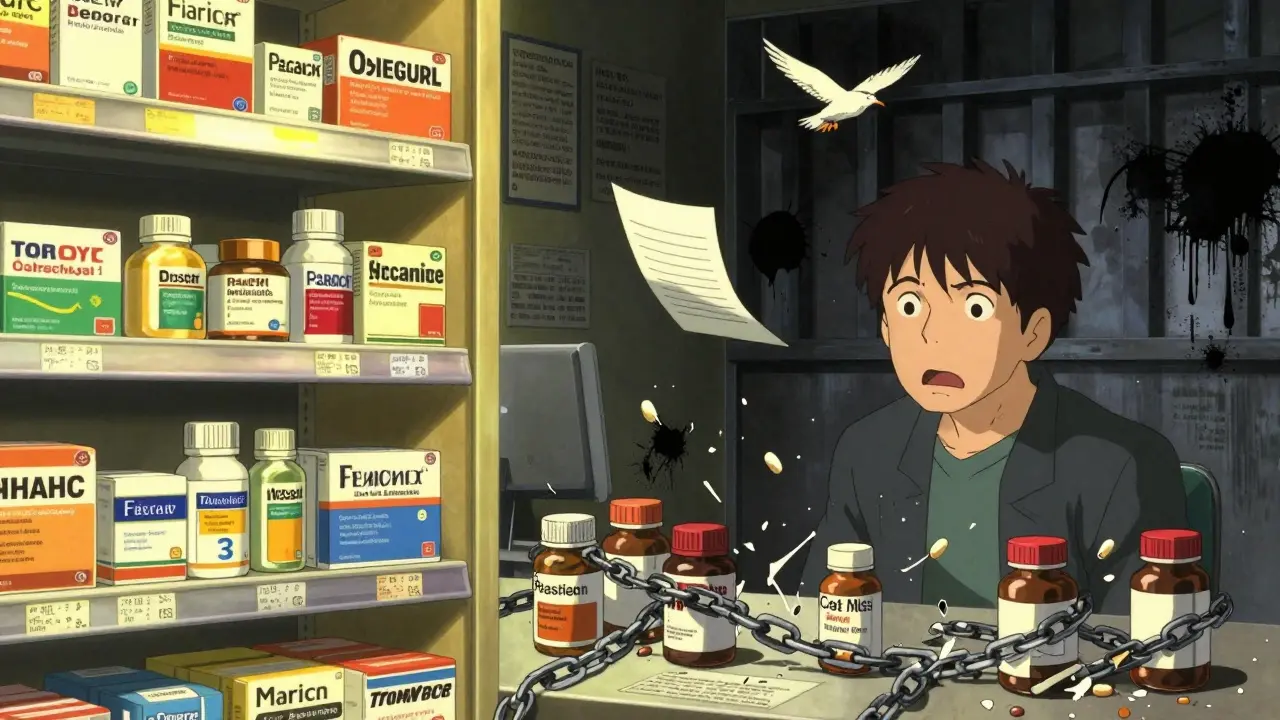
How to Avoid Getting Arrested
You don’t need to stop taking your meds. You just need to plan ahead. Here’s how to stay safe:
- Check the official source - Visit the International Narcotics Control Board (INCB) Country Regulations database. It’s the only global source that compiles official rules from 78 countries.
- Contact the embassy - Email or call the embassy of your destination at least 8-12 weeks before you leave. Ask: "What OTC medications are prohibited? What documentation is required?"
- Carry original packaging - Never transfer pills to a pill organizer. Keep them in the original bottle with the pharmacy label. Your name must match your passport.
- Get a doctor’s letter - Ask your doctor to write a letter on letterhead listing: the medication’s International Nonproprietary Name (not brand name), dosage, purpose, and that it’s for personal use. This cuts legal risk by 89%, according to CDC data.
- Don’t exceed limits - Japan allows up to a 2-month supply without a certificate. Most countries allow a 30-day supply. Bring only what you need.
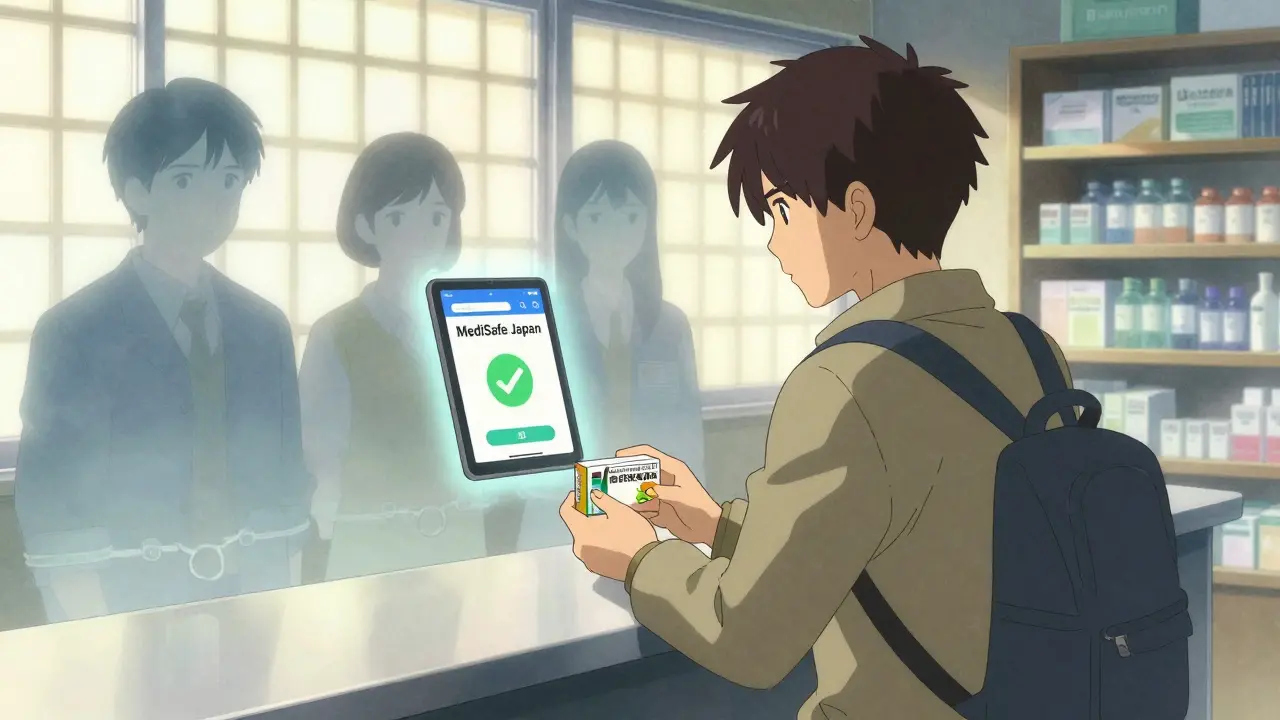
- Use digital tools - The IATA Travel Pass app now includes a medication checker for 65 countries. Japan’s "MediSafe Japan" app (downloaded over 147,000 times) lets you verify if your meds are allowed.
Common mistakes? Assuming "it’s OTC at home, so it’s fine abroad" - that’s behind 67% of cases. Carrying meds in unmarked containers - 18% of incidents. Not knowing the active ingredient - 29% of cases involve confusion between brand names like "Benadryl" and the actual drug, "diphenhydramine."
What If You’re Already Traveling?
If you realize you’ve brought something banned after you’ve landed:
- Don’t hide it. Don’t flush it. Don’t lie.
- Ask to speak with a consular officer immediately. U.S. embassies can help with legal referrals but can’t override local laws.
- Do not sign anything without legal advice. Some countries pressure travelers into confessions.
- Call the U.S. Department of State’s 24/7 hotline: +1-888-407-4747.
There’s no quick fix. Your best defense is preparation - not reaction.
What’s Changing in 2025?
The INCB is launching a Global Medication Travel Registry in 2025. It aims to standardize approval processes across 100+ countries. But until then, 42 countries still don’t publish any rules - meaning you’re guessing.
Travel insurance now covers medication-related legal issues in 73% of policies - up from 41% in 2019. But insurance won’t get you out of jail. Only proper documentation will.
More travel agencies are starting to ask about meds before booking - but only 28% do it systematically. You can’t rely on them. You have to do it yourself.
Final Rule: When in Doubt, Leave It Behind
You can buy most OTC meds overseas - if you know where to look. In Japan, you can get pseudoephedrine-free cold medicine at pharmacies. In Dubai, you can find codeine-free cough syrup with a doctor’s note. But bringing your own? That’s where the risk lies.
Don’t gamble with your freedom. A few extra minutes of research before you pack can save you from months in a foreign jail. The world doesn’t follow U.S. rules. And your Sudafed isn’t as harmless as you think.
Can I bring Benadryl to Japan?
No, not without documentation. Japan requires a doctor’s note for any medication containing diphenhydramine, even in small amounts. Customs seized over 1,800 Benadryl products from travelers in 2022. You must declare it, carry it in original packaging, and have a letter from your doctor. Without it, you risk confiscation or arrest.
Is Sudafed illegal in Mexico?
Yes. Pseudoephedrine is completely banned in Mexico under its Pharmaceutical Affairs Law. Even if you have a U.S. prescription, you cannot bring Sudafed or any decongestant containing pseudoephedrine into the country. Many travelers are detained at airports for this. Use pseudoephedrine-free alternatives like phenylephrine-based products instead.
Do I need a prescription for codeine in the UAE?
Yes - and even then, it’s risky. Codeine is classified as a controlled narcotic in the UAE. You need a special permit from the UAE Ministry of Health and Prevention, plus a doctor’s letter and original packaging. Without it, possession can lead to 1-3 years in prison. Most travelers are better off buying codeine-free alternatives locally after arrival.
Can I bring my ADHD medication to Japan?
No. Adderall, Vyvanse, Ritalin, and all amphetamine-based ADHD medications are banned in Japan. Even with a valid U.S. prescription, you cannot bring them into the country. Japan detained 147 travelers for ADHD meds in 2021. You must stop taking them before travel or obtain a local prescription after arrival - which requires a local doctor’s evaluation and can take weeks.
What should I do if I’m stopped at customs with banned meds?
Stay calm. Do not argue, lie, or try to hide the medication. Ask to speak with a consular officer from your country’s embassy immediately. Do not sign any statements without legal counsel. Call the U.S. Department of State’s hotline at +1-888-407-4747. Your priority is to avoid making the situation worse - not to defend yourself on the spot. Legal help is your only path forward.
Are there apps to check if my meds are allowed?
Yes. The IATA Travel Pass app includes a medication checker for 65 countries. Japan’s official "MediSafe Japan" app lets you search by drug name and see if it’s allowed. Both are free and updated regularly. But always double-check with the embassy - apps can lag behind policy changes.
Can I mail my medication ahead to avoid carrying it?
Almost never. Most countries treat mailed medications the same as carried ones - and often with stricter scrutiny. Some require special import permits for shipments, which can take months. The safest option is always to carry only what you need in your luggage, with full documentation. Don’t risk delays or confiscation by shipping.
What if I need my medication for a medical condition?
You still need to follow the rules. Even if you have a chronic condition, foreign laws don’t make exceptions for medical necessity. For Japan, apply for a Yunyu Kakunin-sho at least 8 weeks ahead. For the UAE, contact the Ministry of Health before you travel. Always carry your doctor’s letter, original packaging, and a copy of your prescription. Being sick doesn’t protect you from arrest - preparation does.






I once got pulled aside at Delhi airport for carrying ibuprofen in a ziplock. No one told me India requires prescriptions for everything. I thought I was safe because it was OTC back home. Turns out, the world doesn't care about your pharmacy's label. Now I carry doctor's notes like they're passports. And I don't even take meds unless I absolutely have to.
I used to think 'it's just medicine' until I watched a friend get detained in Dubai for carrying melatonin. She cried in the holding cell because she thought it was harmless. We all do. We assume the world thinks like we do. But laws aren't built on logic-they're built on fear. And sometimes, that fear is about control, not safety. Just because you can buy it doesn't mean you should carry it.
This is exactly why I always check the INCB database before any trip. I used to rely on Google or my pharmacy. Big mistake. Last year I flew to Japan with a Zolpidem prescription and almost got arrested. Turns out the app I used was outdated. The embassy email reply took 11 days but saved me. Don't be lazy. Even if it's 'just a sleep aid,' it's not just anything abroad.
Honestly? If you're the type to bring Benadryl on vacation, you probably shouldn't be traveling. You're not a responsible adult if you think a country's laws don't apply to you because it's 'over the counter.' Zambia seized 1,800 bottles? That's not a statistic-that's a warning. If you can't be bothered to research, stay home. Your ignorance isn't cute, it's dangerous.
I came from Nigeria with codeine cough syrup. Didn't know it was banned in Kenya. Got questioned for 3 hours. No arrest, but they made me throw it out. I didn't even know the name was codeine-I just knew it helped my cough. Now I ask my doctor for the generic name before I pack. And I never, ever trust a pharmacy's label abroad. It's not about fear. It's about respect.
So let me get this straight. You can buy Adderall at CVS but if you take it to Japan, you're a criminal? 😂 Wow. I guess the U.S. is the only country that thinks ADHD is a real condition. Maybe we should rename it 'American Privilege Disorder' and call it a day.
I’ve been through this three times now-Japan, UAE, Thailand. Always carry the original packaging, the doctor’s letter (with INN, not brand names), and a printed copy of the INCB page for that country. I’ve even laminated mine. And yes, I do carry a spare bottle in my checked luggage-just in case. Don’t be that person who panics at customs. Be the one who smiles and says, 'Here’s everything you need.' It’s not hard. It’s just inconvenient.
Honestly, if you’re bringing Sudafed to Mexico, you’re not a traveler-you’re a liability. And let’s be real, most people who do this don’t even know what pseudoephedrine is. They just see 'decongestant' and think 'it’s just a cold pill.' No. It’s a meth precursor. And if you can’t grasp that distinction, you don’t deserve to leave your own country.
The INCB database is outdated. I checked it last week for Thailand and it said Zolpidem was OK. Got flagged at Suvarnabhumi. Turns out the policy changed 3 weeks ago. So yeah, trust the app. Trust the embassy. Trust nothing. Just don’t bring anything.