Naloxone Co-Prescribing Risk Assessment Tool
Patient Profile Inputs
Click items to select them.
Assessment Result
Recommendation:
Please enter your daily MME dosage and check any applicable risk factors to generate a personalized recommendation based on CDC and HHS guidelines.
Imagine handing a patient a prescription for pain relief, knowing that the very medication meant to help them could also put their life in danger if misused or taken in error. For years, this was an uncomfortable silence in many doctor’s offices. Today, that silence is being broken by naloxone co-prescribing, a clinical practice that pairs opioid painkillers with a life-saving reversal agent. It isn’t just about treating pain; it’s about ensuring survival.
Naloxone co-prescribing involves healthcare providers simultaneously prescribing naloxone-an opioid antagonist-alongside opioid analgesics to patients who are at risk of overdose. This approach has shifted from a niche recommendation to a standard of care, driven by the urgent need to curb the rising tide of opioid-related deaths. If you are a clinician, a patient, or a caregiver navigating this landscape, understanding how and why this works is crucial.
Understanding Naloxone: How It Saves Lives
To understand why we prescribe naloxone, we first need to look at what happens during an opioid overdose. Opioids bind to receptors in the brain that control breathing. When too many opioids occupy these receptors, breathing slows down dangerously or stops entirely. This is respiratory depression, and it is the primary cause of death in opioid overdoses.
Naloxone is an opioid antagonist medication that rapidly reverses respiratory depression caused by opioid overdose by competitively binding to opioid receptors with greater affinity than opioids themselves. Originally developed in 1960 and approved by the FDA in 1971, it acts like a key that kicks the opioid out of the receptor lock. Once naloxone binds, normal breathing resumes within minutes.
The beauty of naloxone lies in its specificity. It only affects opioid receptors. If someone is unconscious for reasons other than an opioid overdose-like alcohol intoxication or a diabetic emergency-naloxone will have no effect. This makes it safe to administer even if you aren’t 100% sure of the cause, which is vital in high-stress emergency situations.
Who Needs Naloxone? Identifying High-Risk Patients
Not every patient taking opioids needs naloxone, but identifying those who do is critical. The Centers for Disease Control and Prevention (CDC) and the Department of Health and Human Services (HHS) provide clear guidelines on when to offer this protection. It’s not about judging a patient’s character; it’s about assessing physiological risk factors.
Here are the key indicators that suggest a patient should receive a naloxone prescription:
- High Dosage Thresholds: Patients receiving opioids at dosages of 50 morphine milligram equivalents (MME) per day or greater face a significantly higher risk. HHS data shows that at 50 MME/day, the risk of overdose doubles compared to 20 MME/day.
- Concurrent Benzodiazepine Use: Mixing opioids with benzodiazepines (like Xanax or Valium) multiplies the sedative effects on the brainstem, drastically increasing the chance of fatal respiratory depression. This combination is dangerous regardless of the opioid dose.
- History of Overdose or Substance Use Disorder: A past non-fatal overdose is one of the strongest predictors of a future fatal one. Similarly, a diagnosed substance use disorder increases vulnerability.
- Respiratory Conditions: Patients with COPD or obstructive sleep apnea already have compromised breathing systems. Adding opioids to the mix requires extra caution.
- Recent Release from Incarceration: Time in jail or prison often leads to a loss of physical tolerance to opioids. Returning to previous dosage levels after release can be lethal.
Using tools like the CDC’s MME calculator helps clinicians convert different opioids into a standardized metric. For example, 30 mg of oral morphine equals 20 mg of oral oxycodone. These precise conversions ensure that risk assessments are accurate and consistent.
| Formulation | Route of Administration | Dosage | Key Advantage |
|---|---|---|---|
| Narcan® Nasal Spray | Intranasal | 4 mg | Pre-filled, easy for laypeople to use without training |
| Kloxxado™ | Intranasal | 8 mg | Higher dose effective against potent synthetic opioids like fentanyl |
| Generic Injectable Kits | Intramuscular/Subcutaneous/IV | 0.4 mg/mL | Cost-effective, widely available, familiar to medical staff |
Overcoming Barriers: Stigma and Patient Resistance
Even when the clinical evidence is clear, human emotions can get in the way. One of the biggest hurdles in co-prescribing is patient stigma. Many patients interpret a naloxone prescription as a signal that their doctor thinks they are an addict or that they will inevitably misuse their medication.
A 2021 survey in JAMA Internal Medicine found that 68% of primary care physicians reported discomfort discussing overdose risk. On the patient side, reports indicate that nearly half of patients initially resist accepting naloxone due to perceived judgment. However, framing matters. Instead of saying, “You might overdose,” try saying, “This is a safety net for accidental exposure, similar to keeping a fire extinguisher in the kitchen.”
Real-world stories highlight this shift in perspective. Sarah Johnson, a chronic pain patient in Ohio, admitted she was offended when her doctor prescribed naloxone alongside her oxycodone. But when her teenage son accidentally took her pills, that same nasal spray saved his life. Her experience underscores that naloxone protects not just the patient, but everyone in their household.
Implementing Co-Prescribing in Clinical Practice
Integrating naloxone co-prescribing into your workflow doesn’t have to be complicated. The CDC’s implementation guide suggests a streamlined three-step process that takes only 5-7 minutes per at-risk patient.
- Risk Assessment: Review the patient’s Prescription Drug Monitoring Program (PDMP) data, current medications, and medical history. Calculate their daily MME dose.
- Patient Education: Use resources like SAMHSA’s Opioid Overdose Prevention Toolkit. Explain the signs of overdose: pinpoint pupils, unresponsiveness, and slow or stopped breathing.
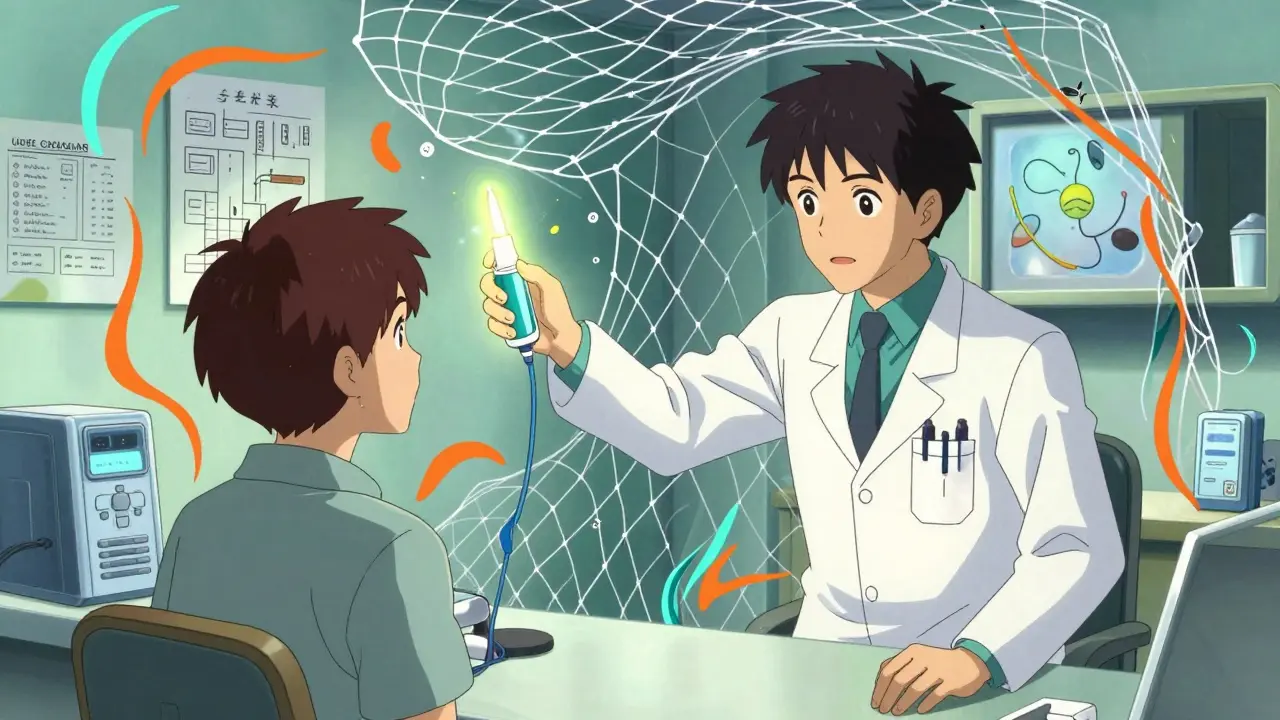
- Prescription and Instructions: Write the prescription for naloxone. Ensure the patient and a family member understand how to use it. The “S.L.A.M.” framework is helpful here: Signs of overdose, Life-saving steps, Administer naloxone, Monitor until help arrives.
Documentation is also key. Many large health systems now use EHR templates that include fields for risk assessment and naloxone dispensing. This ensures consistency and provides a legal record of the safety measures taken.
Access, Cost, and Insurance Coverage
One common concern is cost. Brand-name Narcan® nasal spray can retail for $130-$150 without insurance. However, the landscape has improved significantly thanks to policy changes. The SUPPORT Act of 2018 mandated that Medicare Part D and Medicaid programs cover naloxone without restrictions. As a result, most major insurers now cover naloxone with little to no copay.
For those paying out-of-pocket, generic naloxone kits are more affordable, ranging from $25-$50 at major pharmacy chains. Additionally, standing orders in 49 states allow pharmacists to dispense naloxone directly to anyone who asks, bypassing the need for a specific doctor’s prescription in many cases. This flexibility is crucial for reaching people who may not have regular access to healthcare.
The Bigger Picture: Policy and Future Directions
Naloxone co-prescribing is part of a broader harm reduction strategy endorsed by organizations like the American Medical Association (AMA) and the World Health Organization (WHO). While some critics argue that co-prescribing alone doesn’t address the root causes of addiction, proponents emphasize that saving lives today allows patients the opportunity to seek treatment tomorrow.
State-level mandates vary. New York requires offering naloxone to all opioid patients, while California focuses on those exceeding 90 MME/day. These differences reflect ongoing debates about the balance between individual autonomy and public health safety. Looking ahead, the NIH’s HEAL Initiative is investing heavily in improving naloxone delivery systems, including long-acting formulations currently in trials. The goal is clear: make overdose reversal easier, faster, and more accessible for everyone.
Does naloxone work on all types of opioids?
Yes, naloxone works on all opioids, including prescription painkillers like oxycodone and hydrocodone, as well as illicit drugs like heroin and fentanyl. However, because fentanyl is so potent, multiple doses of naloxone may be required to reverse an overdose completely.
How long does naloxone last in the body?
Naloxone typically lasts for 30 to 90 minutes. Since many opioids last longer than that, a person can slip back into overdose once the naloxone wears off. This is why it is critical to call 911 immediately after administering naloxone, even if the person appears to be fully awake.
Is there a risk of withdrawal symptoms when using naloxone?
Yes, naloxone can trigger acute withdrawal symptoms in people who are physically dependent on opioids. These symptoms may include nausea, vomiting, anxiety, and agitation. While uncomfortable, these symptoms are not life-threatening, whereas untreated respiratory depression is.
Can I buy naloxone without a prescription?
In many states, yes. Due to standing orders and good Samaritan laws, pharmacists in 49 states can dispense naloxone without a specific prescription. Check your local state regulations or ask your pharmacist directly.
What should I do if the person doesn't wake up after using naloxone?
If the person does not respond within 2-3 minutes, administer another dose if available. Continue rescue breathing if trained, and keep calling 911. Do not assume the person is fine just because they are breathing; they still need professional medical evaluation.