
Steroid-Induced Osteoporosis Risk Calculator
This calculator estimates your fracture risk from long-term corticosteroid use based on the guidelines in the article. It helps you understand your risk level and what steps you need to take to protect your bones.
Your Corticosteroid Details
Your Lifestyle Factors
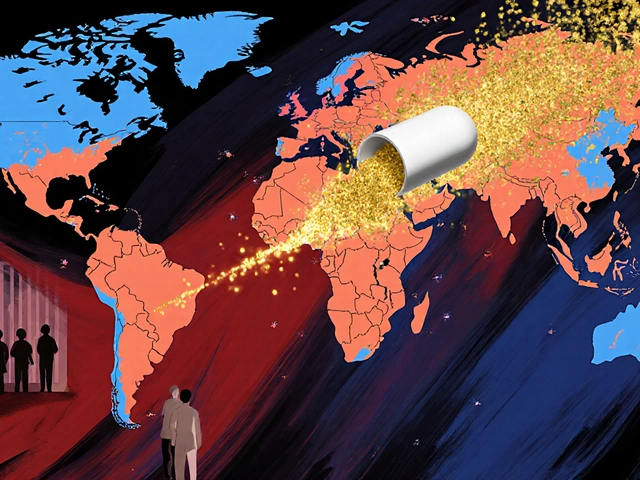
When you're on long-term corticosteroids-whether for rheumatoid arthritis, lupus, asthma, or another chronic condition-you're not just managing your main illness. You're also quietly putting your bones at risk. Osteoporosis from corticosteroid use isn't a rare side effect. It's one of the most common, fastest-developing, and yet often ignored complications of these powerful drugs. And the damage starts sooner than most people realize.
How Fast Does Bone Loss Happen?
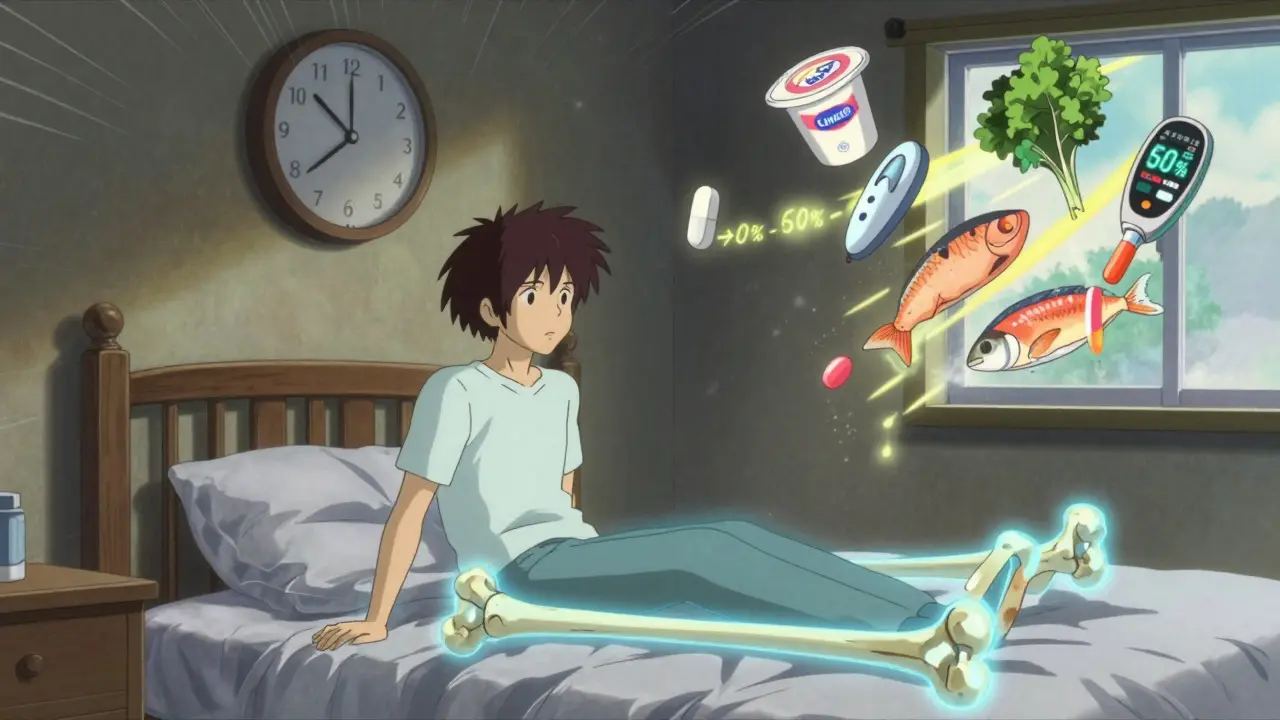
It doesn't take years. Bone density can drop by 5% to 15% in the first year of taking even low doses of corticosteroids like prednisone. That’s faster than menopause-related bone loss. The worst of it happens in the first 3 to 6 months. If you’re on 7.5 mg or more of prednisone daily for three months or longer, your fracture risk doubles. At 10 mg daily, it’s even worse. Each extra milligram per day reduces your spine bone density by 1.4% every year. Your hip bone density drops too, by nearly 1% per year. This isn’t theoretical-it’s measurable, predictable, and preventable.
Here’s why it happens: corticosteroids don’t just calm your immune system. They shut down your bone-building cells (osteoblasts) and keep your bone-breaking cells (osteoclasts) alive longer. They also mess with how your body uses calcium. Your gut absorbs 30% less calcium. Your kidneys dump more of it in urine. Even if you eat plenty of dairy, your body can’t hold onto it. And if you’re not getting enough vitamin D-which most people aren’t-your bones start to weaken fast.
The Foundation: Diet, Movement, and Lifestyle
Before you reach for pills, start with what you can control every day. This isn’t optional. It’s the baseline.
- Calcium: Aim for 1,000 to 1,200 mg per day. Food is best-yogurt, cheese, fortified plant milks, canned sardines, kale. But most people can’t get enough from diet alone. Supplement the gap. Don’t take more than 500 mg at once; your body can’t absorb it all. Spread it out across meals.
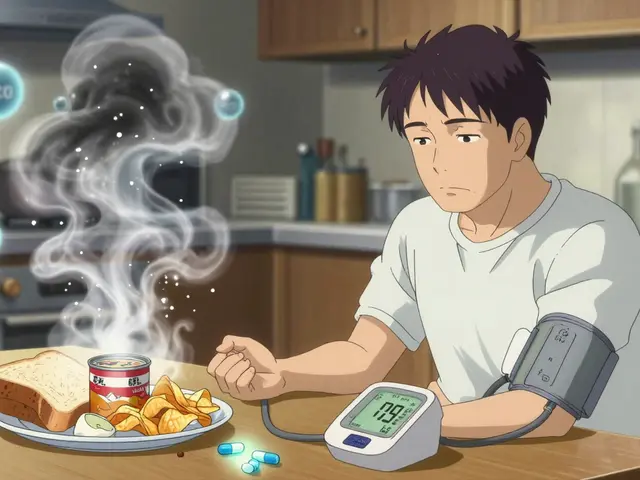
- Vitamin D: 600 to 800 IU daily is the minimum. Many experts now say 800 to 1,000 IU is better, especially if you live in the UK where sunlight is weak for half the year. Blood levels below 20 ng/mL mean you’re at higher risk. Get tested if you’re unsure.
- Weight-bearing exercise: Walk, stair-climb, dance, lift light weights. At least 30 minutes most days. It’s not about intensity-it’s about loading your bones. Even standing more helps. But here’s the catch: corticosteroids blunt your bones’ response to exercise by about 25%. So you need to be more consistent than someone not on steroids.
- Quit smoking: Smoking alone increases fracture risk by 25% to 30%. If you’re on steroids, it’s a double hit. Quitting isn’t just good for your lungs-it’s critical for your spine and hips.
- Limit alcohol: More than three units a day (about two small glasses of wine) speeds up bone loss. Stick to one or two, and skip the daily habit.
These steps alone can cut bone loss by nearly half. One study showed that taking 1,000 mg calcium and 500 IU vitamin D daily prevented a 2% annual bone loss in steroid users-where placebo groups lost 2% per year. That’s not just a number. That’s avoiding a broken hip or crushed vertebra.
When Do You Need Medication?
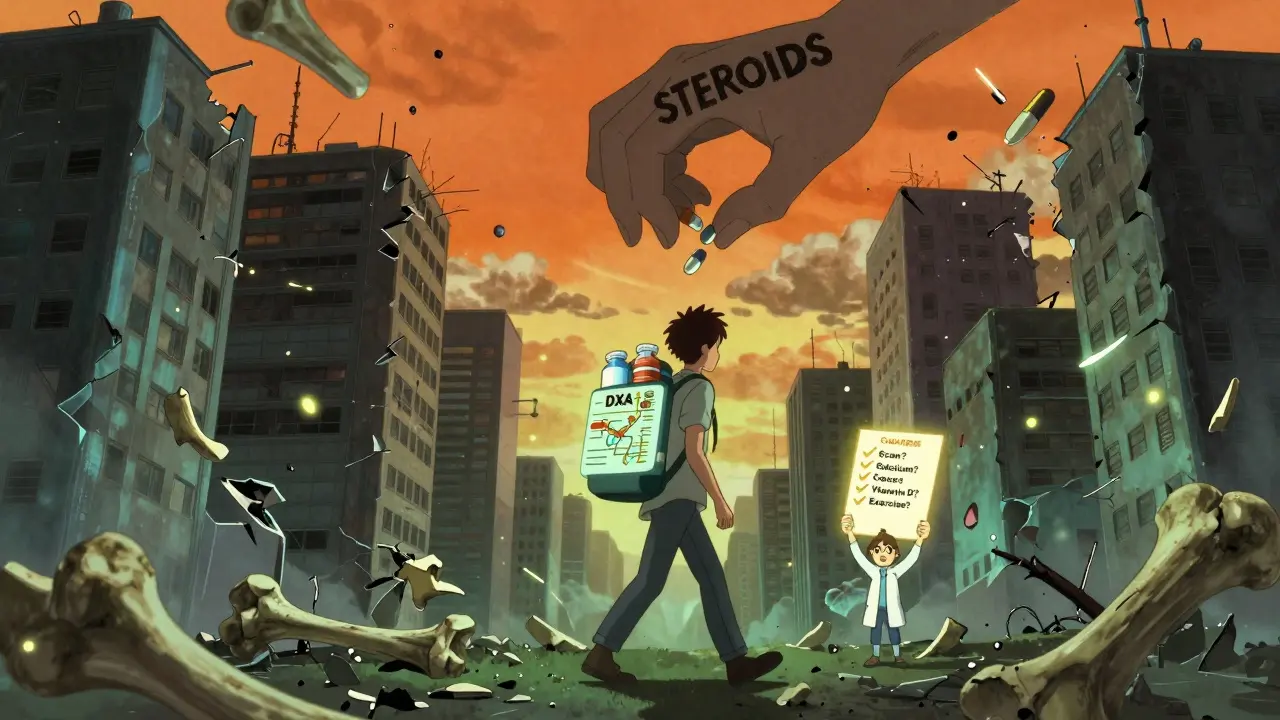
Not everyone needs a prescription. But if you’re on steroids long-term, you likely do. Guidelines say if you’re taking ≥2.5 mg prednisone daily for ≥3 months, you’re in the high-risk group. That’s it. No waiting for a fracture. No waiting for a scan to show damage. Start prevention early.
The first-line drug? Bisphosphonates. Specifically, risedronate (5 mg daily or 35 mg weekly) or alendronate (70 mg weekly). In clinical trials, risedronate cut vertebral fractures by 70% and non-spine fractures by 41%. That’s not a small benefit. That’s life-changing. Zoledronic acid, given as a yearly IV drip, increases spine bone density by 4.5% in a year-far more than placebo. And if you can’t swallow pills, or your stomach can’t handle bisphosphonates, denosumab (a twice-yearly injection) works just as well, boosting spine density by 7% in 12 months.
For people with severe osteoporosis (T-score ≤ -2.5) or those who’ve already broken a bone on steroids, teriparatide is the gold standard. It’s a daily injection that actually rebuilds bone, not just slows loss. Studies show it increases spine density by 9.1% in a year-over twice as much as alendronate. It’s not for everyone. It’s expensive. It’s only approved for two years. But for those at highest risk, it’s the most powerful tool we have.
Testing and Monitoring: Don’t Wait for a Break
Don’t wait until you’re in pain to check your bones. Get a bone density scan (DXA) when you start long-term steroids. Then repeat it every 1 to 2 years. That’s not a luxury-it’s a necessity. The data is clear: only 31% of people on steroids ever get this test. That’s unacceptable.
Use the FRAX tool. It’s free, online, and adjusts for your steroid dose. If your 10-year fracture risk is over 20% (or 10% for hip fracture), you should be on medication-even if your scan looks okay. Bone density doesn’t always reflect how fragile your bones are. Steroids make them brittle in ways a scan can’t fully capture.
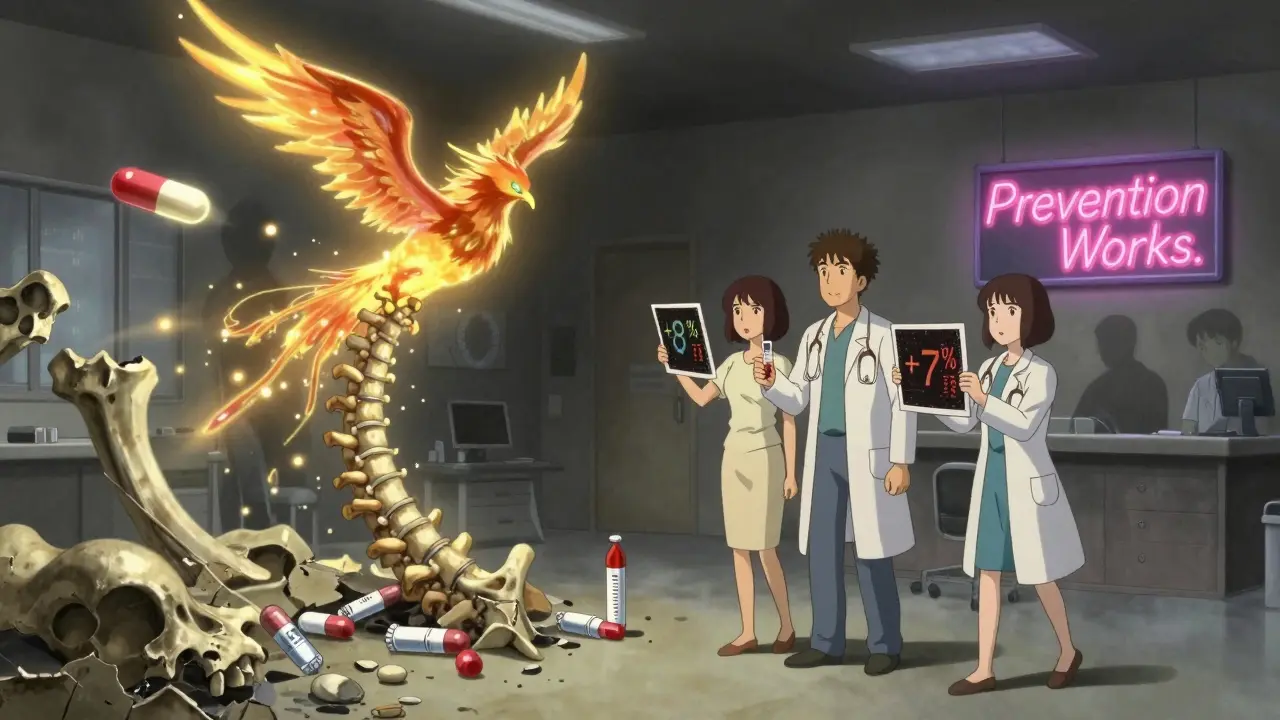
And here’s something most doctors miss: if your bone density improves by 3% to 8% after 12 months of treatment, that’s a win. It means the drugs are working. Don’t stop because you feel fine. You’re not feeling the bone loss. You’re preventing it.
The Big Problem: Nobody’s Doing It
Here’s the ugly truth: despite clear guidelines from the American College of Rheumatology, the Royal Osteoporosis Society, and the Bone, Body and Calcium group, fewer than 15% of people on long-term steroids get full, guideline-concordant care. Only 40% are documented as taking calcium. Only 37% are on vitamin D. Only 31% have had a bone density scan. And men? They’re even less likely to be screened than women.
Why? Fragmented care. You see a rheumatologist for your arthritis. Your GP handles your blood pressure. No one connects the dots. Patients think, "If I’m on steroids, my bones will just get weak. It’s inevitable." That’s a myth. It’s not inevitable. It’s preventable.
One clinic in the US fixed this with a simple trick: their electronic health record automatically flagged any patient prescribed more than 2.5 mg prednisone daily for 3 months. It popped up a reminder: "Order DXA scan. Counsel on calcium, vitamin D, exercise. Consider bisphosphonate." Result? Intervention rates jumped from 40% to 92%.
Pharmacist-led education programs did the same. They called patients, checked their supplements, explained why the pills mattered, and followed up. Adherence went from 40% to 85% in six months.
What You Should Do Right Now
If you’re on long-term corticosteroids:
- Ask your doctor for a bone density scan-today.
- Get your vitamin D level checked. If it’s below 30 ng/mL, start 1,000 IU daily.
- Take 1,000-1,200 mg calcium daily. Split it into two doses.
- Walk 30 minutes most days. If you can’t walk, stand up and shift your weight every hour.
- Stop smoking. If you need help, ask your GP for support.
- Limit alcohol to 2 units a day, max.
- If you’ve been on steroids for more than 3 months at 2.5 mg or more, ask if you need a bisphosphonate. Don’t wait for a fracture.
This isn’t about being extra careful. This is about protecting your ability to move, live independently, and stay out of the hospital. One broken hip can change your life forever. You don’t have to accept that. Prevention works. You just have to start.
Can I stop my corticosteroids to protect my bones?
No-not without medical supervision. Corticosteroids are prescribed for serious conditions like autoimmune diseases or severe asthma. Stopping them suddenly can cause life-threatening adrenal crisis. The goal isn’t to stop the drug, but to use the lowest effective dose for the shortest time possible, while protecting your bones with calcium, vitamin D, exercise, and medication if needed.
Do I need a bone scan if I feel fine?
Yes. Osteoporosis has no symptoms until you break a bone. By then, it’s too late. Bone density loss from steroids happens silently. A scan at the start of treatment and every 1-2 years after is the only way to catch it early and prevent fractures.
Are bisphosphonates safe for long-term use?
Yes, for the duration needed. Bisphosphonates are safe for 3-5 years in steroid users. Rare side effects like jaw bone problems or atypical thigh fractures occur in less than 1 in 1,000 users. The risk of breaking a hip or spine is far greater than these rare side effects. Your doctor will monitor you and may recommend a "drug holiday" after several years if your bone density improves.
Is vitamin D enough to prevent bone loss on steroids?
No. Vitamin D and calcium are essential, but they’re not enough on their own if you’re on long-term steroids. Studies show that even with full supplementation, bone density still declines without a bisphosphonate or other bone-strengthening drug. They’re the foundation-but not the full treatment.
Why do men get less screening than women?
There’s a myth that osteoporosis only affects women. But men on long-term steroids lose bone just as fast-and often with worse outcomes. Men are less likely to be screened because doctors don’t think of them as at risk. This gap needs to change. Any man on ≥2.5 mg prednisone daily for 3 months should get the same screening and treatment as a woman.
Can I take ibuprofen or other NSAIDs instead of steroids?
Not usually. NSAIDs don’t suppress the immune system like steroids do. They’re good for pain and inflammation from arthritis, but not for autoimmune diseases like lupus or vasculitis. Switching without medical guidance could make your condition worse. Talk to your doctor about alternatives-but don’t stop steroids on your own.




Just started prednisone last month for asthma. Didn't know bone loss could happen this fast. Going to ask my doc for the DXA scan tomorrow. Thanks for the clear info.
I've been on 10mg for 18 months and honestly? I thought the bone stuff was just scare tactics. But after reading this, I got my D level checked - it was 18. Started 1000 IU daily and started walking my dog twice a day. No more couch potato life. My last scan showed a 3% increase. It's not magic, but it's something. Don't wait until you're in pain. Seriously.
Also - yes, smoking is the worst. I quit last year. My lungs feel better, but my spine? That's the real win.
Let me be clear: this is not a medical opinion - this is a moral imperative. You are not entitled to your own bone density. The fact that 85% of steroid users are not getting baseline scans is a systemic failure of medical oversight. The ACR guidelines are not suggestions. They are clinical obligations. If your doctor doesn't bring this up, you are being failed. Period.
And yes, men - your bones are not exempt. You are not invincible. You are not immune. Your hip fracture rate is rising. You are part of the problem because you refuse to acknowledge it.
As someone from India who’s been on long-term steroids for lupus, I’ve seen how little awareness there is here. My doctor never mentioned bone health until I brought it up. No one talks about calcium in our diets - we think milk is enough. But even with milk, we’re low on vitamin D because of pollution and indoor living. I started walking at sunrise, eating sardines from the market, and taking supplements. It’s not glamorous, but it’s real. I’ve had no fractures in 5 years. It’s possible. Just don’t wait for someone to tell you.
I read this entire thing. Twice. I’m a 62-year-old woman on 7.5mg prednisone for polymyalgia. I’ve been told to take calcium. I’ve been told to exercise. But I didn’t know the numbers. I didn’t know that each milligram was a measurable loss. I didn’t know that walking was more important than lifting weights. I didn’t know that my vitamin D level was below 20. I’m getting tested today. I’m starting the supplements. I’m walking 45 minutes every day. Thank you for giving me the data I needed to act. This isn’t just advice. It’s a lifeline.
Wait so you’re telling me I can’t just take vitamin D and be fine? I thought that was all I needed. I’ve been taking 2000 IU every day for years. I thought I was golden. So now I need to take calcium too? And walk? And get a scan? This is too much. I just want to feel better.
This is an alarmist piece of propaganda disguised as medical advice. The pharmaceutical industry has been pushing bisphosphonates for decades. The risk of atypical femur fractures is not "less than 1 in 1,000" - it is underreported and systematically ignored. The real cause of bone loss is not steroids - it is the systemic disruption of endocrine balance caused by industrialized medicine. Natural movement, sunlight, and ancestral nutrition are the true cure. You are being manipulated.
Have you considered that the entire concept of "osteoporosis" is a construct designed to sell drugs? Bone density scans are not diagnostic of fracture risk - they are marketing tools. The FRAX tool? A statistical fiction. The real issue is inflammation. If you reduce inflammation, your bones heal. Steroids are the answer - not the problem. You’re treating symptoms, not root causes.
And why are we ignoring the role of glyphosate? It chelates calcium. It’s in your food. It’s in your water. You’re not losing bone - you’re being poisoned.
I’ve been on 5mg prednisone for 4 years. I didn’t know I was at risk until my cousin broke her hip. She was 58. She never even had a scan. I got mine last year - T-score of -2.8. Started alendronate. Walked every day. Took calcium at lunch and dinner. My last scan? Up to -1.9. It’s not a miracle. It’s consistency. I’m not a hero. I just did what the science said. You can too.
just started on 2.5mg. never thought about bones. gonna ask my doc about the scan. also gonna start eating sardines. they’re gross but worth it. thanks for the nudge
Thank you for this 🙏 I’ve been on 7.5mg for 2 years. I was so scared to ask about side effects. This gave me the courage to finally talk to my rheumatologist. Got my D level checked - 22. Started supplements. Started walking. Got the bisphosphonate script. I feel like I just got my future back. This is life-changing info. ❤️
Prevention is not optional. It is the foundation of responsible care. The data is unequivocal. The guidelines are clear. The failure to implement them is not negligence - it is abandonment. Patients are not being informed. Systems are not being designed to protect them. We must demand better. Not because it is convenient. But because it is ethically necessary.
Wait - you’re telling me steroids cause bone loss? That’s not what the CDC says. I read a study from 2017 that said it was all about fluoride in the water. And the FDA is hiding the truth. I’ve been taking magnesium and bentonite clay - that’s what really helped me. Also, the moon phase affects calcium absorption. You need to take it during the waxing moon. I’ve been doing this for 3 years. No fractures. No scans. Just intuition and supplements. The system doesn’t want you to know this.
Look, I’ve been on steroids for 8 years. I don’t trust doctors. I don’t trust science. But I trust my body. I take ashwagandha. I do yoga. I drink bone broth. I don’t take pills. I don’t get scans. I feel strong. I walk 10k steps. I don’t break bones. Maybe the real problem is that people are too scared to listen to themselves? Maybe the answer isn’t in a pharmacy - it’s in the silence.
Me too 😊 I started walking after reading this. Just 20 mins a day. And I got my D checked. It was low. Now I take 1000 IU. No more panic. Just progress. 🌞🦴