
Why Throwing Away Old Medications Is a Bad Idea
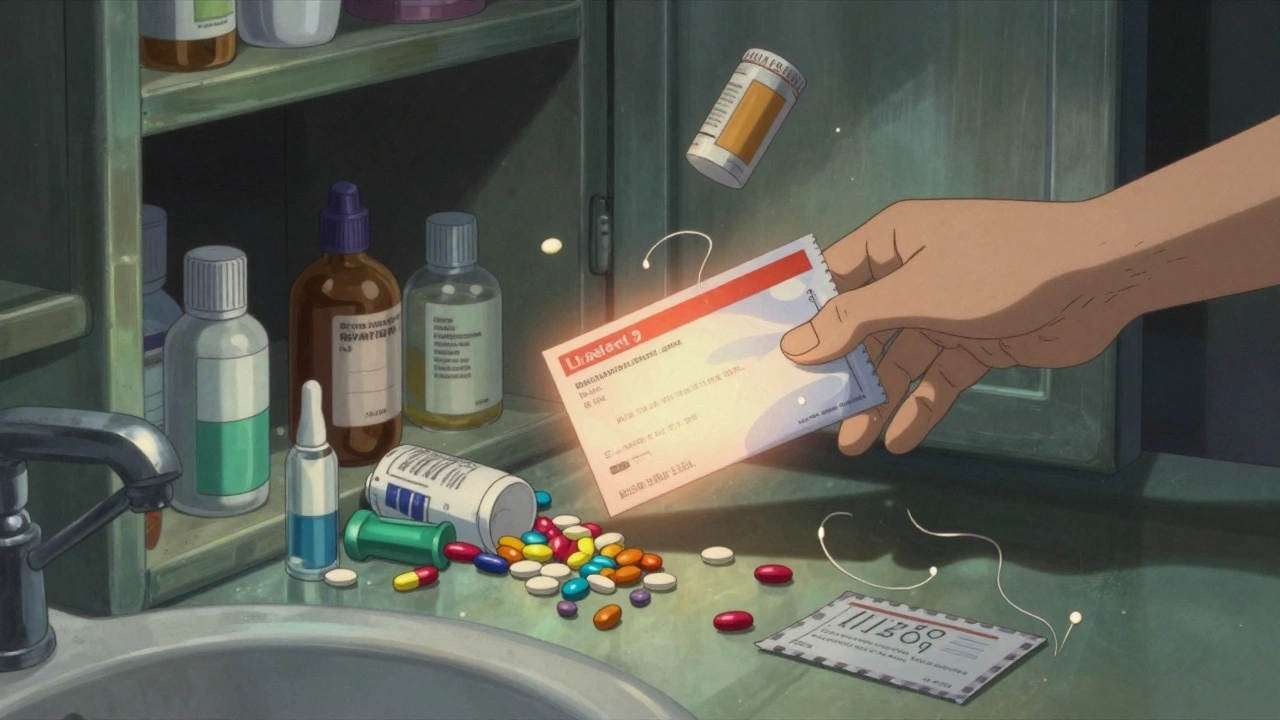
You’ve got a drawer full of old pills. Antibiotics from last winter. Painkillers you never finished. That anxiety med your doctor switched you off of. What do you do with them? Flush them? Toss them in the trash? Both are dangerous.
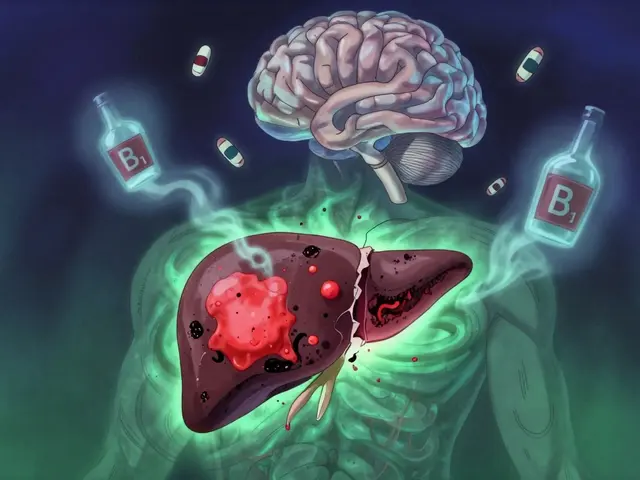
Flushing meds poisons water supplies. The EPA has confirmed pharmaceuticals show up in rivers and drinking water - not in big amounts, but enough to harm fish and potentially affect human health over time. Throwing them in the trash? That’s even worse. Kids, pets, and even scavengers can dig them out. There are real cases of people getting addicted or overdosing on pills they found in the garbage.
The safest, cleanest, and most legal way to get rid of unused or expired medications? Use a prepaid drug mail-back envelope. It’s simple, anonymous, and approved by the FDA and DEA. No trips to a pharmacy. No waiting for a take-back day. Just fill, seal, and mail.
How Prepaid Mail-Back Envelopes Actually Work
These envelopes aren’t regular mailers. They’re specially designed for pharmaceutical waste. You order them online or pick them up at a participating pharmacy. Inside, you’ll find a tamper-evident pouch, instructions, and sometimes a label with a tracking number.
Here’s the process - it’s that simple:
- Take out your unused pills, liquids, or creams. You can leave them in their original bottles - just make sure to scratch out your name, address, and prescription number with a permanent marker.
- Put them in the envelope. No need to sort them. Prescription drugs, over-the-counter meds, pet meds, even samples - all are accepted.
- Seal the envelope. Some brands include special orange tape to confirm it’s locked shut.
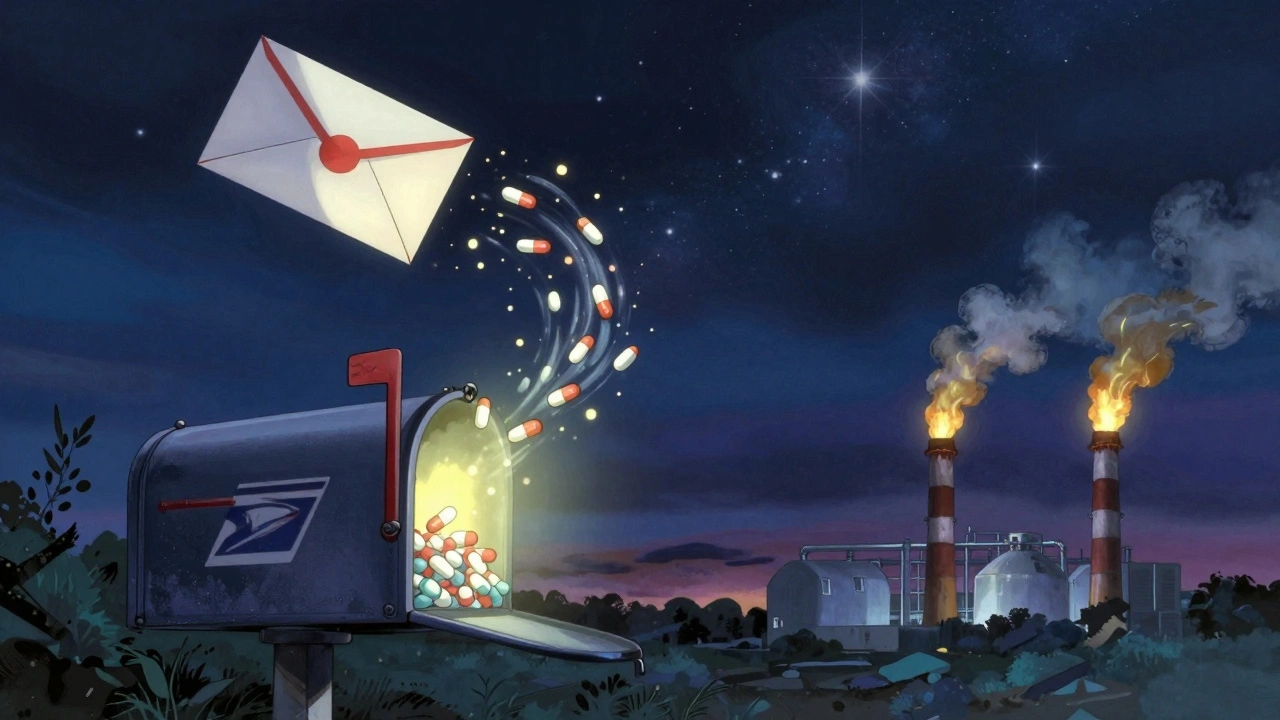
- Drop it in any USPS mailbox. No stamp needed. It’s prepaid.
Once it’s mailed, the envelope goes straight to a DEA-registered incineration facility. It doesn’t go to a landfill. It doesn’t get sorted. It gets burned at high temperatures, turning the waste into clean energy. Companies like American Rx Group partner with Waste-to-Energy plants to make sure nothing harmful is released.
And yes - you can track it. Providers like Mail Back Meds let you log in to see when your envelope was received, when it was destroyed, and even the weight of the contents. It’s not just convenient. It’s transparent.
What You Can and Can’t Put in These Envelopes
Not everything goes in. That’s important to know. Most envelopes accept:
- Prescription pills and liquids
- Over-the-counter meds (ibuprofen, allergy pills, etc.)
- Pet medications
- Medication samples
- Lotions and creams (up to 4 ounces total)
Here’s what stays out:
- Needles, syringes, or sharps - those need special disposal kits
- Aerosols and inhalers - they’re pressurized and can explode
- Controlled substances that are illegal (Schedule I drugs like heroin)
- Non-medical items - batteries, alcohol, cleaning supplies
Some states have special programs. In California, Med Take Back offers separate mail-back envelopes just for inhalers. If you’re unsure, check the provider’s website before you pack anything. Sending the wrong thing can delay disposal - or get your envelope rejected.
Who Offers These Envelopes and How to Get Them
You don’t need a prescription to get one. You can order them online from several companies:
- Mail Back Meds - Sells packs of 3, 50, or 250 envelopes. Good for families or community groups. Offers tracking and eco-certifications.
- Stericycle’s Seal&Send - Focused on clinics, pharmacies, and businesses. Gives detailed reports for organizations tracking disposal compliance.
- American Rx Group - Emphasizes waste-to-energy conversion. No contracts, no monthly fees. Works in all 50 states.
- DisposeRx - Also highlights energy recovery. Popular with pharmacies looking to offer disposal as a service.
Or, you can pick one up for free at your local pharmacy. But here’s the catch: not every pharmacy participates. The FDA says participation is voluntary. So call ahead. Ask: “Do you give out prepaid mail-back envelopes for expired medications?”
Starting March 31, 2025, there’s a new option: the Opioid Analgesic REMS Mail-Back Program. Pharmacies that fill opioid prescriptions will be required to offer free mail-back envelopes specifically for those drugs. It’s a federal rule - not a suggestion. If you’re on long-term pain meds, this will soon be standard.
Why This Is Better Than Take-Back Days
The DEA holds National Prescription Drug Take Back Days twice a year. They collect over a million pounds of meds each time. That’s impressive. But here’s the problem: you have to show up at a specific time, at a specific location - often a police station or community center.
What if you’re elderly? What if you work nights? What if you live in a rural area with no drop-off point within 30 miles? That’s not access - that’s a barrier.
Mail-back envelopes solve that. You don’t need to leave your house. You don’t need to wait. You don’t need to explain why you’re disposing of your meds. It’s private. It’s quiet. It’s always available.
Plus, take-back bins at pharmacies often get full. Or they’re locked. Or they’re only open during business hours. Mail-back envelopes don’t have those limits. They go out when you’re ready.
Common Mistakes People Make
Most users get it right. But here are the errors we see again and again:
- Not removing personal info - Your name and prescription number on the bottle? Scratch it out. Don’t assume the envelope hides it.
- Putting in sharps or inhalers - That’s a hard no. You’ll get your envelope returned, or it’ll get held up at the facility.
- Taking it to the pharmacy - Don’t drop your sealed envelope at the counter. It’s not for them to handle. Take it to the mailbox.
- Waiting until you have a full bottle - You don’t need to hoard. Even one expired pill is worth disposing of safely. Use the envelope as soon as you know you won’t use it again.
Pro tip: Keep a small box in your medicine cabinet labeled “To Dispose.” Add meds as you finish them. Once the box is half-full, order your envelope. It’s easier than waiting for a drawer to overflow.
Environmental Impact and Why It Matters
Every year, Americans throw away over 200 million pounds of unused medications. Most of it ends up in landfills or flushed down the drain. That’s not just wasteful - it’s toxic.
Mail-back programs prevent that. By incinerating meds in controlled facilities, they stop chemicals from leaching into soil and water. They also reduce the risk of accidental poisoning and drug abuse.
Companies like Mail Back Meds say their process aligns with EPA guidelines. Stericycle says their clients use their program to show they’re serious about environmental responsibility. And the FDA? They call mail-back “one of the best ways to safely dispose of unused or expired medicines.”
This isn’t just about being tidy. It’s about protecting public health - and the planet.
What’s Next for Medication Disposal?
The system isn’t perfect. Access still varies by state. Rural areas have fewer pharmacies offering envelopes. Some people don’t know these exist.
But change is coming. The opioid REMS program launching in March 2025 will force manufacturers to supply envelopes with every opioid prescription. That’s a game-changer.
More states are starting to require pharmacies to offer disposal options. Insurance companies are beginning to cover the cost of envelopes for high-risk patients. And tech companies are working on smart labels that tell you when a pill expires - and even send you a reminder to mail it back.
Right now, you have the power to act. You don’t need to wait for policy to catch up. Just order an envelope. Use it. And tell your family to do the same.



I’ve seen this before - it’s all a cover-up. The government doesn’t want you to know they’re secretly selling your old pills to black-market pharmacies. The ‘DEA-registered incineration’? Yeah, right. That smoke? It’s not clean energy - it’s just aerosolized fentanyl in disguise. I checked the EPA’s ‘confidential’ reports. They’re lying. You think they care about fish? They care about control.
It’s fascinating how we’ve turned a basic act of responsibility into a bureaucratic ritual. We don’t just dispose of medicine - we ritualize it with tracking numbers, tamper-evident seals, and corporate branding. Is this progress? Or just another way to monetize our anxiety? The real question isn’t how to dispose of pills - it’s why we’re hoarding them in the first place.
I just ordered five of these envelopes. Not because I’m scared of my meds - but because I’m tired of pretending I’m not a product of a system that tells me to hoard drugs like they’re gold bars. I’ve got a drawer full of leftovers from three different doctors, three different life phases. This isn’t waste management. It’s grief management. And I’m ready to let go.
Okay, but... who actually uses this? Like, really? I mean, you have to... order them? Online? And then... scratch out your name? With a marker? And then... wait? For it to be... incinerated? Like, isn’t this just a fancy way of saying ‘I don’t want to be responsible for my own trash’? And why is there a tracking number? Who cares? I’m not sending my expired ibuprofen to NASA.
This is actually really thoughtful. In my village in Nigeria, we used to bury old meds in the ground behind the clinic - no one knew it was dangerous until a child got sick. I’m glad someone’s making this accessible. But I wonder - do these envelopes reach rural areas in the US? Or is this just another service for the urban middle class?
You say ‘scratch out your name’ - but you don’t specify *how* to do it properly. You need to obliterate the prescription number, not just scribble over it. And ‘permanent marker’? That’s vague. Use a Sharpie Fine Point, not a crayon. Also, you mention ‘some brands include orange tape’ - which brands? Name them. Don’t be lazy. This is a public safety guide - precision matters.
This is so 2018. Everyone’s obsessed with ‘convenient disposal’ but no one talks about why we’re overprescribing in the first place. Why are we still getting 90-day supplies of opioids for a sprained ankle? This is a Band-Aid on a hemorrhage. Fix the system, not the envelope.
i just threw my old adderall in the trash last week lmao. who even cares? no one’s gonna dig through my garbage. also, why do i need to track my expired tylenol? it’s not a package from amazon.
this is so cool!! i never knew this existed!! i always flush my meds bc my mom said its fine!! but now i feel bad 😭 i just ordered 3 envelopes!! thank you for sharing!! 💕
I just cried reading this. I lost my brother to an overdose from pills he found in his ex’s trash. I’ve been saving these envelopes since 2020. I don’t use them for myself. I leave them in the lobby of my building with a sticky note: 'If you’re scared, just mail it. No one will judge.' I’ve had 17 envelopes returned to me. 17 people took them. That’s 17 chances to live.
USA: 1. Rest of the world: 0. Only in America do you need a tracking number to throw away a pill. Next they’ll send you a ‘Disposal Satisfaction Survey’ after you burn your Advil. 🇺🇸🔥 #ProudlyWasteful
Ah yes, the American solution: make the problem more expensive, more complicated, and then sell the solution back to you. Meanwhile, in India, we just give our expired pills to the chai-wallah who sells them to villagers as ‘new medicine.’ But hey, at least your envelope has a tracking number. 🤷♂️
i just put my old zoloft in a ziploc and tossed it in the curb bin. if the fish dont like it, thats their problem. also why is this even a thing? i thought we were supposed to be chill. why am i so stressed about my expired ibuprofen??
The real inefficiency here is the lack of closed-loop pharmaceutical lifecycle management. You’re not addressing the upstream supply chain - you’re just optimizing downstream disposal logistics. Also, ‘waste-to-energy’ is a misnomer - it’s incineration with PR. And why are you using ‘DEA-registered’ like it’s a certification badge? It’s a regulatory compliance mechanism, not a quality seal. And you didn’t even mention the carbon footprint of the USPS mail system. 🤓
Okay, but let’s be real - this is just the latest trend in performative environmentalism. You order the envelope, you post a selfie holding it with your ‘I’m doing my part’ caption, then you forget about it for three months until your drawer is full again. And meanwhile, you’re still buying new meds every month because your doctor keeps prescribing them. This isn’t a solution - it’s a guilt-reduction tool. I’ve seen it. I’ve done it. I’m still doing it. 😅