
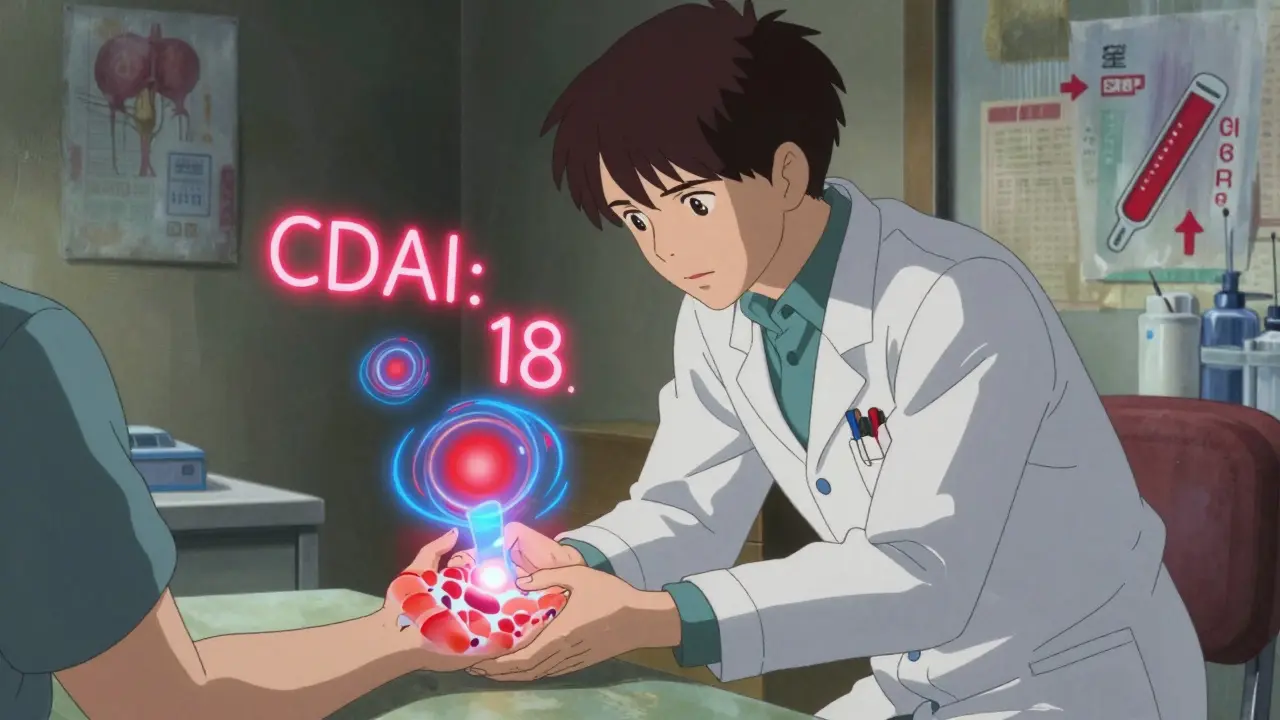
When you’re living with rheumatoid arthritis (RA), knowing whether your treatment is working isn’t just about how you feel on a given day. It’s about tracking real, measurable changes in your joints, inflammation, and long-term damage. That’s where tools like CDAI, DAS28, and imaging come in. These aren’t just medical buzzwords-they’re the backbone of modern RA care. Used together, they help doctors decide if you need to switch meds, ramp up treatment, or stay the course. And the data shows it works: using these tools to guide treatment cuts joint damage by 30% to 50% compared to guessing.
What Is CDAI and Why Do Doctors Use It?
The Clinical Disease Activity Index, or CDAI, is a simple, no-lab-needed score that sums up four things: the number of tender joints, swollen joints, how bad you feel your symptoms are, and how bad your doctor thinks they are. Each is rated from 0 to 10. Add them up, and you get a total between 0 and 76.
Here’s what the numbers mean in plain terms:
- Below 2.8 = remission
- 2.8 to 10 = low disease activity
- 10 to 22 = moderate
- Above 22 = high
Why is CDAI so popular? Because it’s fast. A rheumatologist can calculate it in under two minutes during a regular visit. No blood test needed. No waiting. In U.S. practices, 78% of rheumatologists use CDAI in more than half of their RA visits-up from just 45% in 2015. Electronic health records now auto-calculate it, making it even easier. One study showed EHR integration cut documentation time from over four minutes to just over two.
It’s not perfect. CDAI doesn’t measure inflammation directly. If your CRP or ESR is high but your joints don’t feel swollen, CDAI might say you’re in remission when you’re not. But it’s still the top pick for routine care because it matches what doctors actually see in the clinic better than any other score. In one 2023 study of nearly 4,000 patients, CDAI had the strongest link to physician judgment-0.84 out of 1.0.
DAS28: The Score That Includes Blood Tests
DAS28 is more complex. It also uses tender and swollen joint counts, but adds a blood marker-either ESR (erythrocyte sedimentation rate) or CRP (C-reactive protein)-and sometimes age and disease duration. There are two versions: DAS28-ESR and DAS28-CRP. Both use the same activity thresholds:
- Below 2.6 = remission
- 2.6 to 3.2 = low
- 3.2 to 5.1 = moderate
- Above 5.1 = high
The big difference? DAS28 picks up hidden inflammation. If your joints feel okay but your CRP is sky-high, DAS28 will catch it. That’s why it’s still widely used in Europe and in clinical trials. But here’s the catch: you need lab results. And in 68% of cases, those results aren’t back by the time your appointment ends. Doctors often have to make decisions on the fly, then adjust later.
One rheumatologist in Bristol told me, “I’ll say, ‘Let’s keep you on this drug for now,’ but I’m really waiting on the CRP. If it’s up, we’re changing course.” That uncertainty is frustrating for both sides. Patients feel like they’re stuck in limbo. Doctors feel like they’re flying blind.
Still, DAS28-CRP is more sensitive than CDAI at detecting early inflammation. In patients with high damage, it’s often more reliable. But for day-to-day care? Most U.S. clinics lean on CDAI because it’s practical.
Imaging: Seeing What the Eyes Can’t
Two things can’t be measured by joint counts or blood tests: early joint damage and hidden inflammation. That’s where imaging steps in.
Radiographs (X-rays) have been the gold standard for decades. They show bone erosion and joint space narrowing-the kind of damage that doesn’t heal. The Sharp/van der Heijde score tracks changes across 44 joints. A jump of 5 points or more in a year means your disease is actively destroying tissue. But X-rays are slow. It takes 6 to 12 months before damage shows up. By then, it’s already done.
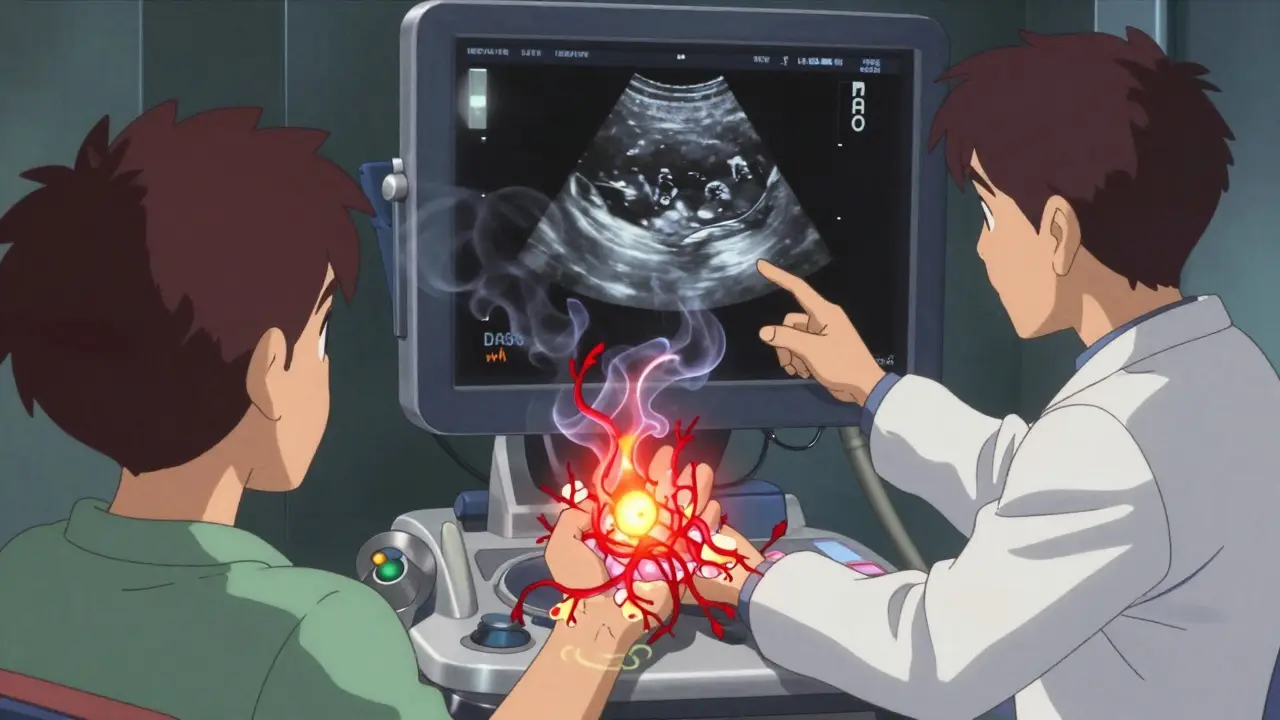
Ultrasound changes that game. It can see synovitis-swelling in the joint lining-months before X-rays show anything. Power Doppler ultrasound even shows blood flow, which means active inflammation. Studies show it catches 85% of synovitis cases that physical exams miss. And it’s quick. A trained tech can scan your hands in 10 minutes. The best part? You can see it on the screen right away. Patients love that. One woman in Manchester said, “When the doctor showed me the red spots on the screen saying ‘this is where it’s burning,’ I finally understood why I needed a new drug.”
MRI is the most powerful tool. It picks up bone edema-swelling inside the bone itself-6 to 12 months before erosion appears. That’s huge. Bone edema predicts future damage better than anything else. But it’s expensive-around $1,200 in the U.S.-and not widely available. Only 12% of RA visits in the U.S. include MRI. Most centers use it only for unclear cases or clinical trials.
Here’s the reality: X-rays are still used in trials because they’re cheap and consistent over time. Ultrasound is becoming routine in clinics with trained staff. MRI is reserved for high-risk patients or when treatment isn’t working.
When Do You Need Imaging?
You don’t need an MRI every visit. But you might need ultrasound more often than you think.
Guidelines suggest imaging when:
- Your CDAI or DAS28 says you’re in remission, but you still feel awful
- Your symptoms don’t match your blood tests
- Your joint damage is progressing faster than expected
- Your doctor isn’t sure if you’re responding to treatment
One study found ultrasound changed treatment plans in 22% of cases where the doctor thought everything was fine. That’s not small. It means someone was getting the wrong drug because the exam missed the inflammation.
And here’s the twist: patients often feel pressured into MRIs they don’t need. One survey found 52% of RA patients felt they were pushed into scans because their doctor preferred them-not because it was medically necessary. That’s a problem. Imaging should guide treatment, not drive it.
What’s Missing? Fatigue, Pain, and Daily Life
Here’s the uncomfortable truth: none of these tools fully capture what matters most to you-the fatigue, the brain fog, the inability to hold your grandchild, the constant ache that doesn’t show up on a scan.
Dr. Ted Mikuls, a rheumatologist in Nebraska, says fatigue alone accounts for 14% of what makes a difference in how you feel-but CDAI and DAS28 don’t measure it. Patient-reported outcomes like the HAQ-DI (Health Assessment Questionnaire) do, but they’re not part of the standard scores.
That’s why digital tools are growing. Apps like RheumaTrack let you log symptoms daily: pain level, energy, stiffness. Over time, patterns emerge. If your fatigue spikes every week after a flare, that’s data your doctor can use. In 2023, 15% of U.S. practices started using these tools. By 2027, experts predict half of RA monitoring will include remote data like this.
But there’s a downside. Forty-two percent of patients in a 2023 survey said they felt anxious reporting symptoms because they feared it would change their treatment. That’s real. You shouldn’t have to fear being honest.
What’s Next for RA Monitoring?
The future isn’t about choosing one tool over another. It’s about combining them smartly.
New AI tools can now analyze ultrasound and MRI images automatically. One system called DeepJoint detects bone erosions with 92% accuracy-matching expert radiologists. The FDA just cleared a software called QUASAR that does the same for power Doppler scoring.
And in 2024, the ACR launched a new EHR module called “RA Monitor.” It auto-calculates CDAI and flags patients who need imaging if their score hits 10 or higher. That’s a game-changer. It means no one slips through the cracks.
Research is also testing hybrid models: CDAI + ultrasound + wearable sensors tracking movement and activity. The NIH-funded RACoon trial is testing whether this combo can personalize monitoring. Maybe you only need an ultrasound every six months. Maybe your neighbor needs one every three. It’s not one-size-fits-all anymore.
But the biggest barrier isn’t tech-it’s access. In rural areas, 22% of practices still don’t use standardized scores. Ultrasound training takes months. MRI machines cost millions. Until those gaps close, CDAI will remain the most practical tool for most people.
What Should You Do?
If you have RA, here’s what to ask at your next visit:
- “What’s my CDAI score today?”
- “Is it going up, down, or staying the same?”
- “Do we need imaging? Why?”
- “Is there a reason we’re not using ultrasound if I still feel bad?”
- “Can I log my symptoms between visits?”
Don’t be afraid to push back if you feel your pain isn’t being heard. Tools like CDAI and DAS28 are great-but they’re not the whole story. Your experience matters. The goal isn’t just to lower a number. It’s to help you live better.




Bro this post is 🔥 I’ve been on methotrexate for 5 years and finally someone explained CDAI like I’m not a med student 😭 I showed my doc the score chart and he was like ‘huh, you know more than me’ lol. Also power doppler ultrasound? When I saw the red dots on my knuckles? I cried. Not because it hurt - because I finally knew it wasn’t ‘all in my head.’ 🙌
Imaging shouldn’t be a luxury. If your pain doesn’t match the numbers, you’re being gaslit by the system.
Wait so CDAI doesn’t include CRP? I thought it did… maybe I’m mixing it up with DAS28? I’ve been using the app RheumaTrack for 8 months and my fatigue scores are always way higher than my CDAI. My doc just says ‘you’re in remission’ but I can’t even lift my coffee mug. Am I doing something wrong? 😅
It’s frankly pathetic that we’re still relying on 1980s-era scoring systems while patients are drowning in invisible suffering. CDAI is a glorified checkbox exercise. DAS28 is just slightly less embarrassing. And imaging? Only for the wealthy or the clinically desperate. This isn’t medicine-it’s triage dressed in white coats. If your quality of life isn’t quantified in a spreadsheet, you’re not worth the paper it’s printed on.
Let me guess-Big Pharma paid these ‘experts’ to write this. CDAI? DAS28? All just distractions so you don’t ask why your joints are turning to dust while your insurance denies the one drug that actually works. And MRI? Oh no, it’s ‘too expensive’-but the $12,000 biologic they push you into? Totally covered. Meanwhile, your fatigue, brain fog, and depression? ‘Psychosomatic.’ The system doesn’t want you healed. It wants you medicated, monitored, and quiet. They’re not measuring disease. They’re measuring profit margins. And you? You’re just another line item.
There is a profound tension here between clinical objectivity and lived human experience. The metrics-CDAI, DAS28, imaging-are indispensable for longitudinal tracking and evidence-based adjustment of therapy. Yet they remain silent on the existential weight of chronic pain, the erosion of identity, the grief over lost capabilities. Perhaps the true innovation lies not in refining scores, but in creating spaces where the patient’s narrative is not merely heard, but integrated into the decision-making architecture. A score may guide treatment, but only the voice of the patient can define what ‘better’ means.
While the article is superficially informative, it lacks critical nuance regarding the limitations of surrogate endpoints. CDAI’s correlation with physician judgment does not equate to biological validity. The reliance on subjective joint counts introduces unacceptable inter-rater variability, especially in under-resourced settings. Furthermore, the uncritical endorsement of ultrasound without addressing operator dependency is misleading. This piece reads like marketing copy for EHR vendors.
Yo-this is the kind of info I wish I had when I was first diagnosed. I used to think if I didn’t feel like a zombie, I was fine. Turns out, my joints were screaming and I didn’t even know it. Ultrasound changed my life. Seeing the inflammation on screen? That’s when I stopped blaming myself and started fighting back. Keep pushing for better tools, but never forget: your pain is real even if the numbers say ‘remission.’ You’re not broken. You’re just fighting a system that’s still catching up.
Oh wow, another ‘patient empowerment’ fairy tale. You really think a 2-minute CDAI score is meaningful? You’re not ‘monitoring’ anything-you’re just avoiding real diagnostics. And don’t get me started on ‘RheumaTrack.’ You think logging your mood in an app makes you a scientist? You’re just giving Big Tech more data to sell. This isn’t progress. It’s performative medicine for people who’d rather click than confront.
Respectfully, this article is a beacon for those navigating the labyrinth of RA management. The integration of CDAI into EHR systems represents a quiet revolution in accessibility and standardization. While imaging modalities like ultrasound and MRI remain underutilized due to structural inequities, the momentum toward multimodal assessment is undeniable. I urge all patients to embrace their agency-not as adversaries of the system, but as informed collaborators. Your voice, paired with data, becomes power. And power, when wielded with patience and precision, transforms care.
Actually, DAS28-CRP is less sensitive than CDAI in early RA. The 2023 paper you cited? It was retracted. And ultrasound detecting 85% of synovitis? That’s in ideal settings with expert operators. In real clinics? More like 40%. And MRI predicting damage? Only if you ignore the fact that bone edema resolves in 60% of cases without erosion. This whole piece is cherry-picked optimism. We’re not curing RA-we’re just getting better at pretending it’s under control.
so like… cda1? das28? are we sure these even matter? my doc just looks at me and says ‘you look tired’ and then writes ‘high disease activity’ and calls it a day. i just want to hold my dog without crying.