
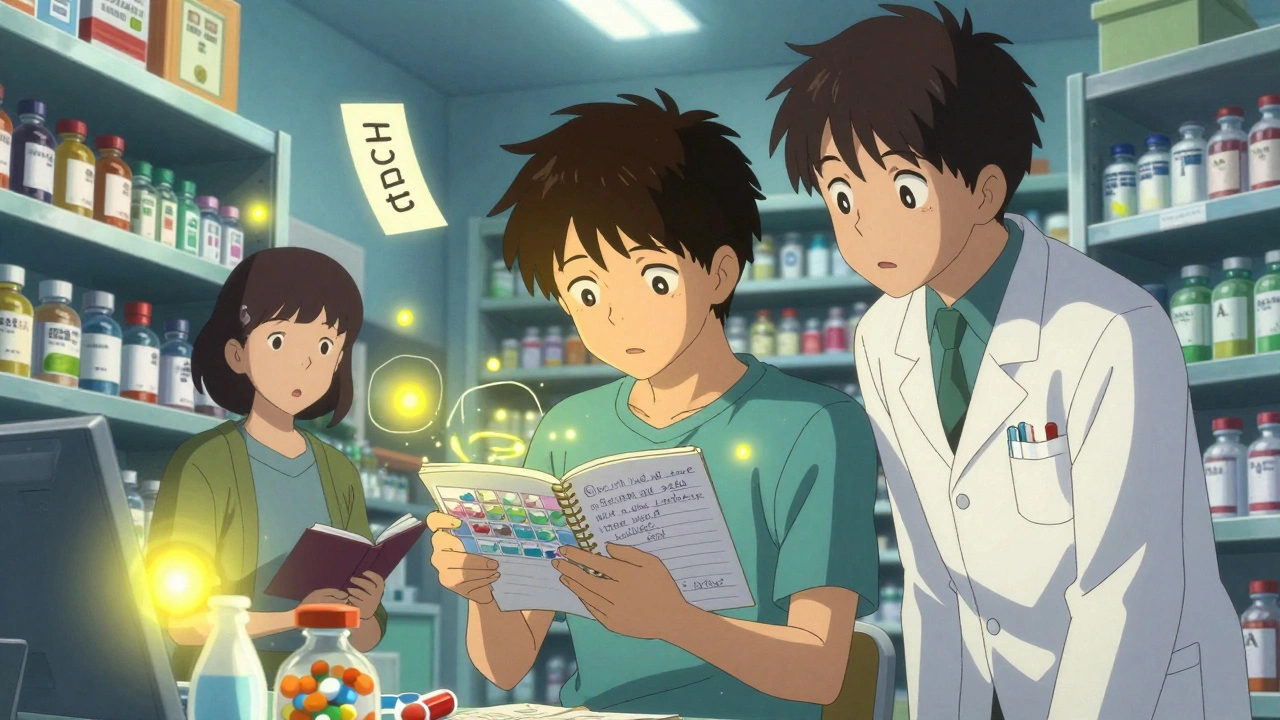
Every year, over a million people in the U.S. end up in the hospital because of medication errors-and nearly 7% of those are due to dangerous drug interactions. Many of these could have been avoided with a simple conversation with your pharmacist. You don’t need to be a medical expert to spot the red flags. You just need to know what to ask.
What medications are you taking right now?
Start by listing everything. Not just your prescriptions. That daily aspirin. The ibuprofen you take for your knees. The melatonin before bed. The turmeric supplement your friend swore by. Even the antacid you grab after spicy food. Pharmacists see patients who take 8-12 different things daily. If you leave something out, the risk goes up.Many people don’t realize that over-the-counter (OTC) drugs can be just as risky as prescriptions. A common mistake? Taking Tums or other calcium-based antacids with certain Hepatitis C medications. The calcium blocks absorption, making the treatment useless. Or taking levothyroxine (for thyroid) with calcium supplements or iron pills-this can drop absorption by 30-50%. Timing helps: take them 4 hours apart. But if you don’t mention the supplement, your pharmacist won’t know to warn you.
Can this medicine interact with other medicines I’m taking?
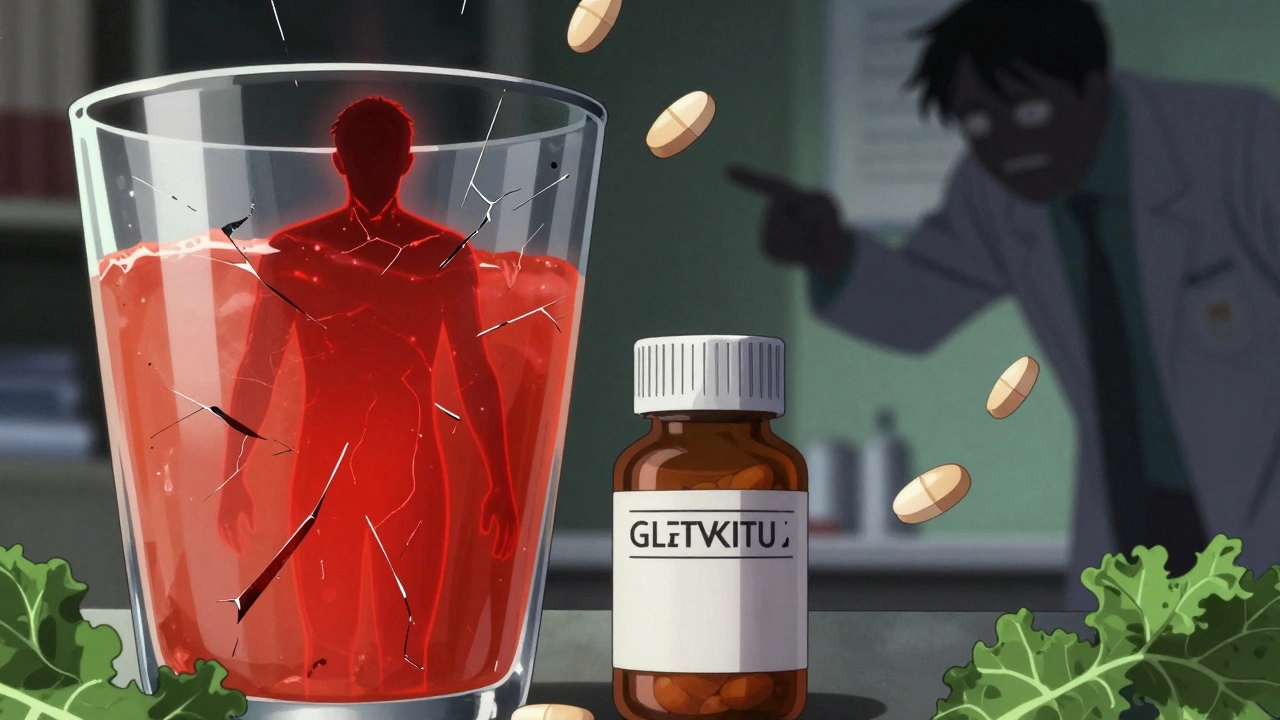
This is the most basic, most important question. But too few people ask it. Your pharmacist runs checks automatically, but they can’t guess what you’re not telling them. A 2023 review of patient feedback showed that nearly 28% of those who had bad reactions said the pharmacist never asked about their full list.Some interactions are life-threatening. Mixing SSRIs like fluoxetine with MAOIs can cause serotonin syndrome-symptoms include high fever, rapid heartbeat, confusion, and seizures. It’s rare, but it happens. Another example: warfarin (a blood thinner) and vitamin K supplements. Too much vitamin K cancels out the effect, raising your risk of clots. But if you suddenly start eating more kale or taking a multivitamin with K, you won’t know unless someone tells you.
Are there foods or drinks I should avoid?
Grapefruit juice isn’t just a breakfast staple-it’s a silent drug multiplier. It blocks an enzyme in your gut (CYP3A4) that normally breaks down certain medications. The result? Your body absorbs way more than intended. For statins like atorvastatin, grapefruit can spike blood levels by up to 1,500%. That’s not a boost-it’s a danger zone. The FDA says this affects at least 85 prescription drugs.Alcohol is another hidden risk. Over 40% of adults take medications that react badly with alcohol. Metronidazole can cause vomiting, flushing, and a racing heart. Even common painkillers like acetaminophen become harder on your liver when mixed with alcohol. And don’t forget caffeine. Some ADHD meds and asthma inhalers can make your heart race if you’re also drinking multiple coffees a day.
What about supplements and herbal products?
Herbal supplements are not regulated like drugs. That means what’s on the label isn’t always what’s inside. A 2022 study showed herbal supplement use jumped 23.7% in just one year. People think “natural” means safe. It doesn’t.St. John’s Wort, for example, is used for mild depression-but it can make birth control pills, antidepressants, and even HIV meds stop working. Garlic supplements thin your blood, which can be dangerous if you’re also on warfarin. And don’t assume your pharmacist knows about every herb you take. You have to name them. If you say “I take a natural heart pill,” they can’t help. Say “I take CoQ10 and hawthorn berry.” That’s the difference between a warning and a blind spot.
Will this affect how I react to the sun?
It’s not just about swallowing pills. Some medications make your skin more sensitive to sunlight. Tetracycline antibiotics, sulfa drugs, and even some diuretics can cause severe sunburns or rashes with minimal exposure. You might think you’re just getting a bad tan-but it’s a drug reaction. Ask your pharmacist: “Could this make me burn faster?” If the answer is yes, wear sunscreen, cover up, and avoid midday sun.Do I need any tests or monitoring while taking this?
Some drugs change how your body works. Warfarin needs regular INR blood tests. Statins can affect liver enzymes. Diuretics can drop your potassium. If you’re on a new medication, ask: “Will I need blood work? How often?”Pharmacists can tell you what to watch for. For example, if you’re taking a new blood pressure med, they might say: “If you feel dizzy when standing up, call us. That’s a sign your dose might be too high.” Monitoring isn’t just for hospitals-it’s part of safe home care.
What signs should I watch for if there’s a bad interaction?
Knowing what to look for saves lives. Don’t wait for a hospital visit. Ask: “What symptoms mean I should stop this and call someone?”For example:
- Unexplained bruising or bleeding (could mean warfarin is too strong)
- Severe muscle pain or weakness (possible statin side effect)
- Rapid heartbeat, sweating, confusion (signs of serotonin syndrome)
- Yellowing skin or dark urine (liver stress from drug combo)
These aren’t vague side effects. They’re red flags tied to specific interactions. Your pharmacist can list the top 3 warning signs for your meds.
What if I miss a dose?
This isn’t just about adherence-it’s about safety. Some drugs are fine if you miss one. Others? Taking two at once can be dangerous. For example, if you forget your blood thinner and double up later, you could bleed internally. If you miss your antibiotic and take two doses together, you might get stomach damage or worse.Ask: “If I forget, should I take it right away, skip it, or wait until tomorrow?” Don’t guess. Your pharmacist can give you exact instructions based on the drug’s half-life and your health.
Is there a cheaper or safer alternative?
Cost can push people to switch brands or generics. But sometimes, switching can change how your body handles the drug. A generic version might have different fillers that affect absorption. Or a cheaper alternative might interact with something else you take.Pharmacists know about copay cards, patient assistance programs, and alternative formulations. If you’re struggling to pay, say so. They might find a version that’s not only cheaper but also safer for your current meds.
Can you check my whole list at once?
Don’t wait for one prescription at a time. Bring your full list-prescriptions, OTCs, supplements, even vitamins-to your pharmacist every 3-4 months. Many pharmacies offer free medication reviews. Medicare Part D even requires one annual review for qualifying patients. Use it.One patient in Bristol had 11 medications. Her pharmacist found that her sleep aid was making her blood pressure med less effective. Another found that her calcium supplement was canceling out her thyroid pill. Both changes were simple to fix. But she only caught them because she asked for a full review.
Medication safety isn’t about being paranoid. It’s about being informed. Your pharmacist isn’t just the person who hands you the bottle. They’re trained to catch what doctors miss. They have the time, the tools, and the training. But they can’t help if you don’t speak up.
Next time you pick up a new prescription, don’t just say “thank you.” Ask the questions. Your body will thank you later.
What should I bring to my pharmacist when asking about medication interactions?
Bring a complete, up-to-date list of everything you take: prescription drugs, over-the-counter medicines, vitamins, supplements, and herbal products. Include the dose and how often you take each one. If you have pill bottles, bring those too. Many pharmacists also recommend bringing a list of any allergies or past reactions to medications. This helps them spot hidden risks you might not think are important.
Can pharmacists really catch interactions that doctors miss?
Yes. Doctors often focus on diagnosing and prescribing, while pharmacists specialize in how drugs behave in the body. A 2023 study found that pharmacists caught 37% more dangerous interactions than electronic systems alone. For example, a patient taking levothyroxine was also taking a calcium supplement daily. Her doctor didn’t know about the supplement. Her pharmacist spotted it and advised her to take them 4 hours apart. That simple change restored her thyroid levels to normal.
Are all drug interactions dangerous?
No. Some interactions are minor-like a mild stomach upset. Others can be life-threatening. The key is knowing which ones apply to you. For example, taking ibuprofen with a blood pressure pill might slightly reduce its effect, but it’s usually safe. But taking ibuprofen with warfarin can cause serious bleeding. Your pharmacist can tell you which interactions matter for your specific meds and health.
How often should I review my medications with a pharmacist?
At least every 3 to 6 months, or whenever you start or stop a medication. Even if nothing seems to change, new drugs can interact with old ones. If you’re on Medicare Part D, you’re entitled to a free annual comprehensive medication review. Use it. Many pharmacies also offer free check-ups during flu season or health fairs.
Can I trust online interaction checkers instead of talking to a pharmacist?
Online tools can help, but they’re not enough. A 2023 study found that pharmacy apps only caught 63% of serious interactions. They miss things like herbal supplements, timing of doses, and individual health factors. A pharmacist can ask follow-up questions: “Are you drinking grapefruit juice every morning?” or “Do you take this pill before or after your coffee?” That context makes all the difference.
What if I can’t afford to ask these questions?
Most pharmacies offer interaction checks for free. You don’t need an appointment. Just walk in with your meds. Pharmacists are paid to provide this service-it’s part of their job. If you’re worried about cost, ask if they can help you find a cheaper alternative or a patient assistance program. Saving money on meds shouldn’t mean risking your health.
Can I report a bad interaction myself?
Yes. The FDA’s MedWatch program lets you report side effects and interactions directly through their website or mobile app. You can also ask your pharmacist to file a report on your behalf. These reports help improve safety for everyone. If you had a reaction you didn’t expect, even if it seems small, report it. It could prevent someone else from getting hurt.




Always bring your full list to the pharmacist. Simple. No drama. I do it every time I pick up a script. Saves lives. Trust the process.
This is so important!! I used to skip the supplements until my pharmacist caught that my turmeric was messing with my blood thinner. She saved me. Thank you for sharing this!! 🙌
It's astonishing how many individuals fail to comprehend the pharmacological implications of their self-prescribed regimens. The average consumer operates under the delusion that 'natural' equates to 'innocuous,' which is not only erroneous but perilous. The data is unequivocal: herbals are unregulated, unpredictable, and often incompatible with standard therapeutics. One must be meticulous.
People think grapefruit is just tart fruit but it's actually a silent killer with meds. I knew someone who ended up in ICU over it. Don't be that person.
Pharmacists are the unsung heroes of healthcare. Doctors write the script, but pharmacists are the ones who catch the hidden bombs. I’ve had mine flag interactions I didn’t even know existed-like my statin and that ‘natural’ fish oil I thought was harmless. They’re trained for this. Use them. Don’t just walk away after they hand you the bottle.
Of course they say ‘ask your pharmacist’-but who’s really watching the pharmacy chains? Big Pharma owns them. They’re paid to push pills, not protect you. That ‘free review’? It’s a loophole. They’re just checking for liability, not your safety. And don’t get me started on how they hide the real risks in fine print. You think they want you to know about the 1,500% spike from grapefruit? No. They want you to keep buying.
I’ve been a pharmacist for 22 years, and I can tell you-90% of the dangerous interactions I’ve caught came from patients leaving something out. Not because they were hiding it, but because they didn’t think it mattered. ‘Oh, it’s just a vitamin.’ ‘I only take it once a week.’ ‘It’s herbal, so it’s fine.’ But here’s the thing: your body doesn’t care if it’s ‘natural’ or ‘prescription.’ It just reacts. I had a patient last month who took melatonin, ibuprofen, and a new blood pressure med. She thought the melatonin was harmless. Turns out, it was raising her systolic by 15 points. We adjusted the timing, swapped the OTC painkiller, and she’s fine now. But if she hadn’t told me about the melatonin? She could’ve had a stroke. So please-list it all. Even the ‘tiny’ stuff. Even the ‘weird’ stuff. Even the ‘I don’t know what it’s called but it’s in that green bottle’ stuff. We’ve seen it all. We won’t judge. We just want you alive.
grapefruit juice is wild right? i had no idea it could do that to meds. like… i just thought it was a healthy breakfast thing. turns out its like a secret drug amplifier. who knew? also i always forget to mention my ginkgo biloba. i think its fine cause its ‘herbal’ but maybe not…
And yet… the system is designed to keep you dependent. The pharmaceutical-industrial complex thrives on polypharmacy. They don’t want you to know that your 11 medications could be reduced to 3 with proper oversight. They want you to keep coming back. The ‘free review’? It’s a marketing ploy. The real danger isn’t the interaction-it’s the fact that your entire health is being monetized. Who profits when you’re on six drugs? Not you. Not your pharmacist. The shareholders. And they’re laughing all the way to the bank while you’re Googling ‘is this bruise normal?’ at 3 a.m.
YES! My pharmacist literally gave me a printed checklist of what to bring. I didn’t even know they did that. Now I take it every time. I even write down the times I take each thing. It feels so much safer. 😊
Just had my first med review. Pharmacist found that my vitamin D was canceling out my thyroid med. I didn’t even know they could do that. She gave me a new schedule and a free sample of a cheaper brand. I’m not going back to just grabbing scripts without asking anymore. 🙏
The pharmacokinetic dynamics of herbal constituents are frequently overlooked in clinical settings. Hawthorn berry, for instance, exhibits CYP3A4 inhibition similar to grapefruit, yet remains unquantified in most interaction databases. The regulatory lacuna in botanicals renders conventional screening algorithms inadequate. Proactive disclosure is not merely advisable-it is biochemically imperative.
so i brought my whole medicine cabinet last time and the pharmacist laughed and said ‘you’re my favorite customer’ lol. she found 3 things i didn’t even know were interacting. now i keep a list on my phone. best habit ever.
That’s the thing-most people think the pharmacist is just the person who counts pills. But we’re the last line of defense. We see your whole picture. We know what your doctor doesn’t. We’ve seen the ER reports. We’ve seen the deaths from ‘harmless’ supplements. If you tell us everything-even the weird stuff-we can help. But if you hold back, we’re flying blind. And that’s not just risky. It’s heartbreaking.