

Most people think melatonin is a sleeping pill. It’s not. It’s your body’s natural melatonin signal - a chemical that says, "It’s dark. Time to wind down." When you take it as a supplement, you’re not forcing sleep. You’re trying to reset your internal clock. And that makes all the difference.
What Melatonin Actually Does in Your Body
Melatonin is made by your pineal gland, a tiny structure deep in your brain. It doesn’t make you sleepy like a drug. Instead, it tells your body it’s nighttime. Levels start to rise around 9 PM, peak between 2 and 4 AM, and drop off before sunrise. This rhythm is tied to light exposure - even a little blue light from your phone can shut it down.The hormone works by binding to two receptors in your brain’s master clock, the suprachiasmatic nucleus (SCN). MT1 receptors help you feel drowsy by lowering your core body temperature by about 0.3-0.5°C. MT2 receptors shift your internal schedule. That’s why timing matters more than dose. Take it too late, and you delay your rhythm instead of advancing it.
Unlike prescription sleep aids like Ambien or Lunesta, melatonin doesn’t suppress brain activity. It doesn’t cause dependence, withdrawal, or next-day fog in most people. But it also won’t knock you out if your clock isn’t out of sync. That’s why so many people say it “didn’t work” - they’re using it like a sedative, not a timekeeper.
When Melatonin Actually Works (And When It Doesn’t)
Research shows melatonin is most effective for circadian rhythm problems, not general insomnia. Here’s what the data says:- Jet lag (especially eastbound): Studies show people adjust 1-2 days faster. Taking 0.5-1 mg at local bedtime for a few days before and after travel reduces symptoms significantly.
- Delayed sleep phase syndrome (DSPS): People who naturally fall asleep after 2 AM and struggle to wake up? Melatonin, taken 2-3 hours before desired bedtime, can shift their rhythm by 40-70 minutes over a few weeks.
- Shift work disorder: For night workers trying to sleep during daylight, melatonin taken before daytime sleep helps improve sleep quality by about 24 minutes on average.
- Primary insomnia (no circadian issue): Minimal to no benefit. A Cochrane review found it only reduces sleep onset by about 7 minutes - far less than prescription sleep meds.
Reddit users with 250,000+ members in r/sleep reported 67% found melatonin helpful for jet lag, 58% for DSPS, but only 39% for general insomnia. That’s not a fluke. It’s biology.
The Dose Myth: Why More Isn’t Better
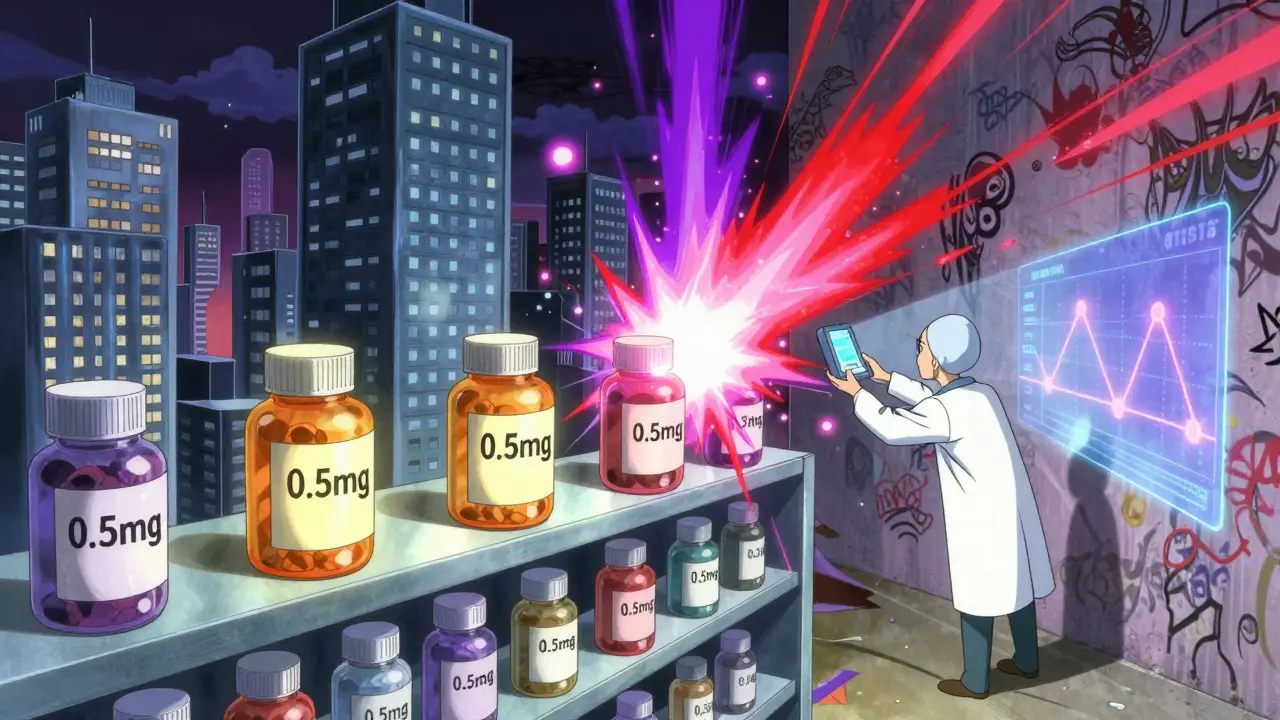
Most melatonin supplements in the U.S. sell 3 mg, 5 mg, even 10 mg. That’s 10 to 100 times more than your body naturally produces. And it’s not helping.Studies show doses above 0.5 mg offer no extra benefit for circadian resetting. Higher doses just increase side effects: vivid dreams, morning grogginess, headaches. One analysis of over 3,000 user reviews found 28% reported next-day drowsiness - mostly at doses above 1 mg.
Experts like Dr. Neil Stanley, a UK sleep specialist, say: "Taking more than 0.5 mg is like turning a dimmer switch all the way up - you’re not getting better light, you’re just blinding yourself."
The American Academy of Sleep Medicine recommends starting with 0.3-0.5 mg, taken 2-3 hours before your target bedtime. If that doesn’t work after a week, try 1 mg. Anything above 3 mg is rarely useful and often counterproductive.

Timing Is Everything - And Most People Get It Wrong
You can take the perfect dose, but if you take it at the wrong time, you’ll make your sleep problem worse.For jet lag eastward (e.g., flying from London to New York): Take melatonin at local bedtime - even if it’s 8 PM your body thinks it’s 1 AM. Do this for 2-3 days before departure and after arrival.
For jet lag westward (e.g., flying from New York to London): Take melatonin at local bedtime upon arrival. No need to start early.
For DSPS: Take it 2-3 hours before you want to fall asleep. If you want to sleep at 11 PM, take it at 8 PM. Taking it at 10 PM might push your rhythm even later.
Consumer Reports found 73% of negative reviews cited taking melatonin too late. One user wrote: "I took 5 mg at midnight. Woke up at 4 AM wide awake. My body thought it was morning." That’s because melatonin at 10 PM+ can delay your rhythm instead of advancing it.
The Supplement Problem: You Don’t Know What You’re Taking
Melatonin is sold as a dietary supplement in the U.S., which means the FDA doesn’t test it for purity or accuracy. A 2022 ConsumerLab test found melatonin content in popular brands ranged from 83% to 478% of what was listed on the label.Some products contained serotonin, a completely different compound, or even undeclared prescription drugs. In the UK, melatonin is a prescription-only medicine (Circadin, 2 mg prolonged-release). That’s why UK doctors rarely see patients misusing it - they’re prescribed the right dose and timing.
If you’re buying over-the-counter, stick to brands that use third-party testing (USP, NSF, or ConsumerLab verified). Avoid anything labeled “high potency” or “maximum strength.”
Who Should Avoid Melatonin?
Melatonin is generally safe for short-term use in healthy adults. But it’s not for everyone:- Pregnant or breastfeeding women: Not enough safety data.
- People on blood thinners or immunosuppressants: Melatonin can interact with these medications.
- Those with autoimmune disorders: May affect immune function.
- Anyone under 18: Not recommended unless supervised by a sleep specialist.
Also, if you’ve been taking melatonin daily for more than 2 months and notice it’s losing its effect, you might be experiencing receptor desensitization. Take a break for a week, then restart at the lowest effective dose.
What’s Next for Melatonin?
Scientists are working on smarter versions. Agomelatine, approved in Europe, targets melatonin receptors and serotonin to treat depression without drowsiness. Tasimelteon helps blind people with non-24-hour sleep disorder. The NIH is funding trials for melatonin in Alzheimer’s, long COVID, and IBS.The future isn’t about bigger doses. It’s about precision: matching the right person, with the right timing, using the right dose. Wearable tech that tracks your melatonin onset (DLMO testing) is becoming more accessible. In five years, you might get a personalized melatonin schedule from your doctor - not just a bottle from a pharmacy shelf.
For now, treat melatonin like a compass, not a parachute. It won’t save you if you’re falling - but if you’re lost, it can point you back to your natural rhythm.
Can melatonin help me fall asleep faster?
It can, but only if your sleep delay is caused by a misaligned circadian rhythm. For people with delayed sleep phase or jet lag, melatonin helps reduce sleep onset by 7-15 minutes on average. For those with general insomnia unrelated to timing, the effect is minimal - often less than 7 minutes. If you’re lying awake at 1 AM because of stress or anxiety, melatonin won’t fix that.
Is 5 mg of melatonin too much?
Yes, for most people. Your body naturally produces about 0.1-0.3 mg per night. Studies show 0.3-0.5 mg is enough to reset your internal clock. Higher doses (3-10 mg) don’t improve sleep quality - they just increase side effects like grogginess, vivid dreams, and headaches. Many U.S. supplements are over-dosed by design. Stick to 0.5-1 mg unless directed otherwise by a sleep specialist.
When should I take melatonin for jet lag?
For eastbound travel (e.g., U.S. to Europe), take 0.5-1 mg at your destination’s bedtime - even if it’s 8 PM for you. Start 2-3 days before you fly and continue for 2-3 days after arrival. For westbound travel (e.g., Europe to U.S.), take it at local bedtime after you land. Don’t take it before departure unless you’re adjusting your schedule early.
Can melatonin cause dependency?
No, melatonin doesn’t cause physical dependence like benzodiazepines or Z-drugs. You won’t experience withdrawal symptoms if you stop. But some people develop a psychological reliance - they feel they can’t sleep without it. If you’ve been using it daily for more than 6-8 weeks, try taking a break for 3-5 days. Your natural rhythm often resets on its own.
Why does melatonin sometimes make me feel more awake?
Because you took it at the wrong time. Melatonin has a phase-response curve: taking it in the early evening advances your clock (helps you sleep earlier), but taking it after 10 PM can delay it (pushing bedtime later). If you take it at midnight and feel alert, your body interprets it as a signal that it’s still morning. Always take it 2-3 hours before your target sleep time.
Are there long-term risks of taking melatonin?
Short-term use (up to 3 months) is considered safe for most adults. Long-term data is limited, but no major safety concerns have emerged in studies lasting up to 2 years. However, because melatonin is unregulated in the U.S., long-term use of contaminated or over-dosed products poses risks. Stick to verified brands, use the lowest effective dose, and consult a doctor if you plan to use it beyond 3 months.





Been using 0.5mg for jet lag and it’s been a game changer. No more waking up at 3 AM feeling like a zombie.
Bro I tried 5mg once because I thought more = better. Woke up at 5 AM with dreams about flying squirrels. Never again. 0.5mg is all you need.
THIS IS ALL LIES. I took 10mg and slept 14 HOURS straight. You people are brainwashed by Big Pharma. Melatonin is a miracle drug and they want to hide it. Also my cat started talking to me after I took it. 😈
The phase-response curve is critical. Taking melatonin after 10 PM doesn’t just do nothing-it actively screws with your circadian rhythm. This is basic chronobiology, not magic.
It’s so comforting to finally understand that melatonin isn’t supposed to knock you out-it’s supposed to whisper to your body, "Hey, it’s bedtime." So many of us have been treating it like a sedative when it’s really a gentle guide. Thank you for this clarity.
I’ve been using 0.3mg for DSPS for 6 months now. Took me 3 weeks to notice the shift, but now I’m falling asleep at 11 PM like a normal human. No grogginess. No dependency. Just biology working right.
Let’s be clear: The FDA’s regulatory lacuna regarding melatonin is a scandal. Supplement manufacturers exploit this loophole to peddle pharmacologically irrelevant, often contaminated, doses-while the public suffers from misinformation, poor sleep hygiene, and misplaced trust in unregulated substances.
I thought I was broken because melatonin didn't work... until I read this. Took 0.5mg at 8pm instead of midnight and slept like a baby. I feel so dumb but also so relieved. Thank you for saving my sleep life.
While the science presented here is sound, it's worth noting that individual variability in melatonin metabolism can influence efficacy. Some people may require slightly higher doses, particularly if they are CYP1A2 poor metabolizers. Always consult with a sleep specialist if long-term use is contemplated.
One thing people overlook: melatonin doesn’t fix sleep debt. If you’ve been pulling all-nighters for weeks, no amount of melatonin will help until you actually go to bed at a decent hour. It’s a reset tool, not a Band-Aid.
I used to think melatonin was just a placebo until I tried it for my night shift. Took it before my 7 AM nap and actually slept through my alarm. My boss thought I was cheating. I was just using science.
Wow. Another ‘sleep guru’ pushing the same tired advice. You know what actually fixes sleep? Stopping screen time. Getting sunlight. Not taking a hormone you don’t even need. This post is just marketing dressed up as science.
😂 I took melatonin at 11pm after reading this and now I’m wide awake at 2am. Guess I’m part of the 73%. But hey, at least I got to finish my anime. 🍜🌙