

Pancreatic Health Diet Calculator
This tool helps you understand how your daily food choices affect pancreatic duct health. Select the foods you've eaten today to get a personalized assessment of your diet's impact on pancreatic function.
Imagine feeling bloated, experiencing unexplained abdominal pain, and wondering why your doctor mentioned a "Pancreatic Duct Blockage is a condition where the tiny tube that carries digestive juices from the pancreas to the small intestine becomes clogged, often leading to inflammation and digestion problems. The good news? What lands on your plate can either fuel that blockage or help keep the ducts flowing smoothly.
Why Food Matters for Your Pancreas
The Pancreas produces Pancreatic Enzymes that break down fats, proteins, and carbs. When the duct that carries these enzymes gets blocked, the enzymes back up, causing pain and possible tissue damage. Certain foods increase the viscosity of pancreatic secretions or trigger excess production, raising the risk of clogs. Others, like high‑fiber veggies or omega‑3‑rich fish, thin the secretions and reduce inflammation, acting like a natural plumber for your digestive system.
Foods That Can Worsen Blockage
Not all calories are equal when it comes to duct health. Here’s a quick rundown of the usual suspects:
- High-Fat Foods - fried foods, fatty cuts of meat, and full‑fat dairy force the pancreas to pump more enzymes, thickening the fluid.
- Alcohol - even moderate drinking irritates the duct lining and promotes scar tissue.
- Gallstones - these solid particles can slip into the pancreatic duct, creating a mechanical blockage.
- Sugary pastries and refined carbs - they trigger insulin spikes, which can indirectly cause the pancreas to overwork.
- Processed meats with nitrates - they increase inflammation throughout the gastrointestinal tract.
Cutting back on these items doesn’t mean a bland diet; it means swapping them for smarter choices.
Foods That Keep the Duct Open
Think of these as the friendly neighbors who help clear the road:
- Fiber - whole grains, legumes, and berries bind excess cholesterol and prevent sludge formation.
- Omega-3 Fatty Acids - salmon, sardines, and flaxseed reduce inflammation and thin pancreatic secretions.
- Probiotics - yogurt, kefir, and fermented veggies support gut flora, which in turn helps regulate enzyme release.
- Leafy greens like spinach and kale - packed with magnesium, a mineral that relaxes the sphincter muscles around the duct.
- Water and herbal teas - staying hydrated keeps the pancreatic juice from becoming overly concentrated.
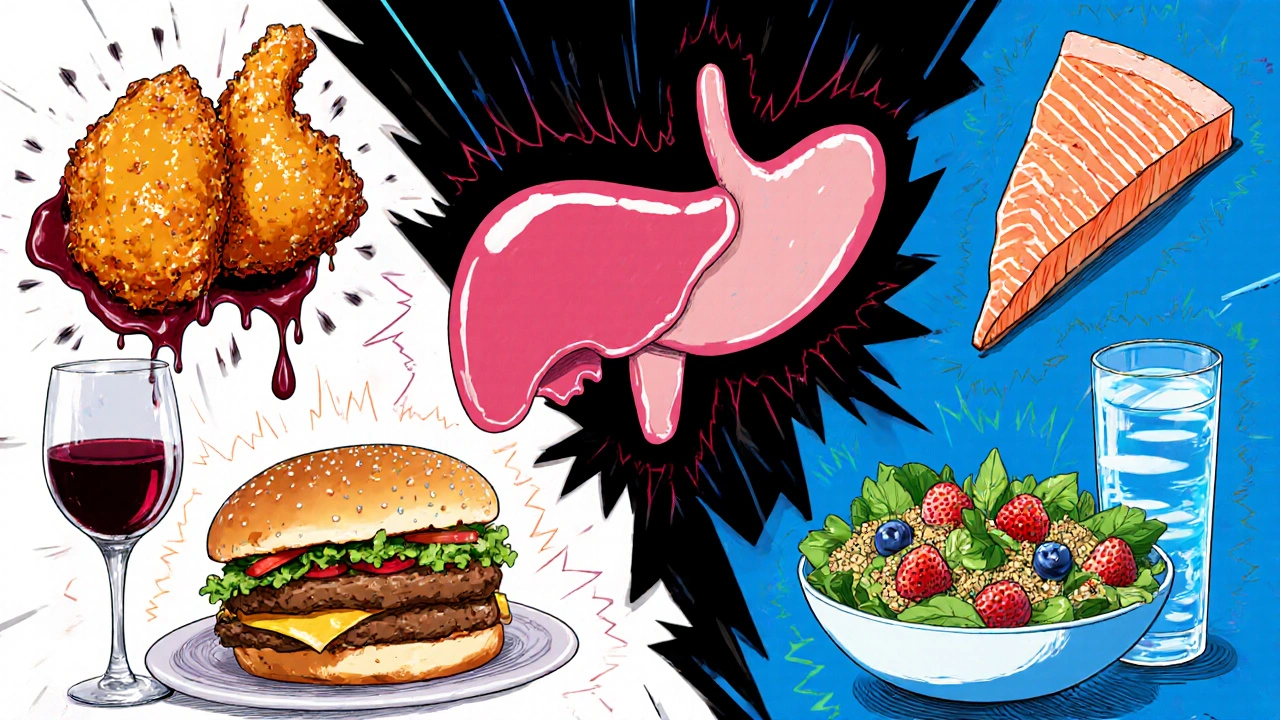
Comparison Table: What to Limit vs. What to Favor
| Category | Limit | Favor |
|---|---|---|
| Fats | Fried foods, butter, cream | Olive oil, avocado, nuts (in moderation) |
| Proteins | Processed meat, fatty cuts | Lean poultry, fish rich in omega‑3 |
| Carbohydrates | White bread, sugary snacks | Whole grains, legumes, fruit |
| Liquids | Alcohol, sugary sodas | Water, herbal tea, kefir |
Sample Day of Eating
- Breakfast: Greek yogurt with chia seeds, blueberries, and a drizzle of honey; plus a cup of green tea.
- Mid‑Morning Snack: An apple and a handful of almonds.
- Lunch: Quinoa salad with mixed greens, grilled salmon, cherry tomatoes, and a lemon‑olive‑oil dressing.
- Afternoon Snack: Carrot sticks with hummus.
- Dinner: Stir‑fried tofu, broccoli, and bell peppers in a ginger‑garlic sauce served over brown rice.
- Evening: Warm chamomile tea; if needed, a small spoonful of probiotic powder mixed in warm water.
This menu hits fiber, omega‑3s, low saturated fat, and plenty of fluids-all the pillars for a clear pancreatic duct.

Common Pitfalls & Myths
Many people think “all smoothies are safe” or “if I’m not eating meat, I’m fine.” Neither is wholly true. A smoothie packed with frozen fruit, banana, and a scoop of protein powder can still be high in sugar and low in fiber unless you add leafy greens or flaxseed. Also, a vegetarian diet lacking adequate omega‑3 sources may miss out on crucial anti‑inflammatory benefits.
Another myth: “Spicy foods cause blockage.” In reality, capsaicin can actually boost digestive enzyme flow, but overwhelming the system with very rich sauces may still overload the pancreas.
When Diet Isn’t Enough
If you’ve tweaked your meals for weeks and still face recurrent pain, it’s time to involve a healthcare professional. Endoscopic procedures can remove stubborn stones, while medications like pancreatic enzyme supplements can aid digestion when the duct remains partially obstructed. Lifestyle changes-cessation of smoking, weight management, and regular exercise-complement dietary tweaks and reduce the overall strain on the pancreas.
Quick Checklist for Pancreatic‑Friendly Eating
- Choose lean proteins and omega‑3‑rich fish over fatty cuts.
- Load up on fiber: whole grains, beans, fruits, and veggies.
- Keep hydrated-aim for at least eight glasses of water daily.
- Avoid alcohol and limit processed sugars.
- Incorporate probiotics and magnesium‑rich foods.
- Monitor portion sizes to prevent over‑stimulating the pancreas.
Can a single meal cause a pancreatic duct blockage?
One unusually heavy, high‑fat meal can trigger a temporary spike in enzyme production, which might lead to a short‑term blockage if the ducts are already compromised. However, chronic dietary patterns are the main driver of lasting issues.
Is it safe to eat nuts if I have a pancreatic duct blockage?
Yes, in moderate amounts. Nuts provide healthy fats and magnesium, but they’re calorie‑dense, so keep portions to a small handful to avoid over‑loading the pancreas.
How long does it take to see dietary improvements?
Most people notice reduced abdominal discomfort within 2-4 weeks of consistent diet changes, though imaging studies may take longer to show cleared ducts.
Should I take pancreatic enzyme supplements as a preventive measure?
Supplements are usually prescribed only after a diagnosis. For prevention, focus on diet, hydration, and lifestyle. If a doctor recommends them, follow the dosage exactly.
Can exercise help prevent pancreatic duct blockage?
Regular moderate exercise improves overall metabolism, helps maintain a healthy weight, and reduces inflammation-factors that lower the risk of duct obstruction.







This so‑called “pancreatic‑friendly” plan is just a marketing gimmick, and anyone who follows it without a doctor’s order is being reckless.
They don’t want you to know that the food industry is funding the research behind these charts, so they can keep you buying processed snacks.
Our own traditional Indian meals already contain the right spices and fish; don’t let foreign labs dictate what we eat.
A good starting point is to track your fiber intake and aim for at least 25 g per day which helps thin pancreatic secretions and keep enzymes flowing smoothly
That’s solid advice – just remember to swap cream for Greek yogurt when you need a creamy texture, it keeps the fat low and the protein high.
Evidence‑based guidelines suggest limiting saturated fatty acids to less than 7 % of total caloric intake to reduce pancreatic enzyme hypersecretion.
Contrary to popular belief, occasional indulgence does not automatically precipitate ductal obstruction, provided the overall dietary pattern remains balanced.
Philosophically, one might view the pancreas as a quiet mediator, reminding us that moderation in all things sustains harmony within the body.
Exactly, think of it like painting a vibrant mural – a splash of omega‑3 here, a dash of leafy green there, and the whole picture stays alive and bright.
Don’t trust the mainstream diet hype.
I hear you – it can feel like a maze when every new tip seems to clash, but staying steady with whole foods usually sorts it out.
When you look at the pancreas it almost feels like a tiny factory hidden behind the stomach, churning out enzymes that break down the meals we love.
If the ducts that carry those enzymes get clogged, the whole system backs up and you end up with that sharp, lingering pain that no over‑the‑counter pill can fully ease.
One of the simplest ways to keep the flow smooth is to stay consistently hydrated, because water dilutes the secretions and prevents them from thickening into sludge.
Fiber plays a starring role as well; whole grains, beans, and berries create a gentle scraping action in the gut that encourages regular movement and reduces the chance of anything sticking in the duct.
Omega‑3 fatty acids found in salmon, sardines, and even ground flaxseed act like natural anti‑inflammatories, calming the tissue around the duct and keeping it pliable.
Probiotic foods such as kefir or fermented vegetables help balance the gut microbiome, which in turn signals the pancreas to release the right amount of enzymes at the right time.
Magnesium‑rich foods like spinach, pumpkin seeds, or a modest handful of almonds help relax the sphincter muscles that control the duct’s opening.
Limiting alcohol is non‑negotiable; even moderate drinking can irritate the lining and promote scar tissue that narrows the passage.
Similarly, cutting back on high‑fat fried foods reduces the workload on the pancreas, allowing it to produce enzymes at a steadier, less aggressive pace.
Small, frequent meals spread throughout the day prevent large spikes in enzyme production that can overwhelm a vulnerable duct.
When you do indulge, pair the richer dish with a side of leafy greens or a splash of vinegar; the acidity helps keep the secretions more fluid.
Staying active with regular, moderate exercise improves overall metabolism and helps maintain a healthy weight, both of which lower the risk of obstruction.
If symptoms persist despite these changes, a doctor may recommend a pancreatic enzyme supplement to aid digestion while the duct recovers.
Imaging studies such as MRCP can visualize the duct and confirm whether the dietary tweaks are having a measurable effect.
Ultimately, think of your pancreas as a delicate orchestra: every instrument – hydration, fiber, omega‑3, and movement – must play in harmony for the music of digestion to flow without discord.
Consistency is the key, and over a few weeks you’ll likely notice less abdominal discomfort and a smoother digestion experience.