
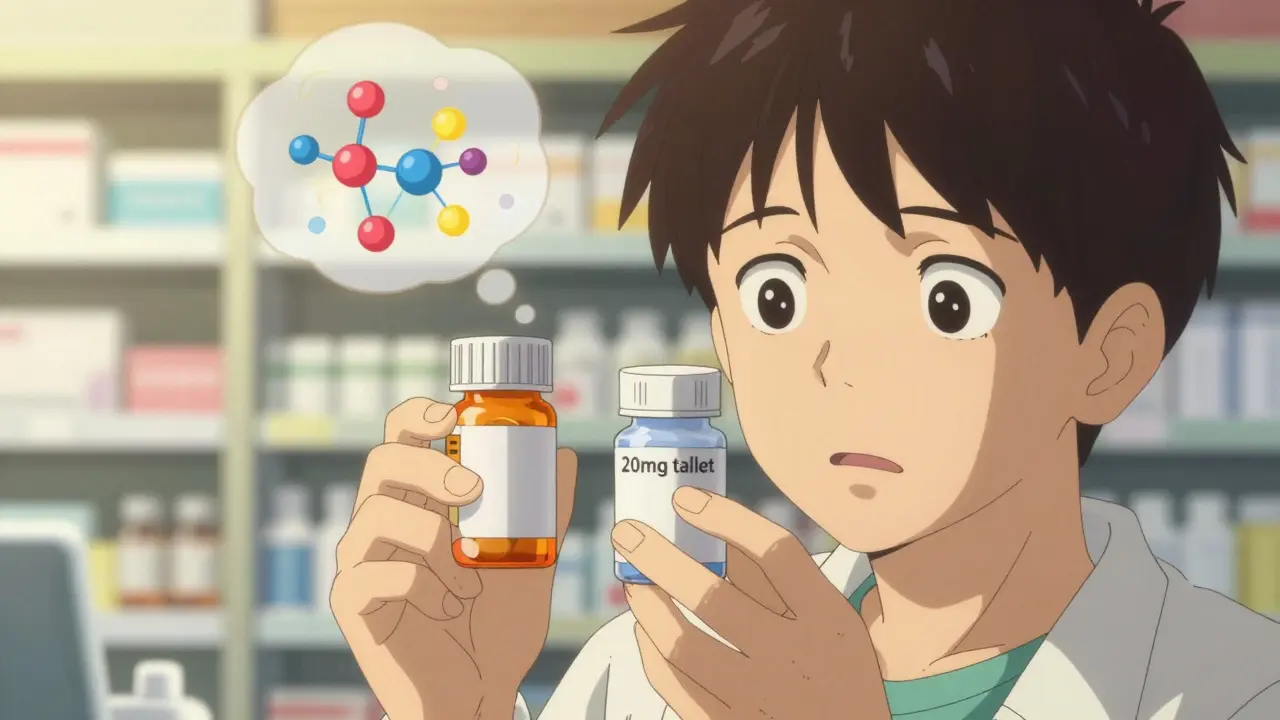
When your prescription switches from the brand-name drug you’ve been taking to a cheaper version, it’s easy to panic. The pill looks different. The bottle has no familiar logo. The pharmacist says it’s the same thing-but are they telling you the truth? If you’ve been handed an authorized generic, you’re getting exactly what you’ve been taking-just without the brand name. And it could save you $15 to $30 a month.
What exactly is an authorized generic?
An authorized generic is the exact same drug as the brand-name version. Same active ingredient. Same inactive ingredients. Same factory. Same manufacturing process. The only difference? No brand name on the label. It’s not a copy. It’s not a look-alike. It’s the original drug, repackaged under a different name by the same company that made the brand version.
For example, if you take Brand-X 20mg tablets, your doctor might switch you to an authorized generic labeled simply as "20mg tablet"-but it’s the same pill, made in the same facility, with the same quality control. The FDA requires that authorized generics be listed in the Orange Book, and they’re tracked quarterly. About 20-25% of brand-name drugs with generic competition have an authorized generic version available.
Unlike regular generics, which go through a separate approval process called an ANDA, authorized generics piggyback on the original brand’s New Drug Application (NDA). That means they don’t need to prove they’re bioequivalent-they already are. The FDA doesn’t require additional testing because they’re identical.
Why do brand companies make authorized generics?
It sounds strange: why would a company that spent millions developing a drug turn around and sell a cheaper version of it? The answer is competition-and strategy.
When a brand drug’s patent expires, the first generic company to file gets 180 days of exclusive rights to sell the generic. That’s a big financial incentive. But here’s the twist: the brand company can launch its own authorized generic during that 180-day window. And when they do, they undercut the first generic’s pricing.
According to the Federal Trade Commission, when an authorized generic enters the market during the exclusivity period, retail prices drop 4-8% and wholesale prices drop 7-14% compared to markets without one. In 92% of cases between 2001 and 2008, the brand company itself launched the authorized generic. It’s not charity-it’s business. But for you, the patient, it means lower costs.
How do you know if you’re getting an authorized generic?
Don’t assume. Not all generics are created equal. A regular generic might look different, contain slightly different fillers, or be made in a different country. An authorized generic is the real deal.
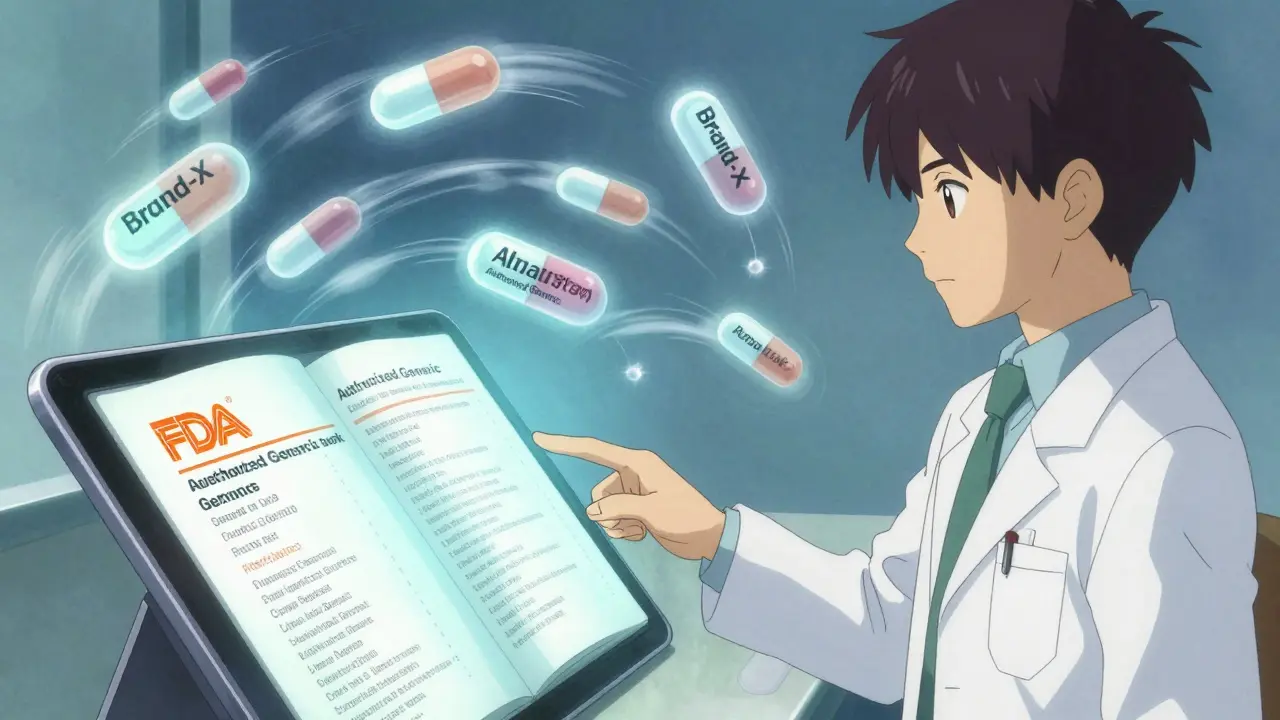
Check the FDA’s quarterly list of authorized generics. It’s free, public, and updated every three months. You can search by brand name or active ingredient. If the generic you’re being given shows up there, it’s an authorized generic.
Pharmacists can also tell you. Ask: "Is this an authorized generic?" If they hesitate or say "it’s just a generic," dig deeper. Most pharmacies now have systems that flag authorized generics automatically, especially since the FDA’s 2020 update required more detailed reporting.
Pro tip: If your pill looks identical to the brand version-same color, same shape, same markings-it’s very likely an authorized generic. Regular generics often change appearance to avoid trademark issues.
Will your insurance cover it?
Almost always. Most health plans, including Medicare Part D, automatically substitute authorized generics when available. In fact, 80-90% of prescriptions for drugs with authorized generics are filled with them because they’re cheaper and on the formulary.
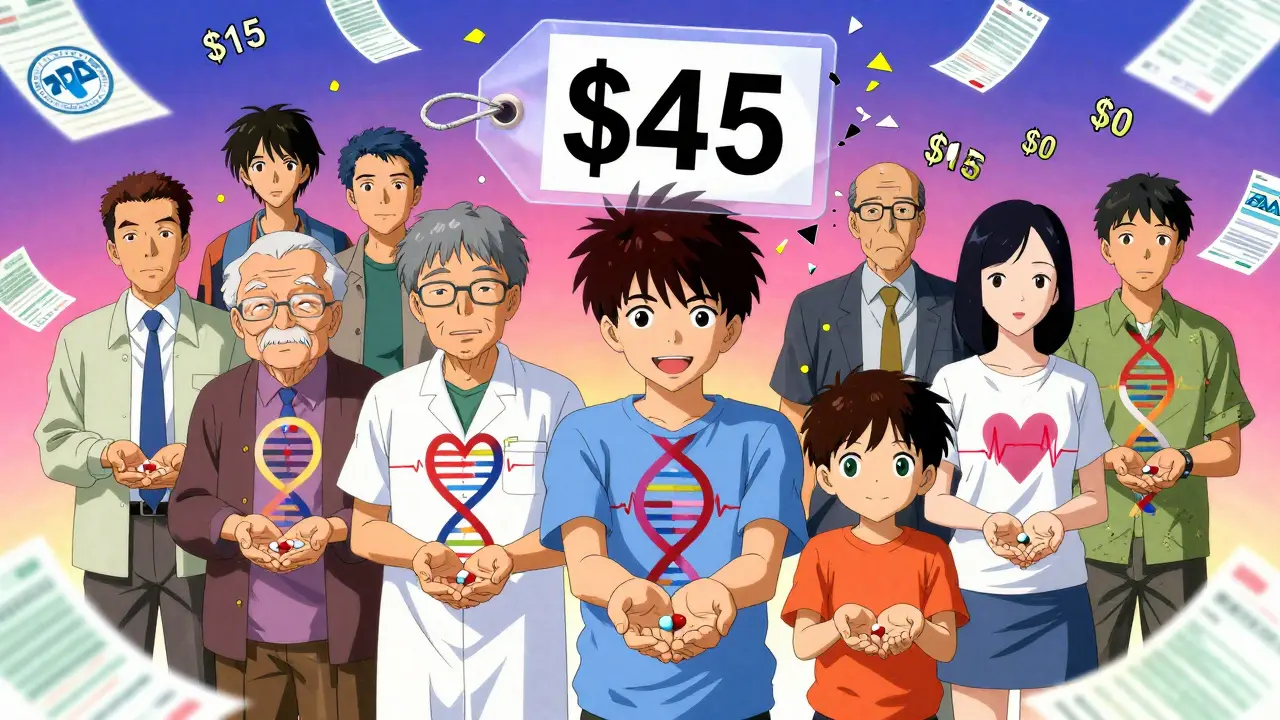
That means your copay could drop from $45 to $15. Or even $0. Some plans don’t charge anything for authorized generics because they’re so cost-effective.
But watch out for specialty drugs. If you’re on a high-cost medication like those for multiple sclerosis or rheumatoid arthritis, your plan might require prior authorization before switching. Don’t wait until your refill to find out-call your insurer before the switch happens.
What about side effects or effectiveness?
Studies show no difference. A 2018 study in the National Center for Biotechnology Information tracked patients switching from brand to authorized generic versus traditional generic. Medication adherence stayed the same. Hospitalization rates didn’t change. Discontinuation rates were identical.
That makes sense. The ingredients are the same. The absorption rate is the same. The only thing that changes is the label.
Some patients report feeling "different" after switching. But that’s usually because they’re expecting a difference. The placebo effect works both ways. If you think the brand is stronger, your body might react as if it is-even when it’s not.
One exception: people with rare allergies to inactive ingredients. While authorized generics use the exact same fillers as the brand, regular generics sometimes swap them out. If you’ve had a reaction to a generic before, ask your pharmacist to confirm it’s an authorized generic.
What if your pharmacy runs out?
It happens. Pharmacies stock both brand-name and generic versions. Sometimes, they’ll run out of the authorized generic and give you the regular generic instead.
That’s not a problem for most people. But if you’re sensitive to even minor differences in fillers, or if you’re on a medication where consistency matters (like thyroid drugs or seizure medications), speak up.
Ask your pharmacist: "Can you get the authorized generic?" Most can order it within 24-48 hours. If they say no, ask for the manufacturer’s name on the bottle. Cross-reference it with the FDA’s list. If it matches the brand manufacturer, you’re good.
How to make the switch smoothly
Switching doesn’t have to be stressful. Here’s how to do it right:
- Check your prescription-Make sure your doctor knows you’re open to switching. Some doctors automatically write "dispense as written" to prevent substitution. Ask them to remove that if you want the cheaper option.
- Verify with the FDA-Go to the FDA’s authorized generic list and confirm the generic you’re being offered is listed.
- Ask your pharmacist-Don’t be shy. Ask: "Is this an authorized generic?" and "Will this look different?"
- Monitor your body-Pay attention for the first week. No new side effects? Good. No change in how you feel? Even better.
- Update your records-If you use a medication app or keep a health journal, note the change. This helps if you see a new doctor or have an emergency.
Common myths about authorized generics
Myth: "It’s not as good as the brand."
False. It’s made by the same company, in the same place, with the same standards.
Myth: "Authorized generics are just rebranded generics."
Nope. Regular generics are made by other companies. Authorized generics are made by the brand company itself.
Myth: "If it looks different, it’s not the same."
Appearance doesn’t matter. Color, shape, and markings are for branding-not function. Even the brand version changes packaging over time.
Myth: "My insurance won’t cover it."
Most do. And if they don’t, it’s usually because they’re still charging for the brand. Ask for a price match.
What’s next for authorized generics?
More are coming. Between 2020 and 2022, authorized generic introductions rose 22% year over year. Analysts predict that by 2028, 35% of biologic drugs losing patent protection will have authorized versions.
The FDA is making it easier to identify them. Pharmacy systems now auto-flag authorized generics during dispensing. You might see a note like "AG: Same as Brand-X" on your receipt.
And while some critics worry brand companies use authorized generics to delay true competition, the data shows patients win. Prices drop. Access improves. And you still get the same medicine you trusted all along.
Is an authorized generic the same as a regular generic?
No. A regular generic is made by a different company and must prove it’s bioequivalent to the brand. An authorized generic is made by the original brand company, uses the exact same ingredients and process, and is sold under a different label. It’s not just equivalent-it’s identical.
Can I switch back to the brand if I don’t like the authorized generic?
Yes. If you feel any change in how you respond to the medication, talk to your doctor. You can request the brand again. However, your insurance may require you to pay the full brand price unless you get prior authorization. Most people don’t notice any difference, but if you do, your health comes first.
Why does the authorized generic look different from the brand?
Sometimes, even authorized generics are repackaged in different pill shapes or colors to avoid trademark conflicts. But the active ingredient, dosage, and manufacturing process remain unchanged. The difference is cosmetic, not medical. If you’re unsure, check the FDA’s list or ask your pharmacist for the manufacturer name.
Are authorized generics safe for children or elderly patients?
Yes. Authorized generics are held to the same FDA standards as brand-name drugs. They’re used safely in all age groups. In fact, because they’re identical to the brand, they’re often preferred for patients with complex conditions like epilepsy or heart disease, where consistency matters most.
How do I find out if my drug has an authorized generic?
Go to the FDA’s website and search the "Orange Book" or the quarterly authorized generic list. Enter your drug’s brand name or active ingredient. If an authorized generic is listed, it’s available. Your pharmacist can also check this for you-just ask.
Final thought: You’re not losing anything-except the extra cost
Switching from brand to authorized generic isn’t a compromise. It’s a smart upgrade. You get the same medicine. Same effectiveness. Same safety. Just without the brand markup. For millions of people, this switch means fewer skipped doses, less financial stress, and better health outcomes.
Don’t let the unfamiliar label scare you. Ask questions. Check the facts. And remember: the pill in your hand hasn’t changed. Only the price has.




I used to freak out every time my pill changed color. Then I learned about authorized generics and realized I was paying for a logo, not medicine. Saved me $28 a month on my blood pressure med. Same pill, same results. Why pay extra for branding? It’s insane.
Let’s unpack this: authorized generics are a strategic maneuver by pharma to undercut first-filer generics during the 180-day exclusivity window. FTC data shows a 7-14% wholesale price drop when AGs enter - that’s not altruism, that’s oligopoly optimization. The FDA’s Orange Book tracking is a transparency veneer. The real win? You’re getting a bioequivalent product at a discount, but the system’s still rigged. #PharmaEconomics
I switched to the generic and felt like my brain was made of wet cardboard for two weeks 😭 I swear I could feel the difference. My doctor said it’s all in my head but I KNOW I felt worse. Now I’m stuck paying full price for the brand because I can’t trust ANYTHING anymore. This is why I hate the system.
Why do people assume the brand is better? It’s the same chemical compound. The same manufacturing line. The same FDA oversight. The only thing different is the label. We’ve been conditioned to equate price with quality. That’s not science - it’s marketing. And it’s costing people their health.
In India, generics are the norm and people live fine. Why is the US so scared of a pill that doesn’t have a fancy logo? You’re not losing quality - you’re losing the illusion. Stop paying for ads and start paying for your health. 🇮🇳💪
My mom’s on levothyroxine and we always check the FDA list before she takes a new batch. Even though it’s an authorized generic, the fillers can still vary slightly between batches. She’s super sensitive, so we make sure it’s the same manufacturer. Just a tip - if you’re on a med where tiny changes matter, be extra careful. Not all generics are equal, even if they’re authorized.
What does it mean to be the same drug if the label changes? Identity isn’t just chemistry - it’s perception. We assign meaning to the shape, the color, the brand. To say it’s identical is technically true, but psychologically? We’re not just consuming molecules. We’re consuming trust. And trust is built on familiarity. That’s why the placebo effect isn’t a bug - it’s a feature of human biology.
I switched my dad to an authorized generic for his statin and he cried. Not because he felt worse - because he realized he’d been overpaying for 7 years. He said, ‘I thought the blue pill was magic.’ I told him, ‘No, sweetheart. You just believed in the logo.’ Now he asks every pharmacist: ‘Is this the same one?’ 😅
USA made this medicine. USA made the brand. USA made the FDA. Now some foreign lab is selling a knockoff and we’re all scared? Nah. If you want the real thing, stick with the authorized generic. Made right here. Same factory. No overseas shortcuts. America First - even in your pill bottle.
People who switch to generics are just cheap. If you can’t afford your meds, maybe you shouldn’t be taking them. Or get a better job. This whole ‘authorized generic’ thing is just pharma’s way of tricking you into thinking you’re saving money while they still make a profit. Wake up.
Just spoke to my pharmacist - she confirmed my metformin is an authorized generic. Same manufacturer as the brand. Same lot numbers, just repackaged. I asked if I could see the FDA listing and she pulled it up on her tablet. It’s wild how few people know this exists. Knowledge is power - and savings.
To everyone who’s scared to switch: you’re not alone. But here’s the truth - millions of people have made this switch without issue. The science is clear. The FDA is watching. The savings are real. Don’t let fear rob you of financial peace. You’re not compromising - you’re choosing wisdom. And that’s something to be proud of. 💪❤️
PS: If you’re on a complex med like thyroid or seizure meds, check the manufacturer. But if it’s the same as the brand? You’re golden. You’ve got this.