When you pick up a bottle of generic medication at your local pharmacy, the price tag seems simple. You pay a set amount, and you walk away with your medicine. But behind that transaction lies a complex economic engine that moves billions of dollars through a tightly controlled network. The reality is that generic drug pricing isn't just about manufacturing costs; it’s about who holds the power in the supply chain. For decades, this system has operated under the radar, but recent shortages and inflationary pressures have pulled back the curtain on how money actually flows from manufacturers to your medicine cabinet.
The Three-Tier System: Who Controls the Flow?
To understand wholesale economics, you first need to map out the players. Since the Prescription Drug Marketing Act of 1987 formalized the structure, the U.S. pharmaceutical market has relied on a three-tier system. At the top are the manufacturers who make the pills. In the middle sit the wholesalers, the logistics giants who move the product. At the bottom are the pharmacies and healthcare providers who dispense it to patients. This isn't a free-for-all marketplace. It is a highly concentrated oligopoly.
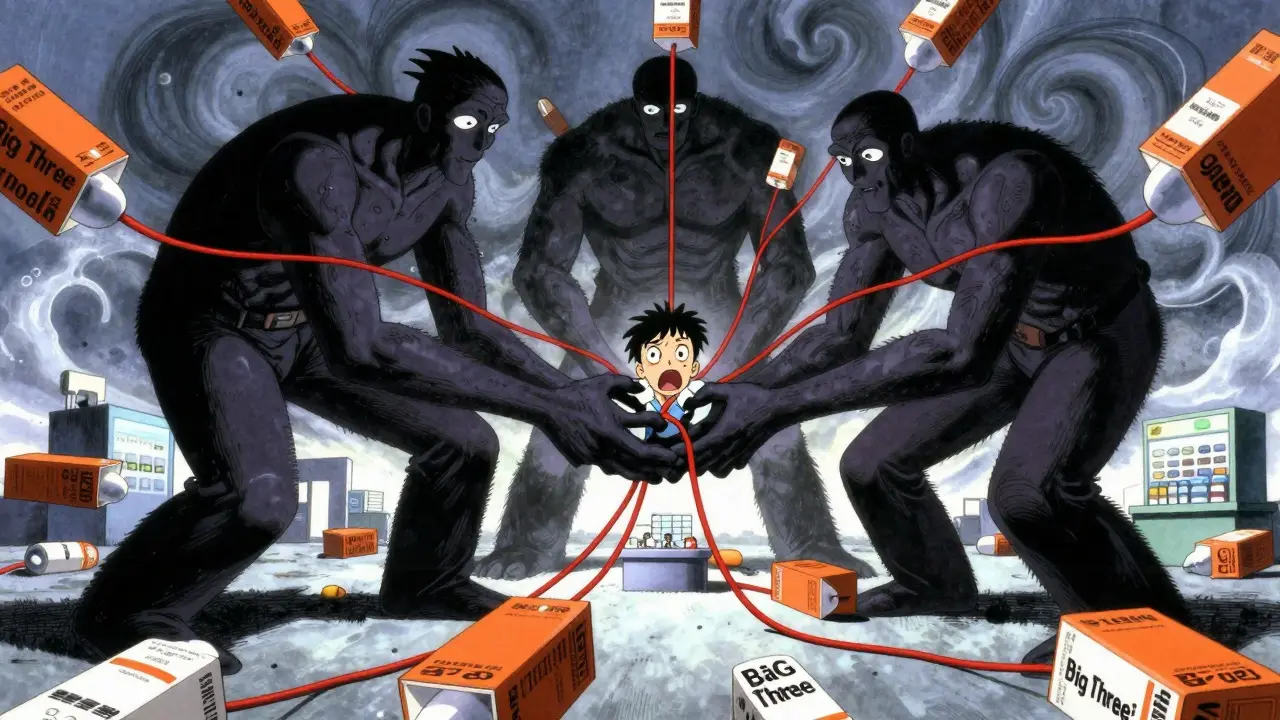
Today, three companies dominate the middle tier: AmerisourceBergen, Cardinal Health, and McKesson. Together, these "Big Three" control approximately 85% of the U.S. pharmaceutical wholesale market as of 2023. When three entities hold that much leverage, they don't just move boxes; they set the terms. They decide which drugs get priority during shortages, which manufacturers get shelf space, and ultimately, how prices are structured for everyone downstream. If you're a small manufacturer trying to get your generic version of a common antibiotic into the system, you don't negotiate with thousands of pharmacies. You negotiate with one of these three behemoths. That dynamic shifts all the bargaining power toward the distributor.
The Profit Paradox: Why Generics Are Wholesalers' Best Friends
Here is where things get counterintuitive. Most people assume that branded name drugs, with their massive marketing budgets and high retail prices, generate the most profit for the supply chain. The data says otherwise. According to research from the USC Schaeffer Center, while branded drugs bring in more total revenue, generic drugs are far more profitable for wholesalers and pharmacies.
| Entity | Branded Drug Gross Margin | Generic Drug Gross Margin |
|---|---|---|
| Manufacturers | 76.3% | 49.8% |
| Pharmacies | Lower (approx. 3x less than generics) | 42.7% |
| Wholesalers | Low (approx. $3 per unit) | High (approx. $32 per unit) |
Look closely at those numbers. Manufacturers capture the lion's share of profits on branded drugs (76.3%), but that margin drops significantly for generics (49.8%). However, for the distributors, the story flips. Wholesalers make eleven times as much profit on generic drug expenditures compared to brand-name drugs. In 2009, despite generics representing only about 9% of wholesaler revenues, they contributed 56% of gross profits for the Big Three. Why? Because generic makers must offer significant price concessions to win supply contracts. They compete fiercely on cost, passing savings down the chain. The wholesaler buys low, sells at a markup, and keeps a healthy slice because the volume is so high and the inventory turnover is fast.
Pricing Strategies: How the Numbers Are Crunched
So, how does a wholesaler determine what to charge a pharmacy? It’s not arbitrary. Several established methodologies drive these decisions, each with its own strategic goal. Understanding these helps explain why prices fluctuate even when manufacturing costs remain stable.
- Cost-Plus Pricing: This is the baseline. The wholesaler calculates the Cost of Goods Sold (COGS), adds shipping and handling fees, and then applies a fixed percentage markup. If the COGS is $10 and shipping is $2, they might price it at $12 to absorb costs, then add another 10-20% for profit. It guarantees a margin but ignores market demand.
- Tiered Volume Discounts: This is standard practice to encourage bulk buying. A pharmacy ordering 50 units might pay $10 per unit. Order 100 units, and the price drops to $8. Order 500, and it might drop to $7. This locks in large customers and ensures steady cash flow for the wholesaler.
- Market-Based Pricing: Wholesalers monitor competitors closely. If McKesson lowers its price on a specific generic statin, AmerisourceBergen and Cardinal Health often follow suit within days to prevent losing key pharmacy accounts. This creates a race to the bottom on price, squeezing manufacturers further.
- Value-Based Adjustments: While less common for simple generics, this comes into play with specialty generics or hard-to-source medications. If a drug is difficult to manufacture or store, the perceived value of having it in stock rises, allowing for higher margins.
It’s important to note that net margins for wholesalers are still thin-often around 0.5%. This means they rely entirely on volume. One mistake in logistics or a slight dip in sales can wipe out profits. This pressure forces them to be ruthless about efficiency and inventory management.
The Impact of Shortages and Inflation
The smooth machinery of wholesale economics hit a snag recently. During the height of the pandemic in 2020, inflationary pressures spiked due to supply chain disruptions. By 2021 and 2022, the market returned to a deflationary cycle, with prices dropping as competition heated up. But 2023 brought a new challenge: widespread generic drug shortages.
Adam J. Fein, President of the Drug Channels Institute, noted that these shortages triggered "pockets of inflation." When supply dries up, the rules of tiered pricing break down. Wholesalers no longer have excess inventory to discount. Instead, they ration supplies among their largest clients. Pharmacies may have to pay premium prices to secure essential medications, or worse, they simply run out. This volatility exposes the fragility of a system that relies on just-in-time delivery and minimal safety stock. For the consumer, this translates to sudden price hikes or the inability to find affordable alternatives for chronic conditions.
Regulatory Scrutiny and Future Outlook
Because the Big Three hold such immense power, regulators are watching closely. The Commonwealth Fund’s 2022 analysis highlighted four areas where wholesalers influence the market: setting generic prices, leveraging list price increases, competing in specialty distribution, and affecting drug shortages. Policymakers are beginning to ask whether this level of concentration benefits patients or just shareholders.
Dr. Neeraj Sood of the USC Schaeffer Center argued years ago that greater scrutiny of pricing policies and more competition throughout the distribution system were warranted. Today, that call is louder than ever. As specialty pharmaceuticals grow in importance, wholesalers are expanding beyond traditional generics. This shift could reshape the economics again, potentially creating new bottlenecks. For now, the system remains efficient for the distributors but opaque for the public. Until transparency improves, the gap between what manufacturers spend and what patients pay will continue to widen.
Who are the main players in pharmaceutical wholesale?
The market is dominated by three major companies known as the "Big Three": AmerisourceBergen, Cardinal Health, and McKesson. Together, they control approximately 85% of the U.S. pharmaceutical wholesale market, giving them significant leverage over manufacturers and pharmacies.
Why do wholesalers make more profit on generic drugs than branded ones?
Generic manufacturers compete aggressively on price to win contracts, offering lower costs to wholesalers. While the absolute revenue from generics is lower, the volume is much higher, and the markup allows wholesalers to earn significantly more per unit-up to eleven times more than on branded drugs.
How does tiered pricing work in drug distribution?
Tiered pricing offers discounts based on order volume. For example, a pharmacy might pay a higher per-unit price for small orders (under 100 units) but receive a 5-15% discount for larger orders (over 100 units) and even deeper discounts (15-25%) for very large bulk purchases (over 500 units). This encourages pharmacies to buy in bulk.
What caused the recent inflation in generic drug prices?
After a period of deflation in 2021-2022, the emergence of widespread generic drug shortages in 2023 created scarcity. With limited supply, wholesalers could no longer offer deep discounts, leading to "pockets of inflation" where prices rose due to lack of availability rather than increased production costs.
Is the pharmaceutical wholesale market competitive?
Not really. It is an oligopoly dominated by three firms. This lack of competition gives wholesalers immense bargaining power, allowing them to dictate terms to both manufacturers and pharmacies. Regulators are increasingly scrutinizing this concentration to see if it harms consumers.