
Medication Safety Checker
Check Your Medication Safety
This tool helps you understand if your current medications interact dangerously with decongestant-antihistamine combinations. Enter your medications and health conditions to see potential risks.
Many people reach for a combination decongestant and antihistamine pill when they feel a cold or allergy attack coming on. It seems simple: one pill tackles congestion, runny nose, sneezing, and itchy eyes. But behind that convenience is a real risk - one that’s often ignored because these medicines are sold over the counter. You don’t need a prescription, so you assume they’re harmless. They’re not.
How These Combinations Work - and Why They’re Risky
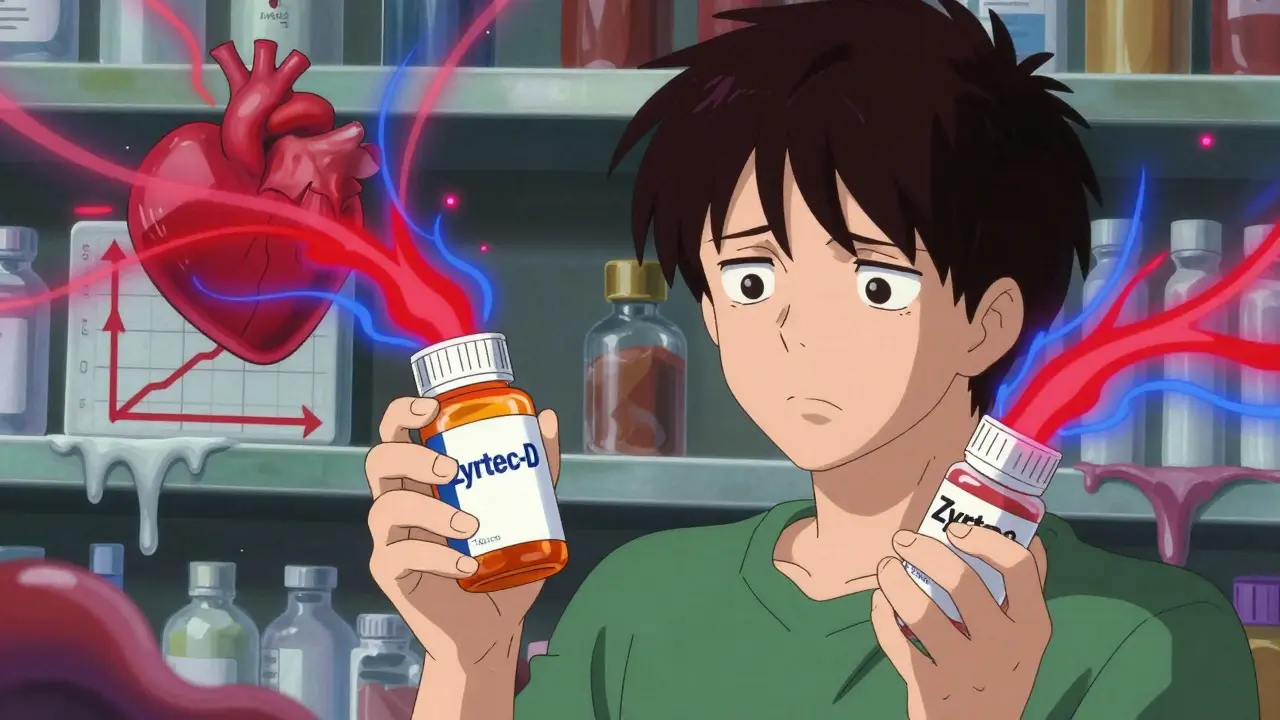
These pills typically pair a decongestant like pseudoephedrine (found in Zyrtec-D, Claritin-D, or Allegra-D) with an antihistamine like cetirizine or loratadine. The idea is straightforward: the decongestant shrinks swollen blood vessels in your nose to open up airways, while the antihistamine blocks the chemical (histamine) that triggers sneezing and watery eyes. But here’s the problem. These two drugs don’t just work on your nose. They affect your whole body. Decongestants are stimulants. They tighten blood vessels everywhere - not just in your nasal passages. That’s why they can raise your blood pressure. For someone with high blood pressure, heart disease, or even just an overactive thyroid, this isn’t a minor concern. Studies show these drugs can bump systolic blood pressure up by 5 to 10 mmHg in people with existing conditions. That’s enough to trigger chest pain, dizziness, or worse. Meanwhile, antihistamines - especially the older ones like diphenhydramine (Benadryl) - slow down your brain. About half of people who take them feel drowsy. Even the newer ones like cetirizine (Zyrtec) cause drowsiness in about 1 in 7 users. That’s not just annoying - it’s dangerous if you’re driving, operating machinery, or even walking around your house. Combine that with the jittery feeling from the decongestant, and you’ve got a cocktail of opposing side effects that can leave you feeling off-balance, confused, or worse.The Overdose Trap: Taking More Than You Think
One of the biggest dangers isn’t taking too much of one pill - it’s taking multiple pills that contain the same ingredients. People don’t realize that Zyrtec-D has cetirizine. So does regular Zyrtec. If you take Zyrtec-D for congestion and then grab a regular Zyrtec tablet for allergies later, you’re doubling your antihistamine dose. Same with Claritin and Claritin-D. Or if you take Benadryl at night for sleep and then take a cold medicine with diphenhydramine in the morning. Poison Control gets calls about this all the time. Symptoms of antihistamine overdose include dry mouth, fast heartbeat, confusion, trouble urinating, blurred vision, and agitation. In severe cases, it can lead to seizures, heart rhythm problems, or even cardiac arrest. Decongestant overdose can cause dangerously high blood pressure, rapid heartbeat, and stroke. GoodRx tracked over 200 cases where people accidentally combined two antihistamines. In nearly every case, they didn’t realize both products contained the same active ingredient. One woman took Allegra for allergies, then took a nighttime cold medicine that also had fexofenadine. She ended up in the ER with a racing heart and severe dizziness. Her doctor said she’d taken nearly double the safe daily dose.Who’s Most at Risk - And Why
Not everyone reacts the same way. Older adults are especially vulnerable. As we age, our bodies process drugs slower. Liver and kidney function decline. That means antihistamines and decongestants stick around longer, building up to dangerous levels. A 70-year-old with mild hypertension might not even know their blood pressure is rising until they feel faint or get chest pain. People with heart disease, diabetes, glaucoma, or an enlarged prostate are also at higher risk. Decongestants can worsen all of these conditions. Antihistamines can make urinary retention worse in men with prostate issues and can trigger acute angle-closure glaucoma in susceptible individuals. Children under 12 are another group where these combinations are not recommended. The American College of Allergy, Asthma, and Immunology says there’s no solid proof they help kids - but plenty of evidence they can harm them. A 2022 review found no meaningful improvement in symptoms for children under 12, yet the risk of side effects remains the same.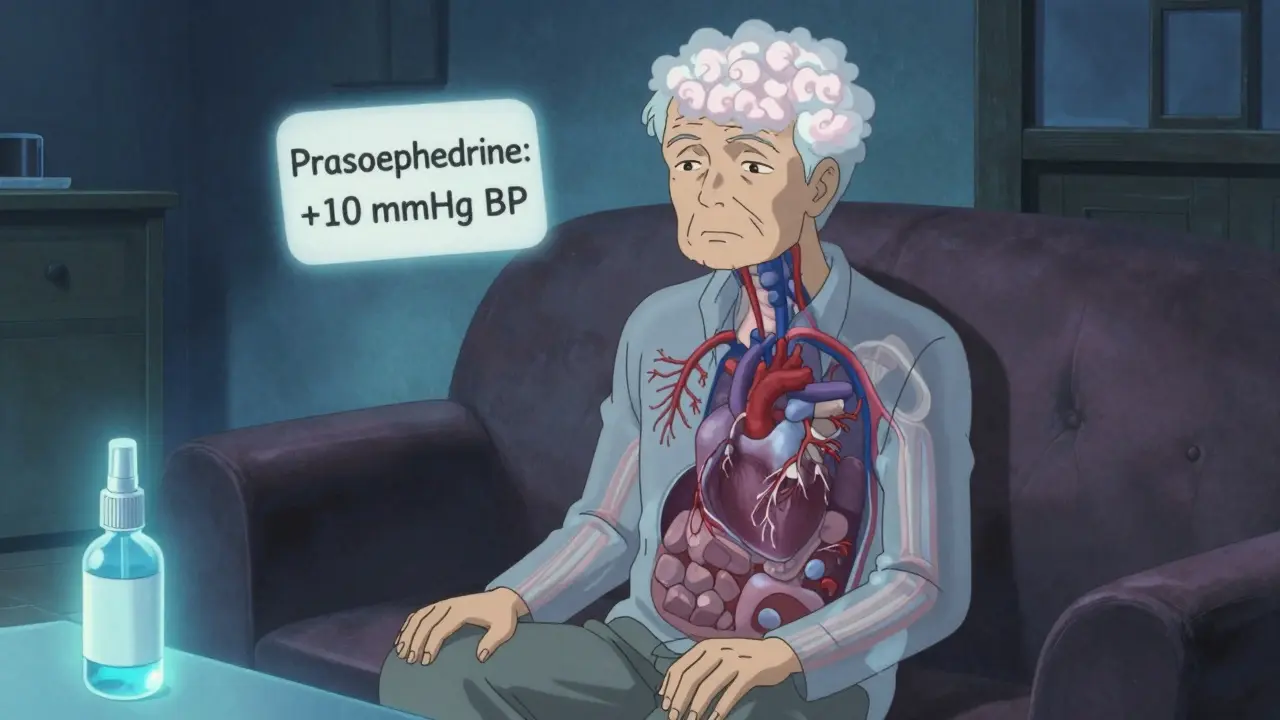
What the Experts Are Saying
Pharmacists and doctors are increasingly pushing back against these combo pills. Laura Carr, a pharmacist at Massachusetts General Hospital, puts it bluntly: "People think because they’re sold on the shelf, they’re safe. But they’re still drugs. They interact with other meds. They can make existing health problems worse." The American Academy of Family Physicians reviewed all the data back in 2012 and concluded that while these combinations might help adults feel a little better, the benefits are small and the side effects are common. About 1 in 5 people who took them had a bad reaction - drowsiness, dizziness, dry mouth, nausea - compared to 1 in 8 who took a placebo. The FDA has been warning about these drugs for years. In 2005, they pulled phenylpropanolamine from the market after it was linked to strokes in young women. Since then, manufacturers switched to pseudoephedrine - which is more effective but still risky. Now, pseudoephedrine is kept behind the pharmacy counter in many places because it can be used to make illegal drugs. That’s a clue: it’s not just a harmless nasal spray.What You Should Do Instead
If you have congestion, try a saline nasal spray. It’s safe, effective, and has no side effects. For runny nose and sneezing, use a single-ingredient antihistamine like loratadine or cetirizine - and take it only when you need it. Don’t take it every day unless your doctor says so. If you’re not sure what you’re taking, read the labels. Look for the active ingredients. Don’t rely on brand names. Zyrtec-D, Claritin-D, Allegra-D - they all have pseudoephedrine. Benadryl Cold & Flu, Tylenol Cold & Flu, Advil Cold & Sinus - they all have antihistamines. If you’re already taking one, don’t add another. For older adults or anyone with heart or blood pressure issues, skip the combo pills entirely. Talk to your pharmacist or doctor. There are safer ways to manage symptoms. Maybe it’s a nasal steroid spray for allergies. Or a humidifier and steam for congestion. Or even just rest and fluids.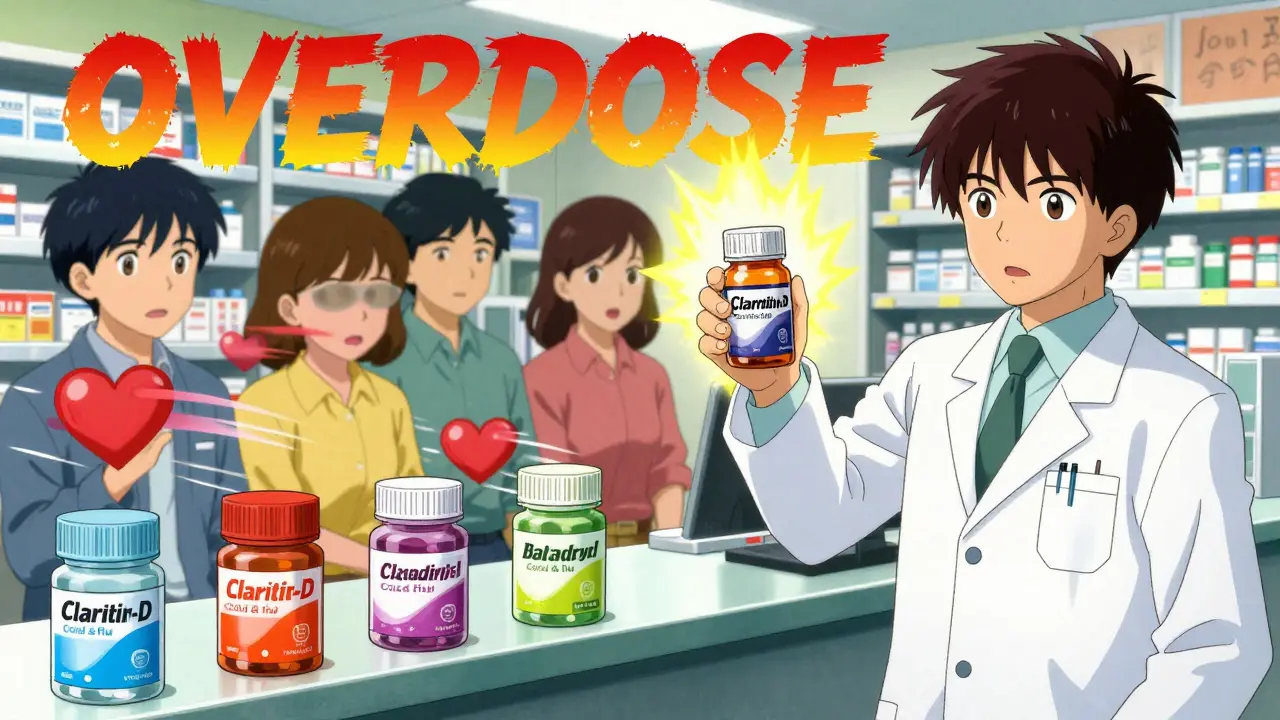
When to Call for Help
If you or someone you know takes one of these combo pills and then feels:- Heart pounding or skipping beats
- Severe dizziness or fainting
- Difficulty breathing or swallowing
- Confusion, hallucinations, or seizures
- Extreme dry mouth, flushed skin, or inability to urinate
Call Poison Control at 1-800-222-1222 immediately. Don’t wait. Don’t try to "sleep it off." These symptoms can escalate fast.
Bottom Line: Convenience Isn’t Worth the Risk
These combination pills are everywhere. They’re cheap. They’re marketed as "all-in-one relief." But they’re not a miracle. They’re a gamble. For most people, the benefits are small. The risks? Real. And preventable. You don’t need a pill that does two things if you only need one. Use the right tool for the job. If you’re congested, treat congestion. If you’re sneezing, treat allergies. You’ll feel better - and you’ll be safer.Can I take Zyrtec and Benadryl together?
No. Both Zyrtec (cetirizine) and Benadryl (diphenhydramine) are antihistamines. Taking them together doubles your dose and increases the risk of drowsiness, dizziness, confusion, and even heart rhythm problems. Zyrtec lasts up to 24 hours. Benadryl lasts 4 to 6 hours. Even if you space them out, the effects can build up. Stick to one antihistamine at a time.
Is Claritin-D safe for people with high blood pressure?
No. Claritin-D contains pseudoephedrine, a decongestant that raises blood pressure. Even if your blood pressure is controlled, this drug can push it into dangerous territory. People with hypertension, heart disease, or thyroid problems should avoid all pseudoephedrine-containing products. Talk to your doctor about alternatives like nasal saline sprays or steroid sprays.
Why are these medicines kept behind the pharmacy counter?
Products containing pseudoephedrine are kept behind the counter because they can be used to make methamphetamine. But that’s not the only reason. Pharmacists are trained to screen customers for risks - like high blood pressure, heart disease, or taking other medications. They can warn you if the combo pill isn’t safe for you. It’s a safety check, not just a legal requirement.
Do these combos work better than single-ingredient meds?
Not really. Studies show the added benefit is minimal. You might feel slightly less congested or sneeze a little less, but the difference isn’t significant enough to justify the added risk. Most people only need one or two symptoms treated at a time. Using single-ingredient drugs lets you control your dose and avoid unnecessary side effects.
Are children safe to take these combination medicines?
No. The American College of Allergy, Asthma, and Immunology advises against using decongestant-antihistamine combos in children under 12. There’s no solid proof they help, but there’s plenty of evidence they can cause serious side effects like agitation, rapid heartbeat, and seizures. For kids, stick to saline drops, humidifiers, and age-appropriate pain relievers if needed.






Oh please. You're acting like these pills are cocaine. I've been taking Claritin-D for years and I'm fine. My blood pressure? Normal. My energy? Better than ever. Stop fearmongering with your "studies" and "FDA warnings" - I don't need a pharmacist to tell me how to take medicine. If you're weak enough to get dizzy from one pill, maybe don't leave the house.
Thank you for writing this 💙 I'm a nurse and I see so many older patients come in with confusion and tachycardia because they took "just one more" cold pill. It's heartbreaking. Please, if you're over 65 or have any heart issues - skip the combo pills. Saline spray and rest are free and don't make your heart feel like it's trying to escape your chest. You're not weak for choosing safety.
This is such a needed post! I used to grab those combo pills like candy until I had a panic attack after taking Zyrtec-D and Benadryl on the same day. Turns out I didn't even need the decongestant - my nose was just dry. Humidifier + single antihistamine = life changed. If you're reading this and you're like me - tired, anxious, and just trying to feel normal - you don't need a magic pill. You just need to stop stacking meds like Legos. 💪
Oh wow, another anti-pharma rant. Next you'll say aspirin causes bleeding. Duh. People have been taking these for decades. If you're going to scare people, at least cite real data - not some "GoodRx tracked 200 cases" like that's a scientific study. Also, why are you suddenly an expert? Did you get a pharmacy degree in your sleep?
THEY'RE WATCHING US. I found out my neighbor's "Claritin-D" was actually part of a government program to make people drowsy so they don't notice the 5G towers. I checked the ingredients - cetirizine? That's a mind-control agent. I saw a documentary. They put it in the water. I stopped taking it. Now I drink distilled water and chant in Sanskrit. My blood pressure dropped 20 points. You're welcome.
Very informative. I am from India, and here people buy these combo pills without reading labels. My aunt took three different cold medicines at once and ended up in hospital. She didn't know they all had diphenhydramine. This post should be shared in every village. Thank you.
Let’s break this down clinically: pseudoephedrine is a non-selective alpha and beta-adrenergic agonist - that means it stimulates sympathetic nervous system everywhere. Antihistamines are H1 antagonists with CNS penetration, especially 1st-gen like diphenhydramine. The combo creates a pharmacodynamic tug-of-war: one drug accelerates, the other sedates. This isn’t just "feeling off" - it’s autonomic dysregulation. For elderly patients, this can precipitate delirium or arrhythmias. Single-agent therapy? Always preferred. Label reading isn’t optional - it’s survival.
Oh so now we’re supposed to trust the FDA? The same FDA that approved OxyContin? And now they’re worried about a little pseudoephedrine? Funny how the real danger - Big Pharma’s profit motive - never gets mentioned. You think they care if you have a racing heart? They care if you buy their next bottle. Wake up. The real drug is belief in the system.
i just wanted to say thank you for this post!! i had no idea i was doubling up on antihistamines until i read this. i was takin zyrtec in the mornin and tylenol cold at night… and felt so foggy all day. switched to saline spray and just zyrtec when i need it. i feel like a new person 😊 you’re right - less is more. you’re amazing for sharing this 💕
They keep pseudoephedrine behind the counter because they don’t want you to know it’s the same chemical used in meth - but they’re fine selling it to you like candy. Why? Because they’re making billions. The real conspiracy? They profit more from you getting sick than from you staying healthy. Read the fine print. That "safe" pill? It’s a Trojan horse. Your heart’s beating faster right now because of it.
Life is a balance, not a battle. We want quick fixes because we’re tired - not because we’re lazy. But the body isn’t a machine you can patch with pills. It’s a river. Sometimes you just need to sit by the bank, breathe, and let it flow. Saline spray, steam, rest - they’re not weak. They’re wise. You don’t need to conquer your cold. You need to honor your body. 🙏