
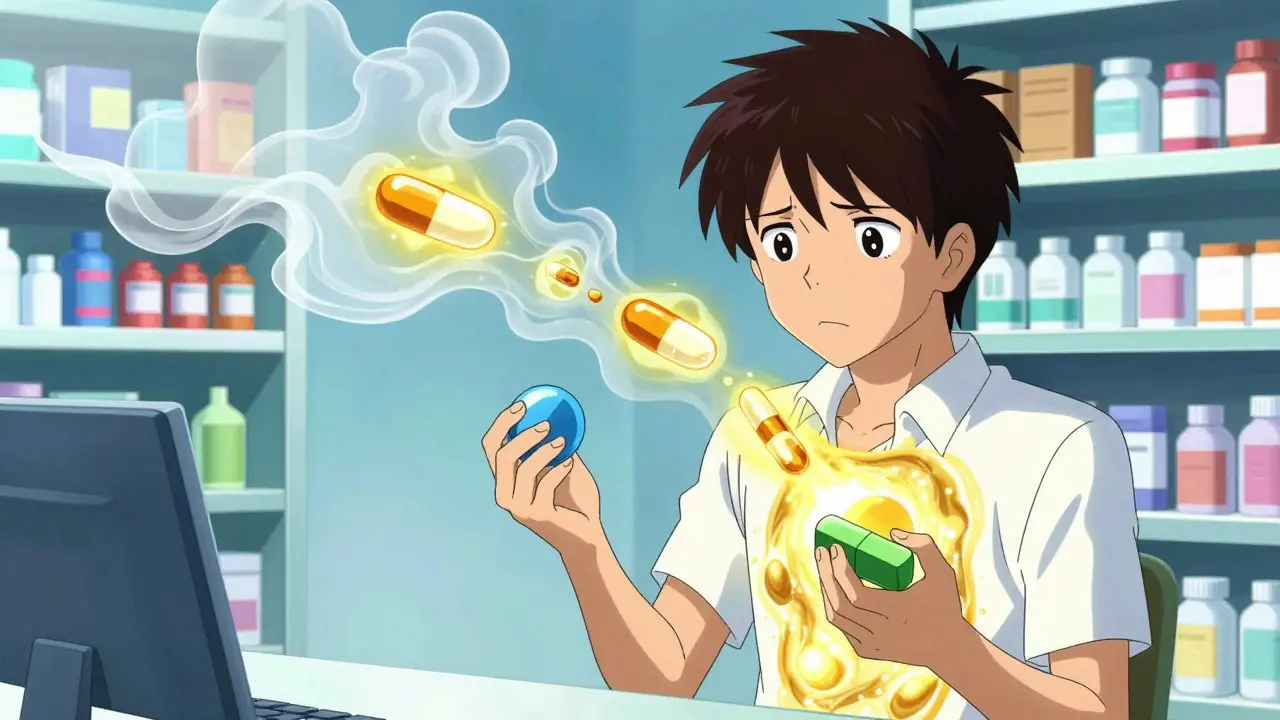
The Truth About Generic Medication Safety
It is common to feel uneasy when a pharmacy hands you a medication that looks different from the one you have taken for years. Many patients worry that if they switch from a brand-name pill to a generic version, their other medications might react differently. This concern often stems from seeing changes in energy levels, side effects, or lab results shortly after the switch. However, the science tells us something quite different. For the vast majority of medicines, generic versions behave exactly like their brand-name counterparts regarding drug interactions.
Understanding What Makes a Drug Work
To understand why generics are generally safe, we need to look at what actually happens inside your body. Generic drugs are defined as medications that contain the exact same active ingredient as the original brand-name product. This active ingredient is the chemical component that treats your condition. Whether you take a branded statin for cholesterol or a generic version, the molecule that lowers the LDL numbers remains identical.
Regulatory bodies like the Food and Drug Administration (FDA) require that these products show Bioequivalence. This means the generic must deliver the same amount of the medicine into your bloodstream within the same timeframe. Studies consistently show that over 97% of approved generics demonstrate equivalent pharmacokinetic profiles to reference listed drugs. Essentially, your liver and kidneys process the generic molecule the same way they process the brand molecule. If a drug interacts with another substance, it is almost always because of that active ingredient, which does not change between brands.
How Drug Interactions Actually Occur
Drug interactions occur when two substances affect each other's presence or action in the body. These risks exist regardless of whether the packaging says "Brand" or "Generic." There are three primary ways these interactions happen:
- Drug-Drug Interactions: One medication blocks or speeds up the metabolism of another. For example, fluconazole can increase simvastatin blood levels significantly. If you take a generic simvastatin, this interaction still occurs because the active chemical is the same.
- Drug-Food Interactions: Certain foods inhibit enzymes that break down medicine. Grapefruit juice inhibits CYP3A4 enzymes by up to 70%, potentially increasing calcium channel blocker levels. This affects any version of the drug, generic or brand.
- Drug-Condition Interactions: Pre-existing health states alter drug effects. Antihistamines like diphenhydramine can raise intraocular pressure in glaucoma patients. The source of the drug does not negate this physiological response.
Because the active pharmaceutical ingredient drives these mechanisms, switching manufacturers usually does not alter your interaction profile. A 2023 post-marketing surveillance report indicated that generic drugs interact identically to brand-name versions in 99.8% of cases.
| Feature | Brand-Name Drug | Generic Drug |
|---|---|---|
| Active Ingredient | Specific Chemical Compound | Identical Chemical Compound |
| Bioavailability Range | Standard Baseline | 80%-125% of Brand (Clinically Equivalent) |
| Interaction Potential | Defined by Active Molecule | Identical to Brand (Pharmacologically) |
| Excipients (Inactive Ingredients) | Consistent Formulation | May Vary by Manufacturer |

The Exception: Inactive Ingredients and Sensitivity
While the active chemistry matches, the "filler" materials-known as excipients-can differ. These binders, dyes, and preservatives help hold the pill together or aid swallowing. For most people, these are inert and pass through the system unnoticed. However, a small subset of patients may have sensitivities. A 2021 case reported in the Journal of the American Pharmacists Association highlighted a patient who developed gastrointestinal distress with a generic version of levothyroxine due to lactose content in the filler, despite tolerating the brand-name version without issue.
This does not constitute a classic "drug interaction" in the metabolic sense, but it causes an adverse reaction that feels like one. Some generic versions of sertraline, for instance, use sodium benzoate instead of the hydrochloride salt found in others. While rare, these variations can trigger reactions in individuals with specific allergies or sensitivities. If you notice a change in symptoms immediately after a manufacturer switch, it is worth checking the inactive ingredients list on the label to see if a new allergen has been introduced.
Narrow Therapeutic Index Medications
There is one specific category where consistency is critically important: Narrow Therapeutic Index (NTI) drugs. These are medicines where a tiny difference in blood concentration can mean the difference between curing a disease and causing toxicity. Examples include warfarin, digoxin, phenytoin, and levothyroxine.
For these drugs, even the permitted variance of 20% in absorption could theoretically push a patient outside their safe window. The FDA mandates tighter bioequivalence standards for NTI drugs, aiming for a 90%-112% variance rather than the standard range. Hospitals and clinics often maintain formularies with preferred generic manufacturers for these critical drugs. Studies suggest that while pharmacological differences are minimal, maintaining consistency with the same manufacturer reduces the risk of fluctuating lab values. If you are on warfarin, for example, switching between generic makers might lead to INR fluctuations, though pharmacist follow-ups show 89% of such reports are later attributed to dietary changes rather than the pill itself.

Patient Perception vs. Clinical Reality
Data reveals a significant gap between patient belief and clinical evidence. Surveys show nearly half of patients believe generics work differently, yet medical record analysis correlates only 3.7% of these claims with actual physiological differences. Much of this is driven by the nocebo effect. As Dr. Jerry Avorn noted in a Harvard Medical School editorial, the perception that generics are inferior can trigger real physical sensations simply because patients expect to feel worse.
In practical terms, if you take a generic pill and suddenly feel side effects, it is rarely a hidden interaction. It is more often related to inconsistent dosing, undiagnosed conditions, or psychological expectations. The Institute for Safe Medication Practices documented cases where 90.5% of reported differences were attributed to adherence errors or misunderstandings rather than actual pharmacological divergence.
Strategies for Safe Medication Management
Safety monitoring becomes your responsibility when managing these potential variables. Here are practical steps to ensure stability when using generic medications:
- Maintain Records: Keep a current list of every medication you take, including supplements. Share this with every provider you visit.
- Check the Manufacturer: If you rely on NTI drugs like levothyroxine, ask your pharmacy to keep prescribing the same manufacturer whenever possible.
- Monitor Lab Values: For drugs with tight margins, schedule consistent blood tests to catch any shifts early.
- Report Changes: Tell your doctor if symptoms change, but also note if you have switched food sources or other lifestyle factors recently.
- Read Labels: Occasionally check the package insert for known excipients if you have known allergies to dyes or binders.
Healthcare systems utilize AI-driven monitoring tools to track interaction data across millions of prescriptions, ensuring rapid detection of true safety signals. Between 2022 and 2023, regulatory bodies updated hundreds of labels to ensure clarity on interaction risks. This infrastructure works continuously to validate that generic drugs remain safe for the public, protecting you from the vast majority of theoretical risks.
Can generic drugs cause different interactions than brand name?
In 99.8% of cases, no. Generic drugs contain the exact same active ingredient, which is responsible for interactions. Differences are extremely rare and usually involve inactive ingredients (excipients) affecting sensitive individuals, not the drug metabolism itself.
What is a narrow therapeutic index drug?
These are medicines where a small change in blood concentration leads to failure or toxicity. Examples include warfarin, lithium, and levothyroxine. Consistency in the manufacturer is recommended for these specific drugs to minimize variability.
Why do some patients feel different on generics?
Often, this is the nocebo effect, where expectation of lower quality triggers side effects. In rarer cases, patients may react to different fillers, colours, or binders used in the manufacturing process, rather than the active medication changing.
Are generic warnings the same as brand warnings?
Yes. Regulatory agencies require generic labeling to include identical drug interaction warnings as the reference product. Compliance audits verify that 100% of generics carry the correct safety data.
Should I ask my pharmacist for a specific brand?
Generally, no. For most drugs, all approved generics are equivalent. However, for critical NTI medications, asking for a consistent manufacturer batch is a reasonable precaution to ensure stable blood levels.





Pharmacokinetic variance is negligible in most standard cases. The bioequivalence limit allows for eighty percent to one hundred twenty five percent availability rates. Clinically significant deviations remain statistically improbable in broad populations. Enzyme inhibition patterns persist regardless of manufacturer branding choices. CYP450 substrates process identically through hepatic filtration mechanisms. Absorption curves align within acceptable regulatory parameters set by agencies. Excipient differences rarely alter metabolic pathways significantly enough to matter.
We observe stability in plasma concentrations across multiple batches consistently. Therapeutic windows account for minor formulation variances quite well. Patient monitoring remains essential for narrow therapeutic index categories specifically. Warfarin management requires strict adherence to consistent sources of supply. INR fluctuations often correlate with dietary shifts instead of pill composition. Pharmacist intervention mitigates potential absorption risks effectively. Data supports the equivalence of approved generic formulations overwhelmingly. Adherence issues frequently masquerade as drug interaction events during review.
The data clearly shows bioequivalence holds up under rigorous scrutiny.
Totally agree with these points 💊👩⚕️ It gives peace of mind knowing the science backs this up completely 🙌✨ Love seeing hard evidence shared here!
It feels like our bodies become battlegrounds for corporate manufacturing interests somehow. Every switch in the pharmacy line triggers a primal fear of chemical betrayal. We crave consistency in a world designed for fluctuation constantly. Yet the molecule remains the same entity fighting our internal battles silently. Anxiety builds when the color changes slightly despite identical chemistry. This psychological weight impacts perception more than the actual substance does sometimes. We must separate the pill wrapper from the healing agent within carefully.
Ugh you rite about the mindset thing totally. People worry way to much bout the look of the med. As long as the active ingreedent is there its fine reeeally. Just ignore the label color diffrences and focus on results. Its all in ur head mostly if the lab work stays normal.
I have witnessed countless patients suffer unnecessarily due to unfounded fears regarding pharmaceutical sourcing methods. The hesitation to utilize approved alternatives often leads to medication abandonment entirely. This abandonment poses far greater risks than the theoretical variance in excipient composition suggests.
We must consider the broader implications of refusing cost effective treatment options available today. Trust in the regulatory framework is paramount for maintaining public health standards globally. Personal experiences with adverse reactions are often anecdotal rather than scientifically documented phenomena. It is distressing to see valid safety concerns diluted by internet misinformation constantly. Patients require accurate guidance from professionals who understand the nuance of pharmacology deeply. Education remains the strongest tool against the nocebo effect prevalent in communities now. We should encourage open dialogue between prescribers and those managing chronic conditions regularly. Understanding the biological mechanism prevents emotional decision making which harms outcomes. Health literacy is the foundation of proper self advocacy in modern healthcare systems. Misinformation spreads rapidly without factual corrections from credible sources promptly. Empathy must guide our conversations when addressing deep seated anxieties about care. Ultimately safety depends on informed choices rather than fearful assumptions alone.
One would assume basic education eliminates such hysterical concerns in educated circles. The masses simply lack the capacity to distinguish marketing from medical reality accurately. It is amusing how quickly sentiment overrides established clinical trial data repeatedly. True sophistication involves trusting the experts rather than personal anecdotes constantly.
Keep your records updated at all times. Always check manufacturer lists when picking up new scripts. Stay calm when switching between different brands. Report changes immediately if symptoms appear sudden. Monitor lab values as scheduled by your team.
The system fails us when pharmacies change without asking permission first. Why should we accept any risk even if statistics claim it is zero. They never listen to what patients actually feel matters most here.
Great breakdown of the mechanisms 👍 Most people just need to know the active ingredient stays the same 😌 Consistency with the same maker helps with sensitive meds though 😉
Global standards are converging on these safety metrics nicely. Many countries follow similar bioequivalence guidelines now. We share best practices to improve outcomes everywhere.
Wow this is so important. I love the detailed table presented here. Everyone read this thoroughly. Thank you for sharing this information.
Good stuff man. Keeps the panic down. Helps everyone stay calm.
Trusting the science helps us move forward positively. Knowledge empowers us to make better choices daily. Let's prioritize clarity over fear in our discussions.