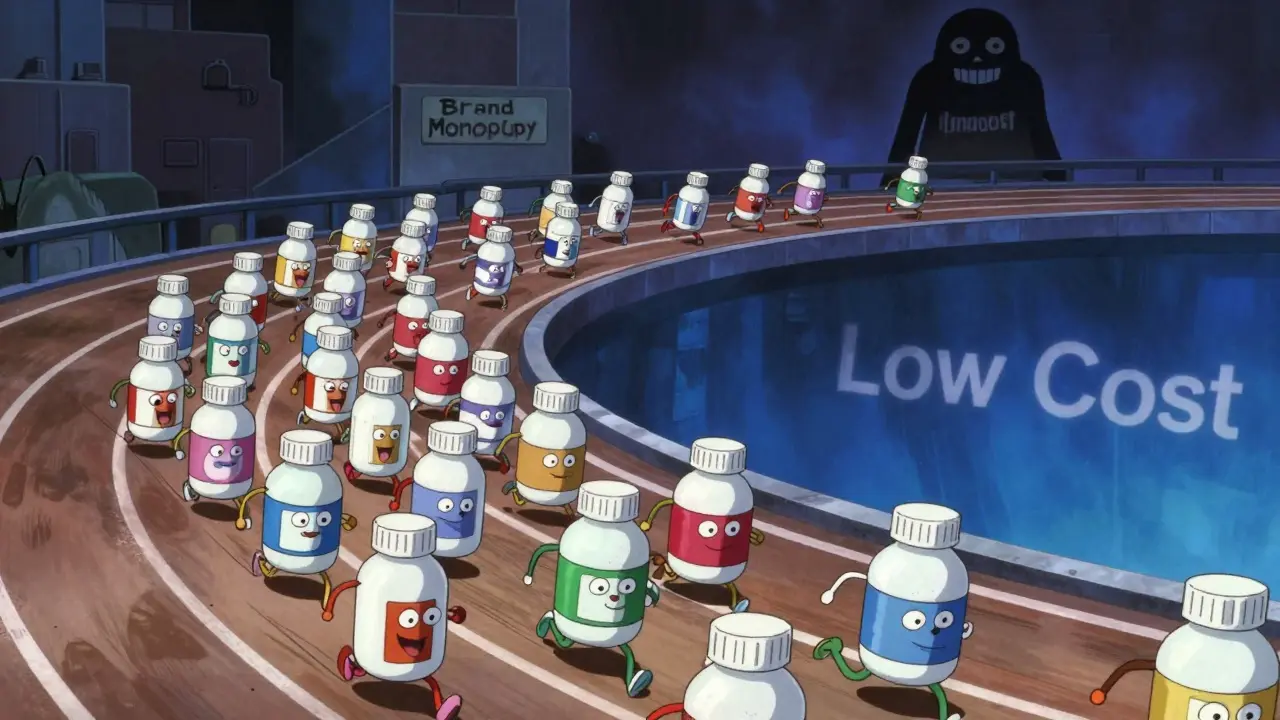
Why do generic drugs cost a fraction of their brand-name counterparts? The answer isn't usually a government official setting a price tag. Instead, it’s the invisible hand of market competition. While you might hear debates about drug price controls, the reality for generic medications is quite different from branded drugs. Governments generally avoid direct price caps for generics because the market already forces prices down through fierce competition.
This approach relies on a specific legal and regulatory framework designed to let multiple manufacturers enter the market quickly. When patents expire, dozens of companies can produce the same medication. They race to offer the lowest price to win contracts with pharmacies and insurance plans. This dynamic keeps costs low without the need for complex bureaucratic pricing formulas.
The Foundation: Hatch-Waxman and Market Entry
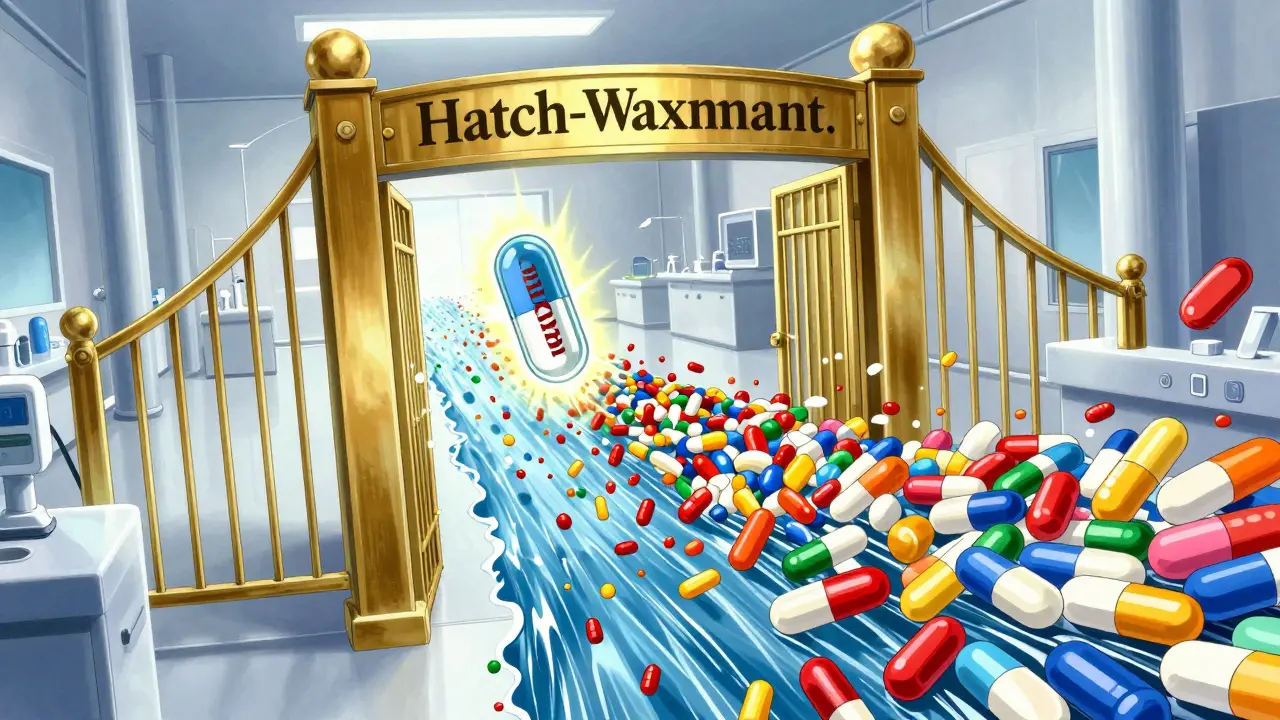
To understand why generic pricing works this way, we have to look at the Hatch-Waxman Act. Passed in 1984, this law created a balanced system. It allows brand-name companies to keep patents for a set time to recoup research costs. But once that protection ends, it opens the door for generics.
The key mechanism here is the Abbreviated New Drug Application (ANDA). Unlike a new drug, which requires billions in clinical trials, a generic manufacturer only needs to prove bioequivalence. This means the generic drug must work the same way in the body as the original. No new safety or efficacy data is needed. This slashes development costs from roughly $2.6 billion for a brand-new drug to just $2-3 million for a generic.
| Feature | Brand-Name Drug | Generic Drug |
|---|---|---|
| Development Cost | ~$2.6 Billion | ~$2-3 Million |
| Clinical Trials Required? | Yes (Full Safety/Efficacy) | No (Bioequivalence Only) |
| Average Approval Time (FDA Target) | Variable (Often Years) | 10 Months (Priority Applications) |
| Pricing Power | Monopoly (Patent Protected) | Competitive (Market Driven) |
This speed is crucial. The Food and Drug Administration (FDA) aims to review priority generic applications within 10 months. In 2023, they achieved a 92% compliance rate for this target. Faster approval means faster competition. And faster competition means lower prices for you.
How Competition Lowers Prices Naturally
You don’t need a government agency to tell a company to lower its price when three other companies are doing it cheaper. The data supports this. According to a 2022 FDA analysis, generic drug prices typically drop by 75% within six months of entering the market. If multiple competitors join, prices can fall by 90% within two years.
The Congressional Budget Office (CBO) notes that while generics make up about 90% of prescriptions filled in the U.S., they account for only 23% of total drug spending. This disparity exists because the volume is high, but the unit cost is incredibly low compared to brands.
Consider the number of players in the game. A 2024 IQVIA Institute report found that the U.S. generic market features an average of 14.7 manufacturers per drug. Compare that to 8.2 in Europe and 5.3 in Japan. More manufacturers mean more pressure to cut margins. This is why the U.S. often sees aggressive price competition that naturally suppresses costs without direct intervention.
Government Role: Enforcing Rules, Not Setting Prices
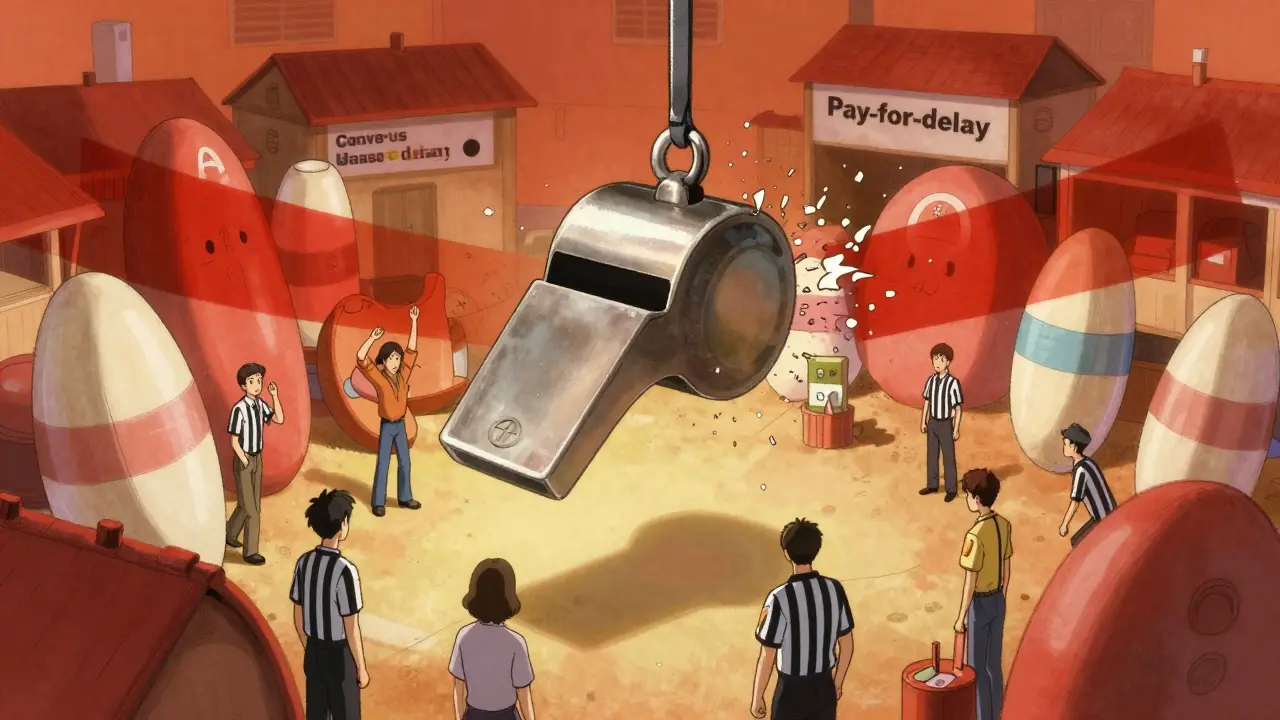
If the government doesn’t set prices for generics, what do they do? They act as referees. Their job is to ensure the playing field remains fair and competitive. Direct price controls are largely absent for generics because policymakers believe the market works well enough on its own.
For example, the Inflation Reduction Act (IRA) of 2022 introduced Medicare drug price negotiations. However, these negotiations explicitly exclude generic drugs. The Department of Health and Human Services determined that generics already face sufficient market competition. Negotiating prices for them would yield minimal savings-estimated at just $1.2 billion annually-compared to $9.5 billion from branded drug negotiations.
Instead, agencies like the Federal Trade Commission (FTC) focus on anti-competitive behavior. They challenge "pay-for-delay" settlements where brand manufacturers pay generic makers to stay out of the market. In 2023 alone, the FTC challenged 37 such agreements. Restoring competition in these cases can save consumers billions.
Challenges: Shortages and Price Spikes
The competition model isn’t perfect. Sometimes, prices get too low. When margins shrink below production costs, manufacturers may stop making certain drugs. This leads to shortages. The American Society of Health-System Pharmacists reported in May 2024 that 18% of hospital pharmacists experienced shortages of critical generic drugs due to unsustainable pricing.
Occasionally, you might see a sudden price spike. A Reddit user reported their generic sertraline jumping from $4 to $45 per month. These cases are rare-affecting only 0.3% of generic drugs according to the FDA-but they feel personal when they happen. Usually, these spikes occur when there are very few manufacturers left in the market, creating a temporary oligopoly.
To combat this, the FDA has introduced programs like the Competitive Generic Therapy designation. This provides expedited review for generics entering markets with insufficient competition, encouraging new players to step in and stabilize prices.
Complex Generics and Future Outlook
Not all generics are simple pills. "Complex generics"-drugs with difficult formulations or delivery mechanisms-face longer approval times. In January 2024, the FDA reported that only 38% of complex generic applications met the 10-month review target. To fix this, they launched a submission template in November 2023, which reduced review times by 35% for pilot applications.
Looking ahead, the trend suggests prices will continue to decline. The CBO projects generic drug prices will drop by 3.5% annually through 2030 due to competitive forces. Meanwhile, branded drug prices are expected to grow slightly. This divergence reinforces the idea that fostering competition, rather than imposing price controls, is the most effective strategy for keeping generic medications affordable.
Why aren't generic drugs included in Medicare price negotiations?
Generic drugs are excluded because they already benefit from intense market competition. Multiple manufacturers produce the same drug, driving prices down naturally. Studies show that negotiating prices for generics would result in minimal savings compared to branded drugs, which lack this competitive pressure.
What is bioequivalence in generic drugs?
Bioequivalence means that a generic drug delivers the same amount of active ingredient into a patient's bloodstream in the same amount of time as the brand-name drug. It ensures the generic works just as effectively and safely without requiring new clinical trials.
How does the Hatch-Waxman Act affect drug prices?
The Hatch-Waxman Act creates a pathway for generic manufacturers to gain FDA approval quickly after a patent expires. By reducing development costs and time, it encourages many companies to enter the market, leading to price competition that lowers costs for consumers.
Why do some generic drug prices spike suddenly?
Price spikes usually happen when there are very few manufacturers producing a specific drug. If one company raises prices or stops production, the remaining suppliers have little competition, allowing them to charge more. This is rare but can cause significant issues for patients relying on those medications.
What role does the FTC play in generic drug pricing?
The Federal Trade Commission (FTC) monitors the market for anti-competitive practices. They challenge agreements between brand and generic manufacturers that delay generic entry, such as "pay-for-delay" settlements. By ensuring fair competition, the FTC helps maintain lower prices for generic drugs.