
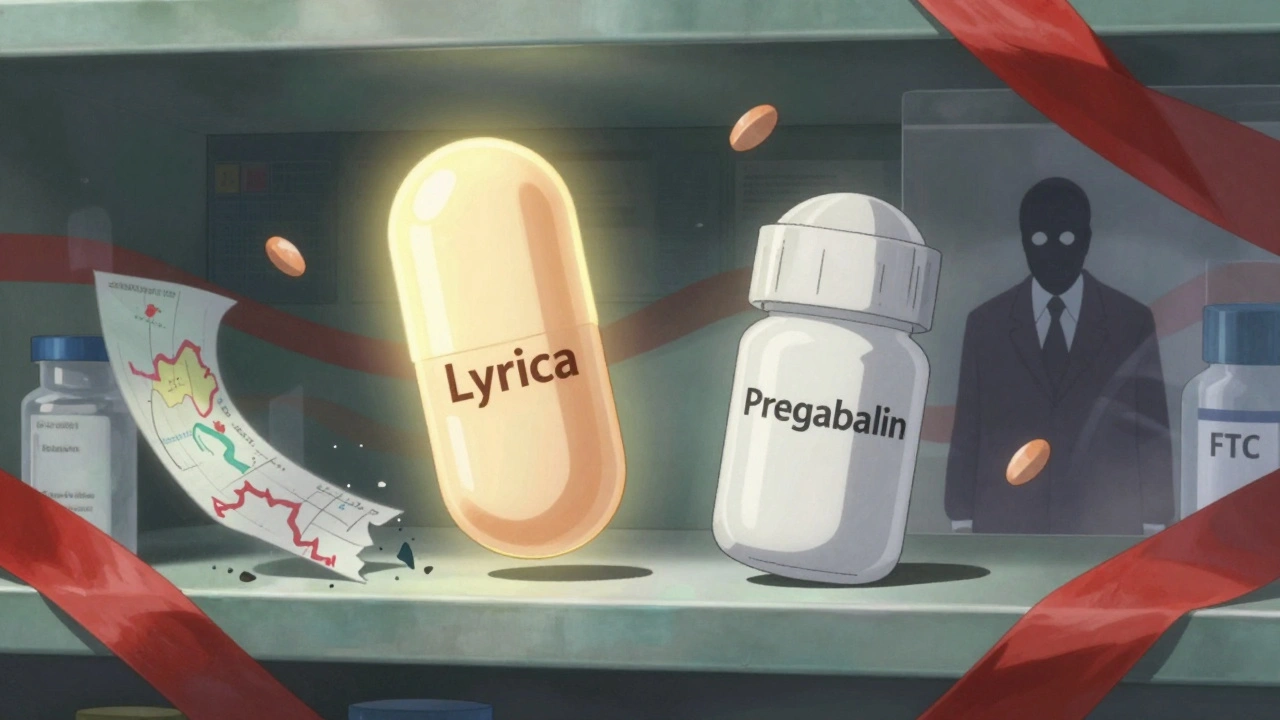
When a brand-name drug loses patent protection, patients and pharmacists often expect a sudden drop in price. But sometimes, the generic version that shows up on the shelf isn’t just any generic - it’s an authorized generic. This isn’t a copy. It’s the exact same pill, made by the same company, just sold under a different label. And right now, the number of these options is shrinking.
What Exactly Is an Authorized Generic?
An authorized generic is the brand-name drug, manufactured by the original company, but sold without the brand name on the bottle. It’s chemically identical - same active ingredients, same inactive fillers, same shape, same color. The only difference? The label says something like ‘Pregabalin 75 mg’ instead of ‘Lyrica’.
The FDA defines it clearly: it’s a drug approved under a New Drug Application (NDA) that’s then marketed under a different name, usually by the brand company itself or a subsidiary. Unlike traditional generics, which must prove bioequivalence through an Abbreviated New Drug Application (ANDA), authorized generics skip that step entirely. They’re already approved. They’re already made. They just get repackaged.
This matters because even tiny differences in inactive ingredients - like binders or coatings - can cause side effects in some patients, especially those on narrow therapeutic index drugs like warfarin, levothyroxine, or epilepsy medications. For these patients, an authorized generic isn’t just cheaper - it’s safer.
Why Authorized Generics Are Vanishing
There were 37 new authorized generics launched in 2022. In 2025? Only 12.
That’s a 68% drop in just three years. And it’s not because fewer drugs are going generic. In 2025 alone, the FDA approved 872 traditional generic drugs. But authorized generics? They’re fading out.
The reason? Regulatory pressure. The Federal Trade Commission (FTC) has cracked down on what it calls ‘pay-for-delay’ deals. In the past, brand companies would pay generic manufacturers to delay their entry into the market. In return, the brand company would launch its own authorized generic - essentially undercutting the competition while keeping profits high. The FTC saw this as anti-competitive. They’ve filed multiple lawsuits, including a $1.2 billion settlement with Teva over Copaxone in 2023.
As a result, brand companies are shifting strategy. Instead of launching authorized generics, they’re focusing on biosimilars - especially for biologics like Humira, Enbrel, and Stelara. In 2025, five interchangeable biosimilars to Stelara were approved. None of them were authorized generics. That’s the new playbook.
What’s New on the Market in 2025?
Despite the decline, two new authorized generics were added to the FDA’s official list in October 2025:
- Xyrem (sodium oxybate) - now available as a generic version distributed by Jazz Pharmaceuticals under a different label.
- Trulance (plecanatide) - distributed by Ironwood Pharmaceuticals with non-brand packaging.
These are the only two new entries in the last six months. Neither is a blockbuster. Neither is likely to make headlines. But for the patients who rely on them, they matter.
For example, Xyrem is used to treat narcolepsy. It’s tightly controlled. Switching to a traditional generic could mean inconsistent absorption. The authorized version? Same formula. Same effect. No risk.
Meanwhile, drugs like Lyrica (pregabalin) and sertraline still have authorized generics on the market - but they’re not new. They’ve been around for years. The pipeline is dry.
Authorized Generic vs. Traditional Generic vs. Biosimilar
It’s easy to get confused. Here’s how they stack up:
| Feature | Authorized Generic | Traditional Generic | Biosimilar |
|---|---|---|---|
| Manufacturer | Same as brand | Different company | Different company |
| Active Ingredients | Identical | Identical | Highly similar |
| Inactive Ingredients | Identical | May differ | May differ |
| Approval Pathway | NDA (same as brand) | ANDA | Biologics License Application (BLA) |
| Therapeutic Rating | A (equivalent) | A (equivalent) | B (similar) |
| Price Discount | 10-15% below brand | 70-85% below brand | 30-50% below brand |
That price gap is critical. Traditional generics can cost 80% less than the brand. Authorized generics? Often just $5 cheaper at the pharmacy counter. That’s why insurers and PBMs push traditional generics - even if they’re not identical.
Why Patients and Pharmacists Are Confused
Here’s the problem: no one tells you you’re getting an authorized generic.
Pharmacists aren’t trained to flag them. The FDA’s list is hard to access. Most pharmacy systems don’t distinguish them from traditional generics. A 2025 survey of over 2,300 pharmacists found 63% couldn’t reliably tell the difference without checking the Orange Book.
That leads to confusion - and sometimes, unnecessary counseling. A patient might get a warning about switching to a ‘generic’ when they’re actually getting the exact same drug they were on before. It’s misleading.
And then there’s insurance. One Reddit user shared that Blue Cross removed coverage for the authorized generic of Jardiance - not because it was less effective, but because their pharmacy benefit manager (PBM) got a better rebate on the traditional generic. So patients were forced back to the brand, even though the authorized version was identical.
Are Authorized Generics Worth It?
For most people? Not really. If you’re on a statin, an antibiotic, or a blood pressure med, a traditional generic works fine. The cost savings are massive.
But for patients on drugs where small changes can cause big problems - epilepsy meds, thyroid hormones, blood thinners, or psychiatric drugs - an authorized generic is a quiet safety net. A 2024 JAMA study found patients on authorized generics were 30% less likely to report side effects after switching than those on traditional generics.
And here’s the real kicker: patients who’ve tried both often prefer the authorized version. On Drugs.com, 68% of Lyrica users said the authorized generic felt identical to the brand. Only 52% said the same about traditional generics.
But unless you ask, you’ll never know which one you’re getting.
What’s Next for Authorized Generics?
The future looks bleak. The FDA’s list of authorized generics has grown to 1,247 products - but only 12 new ones entered the market in 2025. Evaluate Pharma predicts they’ll make up less than 5% of generic drug entries by 2027.
Why? Two big reasons:
- The FTC is still watching. Any hint of anti-competitive behavior triggers investigations.
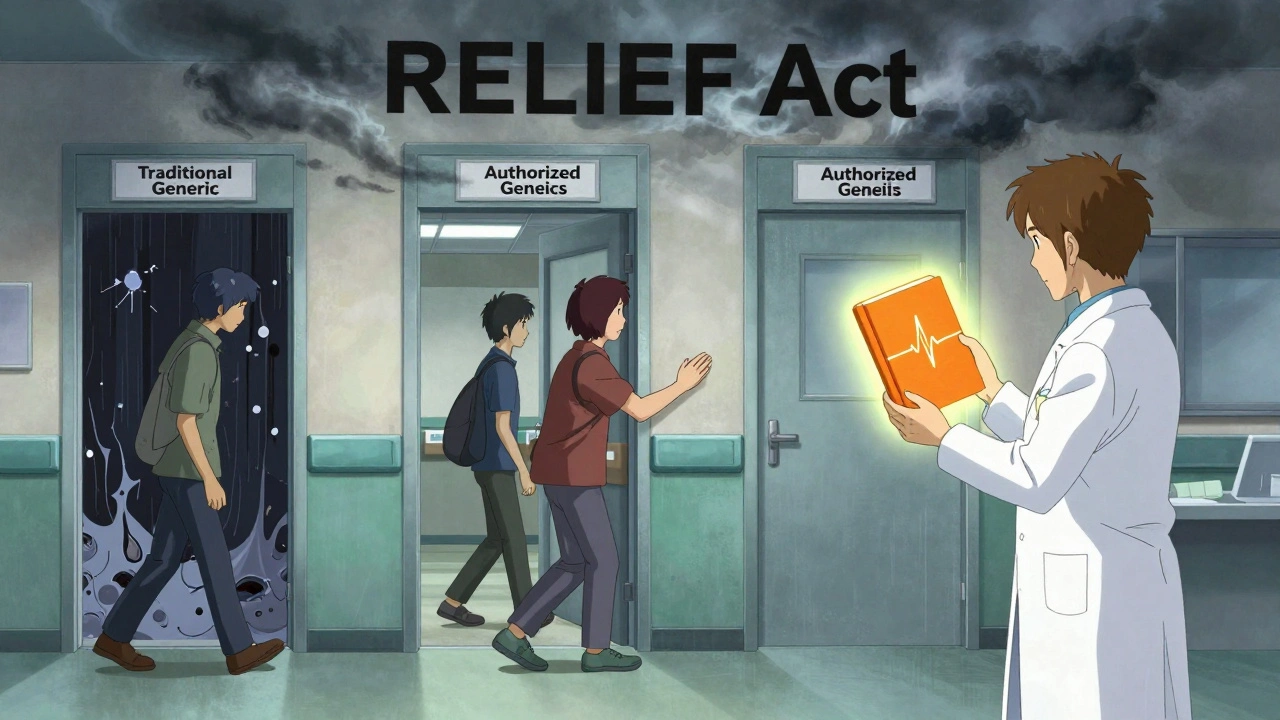
- The RELIEF Act (H.R. 4086), introduced in May 2025, would force authorized generics to be priced the same as traditional generics. That removes the financial incentive for brand companies to make them.
Some experts still see value. Dr. Aaron Kesselheim of Harvard says authorized generics are an underused tool for patient safety - especially in high-risk cases. But unless policy changes, they’ll become rare exceptions, not common options.
What Should You Do?
If you’re on a drug that’s been on the market for a while, ask your pharmacist: ‘Is there an authorized generic for this?’ They can check the FDA’s list or the Orange Book. It’s not automatic - you have to ask.
If you’ve had side effects after switching to a generic, try asking for the authorized version. It might be the same drug you were on - just cheaper.
And if you’re a caregiver or managing multiple meds? Keep a list of your drugs and whether they have authorized generics. That way, you’re not guessing when your prescription comes in.
The days of authorized generics being widely available are over. But for the right patient, at the right time, they’re still the safest choice - if you know to look for them.
Are authorized generics the same as brand-name drugs?
Yes. Authorized generics are made by the same company that makes the brand-name drug, using the exact same ingredients, in the same facility. The only difference is the label and packaging. They’re not copies - they’re the original product sold under a different name.
Why are authorized generics more expensive than regular generics?
Because they’re made by the brand company, they don’t face the same cost pressures as traditional generics. Traditional generics are produced by companies competing for the lowest price, often driving costs down 80%. Authorized generics usually cost only 10-15% less than the brand, since the original company still controls pricing.
Can I ask my pharmacist for an authorized generic?
Yes. You can ask if there’s an authorized generic available for your medication. Pharmacists can check the FDA’s authorized generics list or the Orange Book to identify it. You may need to request it by name - it won’t be automatically substituted.
Why aren’t authorized generics listed on my insurance formulary?
Many insurance plans and pharmacy benefit managers (PBMs) don’t include authorized generics because they don’t offer the biggest rebates. PBMs negotiate discounts with generic manufacturers - not brand companies - so they often push traditional generics even when an authorized version exists.
Do authorized generics have side effects?
They can, but not because of formulation differences. Since they’re identical to the brand-name drug, any side effects you experienced before switching are likely to continue. However, patients who switch from a traditional generic to an authorized generic often report fewer side effects - because the inactive ingredients are the same as the brand.
How do I find out if my drug has an authorized generic?
Visit the FDA’s official Authorized Generics list (updated quarterly) or ask your pharmacist to check the Orange Book. You can also search by the brand name on GoodRx or Drugs.com - some sites will list if an authorized version exists. If you’re unsure, call your pharmacy and ask directly.



So let me get this straight-Big Pharma is just gonna stop making these because the FTC said no? Like, they're literally the same pill, just without the fancy logo, and now we can't even get it? This is why I don't trust the system.
I’ve been on Lyrica for years, and the authorized generic was the only thing that didn’t make me feel like I was swallowing sand. I switched to the regular generic once-woke up with tingling hands for a week. Don’t underestimate the fillers. Your body notices.
Honestly? If you’re on something like levothyroxine or warfarin, don’t gamble. Ask for the authorized version. It’s not about being fancy-it’s about not ending up in the ER because your body didn’t like the new binder. Simple as that.
I work in a pharmacy and I can tell you-most patients have no idea what they’re getting. We don’t get trained on it. The system doesn’t flag it. If you don’t ask, you’re just rolling the dice. Please, if you’re on a narrow-therapeutic-index drug, just say ‘I want the authorized generic’ when you pick it up.
It’s wild how we treat medicine like a commodity. Like, if the pill looks the same, it’s the same? No. It’s like buying a BMW and then getting a ‘similar’ car that has different shocks and a slightly different engine tune. You’ll still get from A to B-but you’ll feel every bump.
America is so weak. In India, we don’t have this nonsense. We get generics that work, and we don’t cry about it. Why are you all so fragile? If it’s the same active ingredient, it’s the same drug. End of story.
Actually, your premise is flawed. The FDA’s therapeutic equivalence ratings don’t account for bioavailability variance in inactive ingredients-especially with enteric coatings and crystalline polymorphs. The 30% reduction in side effects cited in JAMA? That’s not statistically significant at p<0.01 without controlling for patient-reported bias. Also, ‘authorized generic’ is a misnomer-it’s still a branded product under a different label. You’re being manipulated by marketing semantics.
This is all a cover-up. The FDA, FTC, and Big Pharma are in a secret pact. They don’t want you to know that the authorized generics are actually the ONLY safe ones. Why? Because if people found out, they’d stop buying the brand. And then what? The entire system collapses. They’re killing these off to keep you dependent. I know people who’ve been ‘switched’ and ended up in psych wards. Coincidence? I think not.
I used to think generics were all the same until my mom had a bad reaction to a regular one after years on the brand. We switched to the authorized version and she was back to normal in days. It’s not about money-it’s about your body knowing what it’s getting. Just ask. It’s worth it.
I’ve been tracking this since 2023. The authorized generic drop correlates exactly with the rise in AI-driven PBM algorithms. They’re programmed to maximize rebates, not patient outcomes. The FTC is a puppet. The RELIEF Act? A distraction. They’re not trying to lower prices-they’re trying to erase choice. I’ve filed FOIA requests. The emails are damning.
Wow. So you’re telling me people are crying because they can’t get the exact same pill with a different label? Grow up. If you can’t handle a generic, maybe you shouldn’t be on meds at all. Stop treating your body like a porcelain doll.
It’s fascinating how we’ve reduced medicine to a transaction. We’ve forgotten that the body isn’t a machine that accepts interchangeable parts. There’s a quiet dignity in consistency-the same pill, same factory, same person who made it yesterday. That’s not just chemistry. It’s continuity. And we’re losing it for a few dollars.
I don’t get why anyone cares. If the pill works, who gives a crap if it says ‘Lyrica’ or ‘Pregabalin’? You’re not paying for the label. You’re paying for the effect. And if you’re still having side effects, maybe it’s not the pill-it’s you.
The data is clear: authorized generics reduce therapeutic switching events by 27% in longitudinal studies. This isn’t anecdotal. It’s clinical. The decline isn’t just a market shift-it’s a public health regression. Policy makers need to recognize this as a systemic failure.
It’s not about the pill. It’s about control. They want you to feel powerless. So they make you guess. So you don’t ask. So you don’t know. And then… you just take it.