
Medication Safety & Adherence Estimator
This tool estimates your current risk of medication misunderstanding based on factors cited in the FDA's proposed rule changes.
Why this matters
The FDA proposes standardized Patient Medication Information (PMI) to address the fact that medication errors contribute to approximately 1.3 million injuries annually.
Your Assessment Results
Current Estimated Error Risk
Potential Improvement with PMI
- ✓ 25-40% better understanding of critical info
- ✓ 30% higher medication adherence rate
- ✓ Standardized plain language (12pt font)
Have you ever picked up a prescription and stared at the tiny print on the label, wondering if you’re taking it right? You aren’t alone. For decades, patients have received inconsistent, often confusing information about their medications. That is about to change. The U.S. Food and Drug Administration (FDA) has proposed a major overhaul of how prescription drug information is shared with patients. This new initiative, known as Patient Medication Information (PMI), aims to replace the current patchwork of labels and guides with a single, standardized, one-page document for every outpatient prescription.
This isn’t just a minor tweak to existing rules. It represents a fundamental shift in regulatory philosophy, moving from industry-led labeling to patient-centered communication. If finalized, this rule will affect nearly all 6.7 billion prescriptions dispensed annually in U.S. outpatient settings. Here is what you need to know about the proposed changes, why they matter, and how they could impact your health care experience.
The Problem with Current Prescription Labeling
To understand why the FDA is pushing for PMI, we first need to look at the current system. Right now, most prescription bottles come with a pharmacy-generated label that focuses heavily on billing details, insurance codes, and identification numbers. Critical safety instructions are often buried or missing entirely. Only about 10% of prescription drugs currently require a Medication Guide, a separate leaflet provided by manufacturers for drugs with serious risks or those part of a Risk Evaluation and Mitigation Strategies (REMS) program.
This inconsistency creates a dangerous gap in patient knowledge. According to the Institute of Medicine’s 2006 report, Preventing Medication Errors, medication errors contribute to approximately 1.3 million injuries and 7,000 deaths annually in the United States. Many of these errors stem from simple misunderstandings about dosage, timing, or side effects. When patients receive different types of information depending on which pharmacy they visit or which drug they take, confusion increases. The current system assumes that doctors explain everything perfectly during appointments, but in reality, patients often leave clinics overwhelmed and unsure.
What Is Patient Medication Information (PMI)?
The proposed PMI is designed to fix these inconsistencies. Imagine a single-page document that looks the same for every prescription, regardless of the drug or the pharmacy. That is the core idea behind PMI. Published in the Federal Register on May 31, 2023 (Docket No. FDA-2023-N-11354), the proposal mandates that pharmaceutical manufacturers create standardized PMI documents for all prescription drugs used, dispensed, or administered on an outpatient basis. This includes blood components transfused in outpatient settings.
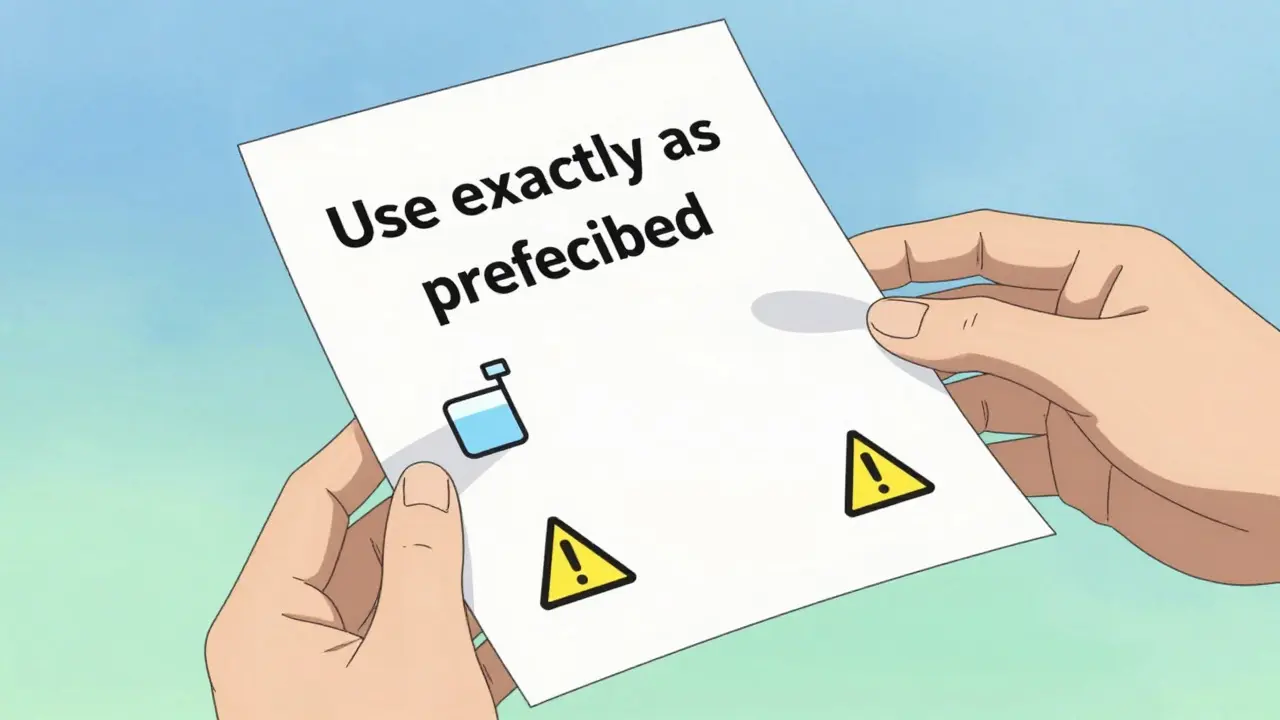
The format is strictly defined to maximize clarity. Every PMI must begin with the bold statement "Use exactly as prescribed" immediately following the heading. This is followed by a clear summary of administration instructions and the route of administration (e.g., oral, topical, injectable). A dedicated section titled "Directions for Use" must include special handling requirements, storage conditions, and disposal information. The language must be plain, scientifically accurate, and free from promotional tone. The text is designed to be readable at a 12-point font size, addressing the needs of the estimated 80 million U.S. adults with limited health literacy identified in the National Assessment of Adult Literacy (2003).
| Feature | Current Pharmacy Label | Proposed PMI |
|---|---|---|
| Coverage | All prescriptions (varies by pharmacy) | All outpatient prescriptions (standardized) |
| Content Focus | Billing, ID, basic dosage | Safety, usage directions, warnings |
| Format | Inconsistent across pharmacies | Single-page, uniform layout |
| Readability | Often small print, technical jargon | Plain language, 12-point font |
| Delivery Option | Paper only | Paper or electronic (patient choice) |
Key Features of the Proposed PMI Format
The FDA did not design the PMI in a vacuum. They conducted extensive public meetings and iterative testing with prototypes to determine what actually helps patients understand their medications. The result is a document that prioritizes essential safety information and usage directions over exhaustive clinical data.
One significant feature is the inclusion of common side effects and warnings in a prominent location. Unlike current Medication Guides, which are reserved for high-risk drugs, the PMI would apply to all outpatient medications. This means a patient picking up antibiotics would receive the same level of structured safety information as someone picking up a heart medication. The FDA specifies that PMIs must be updated whenever new information becomes available that would cause the document to become inaccurate, ensuring patients always have the latest data.
Another crucial aspect is the expansion of delivery options. Recognizing modern communication preferences, the proposal allows patients to choose between receiving the PMI in paper format or electronically. Electronic versions must comply with accessibility standards (Section 508), ensuring that patients with disabilities can access the information easily. This flexibility is vital for maintaining accessibility while embracing digital health trends.
Industry and Expert Reactions
The reaction to the proposed PMI has been mixed, reflecting the complex balance between patient safety and operational feasibility. Industry experts generally acknowledge the necessity of standardized information but express concerns about implementation challenges. Bobby Mukkamala, MD, President of the American Medical Association, supports the trend toward comprehensive labeling but emphasizes that decisions about therapy should remain individualized. He notes that "if opioid therapy is indicated, physicians should start low and go slow," highlighting the need for clinical judgment alongside standardized info.
Legal analysts at Hogan Lovells point out that this proposal follows decades of failed attempts by the FDA to require uniform patient-friendly information. Previous efforts were scuttled by industry opposition and efforts to reduce regulatory burden. This time, however, the momentum seems stronger. Dr. Tanya Krishnamurti, a researcher at the University of Pittsburgh, offers a critical perspective. She argues that the FDA may be assuming that benefits have already been communicated by providers, but if a patient is relying on the PMI to make a decision, that information should be included. Her team’s "Decision Critical PMI" prototype for mifepristone, for example, specified that 48% of patients experience fever, rather than simply stating it is a "common side effect." This quantitative approach helps patients understand risk magnitude better.
Pharmacy staff surveys reveal practical concerns. According to the American Pharmacists Association’s July 2023 survey of 1,200 pharmacists, 62% expressed concerns about the additional time required to distribute and explain the new PMIs. However, 78% acknowledged the potential safety benefits. The FDA estimates that integrating PMI distribution into workflows will add approximately 30-60 seconds per prescription during the initial implementation phase. Training requirements are estimated at 2-4 hours per employee, with annual refreshers.

Implementation Timeline and Costs
If the final rule is published in Q2 2024, as projected by industry analysts, implementation would begin in phases. Larger pharmaceutical manufacturers would have 24 months to comply, while smaller manufacturers would have 36 months. This phased approach aims to give companies time to develop PMIs for thousands of products. The FDA plans to provide templates and style guides to streamline content creation and has established a dedicated review team to handle the expected 10,000+ PMI submissions annually.
The financial impact is significant. J.P. Morgan’s Healthcare Sector Analysis suggests implementation costs could reach $1.2 billion over the first five years. Pharmaceutical manufacturers would bear approximately 65% of these costs for content development and FDA review. Pharmacies would account for 25% for distribution systems, and healthcare providers for 10%. For independent pharmacies, the National Community Pharmacists Association warns that 15% might struggle with compliance costs without additional support. Despite these hurdles, the long-term viability appears strong due to bipartisan support for medication safety initiatives.
Why This Matters for Patients
For patients, the PMI represents a powerful tool for empowerment. Testing conducted by the FDA revealed that patients understood critical information 25-40% better with the prototype PMI formats compared to current medication guides. This improvement was particularly significant among patients with limited health literacy. By providing consistent, clear, and accessible information, the PMI can help reduce preventable adverse drug reactions and improve health outcomes. Research cited by the FDA shows that patients who receive clear medication instructions have 30% higher adherence rates.
The standardization also ensures equity. Regardless of where you live or which pharmacy you use, you will receive the same quality of information. This reduces the variability that currently exists in patient education. Furthermore, the electronic option allows for easier sharing of information with caregivers or other healthcare providers, facilitating better coordinated care.
When will the Patient Medication Information (PMI) rule take effect?
The final rule is projected to be published in Q2 2024, with implementation beginning in 2025. Larger manufacturers would have 24 months to comply after the final rule publication, while smaller manufacturers would have 36 months.
Will I still get a paper copy of my medication information?
Yes. The proposed rule allows patients to choose between receiving the PMI in paper format or electronically. Pharmacies must offer both options to ensure accessibility for all patient populations.
How is PMI different from the current Medication Guides?
Current Medication Guides are only required for about 150 prescription drugs with serious risks. PMI would be mandated for all outpatient prescription medications, creating a consistent, single-page format for every drug, focusing on essential safety and usage directions.
Who is responsible for creating the PMI documents?
Pharmaceutical manufacturers are responsible for creating and submitting PMI documents for FDA approval. The FDA will provide templates and review the submissions to ensure they meet scientific accuracy and plain language standards.
Will PMI include information about drug benefits?
The current proposal focuses primarily on safety, usage directions, and side effects. Critics argue it lacks requirements to list medication benefits or quantify effectiveness. Future iterations may expand to include more comprehensive risk-benefit communication based on ongoing research.
How will PMI help reduce medication errors?
By providing standardized, easy-to-understand information, PMI aims to improve patient comprehension and adherence. Studies show that clear instructions can lead to a 30% increase in adherence rates, potentially preventing a significant portion of the 770,000 medication errors that occur annually in outpatient settings.
Are there any costs for patients to receive PMI?
No. The PMI is intended to be provided at no extra cost to the patient. Implementation costs are borne by manufacturers and pharmacies, though some independent pharmacies may face challenges absorbing these expenses.
Does PMI apply to over-the-counter (OTC) drugs?
No. The proposed PMI rule specifically applies to prescription drugs used, dispensed, or administered on an outpatient basis. OTC drugs are regulated under different labeling requirements.
How can patients provide feedback on the proposed PMI rule?
While the initial public comment period ended in November 2023, patients and stakeholders can continue to engage through FDA public meetings and future comment periods as the rule evolves. Advocacy groups like the National Patient Safety Foundation actively participate in these processes.
Will international regulations follow the FDA's PMI model?
International regulatory bodies are watching closely. The European Medicines Agency (EMA) is considering similar standardized patient information requirements for potential implementation in 2025, suggesting a global trend toward enhanced patient transparency.