It happens to all of us. You’re reaching for a painkiller during a migraine or grabbing an antibiotic from the cabinet, and you pause. There’s a date printed on the bottle, but what does it actually mean? Is this pill still safe to take? Will it hurt me if I swallow it today?
The answer isn’t as simple as "yes" or "no." Understanding medication expiration dates is crucial for your health, not just because of legal requirements, but because chemical stability changes over time. Taking a degraded drug can mean treating an infection with a weak antibiotic or managing chronic conditions like diabetes with ineffective insulin.
This guide breaks down exactly how to read those dates, why some meds lose power faster than others, and when you should absolutely throw them away versus when they might still be okay.
Decoding the Labels: Manufacturer vs. Pharmacy Dates
The first step is knowing which date you are looking at. Often, there are two different dates involved, and confusing them can lead to wasted money or unsafe usage.
Manufacturer Expiration Date is the final day the pharmaceutical company guarantees the full potency, safety, and purity of the drug under specific storage conditions. This date is determined through rigorous stability testing. If you buy an over-the-counter (OTC) product like ibuprofen directly from a shelf, the date on the box is the manufacturer's guarantee. It usually ranges from one to five years after production.
However, if you get a prescription from a pharmacy, look closely at the label. You will often see a date labeled as "Discard After," "Do Not Use After," or "Beyond-Use Date." This is different. Once a pharmacist opens the original sealed container and pours pills into a new plastic bottle, the environment changes. Exposure to air, moisture, and light can degrade the drug faster. Therefore, pharmacies typically assign a shorter "beyond-use" date-often one year from the dispensing date, regardless of the manufacturer's longer expiry.
| Date Type | Source | Typical Duration | What It Means |
|---|---|---|---|
| Manufacturer Expiry | Original Box/Bottle | 1-5 Years | Guaranteed potency in sealed, ideal conditions |
| Pharmacy Beyond-Use | Prescription Label | Usually 1 Year | Potency guarantee after repackaging by pharmacist |
| Liquid/Suspension | Pharmacist Mixing | 7-14 Days | Short life due to lack of preservatives once mixed |
If you have a critical medication, ask your pharmacist to write the manufacturer's expiration date on the bottle as well. This helps you understand the true lifespan of the drug itself, separate from the packaging constraints.
Understanding Date Formats and Regional Differences
Reading the date seems easy, but formats vary globally. In the United States, you’ll often see Month/Year (e.g., 08/23). If only the month and year are listed, the medication expires on the last day of that month. So, 08/23 means it is good until August 31, 2023.
In the European Union, the standard is Day/Month/Year. China uses Year/Month/Day. If you travel or buy medications online from international sources, double-check the format. Misinterpreting a day for a year could mean taking a drug that has been sitting in a warehouse for three extra years.
Look for these common labels on packaging:
- Expiry / Exp
- Expires / Exp Date
- Use By / Use Before
- Discard After
Also, keep an eye out for the Lot or Batch number. While not a date, this code links the specific batch to manufacturing records. If a recall happens, this number is what you need to check against official alerts.
Is It Safe to Take Expired Medicine?
Here is the nuance most people miss: expiration dates are about potency, not necessarily toxicity. According to research cited by the FDA and studies like the Shelf Life Extension Program (SLEP), about 90% of medications remain safe and retain most of their strength long past their expiration date if stored correctly in their original, sealed packaging.
However, "safe" doesn't always mean "effective." An antibiotic that has lost 20% of its potency might not fully kill a bacterial infection. This partial treatment can lead to antibiotic resistance, where bacteria survive and multiply stronger. That is a serious public health risk.
There are exceptions where expired drugs become dangerous. Tetracycline, an older antibiotic, was historically known to break down into harmful compounds that could damage kidneys. While modern manufacturing processes have largely mitigated this risk, it remains a cautionary tale. More importantly, certain critical medications should never be taken past their date:
- Insulin: Degraded insulin can lead to uncontrolled blood sugar levels, causing diabetic ketoacidosis or coma.
- Nitroglycerin: Used for chest pain (angina). If it loses potency, it won't relieve heart attacks, risking death.
- Birth Control Pills: Reduced effectiveness increases the risk of unintended pregnancy.
- Thyroid Medications: Essential for metabolic function; dosage accuracy is vital.
- EpiPens (Epinephrine): Critical for allergic reactions. A weakened dose may not stop anaphylaxis.
For everyday pain relievers like ibuprofen or acetaminophen, taking a pill a few months past its date is unlikely to harm you, though it might work slightly less well. But for life-sustaining drugs, the risk is not worth it.
Storage Matters More Than You Think
An expiration date is only valid if the drug has been stored correctly. The FDA states that drugs must be kept according to labeled instructions. Most medications prefer cool, dry places away from direct sunlight.
Think about your bathroom medicine cabinet. Is it really the best place? Bathrooms are hot and humid. Every shower creates steam that can seep into pill bottles, accelerating chemical breakdown. Moisture causes tablets to crumble and capsules to soften. Heat speeds up degradation reactions.
Instead, store medications in a bedroom drawer or a kitchen cupboard away from the stove and sink. Avoid the refrigerator unless the label specifically says "Refrigerate." Cold temperatures can cause some liquid suspensions to precipitate or freeze, altering their chemical structure. For example, insulin needs refrigeration before opening, but once opened, many types can stay at room temperature for 28 days. Check the leaflet.
If you notice visible changes-discoloration, strange odors, crumbling pills, or cloudiness in liquids-the drug has likely degraded, even if the date hasn't passed. Throw it out immediately.
How to Dispose of Expired Medications Safely
Once you decide to toss the expired meds, don’t just flush them down the toilet or pour them down the drain. Many drugs contaminate water supplies and harm aquatic life. Also, leaving them in the trash accessible to children or pets is dangerous.
The best method is a Drug Take-Back Program. The DEA sponsors National Prescription Drug Take Back Days twice a year, but many local pharmacies and police stations have permanent drop-off kiosks. These ensure secure destruction.
If no take-back option is available near you, follow the FDA’s home disposal guidelines:
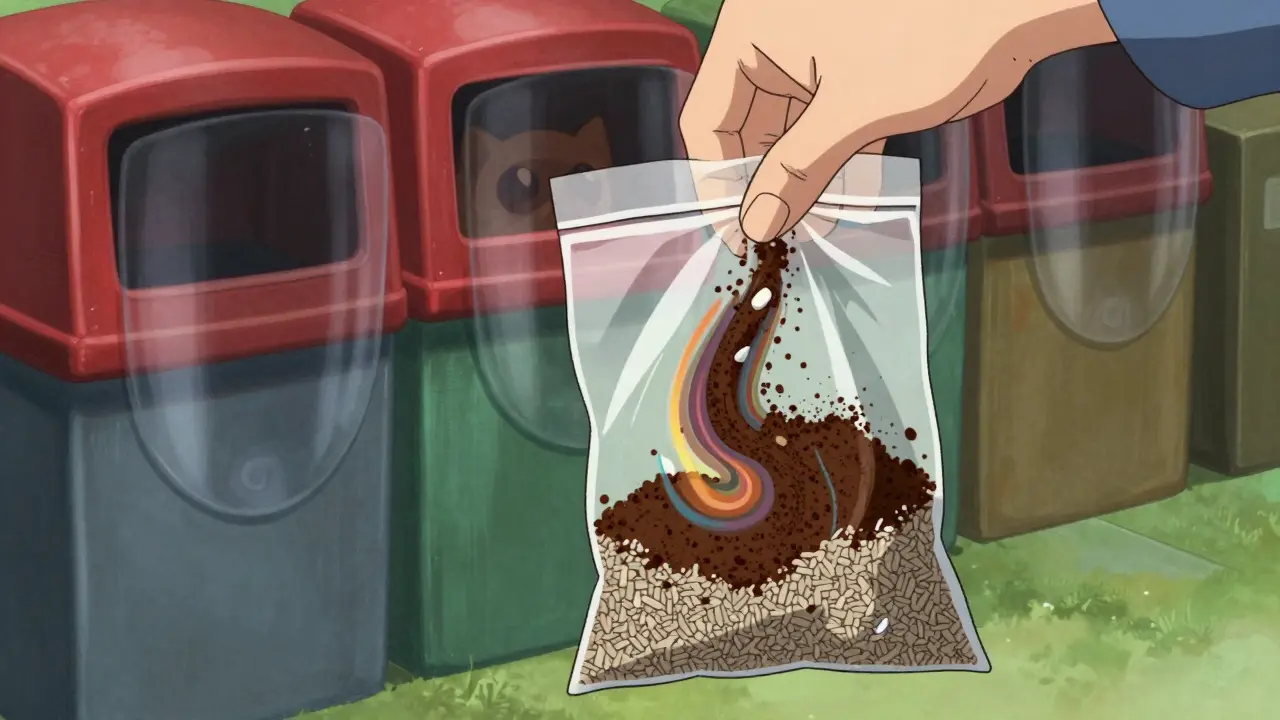
- Mix the medications (do not crush tablets or capsules) with an unappealing substance like dirt, cat litter, or used coffee grounds.
- Place the mixture in a sealed disposable container, like a plastic bag.
- Remove or scratch out all personal information on the prescription label to protect your privacy.
- Throw the container in your household trash.
Note: Some specific drugs, like fentanyl patches or oxycodone, have instructions to flush them if no take-back is available because the risk of accidental ingestion outweighs environmental concerns. Always check the patient information leaflet for specific disposal instructions.
Tips for Managing Medication Dates
Keeping track of expiration dates can be tedious, especially if you manage multiple prescriptions. Here are practical ways to stay organized:
- Buy Smaller Quantities: If you know you’ll use up a medication within six months, ask your doctor for a smaller refill. This reduces waste.
- Check Annually: Set a calendar reminder every six months to review your medicine cabinet. Discard anything expired or unused.
- Keep Original Packaging: When possible, keep OTC meds in their original boxes. They often have clearer printing and storage instructions than small blister packs.
- Use Apps: Smartphone apps like MedSafe or MyTherapy allow you to scan barcodes or manually enter drugs to track expiration dates and send reminders.
- Ask Your Pharmacist: When picking up prescriptions, ask, "How long will this stay effective in this bottle?" They can provide the exact beyond-use date.
Can I take antibiotics that are expired?
No, you should not take expired antibiotics. Even if they are not toxic, they may have lost potency. Incomplete treatment of an infection can lead to antibiotic resistance, making future infections harder to treat. Always consult your doctor for a fresh prescription.
Does the expiration date apply to the whole bottle or just after opening?
For solid pills in sealed blister packs, the date applies to the sealed package. Once opened, exposure to air and moisture begins degrading the drug. For prescription bottles dispensed by a pharmacy, the "discard after" date on the label is the one that matters, as it accounts for the time since the pharmacist opened the manufacturer's seal.
Why do some medications expire faster than others?
Chemical stability varies by formulation. Liquid suspensions, eye drops, and inhalers generally have shorter shelf lives (6 months to 2 years) because they contain more water or complex delivery mechanisms that degrade quickly. Solid tablets and capsules are more stable and often last 3 to 5 years.
Is it safe to flush expired medication?
Generally, no. Flushing contaminates water systems. Only flush medications if the label or patient insert explicitly instructs you to do so (usually high-risk opioids like fentanyl). Otherwise, use a drug take-back program or mix with unpalatable substances like coffee grounds and dispose of in the trash.
What does "Lot Number" mean on my medication?
The Lot or Batch number identifies the specific group of products manufactured at the same time. It is used for quality control and recalls. If a defect is found, the FDA or manufacturer will issue a recall for specific lot numbers, not necessarily all products of that brand.