
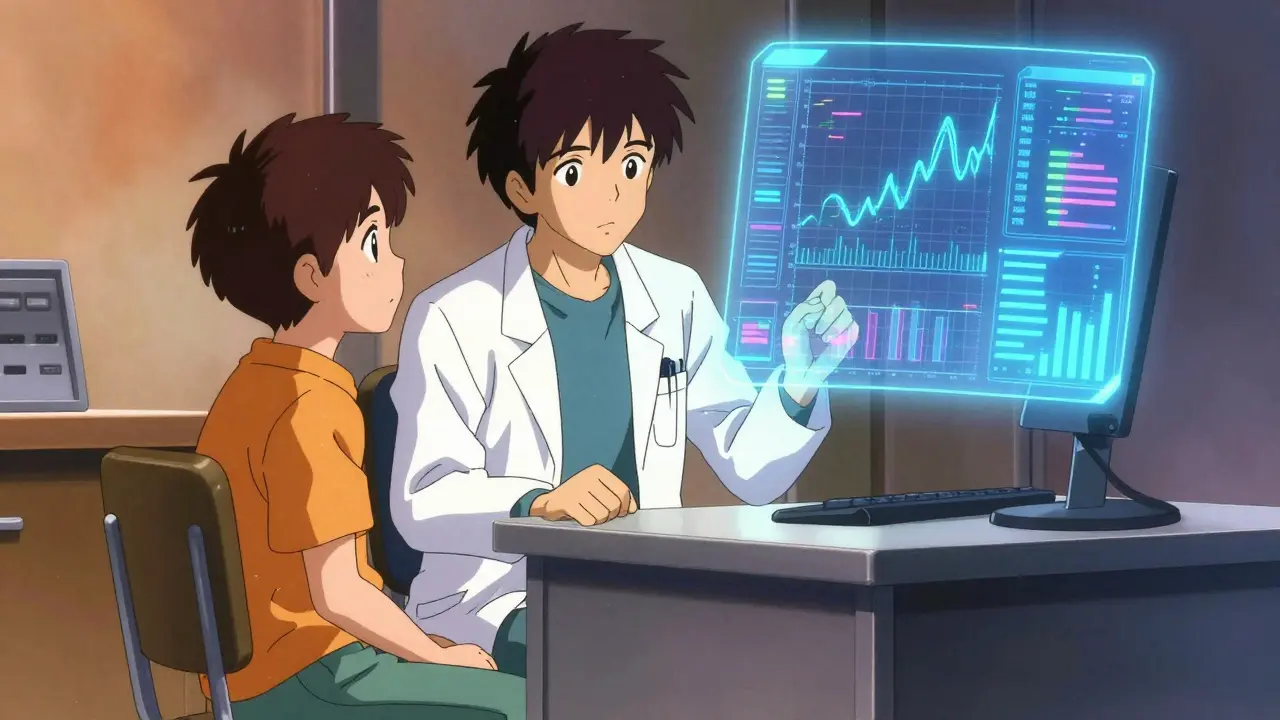
The Shift from Cautious Adoption to Strategic Necessity
Not long ago, many clinicians viewed new tech as a nuisance-something that added clicks to an already bloated EHR system. Now, that skepticism is turning into a strategic necessity. With over half of Americans wearing devices that track biometrics in real-time, providers are realizing that healthcare provider attitudes toward digital health integration must evolve or they will lose relevance. We are moving away from the era of "trying out" a tool to an era where AI is a baseline requirement for efficiency.
This isn't just about fancy gadgets. According to research from the NIH, physicians are now dealing with patients who bring comprehensive health records to appointments rather than simple lists of complaints. This changes the diagnostic process. Instead of being the sole source of truth, the provider is becoming a curator of data. This requires a new set of competencies: the ability to interpret consumer-generated health data and translate it into a clinical plan without feeling overwhelmed by the volume of information.
The integration of Artificial Intelligence is the most visible part of this shift. Forrester suggests that the expansion of AI on the front line is critical. The attitude is shifting from "Will AI replace me?" to "How can AI handle my administrative burden?" The most successful practices are those implementing governance frameworks that prioritize fairness and security, treating AI as a digital assistant rather than a replacement for human judgment.
Redefining the Patient Partnership
We are witnessing the death of the transactional medical visit. The old model-show up, get a prescription, leave-is being replaced by a holistic partnership. Providers are now building what PwC calls "digital front doors," which centralize everything from account management to care solutions. This shift is driven by the fact that patients now expect a retail-like experience in healthcare: seamless, personalized, and transparent.
One of the most interesting changes is how providers view the "informed consumer." In the past, a patient googling their symptoms was often seen as a challenge to the doctor's authority. Today, as highlighted by IPG Health, this is seen as an advantage. When a patient has already customized their treatment paradigm using their own biometric data, the provider can act quicker and more effectively. The doctor's role is shifting from a "gatekeeper of knowledge" to a "health coach" who helps the patient navigate their own data.
However, this isn't a one-size-fits-all transition. McKinsey's research shows that providers must now segment their patients. You have the "wellness shirkers" who are price-sensitive and avoid monitoring, and those who are highly motivated but struggle with execution. The evolving provider attitude is one of nuance-learning how to incentivize the unmotivated while empowering the data-driven patient.
| Feature | Traditional Attitude | Future Practice Trend |
|---|---|---|
| Patient Data | Skepticism of consumer apps | Integration of Patient-Generated Health Data (PGHD) |
| Care Model | Fee-for-service (Transactional) | Value-Based Care (Outcomes-driven) |
| AI Perception | Experimental/Risky | Operational Necessity/Administrative Support |
| Work Environment | Physically tied to clinic/hospital | "Anywhere, Anytime" Multidisciplinary Teams |
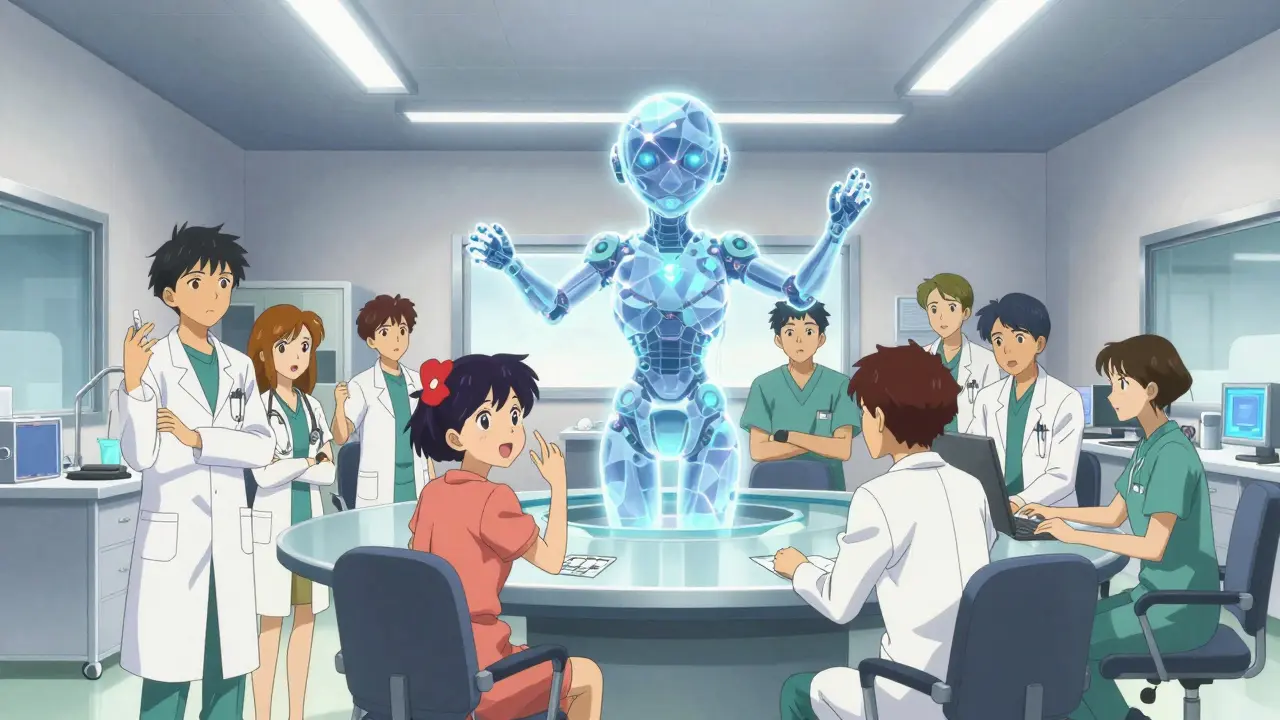
The Workforce Transformation and the Identity Crisis
The shortage of clinical labor is no longer a temporary glitch; it is a systemic crisis. This is forcing a massive shift in how providers view their professional identity. For a long time, the physician was the center of the medical universe. Now, there is a growing reliance on Allied Health Professionals. From Medical Assistants to Pharmacy Technicians, the attitude is shifting toward a team-based approach where certification and formal qualifications are the primary markers of quality, not just years of experience.
Data from the NHA shows that 70% of employers now require certifications for support roles, and 71% have increased pay for those who earn them. This tells us that providers are finally recognizing that they cannot do everything themselves. The future of practice is multidisciplinary. We are seeing the rise of "digital workers"-AI agents that handle the grunt work-allowing human clinicians to focus on complex decision-making and emotional support.
Moreover, the physical workspace is changing. The NIH notes that clinicians are moving toward flexible schedules and virtual care solutions. The attitude that a doctor must be physically present in a brick-and-mortar office to provide quality care is evaporating. This flexibility is not just a perk; it is a survival mechanism to prevent burnout and retain staff in a market where 53% of employers cite retention as their biggest challenge.

Overcoming the Culture Gap
Despite the push toward tech and new models, there is a persistent gap between leadership vision and frontline reality. Many healthcare organizations launch "culture initiatives" that fail because the people in the C-suite aren't the ones dealing with the AI glitches in the exam room. Forrester warns that for these changes to stick, leaders must model a shared purpose and create rituals that reinforce the employee's role in the new ecosystem.
The challenge is balancing efficiency with humanity. IPG Health points out that while AI can generate content and analyze data, consumers still crave authenticity. The providers who will win in the next few years are those who use technology to remove the friction of medicine, thereby freeing up more time for actual human connection. It is a paradox: the more we integrate high-tech tools, the more the human touch becomes a competitive advantage.
We are also seeing a move toward Integrated Care Models. Instead of fragmented services, providers are building ecosystems tailored to patients with complex social and behavioral needs. This requires a shift in attitude from "treating a disease" to "managing a person's life context," including their housing, food security, and mental health.
How is the doctor-patient relationship changing with more patient data?
The relationship is shifting from a hierarchical model to a partnership. Patients now arrive with their own biometric data and health records, allowing providers to act as curators and coaches rather than the sole source of information. This enables quicker treatment decisions but requires providers to be more open to consumer-generated data.
What is the impact of AI on the healthcare workforce?
AI is shifting from an experimental tool to an operational necessity. It is being used to handle administrative burdens and as "digital workers" to mitigate clinical labor shortages. The focus is moving toward training employees in responsible AI use rather than replacing them, allowing clinicians to focus on complex patient care.
Why is certification becoming more important for allied health professionals?
With severe staffing shortages, there is a higher reliance on roles like Medical Assistants and Pharmacy Technicians. Certification ensures a baseline of quality and safety, and it has become a key tool for employee retention, with many employers offering higher pay for certified staff.
What is a "digital front door" in healthcare?
A digital front door is a centralized digital interface where patients can manage their accounts, schedule appointments, handle payments, and access care solutions. It is designed to mirror the seamless experience found in retail or banking, reducing friction in the patient journey.
What is value-based care and why is it trending?
Value-based care is a payment model that rewards providers for the quality of care and patient outcomes rather than the quantity of services provided. This encourages the reduction of wasteful spending and promotes overall operational efficiency and long-term patient health.
Next Steps for Providers
If you're running a practice, start by auditing your data flow. Are you actually using the biometric data your patients are collecting, or are you ignoring it? Moving toward a model that accepts and integrates Patient-Generated Health Data (PGHD) is the first step in building trust with the modern consumer.
Next, look at your staffing. If you're relying on a few overstretched clinicians, invest in the certification of your allied health staff. Increasing the capabilities of your support team is the most effective way to reduce burnout and improve patient safety. Finally, focus on the "human" part of the equation. Use your AI tools to automate the paperwork, but use that saved time to actually talk to your patients. The technology is the tool, but the relationship is still the product.






Actually, most of the 'digital front doors' I've seen are just glorified patient portals with a fresh coat of paint 💅 But the idea of treating providers as health coaches is totally the right move for the industry! ✨💖
One must wonder if this so-called "curation of data" is merely a sophisticated facade for the centralized surveillance of the populace. While the prose suggests efficiency, it is far more likely that these AI frameworks are designed to strip the last vestiges of autonomy from the patient-provider dynamic in favor of algorithmic control. It is truly quaint that some still believe this is about "burnout" rather than systemic hegemony.
maybe we can find a middle ground where tech helps without taking over
This is such a massive shift!!! 🚀 I honestly think the focus on allied health professionals is the real game changer here. It's like giving the doctors a superpower by delegating the grind! Let's gooo! 💥
value based care is just a buzzword for cutting costs
It is really encouraging to see the focus moving toward a partnership. If we can actually get the administrative burden off the doctors, the quality of care will skyrocket for everyone.
The vibe shift here is totally wild!! We're basically transmuted into data-beings lol. It's kinda trippy how we're movin from the old school vibe to this neon-digital future where my watch knows more about my heart than my doc does. Just gotta make sure we dont lose the soul of the thing in the process of optimizzing everything into oblivion!
Honestly, the sheer audacity of suggesting that a "digital front door" solves the systemic failure of our healthcare system is just laughable. I've spent years studying the holistic intersection of wellness and corporate greed, and this narrative is just a glossy brochure for the C-suite to pretend they care about the frontline while they implement AI to replace the only people who actually know how to treat a human being with dignity. It's a tragedy that we're pretending a certification for a pharmacy tech is a solution to a labor crisis caused by treating doctors like vending machines for prescriptions for the last thirty years, and frankly, if you think this "strategic necessity" is anything other than a cost-cutting measure disguised as innovation, you're just not paying attention to how the world actually works.
i just think it's interesting how we're all talking about technology and efficiency but the most important part is still just having someone who actually listens to you when you're scared and sick... like the article says the human touch is the advantage but i wonder if the system will even let the doctors have enough time to actually be human after they've automated everything else away just to make the numbers look better on a spreadsheet somewhere in a corporate office