
Dealing with an autoimmune condition often feels like a gamble with your own body. One day you can tackle your to-do list, and the next, simply opening a jar or walking to the mailbox feels like climbing Everest. This unpredictable shift in physical ability is what clinicians call functional impairment. It isn't just about the pain; it's about the gap between what you want to do and what your body actually allows you to do. The good news is that autoimmune rehabilitation can bridge that gap, improving functional capacity by as much as 35-42% when started early.
The goal of rehab isn't to "fix" the disease-since autoimmunity is a lifelong management journey-but to stop the spiral of decline. When inflammation hits, we stop moving. When we stop moving, muscles weaken and joints stiffen. This creates a secondary problem: deconditioning. By combining physical and occupational therapies, you can protect your joints, manage your energy, and reclaim a level of independence that might seem lost during a flare.
Key Takeaways for Recovery
- Early Intervention: Starting rehab within the first 12 months of symptoms leads to the best long-term outcomes.
- Pacing is Priority: Using the "70% effort rule" prevents the boom-bust cycle that often leads to crashes.
- Combined Approach: Physical therapy focuses on mobility and strength, while occupational therapy targets daily living tasks.
- Environment Matters: Hydrotherapy is significantly more effective for pain relief during active disease phases than land-based exercise.
Understanding the Rehab Landscape
Rehabilitation for autoimmunity is a multidisciplinary effort. It's not a one-size-fits-all gym routine; it's a medical intervention where exercise is dosed like a drug. Depending on your current state, your therapy will shift between an acute phase (during a flare) and a maintenance phase (during remission).
For those in the acute phase, the focus is on preventing further damage. You'll likely start with Isometric Exercises exercises where the muscle contracts without changing length, creating no joint movement. These are typically kept at 20-30% of your maximum strength to avoid triggering more inflammation. Once you hit remission, the intensity ramps up to aerobic training, targeting 40-60% of your heart rate reserve to build cardiovascular health without overtaxing the system.
A critical part of this process is knowing when to stop. Clinical guidelines from the American Physical Therapy Association warn against pushing through if you have a fever over 100.4°F, active swelling in more than two joints, or if you've had a corticosteroid injection in the last 72 hours. Pushing through these "red flags" doesn't build strength; it increases injury risk.
The Role of Occupational Therapy
While a physical therapist helps you walk or stand, an occupational therapist (OT) helps you live. Occupational Therapy a healthcare profession that helps people overcome limitations to perform skills needed for daily living focuses on the "upper extremity"-your hands, arms, and shoulders-and how you interact with your environment.
One of the most powerful tools an OT provides is the "4 Ps" principle for energy conservation. If you've ever felt a burst of energy on a "good day" only to be bedridden for three days afterward, you've experienced the boom-bust cycle. The 4 Ps help break this pattern:
- Prioritize: Decide which tasks are essential and let the rest go.
- Plan: Organize your day to minimize unnecessary movement.
- Pace: Break tasks into small chunks. Limit continuous activity to 15-20 minutes, followed by a mandatory 5-10 minute rest.
- Position: Use ergonomic tools or sit down while doing tasks that usually require standing.
Modern OTs also integrate technology to reduce physical strain. Voice-activated smart home systems, for example, have been shown to increase independence by 31% for people with severe joint impairment in their hands. It's about working smarter, not harder.
Comparing Physical vs. Occupational Therapy
It is common to wonder which therapy is more important. The reality is that they solve different problems. Physical therapy (PT) is generally 28% more effective at improving lower body function and balance, while OT is 33% superior for hand function and activities of daily living (ADLs).
| Feature | Physical Therapy (PT) | Occupational Therapy (OT) | Hydrotherapy |
|---|---|---|---|
| Primary Focus | Gross motor skills, gait, lower body strength | Fine motor skills, ADLs, energy pacing | Pain reduction, low-impact mobility |
| Key Tool | TENS units, Goniometers | Adaptive tools, COPM assessment | Underwater treadmills (92-96°F) |
| Best For... | Walking, balance, overall stamina | Dressing, cooking, workplace ergonomics | Active flares, severe joint pain |
| Outcome Metric | Timed Up and Go (TUG) test | Canadian Occupational Performance Measure | Visual Analog Scale (VAS) |
The Power of Water: Why Hydrotherapy Works
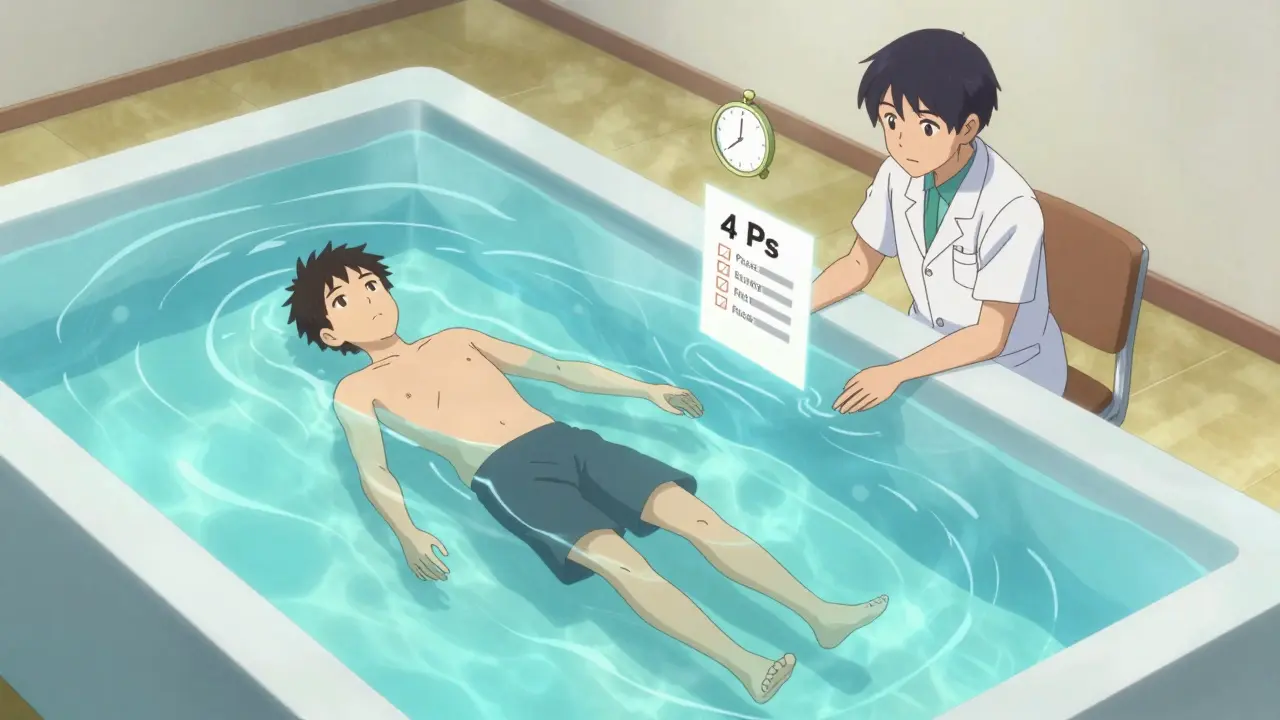
If you are in the middle of a flare, land-based exercise can feel punishing. This is where Hydrotherapy the use of water for medical purposes, typically in heated pools to reduce joint load becomes a game-changer. The buoyancy of water reduces the weight on your joints, allowing you to move through a full range of motion without the crushing pressure of gravity.
Data shows that hydrotherapy produces 22% greater pain reduction than land-based exercises during active disease phases. Patients often see their pain scores drop significantly more in the pool than on a treadmill. However, accessibility is a hurdle; a large number of rural clinics simply don't have the infrastructure for specialized warm-water pools. If your local clinic lacks one, asking about a telehealth-guided home aquatic program might be a viable alternative.
Common Pitfalls and How to Avoid Them
The biggest mistake people make in autoimmune rehab is the "push through the pain" mentality. In a healthy body, pushing through soreness leads to growth. In an autoimmune body, pushing through a flare can lead to a systemic crash that lasts weeks. This is often a result of therapists who aren't specialized in autoimmunity and treat the patient like a standard sports injury.
To avoid this, follow the 70% effort rule: never exceed 70% of your perceived maximum capacity, even on your best days. If you feel like you can give 100%, stop at 70%. This leaves a buffer for your immune system and prevents the crash. Keeping an activity diary and monitoring your heart rate can help you identify exactly where that 70% threshold lies.
The Future of Autoimmune Recovery
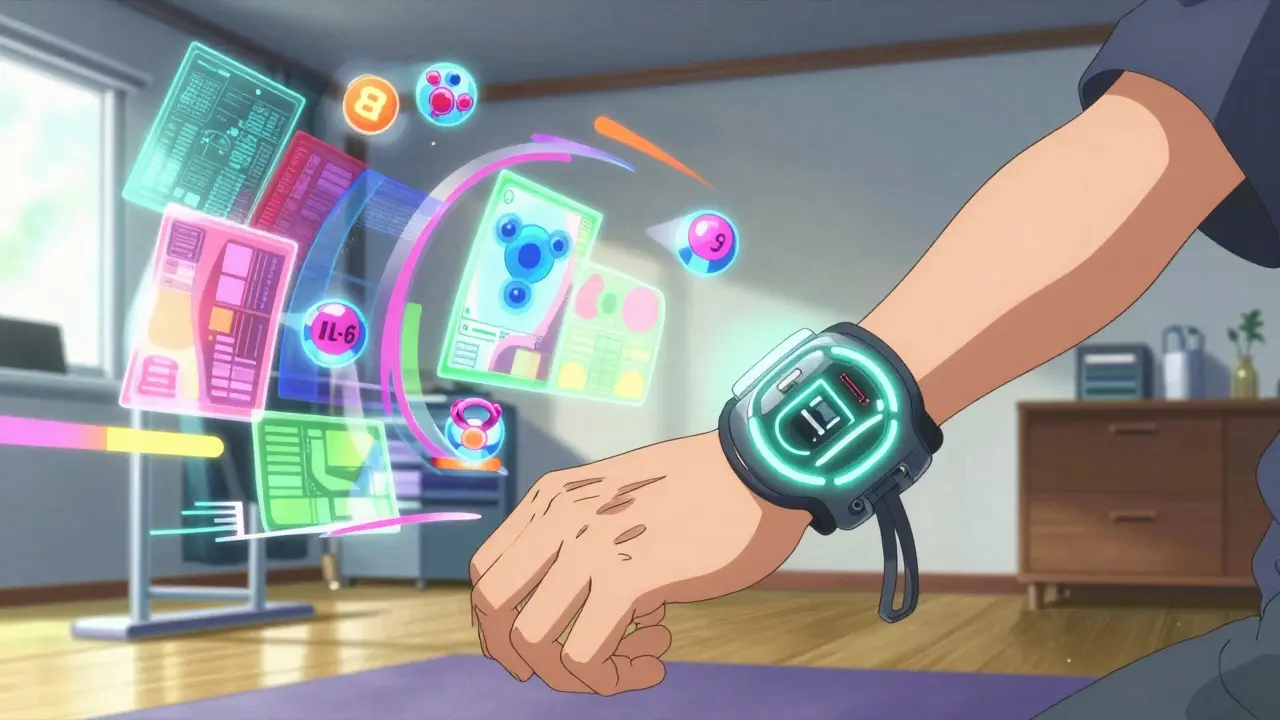
We are moving toward a world of "precision rehab." Instead of general guidelines, doctors are starting to use biomarkers like Serum IL-6 a pro-inflammatory cytokine used as a marker for systemic inflammation to decide exercise intensity. If your inflammatory markers are high on a Tuesday, your rehab intensity drops automatically, regardless of how you "feel."
AI is also entering the chat. New adaptive therapy apps are being developed to predict flare risks using wearable sensor data, potentially telling you to rest 24 hours before a flare actually hits. While we aren't there yet for everyone, the shift toward data-driven, personalized recovery is making it much easier to maintain a high quality of life despite a chronic diagnosis.
When is the best time to start rehabilitation after diagnosis?
The most significant benefits are observed when structured rehabilitation is initiated within the first 12 months of symptom onset. Starting early helps prevent the cycle of deconditioning and muscle loss that occurs when patients stop moving due to pain and inflammation.
Can I do physical therapy during a flare?
Yes, but the intensity must change. During a flare, you should move away from high-impact or aerobic work and focus on isometric exercises at 20-30% of maximum voluntary contraction. Avoid therapy if you have a fever over 100.4°F or significant joint swelling, as this can exacerbate the inflammation.
What is the "boom-bust cycle" in autoimmune diseases?
The boom-bust cycle happens when a patient feels a surge of energy during a "good day" and overexerts themselves to catch up on chores or work. This overexertion triggers a "bust," leading to several days of extreme fatigue and pain. It is managed through energy pacing and the 70% effort rule.
How does occupational therapy differ from physical therapy?
Physical therapy focuses on gross motor function, such as walking, balance, and lower body strength. Occupational therapy focuses on the "occupations" of daily life, including fine motor skills (like buttoning a shirt), adapting the home environment, and implementing energy conservation strategies.
What are the "4 Ps" of energy conservation?
The 4 Ps stand for Prioritize, Plan, Pace, and Position. By prioritizing tasks, planning the day to reduce movement, pacing activities with frequent rests, and positioning the body ergonomically, patients can maintain independence without triggering severe fatigue.
Next Steps and Troubleshooting
If you are just starting your journey, your first step should be finding a therapist with a specialized certification in autoimmune conditions. Not all PTs or OTs have the training to handle the volatility of autoimmune flares. Ask your provider if they are familiar with the Canadian Occupational Performance Measure (COPM) a client-centered outcome measure designed to identify issues in occupational performance or if they use a stepped-care model for treatment.
If you find that your current therapy is leaving you exhausted for days (the "post-therapy crash"), it is a sign that the intensity is too high. Do not simply "tough it out." Request a transition to a more conservative, phased approach or suggest moving your sessions to a hydrotherapy pool to reduce the load on your joints. Remember, the goal is a sustainable baseline, not a short-term peak.