
Dealing with a kidney diagnosis often feels like you've been handed a puzzle where the pieces keep changing. One day you're told to eat more greens, and the next, you're told some of those same greens are actually dangerous for your blood chemistry. The reality is that when your kidneys can't filter waste effectively, your food becomes your first line of defense. A renal diet isn't just about eating "healthy"-it's a precise medical tool designed to keep your electrolytes in balance and stop your condition from spiraling.
If you're in stage 3 to 5 of chronic kidney disease (CKD), your kidneys struggle to remove excess water and minerals from your blood. When sodium, potassium, and phosphorus build up, they don't just sit there; they can cause your blood pressure to spike, your heart to beat irregularly, or your bones to become brittle. The goal here is simple: reduce the workload on your kidneys to delay the need for dialysis and keep you feeling steady.
The Sodium Struggle: More Than Just the Salt Shaker
Most of us know that salt is bad for blood pressure, but for someone with CKD, sodium is a direct threat to fluid balance. When you eat too much sodium, your body holds onto water. This leads to swelling in your ankles (edema) and puts an immense strain on your heart. According to the KDIGO Kidney Disease: Improving Global Outcomes 2023 guidelines, non-dialysis patients should aim for 2,000 to 2,300 milligrams of sodium daily. That's roughly one teaspoon of salt for the entire day.
The real trap isn't the salt you add at the table; it's the salt already in the box. About 75% of the sodium we eat comes from processed foods. For example, a single can of soup can easily pack 1,200 mg of sodium, blowing your entire daily budget in one meal. To get around this, skip the salt and use herb blends like Mrs. Dash or fresh lemon juice to wake up your taste buds. Reducing your sodium by just 1,000 mg a day can drop your systolic blood pressure by 5-6 mmHg, which is a massive win for your kidney longevity.
Potassium: The Heart-Rate Balancing Act
Potassium is essential for muscle function, but in the world of renal health, too much of a good thing is dangerous. When your kidneys can't flush out extra potassium, you develop hyperkalemia a condition where potassium levels in the blood are too high. If your levels climb above 5.5 mEq/L, you're risking cardiac arrhythmias-essentially, your heart can lose its rhythm.
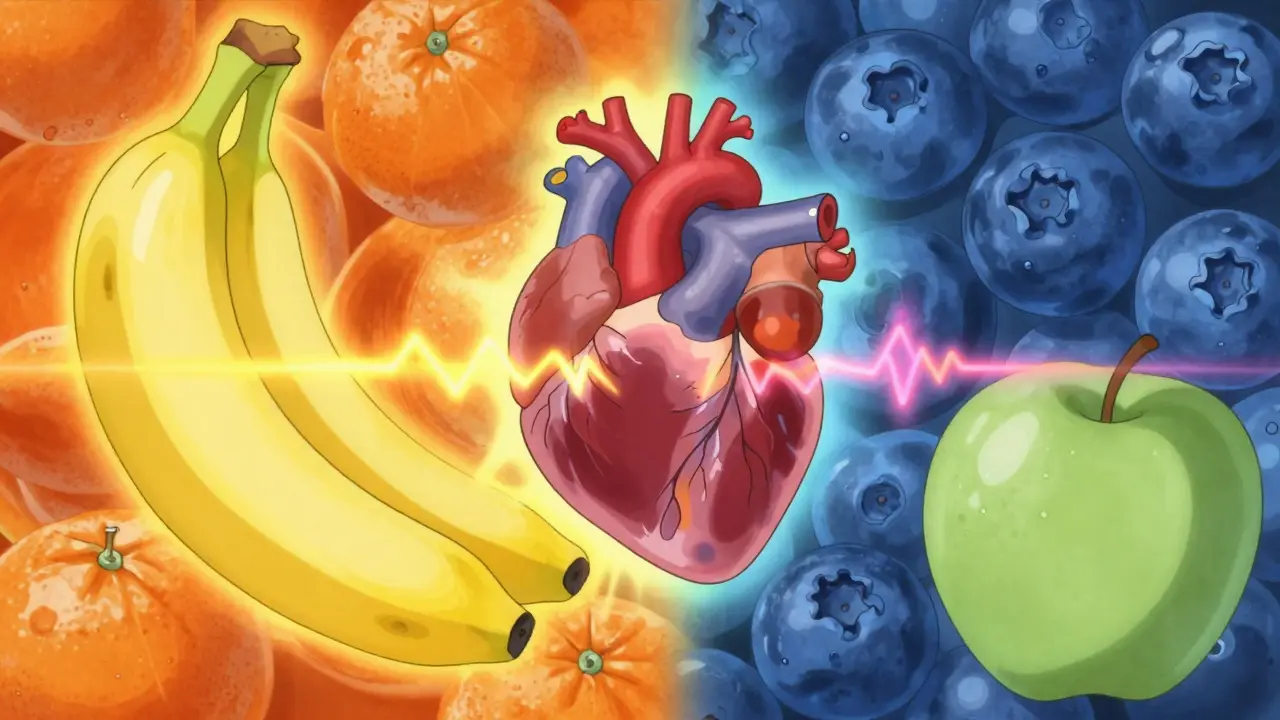
The tricky part is that many "healthy" foods are potassium bombs. Bananas and oranges are staples of a good diet, but for a renal patient, they can be problematic. Instead, reach for apples or blueberries. If you really crave a high-potassium vegetable, you can use a technique called leaching. By soaking vegetables in warm water for a few hours and then boiling them in a large pot of water, you can cut the potassium content by nearly 50%.
| High-Potassium (Limit) | Potassium Amount | Low-Potassium (Better Choice) | Potassium Amount |
|---|---|---|---|
| Banana (1 medium) | 422 mg | Apple (1 medium) | 150 mg |
| Orange (1 medium) | 237 mg | Blueberries (½ cup) | 65 mg |
| Potato (medium) | 900+ mg | Cabbage (½ cup cooked) | 12 mg |
Phosphorus: Protecting Your Bones and Vessels
Phosphorus management is perhaps the most confusing part of the renal diet because not all phosphorus is created equal. You have organic phosphorus, found naturally in plants and meats, and inorganic phosphorus, which is added to processed foods as a preservative. Your body only absorbs about 50-70% of the natural stuff, but it sucks up nearly 100% of the additives.
When phosphorus levels rise (hyperphosphatemia), your body starts pulling calcium out of your bones to compensate, making them brittle. Even worse, that calcium can end up depositing in your blood vessels and heart valves, causing them to stiffen. This is why nephrologists are so adamant about avoiding colas and processed cheeses. A 12-ounce cola can contain 450 mg of phosphorus additives, which hits your system far harder than the phosphorus in a small piece of dairy.
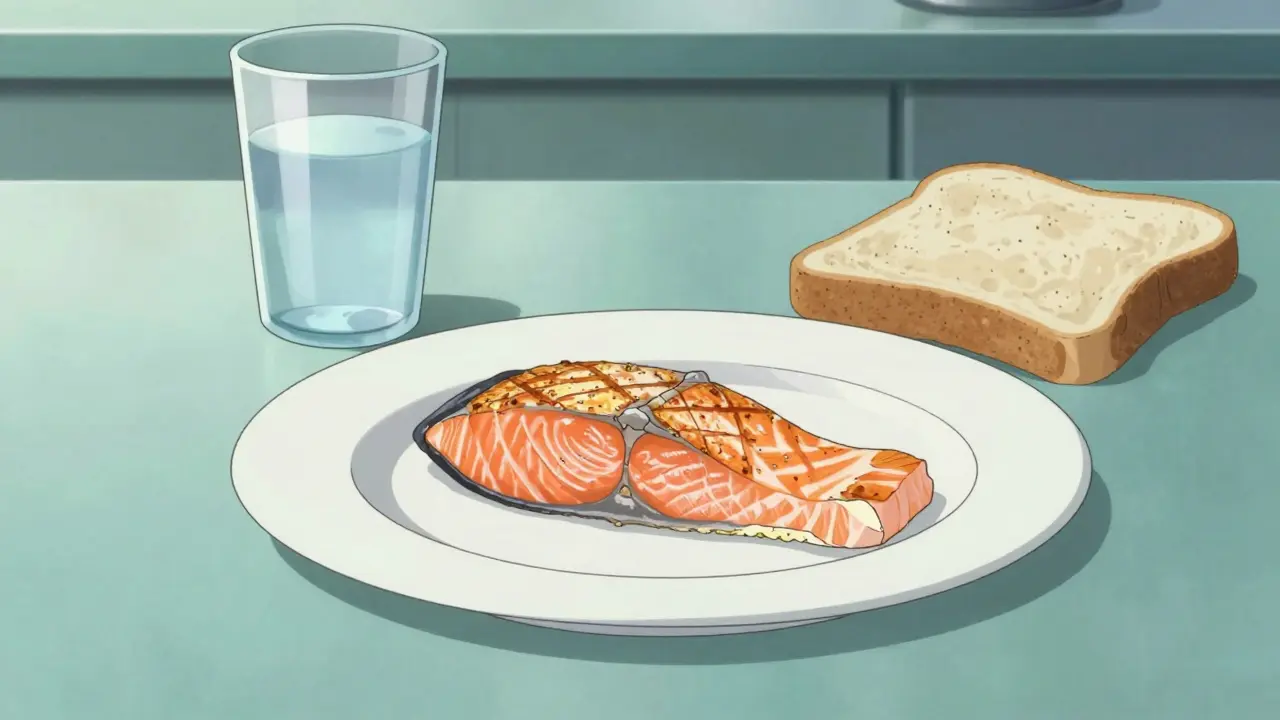
A surprising tip from renal dietitians: if you need bread, white bread is often a safer bet than whole-grain. While whole-grain is usually "healthier," it contains significantly more phosphorus (about 150 mg per slice compared to 60 mg in white bread). It feels counterintuitive, but in a renal diet, the usual rules of nutrition are flipped.
Protein: The Quality vs. Quantity Debate
Protein is necessary to keep your muscles strong, but breaking down protein creates urea, a waste product your kidneys have to filter. For years, the standard advice was strict protein restriction. However, recent research shows that going too low (less than 0.6g per kg of body weight) can lead to malnutrition, especially in older adults. The modern approach, supported by the KDOQI Kidney Disease Outcomes Quality Initiative, focuses on high-quality proteins in moderate amounts.
Fish like salmon, cod, and halibut are excellent choices because they are naturally lower in sodium and provide the essential amino acids your body needs without overloading the system. The key is portion control-sticking to 2-3 ounce servings a few times a week helps maintain muscle mass without spiking your waste levels.
Practical Tips for Daily Living
Adapting to this way of eating takes time-usually three to six months. It's not just about the food; it's about the mental load of tracking every milligram. To make it easier, consider these practical shifts:
- Read every label: Look for "PHOS" in the ingredients list (e.g., sodium phosphate, phosphoric acid). If you see it, put it back.
- Manage your fluids: If your urine output is less than 1 liter a day, you may need to limit your total fluid intake to around 32 ounces to avoid heart failure and swelling.
- Use digital tools: Apps like Kidney Kitchen can help you track nutrients in real-time so you aren't doing mental math at the grocery store.
- Focus on the "Gut-Kidney Axis": Some newer research suggests that prebiotic fibers, like inulin, might actually help reduce the amount of phosphorus your body absorbs by 15-20%.
Can I ever eat bananas again?
It depends on your blood work. If your serum potassium is consistently below 5.0 mEq/L, your doctor might allow occasional small portions. However, if you are in a state of hyperkalemia, you should strictly avoid them in favor of low-potassium fruits like berries or apples.
Why is white bread better than whole wheat for kidney patients?
Whole wheat contains the bran and germ, which are naturally rich in phosphorus and potassium. White bread is processed to remove these elements, making it much lower in the minerals that compromised kidneys struggle to filter.
Does the renal diet change if I start dialysis?
Yes, significantly. Dialysis removes waste from your blood, which often means you can actually increase your protein intake to prevent muscle wasting. However, you still need to be very strict with potassium and phosphorus between dialysis sessions to avoid dangerous spikes.
What is the easiest way to reduce sodium in my meals?
Switch from table salt to acid and herbs. Using lemon juice, lime, or vinegars mimics the "brightness" of salt. Adding garlic powder, onion powder, and fresh parsley can provide the flavor you miss without the fluid retention.
How do I know if my phosphorus is too high?
High phosphorus is often a "silent" problem until it's advanced, but symptoms can include itchy skin or a metallic taste in the mouth. The only sure way to know is through a blood test measuring serum phosphorus levels.
Next Steps and Troubleshooting
If you're feeling overwhelmed, start with one mineral at a time. Spend the first two weeks just focusing on sodium-get your labels read and your salt shaker tucked away. Once that feels natural, move on to potassium substitutions.
For those also managing diabetes, the intersection is tricky. Many heart-healthy diabetic foods are high in potassium. In this case, work closely with a Registered Dietitian Nutritionist (RDN) to create a hybrid plan that manages blood sugar without compromising kidney function. If you notice sudden swelling in your legs or shortness of breath, contact your nephrologist immediately, as this could be a sign of fluid overload regardless of your dietary adherence.







The tip about leaching vegetables is actually a lifesaver for people who really miss their potatoes.
Ah, the delightful irony of modern medicine where the 'healthy' whole wheat is suddenly the villain and the processed white bread is the hero... it's almost poetic how we redefine wellness based on which organ is currently failing.
Imagine thinking a basic list of dietary restrictions constitutes a 'guide' when the actual nuance of renal failure is far more complex than a table of fruit. This is essentially nutrition for toddlers, stripped of any real intellectual rigor, and honestly, it's just tedious to see this level of simplification passed off as medical insight. I've seen more comprehensive data in a pharmacy brochure.
Oh wonderful, another guide telling us to eat white bread. Because nothing says 'health' like refined flour and zero nutrients, right? Truly groundbreaking stuff here.
It is quite a fascinating paradox to consider how the biological imperatives of a healthy body are so diametrically opposed to those of a compromised renal system, and while most people would find the transition to such a restrictive diet utterly overwhelming, there is a certain meditative quality to the precision required when one must meticulously calculate every milligram of sodium and phosphorus just to maintain a baseline of stability in their daily existence.
the white bread thing is actually wild lol i bet people just freak out when they first hear it because we spent like 20 years being told it was poison but hey if it saves your bones i guess its fine
omg the salt thing is so hard lol i try but processed food is evrywhere its like they want us to be sick
You guys REALLY need to stop ignoring the mental health part of this!! 😱 Dealing with CKD is a total nightmare and if you aren't talking about the depression that comes with not eating your fav foods you are just lying to yourself!! honestly just get a therapist and a dietition right now!! 🍎✨
The hyperkalemia risk is serious...very serious!! My nephrologist mentioned the GFR levels and the electrolyte imbalance...it's all about that homeostasis!!
we just have to find peace with what our body needs now and stay positive through the change
Are you actually tracking your phosphorus levels every day?? Because that seems exhausting!!
My country has the best natural herbs for flavor. We do not need these chemical powders from the west. Natural is the only way to truly heal the soul and the body.
I've noticed a lot of different cultures have specific ways of prepping food to remove minerals, similar to the leaching mentioned here.